@Hipkins78 Thank you Nick. I was really sad not to be at SEPSIG in person but great to hear the talk resonated. Maybe I can come back and tell you the results of the current study!
Physical inactivity matters. Tell us. Listen to us. Ask us. A call to action to recognise the ways in which care-givers could help towards increasing physical activity and decreasing sedentary behaviour in patients with psychosis. New paper out now: https://t.co/75DousJBot
@Davidiris1@CizCG@simon_rosenbaum@JosephFirthUoM Thanks for your support in highlighting the perspective of carer-givers. Their accounts gave such a wealth of information about what we could do together to support more physical activity and break up sedentary time. Huge thanks to all the participants, advisors and co-authors.
Such important research. With poor physical health driving much of the disparity in life expectancy for people with SMI increasing physical activity can be literally life saving. This should be a core part of any recovery/care programme and plan.
@ResearchHumber Hugely enjoyed meeting so many inspirational people who are passionate about research. This conference is a fantastic example of a trust showcasing research and what it can do for real people in the real world. Thanks for having me!
From listening to patients, carers, and staff: a framework and clinician checklist to promote movement and physical activity in patients diagnosed with psychosis. This is fantastic work by @rowan_diamond. @OxPsychiatry@BMJMentalHealth https://t.co/mOehMxxQ1Q
Absolutely excellent work by @rowan_diamond.
This is a masterclass on translating high quality research into a straightforward, practical tool for clinicians to support their clients in a meaningful way.
Please share with all the clinicians you know!!
https://t.co/8Pg0SRax0K
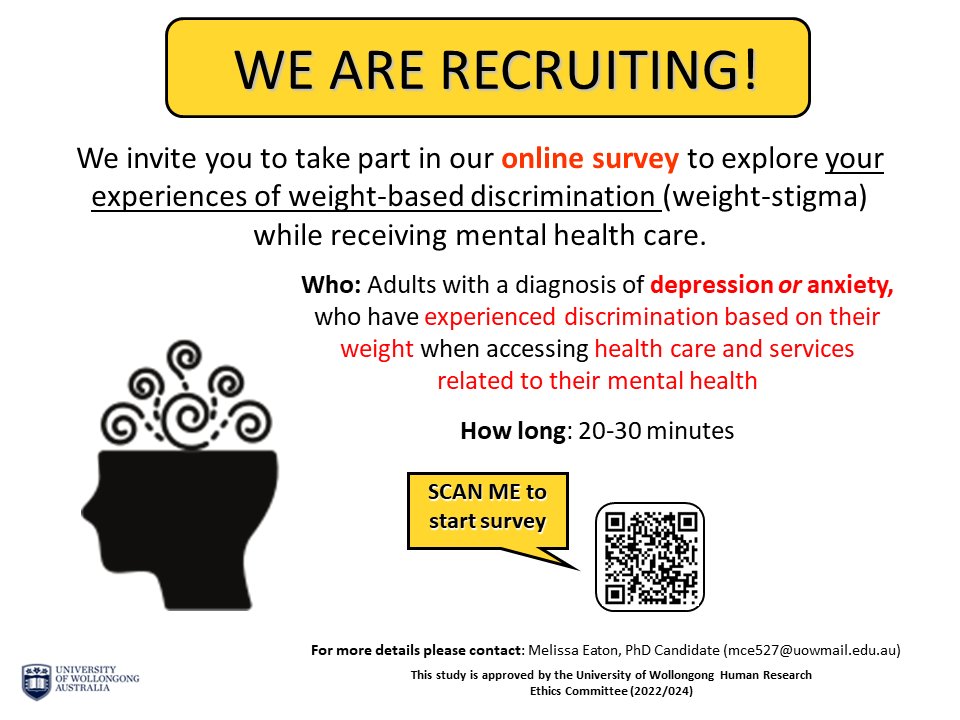
RECRUITMENT ENDING SOON
Are you aged 18 years or older & have or ever had a diagnosis of depression or anxiety?
This survey examines experiences of #weightstigma in mental health services
Join here: https://t.co/E2eKwpyyw2
(and/or please RT and share!)
Wonderful to see this peer methods qualitative evaluation from @McPinFoundation of the patient experience of the Feeling Safe programme for treating persecutory delusions @ThomasKabir @ipanalysis @FelicityWaite@OxPsychiatry https://t.co/2vaKHkSIqp
Really great work from @rowan_diamond indicating three distinct physical activity profiles of people with persecutory delusions: a mobile but inactive group (63%), an immobile and inactive group (27%), and a mobile and active group (11%) @OxPsychiatry https://t.co/PFheq9R4Bd
@matildagosling@_SwiftPress Huge congratulations! This will be a really helpful contribution to the literature for all parents and a great read! Look forward to getting my hands on it!
NEW JOB? We are looking for three assistant psychologists to join the RAPID trial - a new project to help people manage suicidal thoughts. Closing this weekend.
https://t.co/dUfi7T9iQz
https://t.co/z8YZ6zZ0ND
Next week is #RunAndTalkWeek! Running (and walking) provide great opportunities to talk about mental health and wellbeing, as well as boosting your health. Who can you encourage to come for a run? 🏃♂️🏃♀️🏃🐕
@ST_Culture @charliemackesy Congratulations @charliemackesy! That translates into a lot of people taking comfort and joy from your wise words and moving art.
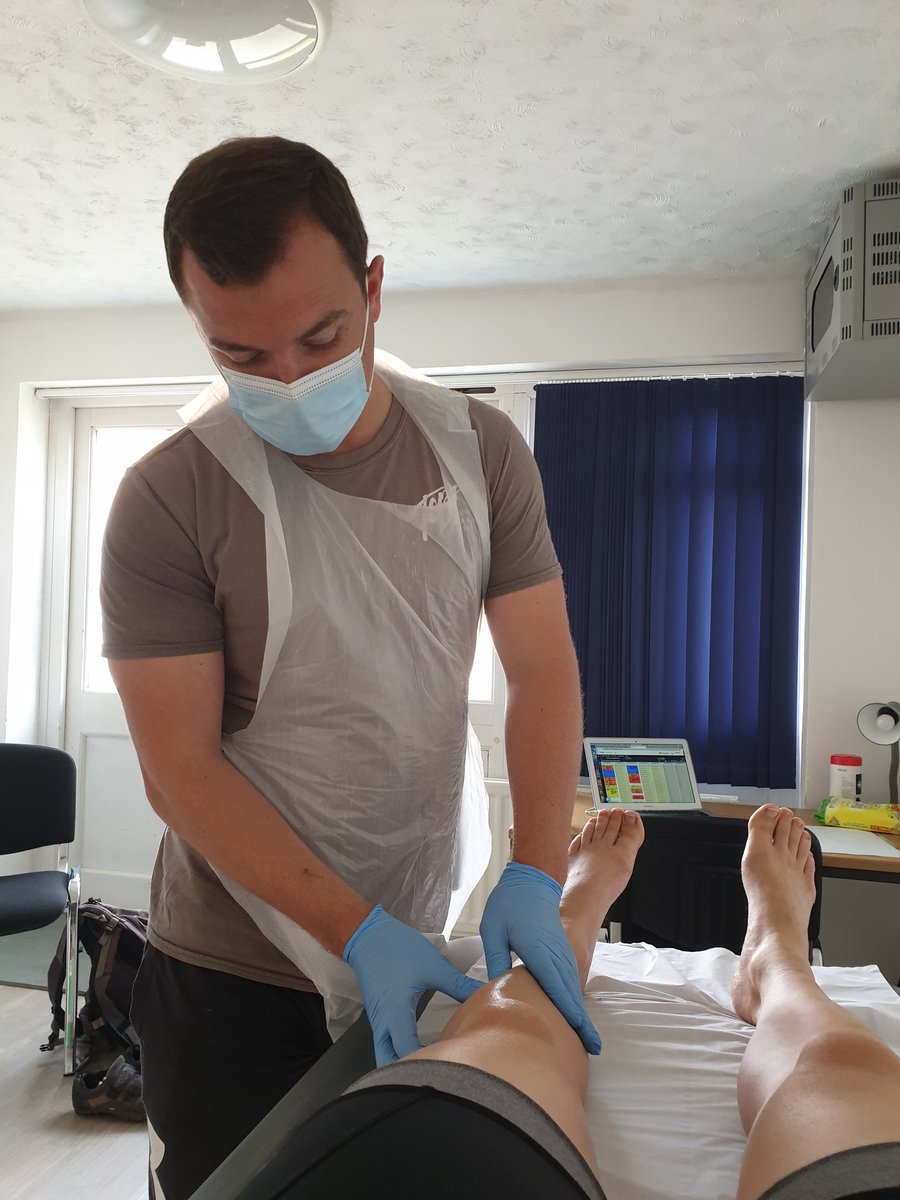
Thanks so much to Dom from @topshealth for helping me get back on the road for my marathon training! Looks like I'll be able to run for @McPinFoundation as planned! 🏃♀️🎉
@movingmedicine Highly recommend this course! It's packed with loads of useful information and skills development so that *all* of us can introduce the idea of becoming more physically active, especially to patients who lose so much through inactivity. Thank you @movingmedicine