Bacterial cell biologist | Biochemist | super-resolution microscopy | scientist at @ThanbichlerLab in collaboration with @SYNMIKRO @mpi_marburg and @Uni_MR 🔬🧬
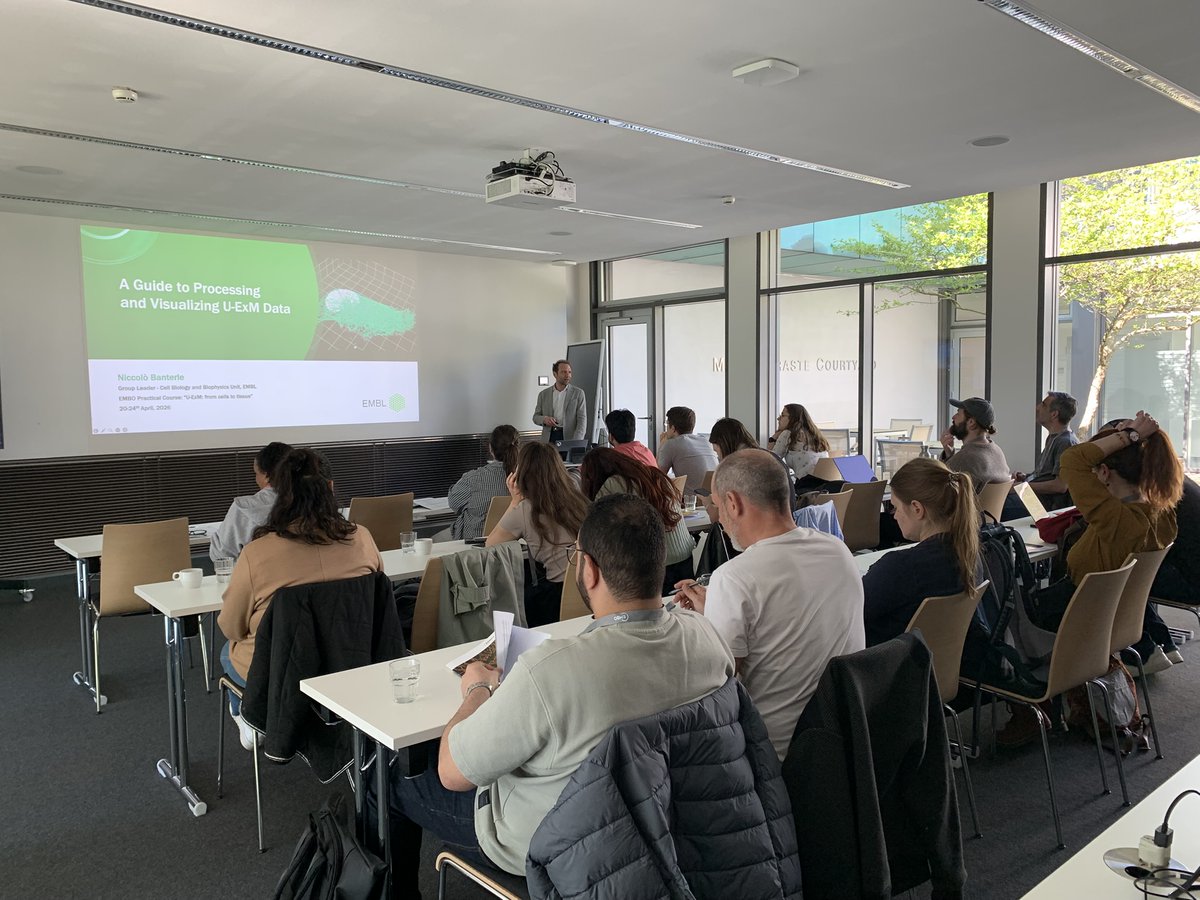
It's a busy day for our #EMBOExM participants! From practicals in the Imaging Centre to fascinating talks in the ATC. Up now: 'A Guide to Processing and Visualizing UExM Data' by Niccolo Banterle 🔬
Incredible.
This is the DNA Repair System. Look how many parts work together to make the system function.
Without DNA Repair, mutations in DNA would completely destroy its functionality very quickly - it would degrade rapidly into non-functional junk. Which means, the DNA Repair System would have to have been around since the very beginning of Life; DNA and the Repair Systems would have to arise together, at the same time, or DNA could not survive - and neither could Life.
But how complex is the DNA Repair System?
It requires 6-7 major systems, working in coordination together. Combined, those systems contain a total of about 130-200+ total unique proteins that make up the systems to do the job.
Two things make this system most likely designed:
1. DNA cannot survive without DNA Repair. The entire system must be in place at the very start of Life, or Life never starts. But creating the systems requires the information in DNA - they both must arise together, simultaneously.
2. The specified, irreducible complexity of the system. DNA Repair requires a minimal amount of specifically engineered protein systems to function. Just look at how many separate systems are involved in that process!
How can anyone see something like this and believe it arose by an accident of natural processes?
Life is so clearly intelligently Created.
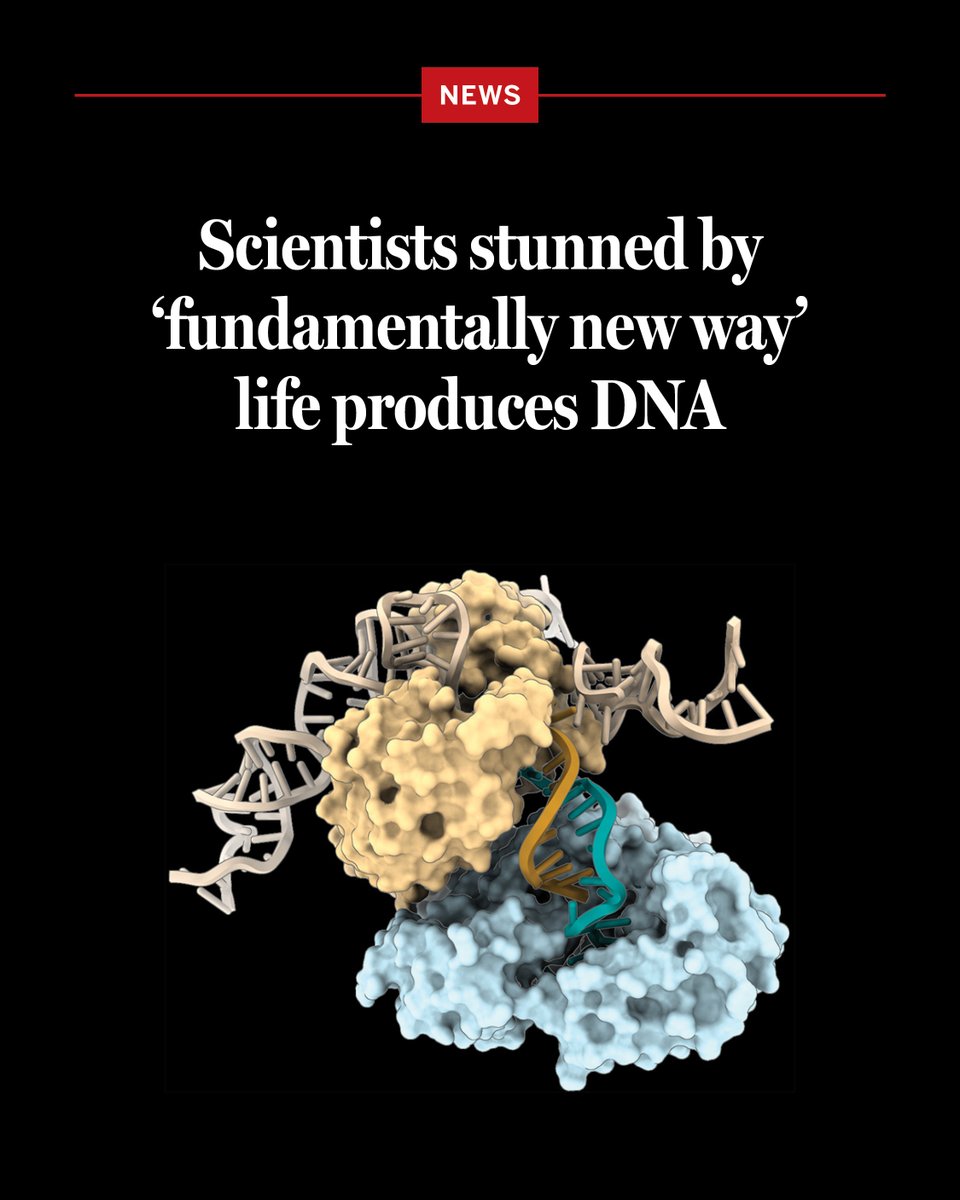
For decades, biology textbooks have enshrined a simple rule: DNA is made by copying a template. After one enzyme unzips a DNA double helix into separate strands, another called a polymerase builds a complementary sequence, base by base, for each strand. Presto: two copies of the original DNA.
But new research into how bacteria defend themselves from viruses now shows this synthesis rule isn’t absolute.
Now, a team describes a bacterial enzyme that synthesizes DNA without a nucleic acid template, using its own structure as a guide.
Learn more: https://t.co/bpVgr0KMdR
The NOMIS & @ScienceMagazine Young Explorer Award recognizes bold young researchers who ask fundamental questions at the intersection of the life and social sciences.
The submission period for this year’s prize ends on 15 May 2026.
Apply today: https://t.co/sCmlvMsZ8g
El volcán Parícutin constituye un caso excepcional en la historia moderna, al haber sido observado desde su surgimiento #UnDíaComoHoy en 1943. Dionisio Pulido, campesino purépecha, fue testigo de este nacimiento. #HistoriasUNAM de #UNAMGlobalTV > https://t.co/PyWMXIeLEE
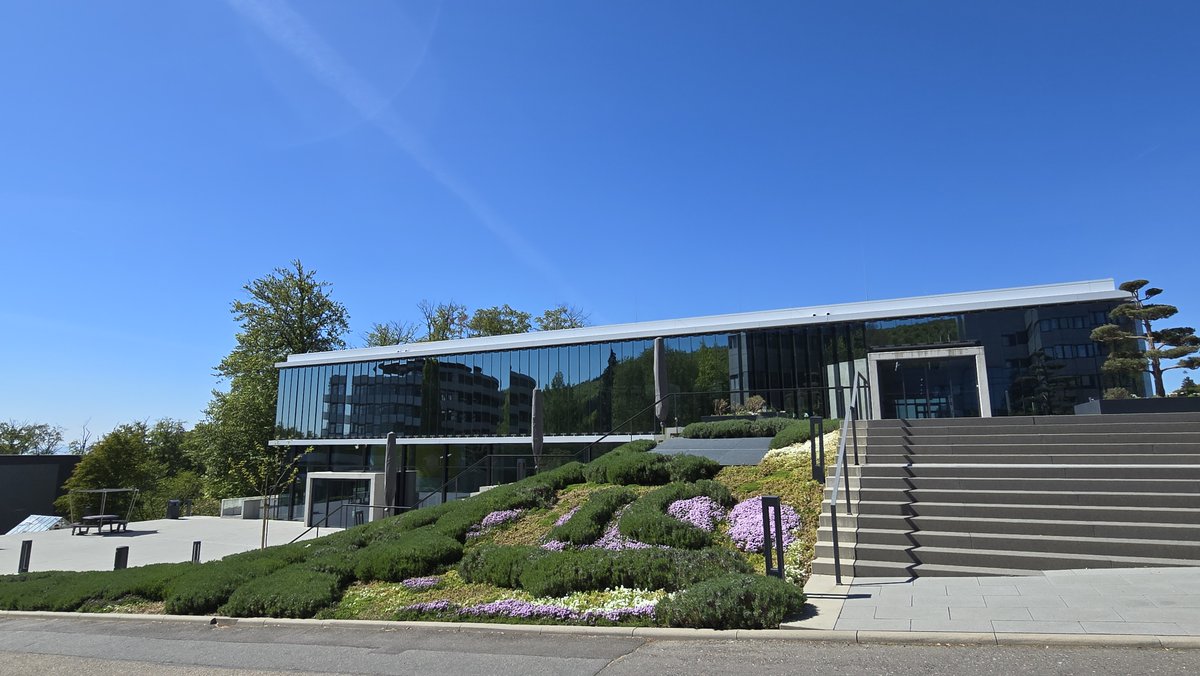
2026 has just begun and we are looking forward to welcoming you to EMBL for another year of groundbreaking science.
Our programme now features even more events, check it out ➡️ https://t.co/6UEBlAc3rI
A toxin-secreting gut bacterium may fuel ulcerative colitis by killing protective immune cells that maintain intestinal homeostasis, according to a new study in Science. The findings suggest potential for new treatment strategies.
📄: https://t.co/U5rEM1FPFe
#SciencePerspective: https://t.co/ALmYoPmZQv
James Dewey Watson – who won the Nobel Prize for his role in divining the structure of DNA; was instrumental in initiating and propelling the Human Genome Project; and who became notorious for his history of racist and sexist comments – has died at 97.
https://t.co/a9AMw6KrIV
The #MaxPlanckPostdocProgram offers a guaranteed contract of at least 3 years, targeted mentoring, and career workshops. The call for applications is open now! 🚀 Take advantage of this opportunity and browse the job vacancies. https://t.co/yWjsq8ld8A
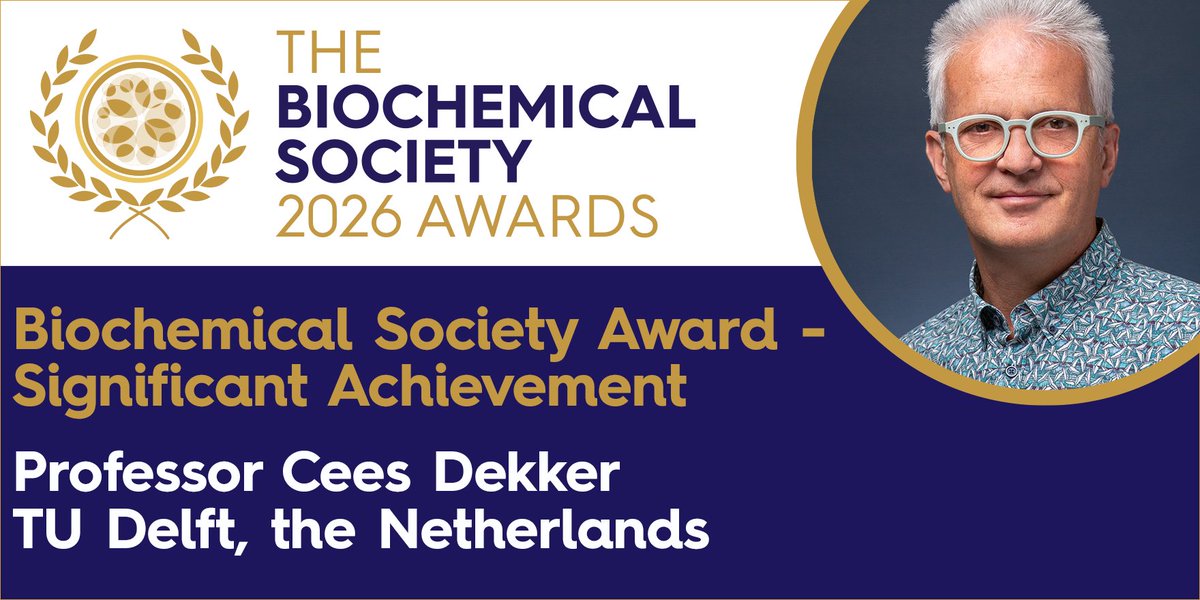
Have you registered for The Biology and Physics of Prokaryotic Chromosomes VII? Taking place between 16-19 September in York, join #BiochemAwards winner @cees_dekker, discussing single-molecule biophysics studies of DNA loop extrusion by SMC motor proteins https://t.co/fwq2gJAXX0
⭐ SAVE THE DATE⭐️
📍 21st VAAM Industry Academia Panel - Bridging Academic and Industry Research:
📅 September 18th, 4:00 pm
💻 Via Zoom
🎯"In vitro Microbiome Models"
Speakers
Philippe Ulsemer, Acaryon GmbH
Michael Schloter, TU Munich
✔️Registration https://t.co/5Tdq5gPK9g
🚀Join us for our 20.🎉
VAAM Industry-Academia Panel
"Synthetic Microbiology Driven Drug Discovery"
We're excited to welcome
🎤 Steven Schmitt - Myria Biosciences AG Basel
🎤 Helge Bode - MPI for Terrestrial Microbiology Marburg
⏰Thu, 17.07., 4 PM CEST
🖍️https://t.co/P2OOyeZEIh
Join the EMBL Conference, “Gene regulation: one molecule at a time”, EMBL Heidelberg, July 15 - 18, 2025. Details: https://t.co/uTy7DF6P0h
#ChemBioChem is proud to be a media partner of EMBL Events #EMBLSingleMolecule
Recent studies show the successful application of Viventis Light Sheet Systems for:
🔹Characterizing in vitro models in liver disease research @nature https://t.co/XGWcnxd18J
🔹Observing early embryo development @embojournal https://t.co/EYa5faaH0e
More: https://t.co/FJKR4SUkTz
📢We are thrilled that our Microbes for Climate (M4C) Cluster of Excellence has been selected for the 2025 Excellence Strategy! 🥳 Together with Philipps University Marburg, we're looking forward to some exciting #microbe research! @maxplanckpress@BangeBalcony#synbio#research