🚨 Advanced #ConservationGenomics | Online, 28 Sept–1 Oct
Learn to translate genomic data into real-world conservation strategies: interpret Ne & genetic load, design SNP panels, and inform monitoring & policy.
https://t.co/FEv3r0CQ6s
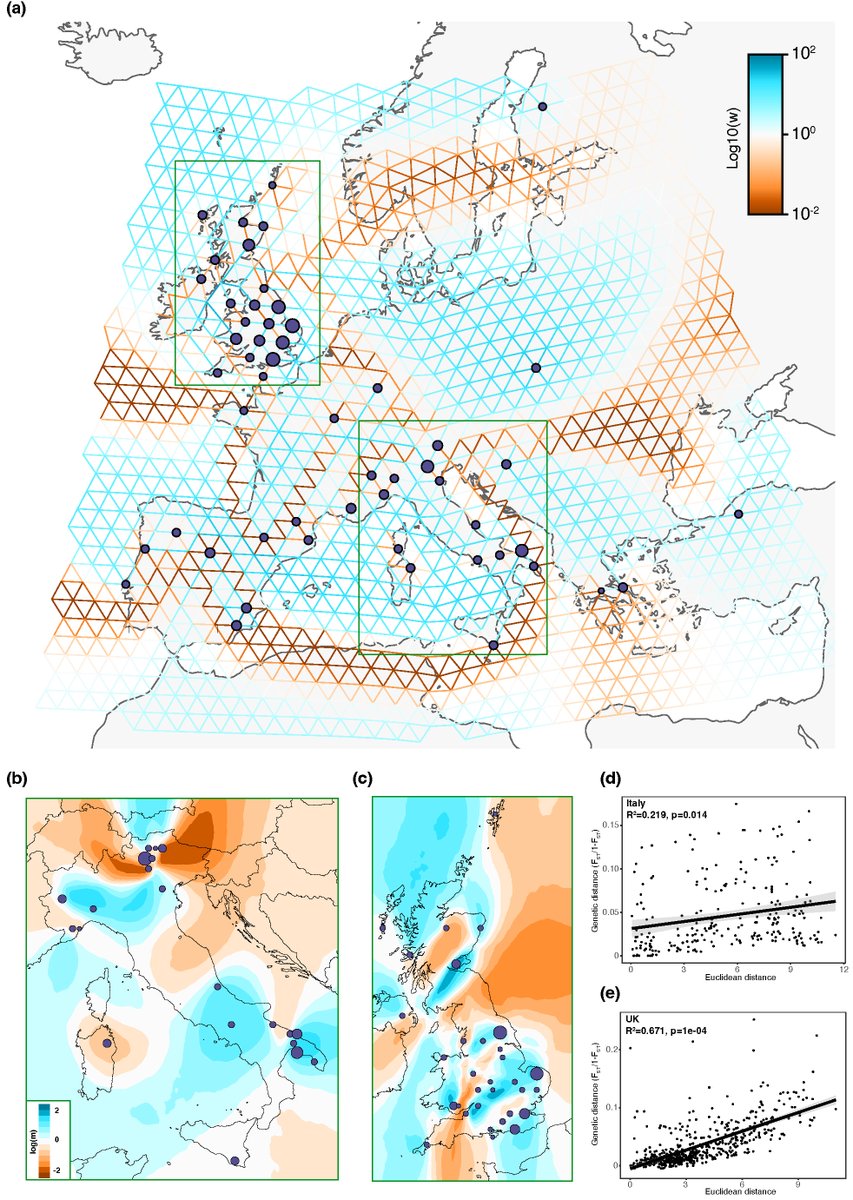
These findings reveal the population structure and adaptive potential of P. spumarius, Europe’s key vector of X. fastidiosa. They highlight the need for targeted surveillance of locally adapted populations and provide genomic tools to monitor vector dynamics and disease risks.
Whole-Genome Population Genomics Reveals Lineage Structure and Adaptive Potential of Philaenus spumarius, the Principal Vector of ... https://t.co/QIRYX6B8IX #biorxiv_evobio
Migration analyses indicate limited long-distance dispersal but strong local connectivity in Italy, consistent with the rapid regional spread of X. fastidiosa. In contrast, we find complex historical gene flow within the UK, suggesting geographic or climatic barriers to movement.
We have a new pre-print!
Here we show how selection may shape behavioral traits in small isolated populations. We also show selective signatures at genes associated with reduced aggressiveness, possibly involving alternative splicing
@maevagabrielli@rsbiello
Don’t miss the first edition of the SIBE Summer School in Ferrara from 7th to 11th September 2025! Registrations are open until 20th of April!
#genomics#pangenomics#conservation@sibe_iseb
We’re delighted to share our latest preprint from the Hogenhout lab (@SaskiaHogenhout, @JohnInnesCentre) on the molecular mechanisms of plant-aphid interactions. We show how the aphid Mp10 effector protein acts as a local anesthetic, suppressing plant perception of aphid attack.
Don't miss @rsbiello presenting our study🧐 on conservation gaps and tends in seahorses 🌊🐴🐠 led by @SznDohrn 🧜♀️ at the free, online BioDiversity Genomics 2024 Conference on Thu Oct 31st in the topical session Marine vertebrate genomics
https://t.co/kdpZPtKndy