A Gentle Introduction to GDAL Part 7: Transforming Data
Which ended up being just as much about remote sensing as it is about GDAL. #remotesensing#dataviz#gdal#foss4g#landsat
https://t.co/WysOjPyasO
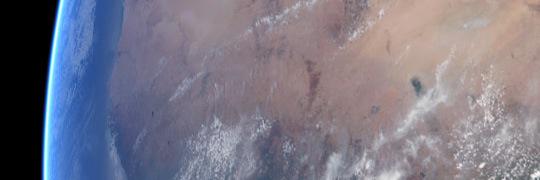
This map is not upside down.
Why do we expect north to be on top? What happens when it's not? And has north always been 'up?'
This beautiful map from @rsimmon provides some cartographic food for thought: https://t.co/RTZBaF6KYO
Ever wondered what the world looks like upside-down*? Now you know! You can even grab a poster-sized copy from the Map Center: https://t.co/m3Ei9HSLv5
#maps#cartography#dataviz
*Not really, north-up is arbitrary.
@marksubbarao Ironic that we created the NASA Earth Observatory because Air & Space wanted $$$$ to do something similar with their Looking at Earth gallery in the late 1990s.
Just about every hurricane forecast map shows you where the storm might go.
Imagine a map that could also forecast who and how many people might be affected, including the portion of those with disabilities, or who lack cell phone or internet access.
That's the goal of Hurricane Aware from @Esri.
https://t.co/kuG9K4oKkW
Satellite imagery from @planet shows Biltmore Village, North Carolina before and after Hurricane Helene came through. The image on the left was taken on 09/28/2024 and the image on the right was taken 09/23/2024.
#HurricaneHelene#Asheville
We had collected an image of the dam in question about 3.5 hours after he tweeted at me - we have two in our open data bucket now if anyone wants to try their hand at change detection. Two 50cm shots taken about 12 hours apart (link in next tweet)
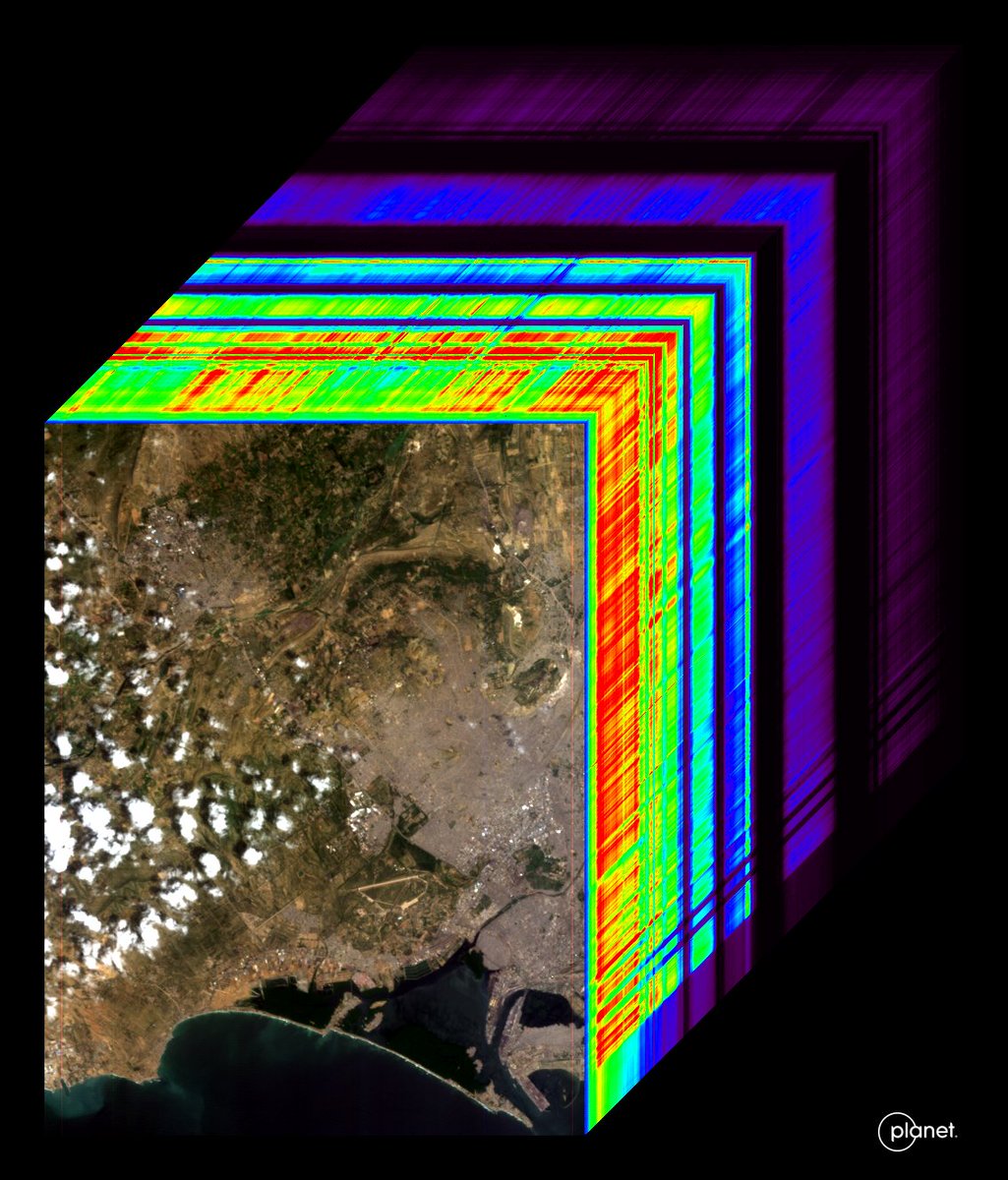
First Light from our first hyperspectral satellite, Tanager-1!
This image is of Karachi, Pakistan on Sept 19th. The image has 420 spectral bands, and here we’re showing one in visible-wavelength, one near-infrared image, and one shortwave infrared image of the same site + the entire ‘datacube.’
An AI field day!!
So pleased with how this instrument is working!
🛰️🧑💻
More details: https://t.co/ryZyzNI2zi
If you’ve ever seen RJ speak, you know how much his enthusiasm for visualization shines through. If you haven’t, this is a great opportunity to find out.
Next week I begin teaching PERSUASIVE DATA GRAPHICS in-person at San Francisco’s fabulous @Lett_Arc using original historic data graphics (and lots of modern digital ones too). There is one seat remaining. Learn more and sign-up here. https://t.co/IE7bGAzx1j
@pdebuyl @NOAA@NASAEarth@PyTrollOrg The GOES image viewer is *so close*. But it doesn’t (AFAIK) give access to data. Just pre-rendered images, often with boundaries overlaid. If you want unadulterated 16-bit images, you need to go elsewhere. Science agencies have the funding if they make it a priority.
New post! I’ve long felt that finding and using satellite data was harder than it should be. Why? And how can we make it easier? My thoughts:
https://t.co/t7NKn19LLA
@postholer Good thoughts! I believe there’s room for a streamlined GUI at least at the agency level. And it’s important to make data accessible in some way to non-programmers.
@lavergnetho For a single-parameter dataset, yes, as bands. I’m not sure if there’s an upper limit but I’m pretty sure I’ve seen 100s in hyperspectral data. Photoshop also supports TIFFs with layers, but I’m not sure how standard that is.
In any case, I prefer file sequences for time series.
@lavergnetho GeoTIFF is my go-to.
I thought CF recommended 0 to 360 for longitude, but maybe that was GRIB? I’ll need to verify.
I haven’t succeeded working with OPeNDAP yet (it’s on my list).