Ini yang sulit diterapkan ya
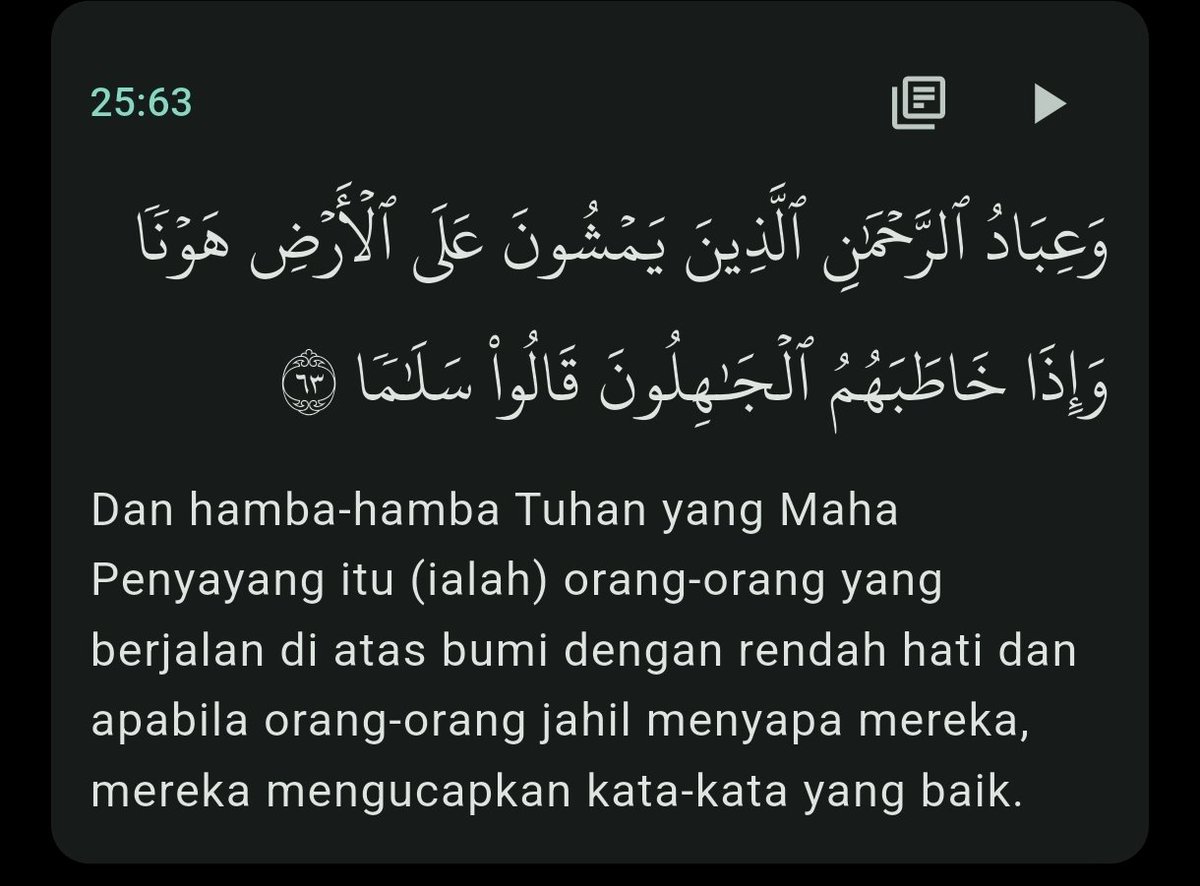
Mengucapkan kata2 yang baik pada yang jahil. Dan juga bersikap rendah hati.
Kalau seseorang itu diolok2 khalayak, kita terbesit ikut mengolok2..
Fatimah (RA) asked the Prophet ﷺ for a servant to ease her work.
He taught her something better. A dhikr to recite before sleeping:
SubhanAllah × 33
Alhamdulillah × 33
Allahu Akbar × 34
(Sahih al-Bukhari 5362)
It's the first dhikr in Daana, and it's waiting for you tonight. 📿
An update since the launch of https://t.co/6tb5y9LCwY
The following collections are now available in English, translated using AI:
Ṣaḥīḥ al-Bukhārī · Ṣaḥīḥ Muslim · Sunan Abī Dāwūd · Jāmiʿ al-Tirmidhī · Sunan al-Nasāʾī · Sunan Ibn Mājah · Muwaṭṭaʾ Mālik · Musnad al-Dārimī · Al-Muʿjam al-ṣaghīr · Sunan al-Dāraquṭnī · Musnad al-Ḥumaydī · Musnad al-Ṭayālisī · Al-Muntaqā · Musnad ʿAbd ibn Ḥumayd · Sunan Saʿīd ibn Manṣūr · Al-Marāsīl li-Abī Dāwūd · Al-Shamāʾil al-muḥammadiyyah.
Following the translation phase, we have started a separate AI review phase.
This review compares https://t.co/6tb5y9LCwY’s English translations with those on https://t.co/HFWF09o2yA, checking both against the Arabic text to identify errors in meaning, omissions, and misattributions. Differences that amount only to wording preferences are excluded.
The review notebook is public:
👉 https://t.co/38DdLYFdnP
Each finding includes the passages compared, the precise location, supporting sources, an explanation, and a proposed correction. Explanations are in English, and the findings can be downloaded as JSON.
The notebook documents the translations before the proposed corrections are applied. These are AI-generated findings, pending independent human validation.
So far, approximately 6,000 texts have been compared out of 36,776 across the seven collections covered by this audit. The notebook will be updated as the review progresses.
Anyone can inspect the comparisons, examine the reasoning, and challenge the findings.
@gading_coder Masih pakai deepseek api, murah & gak pake kadaluarsa/angus kalo lagi gak kepake
Atau ada api based lainnya ya yg lebih oke (biaya & modelnya) ya?
@zainfathoni@idswdev menarik mas 😁 historically proven 👏
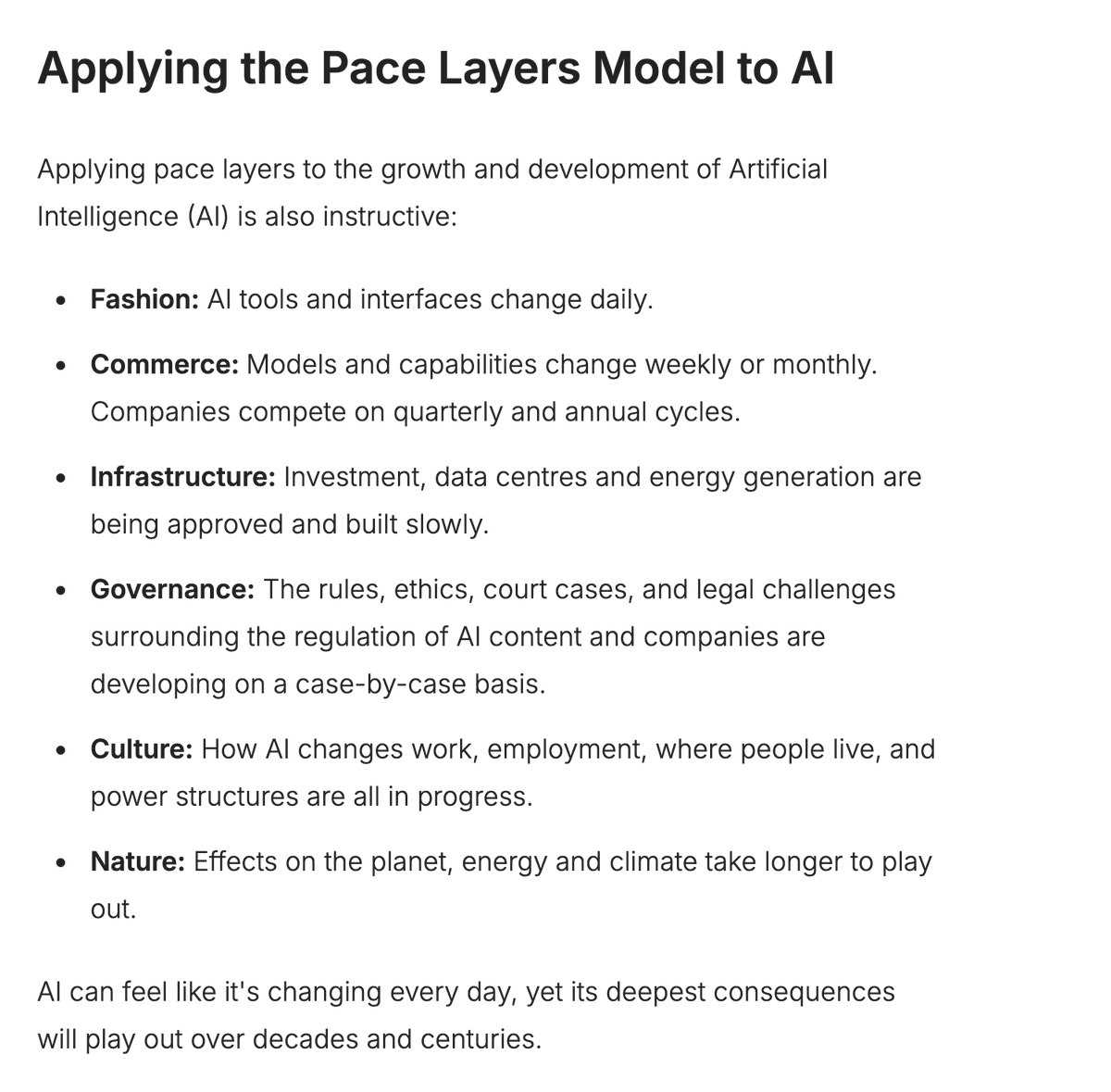
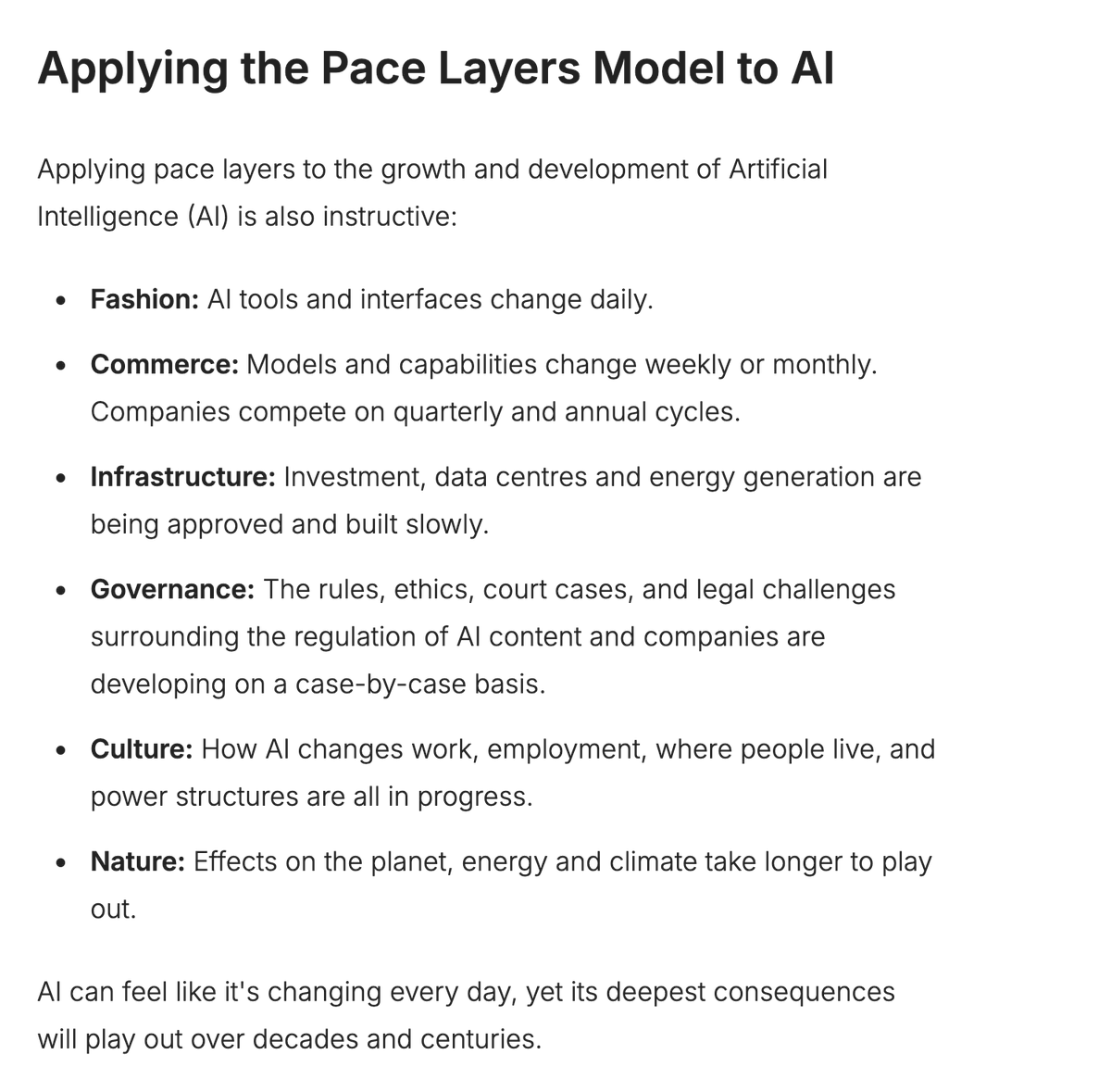
tadi baru baca soal pace layers
humaniora sebagai bagian penting dr inovasi tuh banyak teori yg mendukung ya, sebagai slow layer yg paling lambat pergerakannya, sekaligus menstabilkan teknologi di fast layer
anyway, salam kenal mas zain 🙏
formats evolve over decades, apps over months, intelligence is evolving every day
in terms of pace layers "file over app" defines priorities: invest deeply in formats, and don't expect anything at the intelligence layer to last very long
formats evolve over decades, apps over months, intelligence is evolving every day
in terms of pace layers "file over app" defines priorities: invest deeply in formats, and don't expect anything at the intelligence layer to last very long
remember this? it's finally out!
the big update: real-time memorization mistake detection, running 100% offline.
tracking which verse you're reciting existed before.. the crazy part now is using the exact same tiny offline model (68 mb full, 25 mb lite) for both word-by-word tracking *and* catching mistakes as you recite: wrong words, missed words, extra words, and skipped passages.
zero server, zero api calls, audio never leaves your device. runs in the browser or node, or any app -- it's MIT and CC by 4.0 weights (so any quran app can ship it, without any non-commercial strings attached!).
BUT IS IT ANY GOOD?
on our held-out learner test set it's at 90.3% precision and catches 87.5% of mistakes. on unseen clean recitations false alarms sit at 0.05 to 0.3 per 5 min, though messy phone audio still runs higher (~1.1 per 5 min on stitched sessions).
it flags memorization mistakes only for now (no tajweed or pronunciation grading yet, and fast hadr or kids' voices aren't supported).
how it got here: over 2 weeks an autonomous lab of ai agents tried 884 ideas on the engine, and only 25 made the cut. together they took its mistakes down 78% (chart below). all told, ~$3k of modal gpus and ~$10k of ai inference at api prices.
what i need from you to get this to 1.0:
normal recitations! clean pro reciters are mostly solved. the gap now is everyday people from different backgrounds revising from memory on real phone mics, with different accents, speeds, pauses, and natural self-corrections (we never ask anyone to make deliberate mistakes... just recite the way you normally do).
if you have 2-5 minutes, open https://t.co/S7jpjRiBd2, recite anything you like, and tell us where tilawa got a correction right or wrong. no account needed, private by default with a delete code, and you choose whether it can train future models.
devs (or anyone with an older android/iphone): try the live preview or drop npm i @tilawa/core@next into your app and tell me what breaks!
live preview: https://t.co/IznpSxSh0Z
lend your voice (2-5 min): https://t.co/wQYoo5PJQo
github: https://t.co/QyDRnn6qh8
@AldhitamaR dari alasan yg dipaparkan, lebih butuh belajar lagi abangnya
tp jujur, di sektor hospitality, f&b, entah kenapa pekerjanya lebih banyak yg pakai iphone dibanding android