Thrilled to have contributed to the new IAHR Hydrolink Magazine issue on Remote Sensing! 📢🌊
Download here 👉 https://t.co/ixs1orT5yl
Looking forward to the bright future of remote sensing applications in hydrology & river engineering.
#IAHR#Hydrolink#RemoteSensing#Water
Incredible week at #RiverFlow2026 in Thessaloniki! 🏛️🌊
A massive thank you to our 6 outstanding keynote speakers who brought a unique lens to fluvial hydraulics, with inspiring talks! @IAHR_org @auth_gr
Here's a thread celebrating their brilliance 👇
2/ with this opportunity I want to highlight some recent research we published:
- Valyrakis et al. (2024) on aeolian sediment & plastic debris transport: https://t.co/644REuJlfa
- Bharadwaj et al. (2024) review on scour countermeasures: https://t.co/DhVH0SDi4z
Physical Review Fluids is turning 10 🌊🎉! Chief editors Beverley McKeon and Eric Lauga reflect on the journey so far, and what’s ahead for the journal.
Read at https://t.co/EzjnUBo9pA
#PRF10
River Flow 2026 Tentative Schedule is OUT! 🌊 https://t.co/XWV0uE5uUr
🗓️ June 30: Pre-conference Workshops & Master Classes
🗓️ July 1–3: Main Conference with keynotes by Blom, Franca, He, Passalacqua, Habersack, Sotiropoulos
🗓️ July 4: daily excursion at Vergina
See you at 🇬🇷 !!
River Flow 2026 is proud to announce our distinguished panel of Keynote Speakers comprising of leading experts who will share groundbreaking insights into the future of river hydraulics and sustainable water management 💫💫💫
#IAHRRiverFlow@IAHR
Abstract submission is now open for our #EGU26#Geomorphology session GM2.6 “Measuring & modelling geomorphic processes across scales” (🌍 Vienna, 3–8 May 2026)
Join discussions on #SedimentTransport#morphodynamics#NaturalHazards
📅 Submit by 15 Jan 👉 https://t.co/sVo9gLFsOC
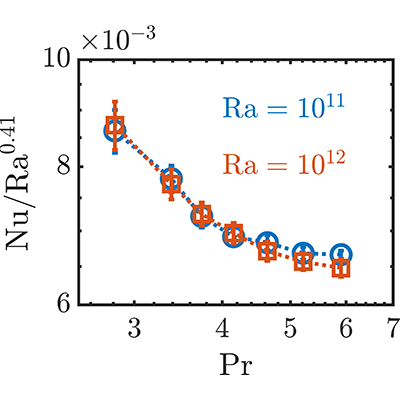
Experiments on rapidly rotating Rayleigh-Bénard convection show that increasing the Prandtl number lowers heat transfer, with stronger dependence than without rotation, linked to changes in thermal & kinetic boundary layer thicknesses.
Editors’ suggestion https://t.co/iG0lFfh6pw
What will the weather be like in 1,000 years? A new machine learning model may be able to tell us while using less power than traditional models.
https://t.co/hU5tYKXsSk
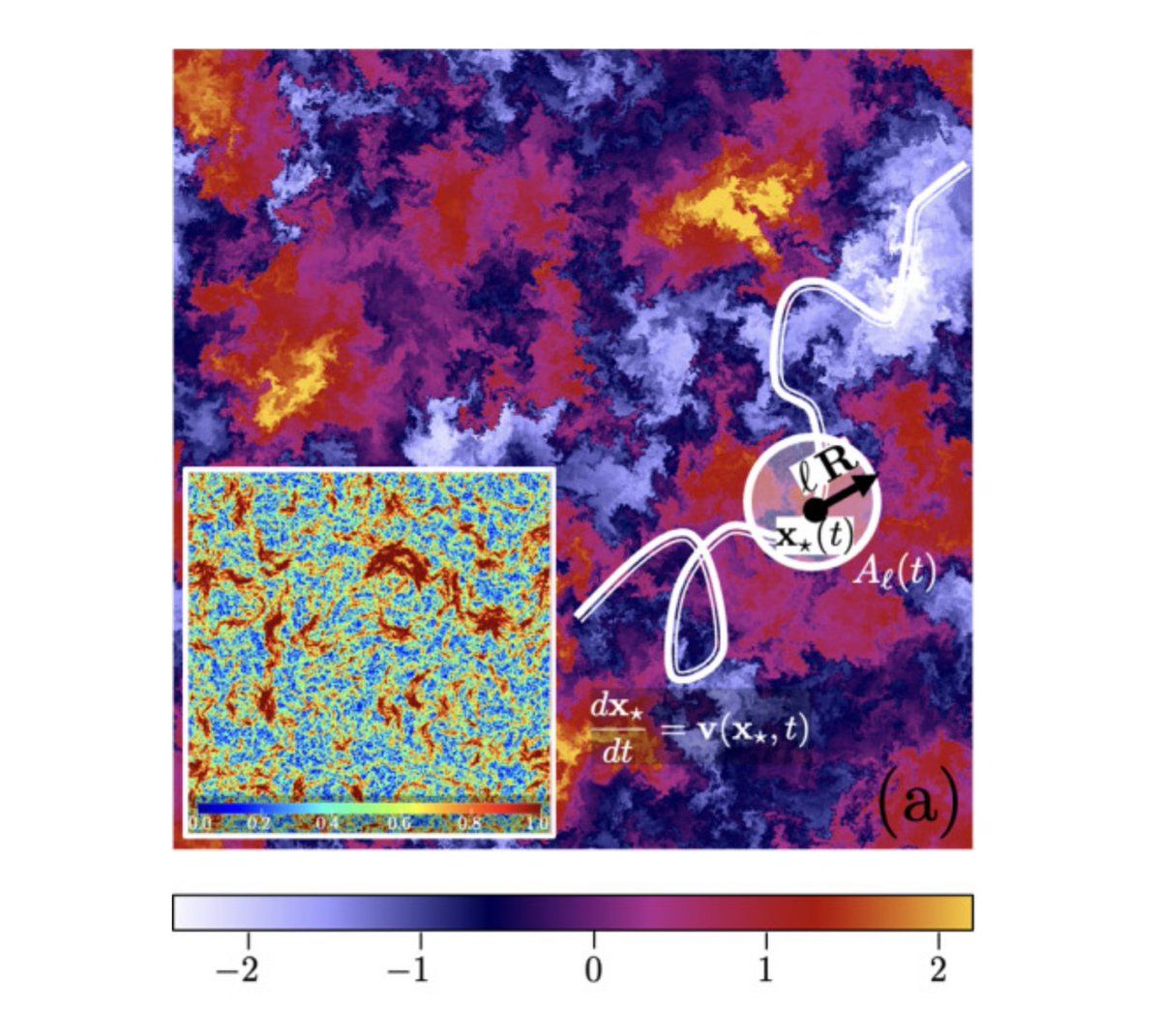
Passive scalars in 2D turbulence display highly intermittent statistical properties, but a hidden symmetry provides a powerful tool to explain their anomalous scaling. Recent simulations show this symmetry restores scale invariance.
Read more at https://t.co/gDNwl5dPE5
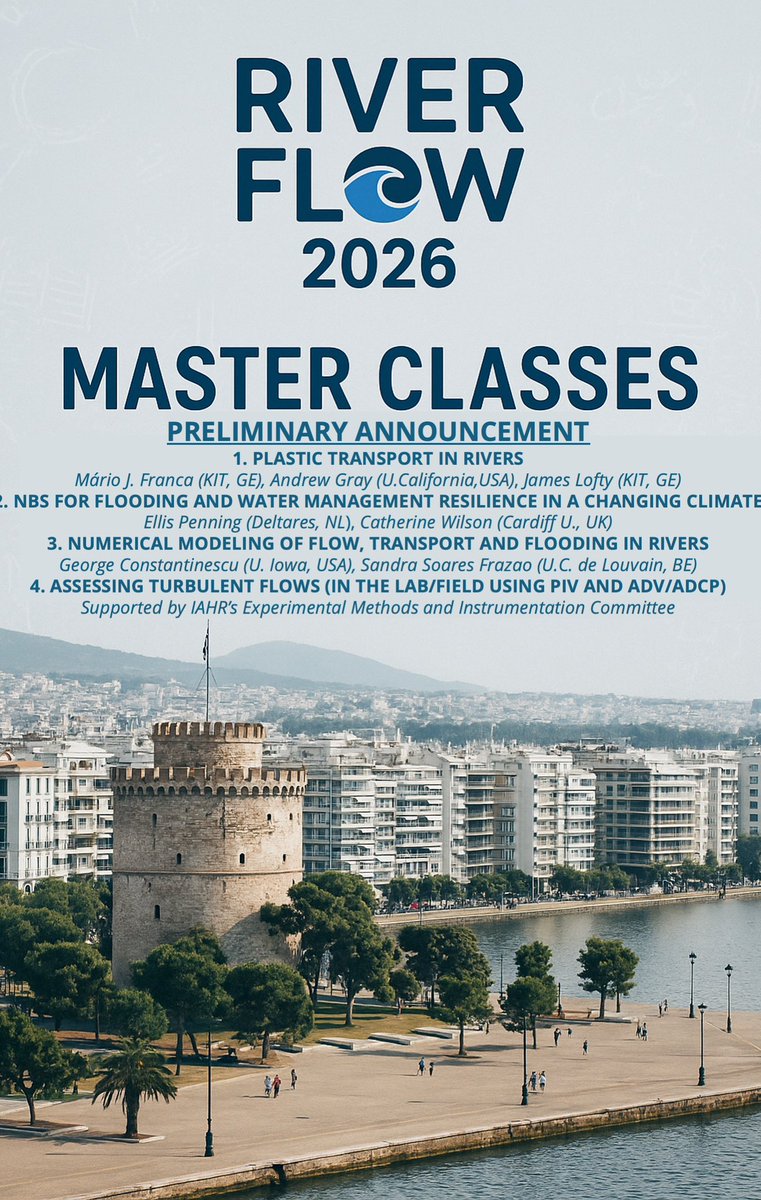
We are pleased to announce some of our Master Classes led by renowned international experts in fluvial hydraulics and river science.
Designed for researchers and professionals, these sessions offer a unique opportunity for interactive learning and professional development 👇👇👇
Help support high-quality science journalism. Please consider a one-time gift, recurring donation, or AGU membership to help Eos continue to provide ethical, accurate science reporting.
https://t.co/OAfrMGsFFA