Almost ten years ago, a one-tusked wild elephant appeared on the scene at Ithumba. She was a very disruptive presence, so the Keepers nicknamed her 'Crazy One.'
Well, how things change! Over the years, the ex-orphans taught Crazy One that the Keepers are kind and to be trusted. She has become a fixture around Ithumba and is just as friendly as one of our orphaned elephants.
When Crazy One first became a mother in 2022, our ex-orphans served as the main nannies to her baby. When she had her next baby in October 2025, she strolled up to the stockades with her two-day-old calf in tow, debuting her newborn just as our ex-orphans do!
Last week, she was at Ithumba again. Welcome back Crazy One!
How Japanese have produced wood for 700 years, without cutting down trees.
Daisugi is an ancient Japanese forestry technique developed in the 14th century originally used by people living in the Kitayama region, because the territory was extremely poor in saplings.
They planted cedars pruned in a special way to produce shoots that eventually would become perfect, straight, knot-free lumbers.
The shoots are gently pruned by hand every two years leaving only the top boughs, allowing them to grow straight. Harvesting takes 20 years and old 'tree stock' can grow up to a hundred shoots at a time.
There was actually another reason why the technique was developed: fashion. In the 14th century, a linear, stylized form of architecture known as sukiya-zukuri (数寄屋造り) became popular, and every prominent samurai or nobleman wanted a house built in this way.
There were simply not enough raw materials available to keep up with demand, so daisugi was developed to produce more wood in a shorter time.
The wood produced with this technique has also impressive qualities: it's 140% more flexible than standard cedar and 200% denser and stronger. And, it's extremely durable.
This tradition from Kukur Tihar, also known as the Festival of Dogs, is part of Nepal’s larger Tihar festival.
It usually happens in October or November on the second day of the five-day celebration. Dogs, both pets and strays, are honored with marigold garlands, a red tika mark on their foreheads, special food, and prayers. This matches exactly what you see in the photo with the flowers and offerings.
In Hindu tradition, dogs represent loyalty and are considered messengers of Yama, the god of death. The festival thanks them for guarding homes and their companionship.
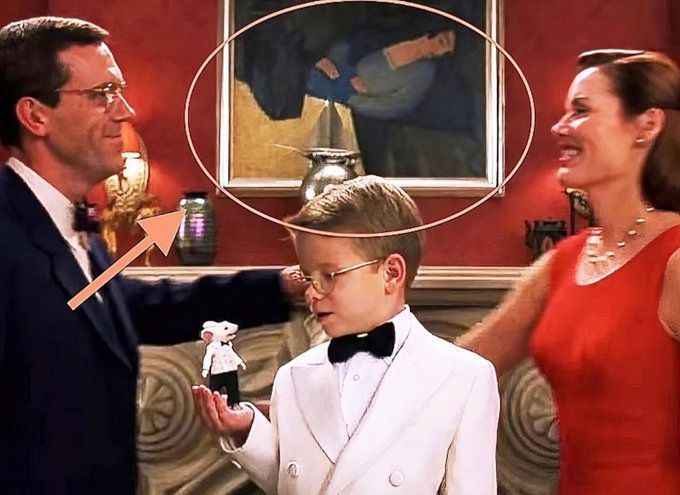
In 2009, while watching "Stewart Little" (1999), Hungarian art historian Gergely Barki saw the painting "Sleeping Lady with Black Vase" by Róbert Berény.
The painting had been missing for 90 years and had been used as a prop for the movie.
Even though it had disappeared in the 1920s, Barki recognized it immediately from a faded black-and-white photo taken at an exhibition in 1928.
He sent a flurry of emails to staff of Sony and Columbia Pictures and received a reply from a former set designer on the film - two years later.
"She said the picture had been hanging on her wall," Barki said. "She had snapped it up for next to nothing in an antique shop in Pasadena, California, thinking its avant-garde elegance was perfect for Stuart Little's living room."
More brilliant film details: https://t.co/us0AWanKHY
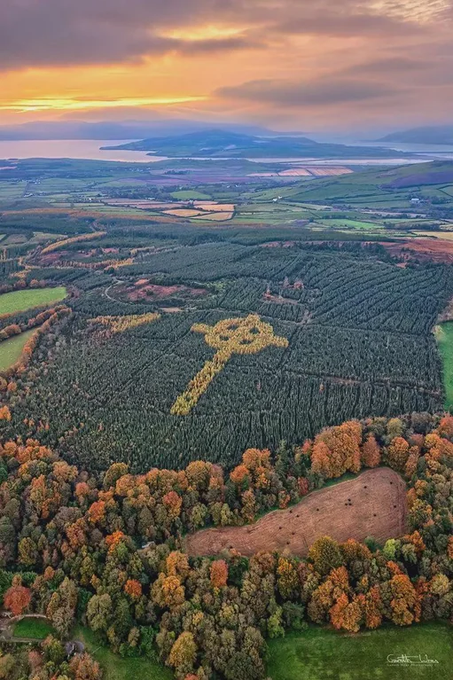
Every autumn, a huge golden cross appears in the forests of County Donegal, Ireland.
3000 Japanese larch trees were planted among pine trees, creating a cross pattern when the larch trees turn yellow.
Claude Mellan's Face of Christ, also known as The Sudarium of Saint Veronica (1649), is one of the most technically extraordinary works in art history...
The entire portrait is rendered using a single, continuous spiralling line that begins at the tip of Christ's nose and expands outward to the edges of the cloth.
Mellan achieved the illusion of depth, shadow, and facial features without any cross-hatching or traditional shading. Instead, he precisely varied the thickness and pressure of the burin (his engraving tool) as he rotated the copper plate, creating "swelling" lines that darken the image where needed.
The spiralling line is estimated to be approximately 150m (about 500ft) long if it were stretched out.
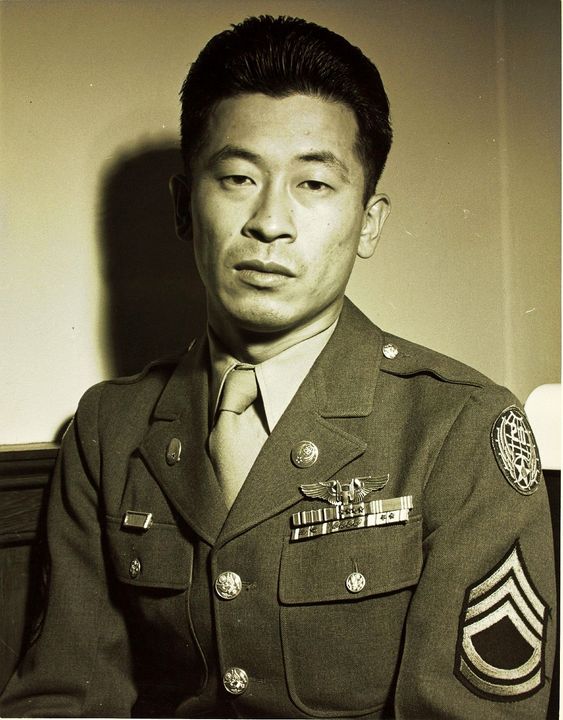
Tech. Sgt. Ben Kuroki was the only Japanese American pilot to participate in Pacific air combat during WWII. Kuroki was also among the rare few who served in both the European and Pacific theaters. Discover his story on the blog: https://t.co/mWnEqRGomj #AAPIHeritageMonth
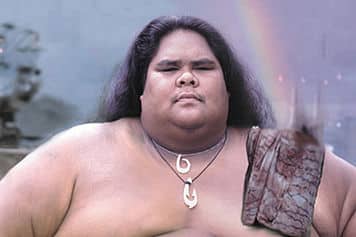
At 3 a.m. one night in 1988, Hawaiian singer Israel Kamakawiwo'ole called a local studio and said he needed to record something immediately.
He pleaded with the engineer: "Please, can I come in? I have an idea."
Kamakawiwo'ole recorded the iconic https://t.co/mUw1amQ68L