announce the player name) is getting very repetitive and monotonous. Have followed you, been a big fan, and been inspired for so many years, but have started noticing this over the last year or so, and exacerbated in today's game.
Just an observation. Not a troll :)
Thank you.
@bhogleharsha if you're reading this, pls consider this a genuine feedback. Not only your words and phrases - (eg sail over) - but also the delivery and tone, (e.g. how you say the word 'over' every single time, how you speak the last word of your phrase, how you 1/2
Proof that bureaucrats are bulletproof. Sanjeev Khirwar, ex-Delhi Principal Secy, famously shunted in 2022 for throwing athletes out of a Delhi stadium so he & his wife could walk their dog, has just been appointed Commissioner of the powerful Municipal Corp of Delhi (MCD).👏🏽🤡
Last one on this topic, and I have been holding this in myself for a while.
For centuries, class divides kept the labor of the poor invisible to the rich. Factory workers toiled behind walls, farmers in distant fields, domestic help in backrooms. The wealthy consumed the fruits of that labor without ever seeing the faces or the fatigue behind it. No direct encounter, no personal guilt.
The gig economy shattered that invisibility, at unprecedented scale.
Suddenly, the poor aren't hidden away. They're at your doorstep: the delivery partner handing over your ₹1000+ biryani, late-night groceries, or quick-commerce essentials. You see them in the rain, heat, traffic, often on borrowed bikes, working 8–10 hours for earnings that give them sustenance. You see their exhaustion, their polite smile masking frustration with life in general.
This is the first time in history at this scale that the working class and consuming class interact face-to-face, transaction after transaction. And that discomfort with our own selves is why we are uncomfortable about the gig economy. We want these people to look our part, so that the guilt we feel while taking orders from them feels less.
We aren't just debating economics. We are confronting guilt. That ₹800 order might equal their entire day's earnings after fuel, bike rent, and app cuts. We tip awkwardly, or avoid eye contact, because the inequality is no longer abstract. It's personal.
Pre-gig era, the rich could enjoy luxury without moral discomfort. Labor was out of sight. Now, every doorbell ring is a reminder of systemic inequality. That's why debates explode. It's not just policy. It's emotional reckoning. Some defend the system (“they choose it”), others demand change (“this isn't progress, its exploitation”).
And here’s the uncomfortable twist: the unsaid ask of clumsy ‘solutions’ isn’t dignity. It is about returning to invisibility.
Ban gig work and you don’t solve inequality. You remove livelihoods. These jobs don’t magically reappear as formal, protected employment the next day. They disappear, or they get pushed back into the informal economy where there are even fewer protections and even less accountability. Over-regulate it until the model breaks, and you achieve the same outcome through paperwork instead of slogans: the work evaporates, prices rise, demand collapses, and the people we claim to protect are the first to lose income.
And then what happens?
The rich get their old comfort back. Convenience returns without faces. Guilt dissolves. We go back to clean abstractions and moral posturing from a distance. The poor don’t become safer, they become invisible again: back in cash economies, back in backrooms, back in shadows where regulation rarely reaches and dignity isn’t even debated.
The gig economy just exposed the reality of inequality to the people who previously had the luxury of not seeing it. The doorbell is not the problem. The question is what we do after opening the door.
Visibility is the price of progress. We can either use this discomfort to build something better (which we keep doing continuously as delivery partners are our backbone), or we can ban and over-regulate our way back into ignorance. One of those choices improves lives. The other simply helps the consuming class feel virtuous in the dark.
So @zomato@zomatocare :
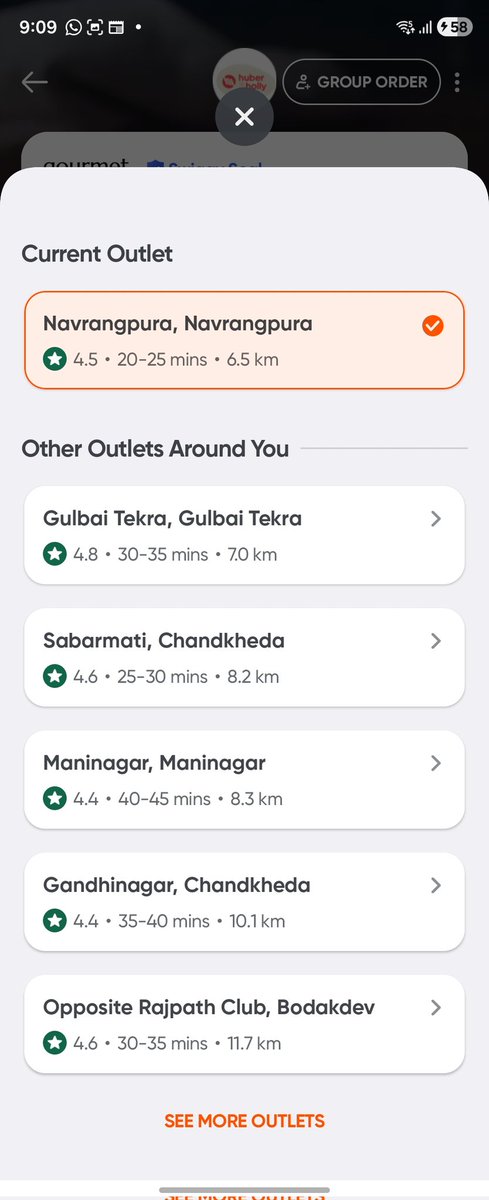
Huber & Holly is 6km from my place. 3 route options on google maps, none more than 6.5km
You conveniently put 7.1km to bypass gold benefits.
Checked @Swiggy and guess what - 6.5km
Ridiculous way to basically cheat and loot @zomato 👏
The country which owns world cricket but still believes it has no leverage in kicking Pak out will naturally believe it has 0 leverage against the economic assault by America
To paraphrase a famous modern guru, leverage is a state of mind
I think India should do everyone a favour and drop out of ICC tournaments for three years. Just a temporary decision, and then let's see what happens.
India is well within its right to not play Pakistan in Pakistan whenever and however they want to. If cricket boards have a problem with that, they can boycott BCCI and play amongst each other. India can poach all international players and just make them play the IPL and other IPL owned franchise leagues. Then they'll realise how much people care about this bullshit when their own players dump their national sides for league cricket money. It's time for a FAFO moment for global cricket.
Sometimes people should be careful what they wish for. India plays Zimbabwe and West Indies consistently to support those boards financially. Check the West Indies directors interview where he acknowledged this fact. Australia never tours these two nations along with Afghanistan. The same Western world has blocked Russia in sports but has a problem when India does it to Pakistan. They can f right off.
India helps Afghanistan (rightly) to build their infrastructure up. Most folks want India to tour them because an Indian team tour is worth its weight in gold. If they cannot respect Indian national security issues, they can take a hike and boycott India while they're at it.
Re civic sense, the Indian state has two options: either make breaking rules costly (which requires actual enforcement) or change social norms at scale (which takes generations). Until then Indian urban life will remain what it has always been—villages on steroids, held together by inertia.
Shri @byadavbjp is the Environment Minister of India. He is busy posting tweets on Modi's visit to Nigeria & election in Maharashtra, but there are no updates on steps taken by his government to curb the air pollution. These works are less important than Mahima Mandan of Modi ji.