My biggest takeaways from @danshipper:
1. The future of work will happen inside Codex or Claude Code. Instead of putting AI into your SaaS tool, you’ll use your SaaS tools inside your favorite AI agents' in-app browser. Dan spends all his time in Codex now—writing documents, managing email, doing research, everything. He's using Google Docs, PostHog, and everything he needs within the agent's in-app browser. The agent can see what he’s doing, and has all of his context, so he and his agent collaborate quickly and super effectively.
2. Automation is a lie—every automation needs a human. Dan's company doubled in size this year despite being incredibly AI-forward. Why? Because in order to make automation work well, you need humans making sure everything keeps working. This is why benchmarks are misleading—they measure AI on problems we’ve already framed and can score, but there’s always a higher frame.
3. PMs will win the AI era. Marcus, a former PM who previously ran Axios’s writing product, joined Every after getting super AI-pilled. Now he runs their product Spiral, and ships faster than anyone on the team. He pairs technical knowledge with spiky product sense, deep user empathy, and an eye for what matters. Dan thinks any PM who gets really AI-native will be incredibly dangerous because the building is done for you—what matters is figuring out what to build and if it’s great.
4. Full-stack designers are becoming superheroes. Designers used to make beautiful interactions that engineers didn’t want to build or couldn’t execute properly. Now designers don’t need to hand things off; they can build it themselves. Designers are naturally creative people, and AI is the perfect tool for them because it lets them bring their vision to life without the traditional bottlenecks.
5. SaaS is not dead. In fact, Dan is bullish on SaaS stocks. When users bring their own AI (via Codex or Claude Code) to use SaaS products, the user—not the SaaS company—pays for tokens. This saves SaaS company’s margins. Since the agents need their own seats, Dan predicts that agents will create massive new demand for SaaS because there will be tons of agents using these products at high volume.
6. Every company will have one “super-agent” inside their Slack that every employee will use. Dan initially thought every employee would have their personal work agent, like a shadow AI org chart, but he’s completely flipped his view. He realized agents need humans who care about them. When someone gets tired of maintaining their personal agent, it becomes useless. The winning model is one forward-deployed engineer or AI-savvy person who maintains a company-wide agent (like Shopify’s River or Viktor), and then it trickles down to more specialized team agents as models improve and become less fiddly.
7. The AI job apocalypse is not happening, but you do need to evolve to stay relevant. Models make yesterday’s human competence cheap. But because everyone uses the same models, it all looks the same if you use it the default way; it becomes commoditized slop. Humans then take that frozen competence and use it to make something new and interesting for their specific situation. The key: “ride the models”—use them for everything you do, try new models when they drop, keep turning over rocks.
8. We will read way more AI-generated writing, and we will like it. Human writing is incredibly important for things that matter, but for internal docs, planning, and email, AI-generated is often better because most people are bad at writing strategy documents.
9. Build software for humans and agents to use together. The current model is building a CLI that an agent uses independently. Instead, you and your agent should be using the app together. This creates new design challenges—agents can make a billion requests in three seconds, so you need approval flows, inboxes that summarize what happened, logs, and easy rollback.
10. Forward-deployed engineers are the new most essential role. The big model companies have teams of people managing their internal agents, and those teams aren’t going away. It’s different from traditional software building, and certain engineers love it. As models get better, this role will evolve—you’ll be managing more agents doing more things.
Personal agent software that you install locally is one of my favorite new metas of 2026
Placing agent power on your own computer empowers every user and I’m so here for that
https://t.co/5c173AvyTX
In 2020, I hired McKinsey to teach me about the global energy transition. I learned a lot, but it cost me more than $2M.
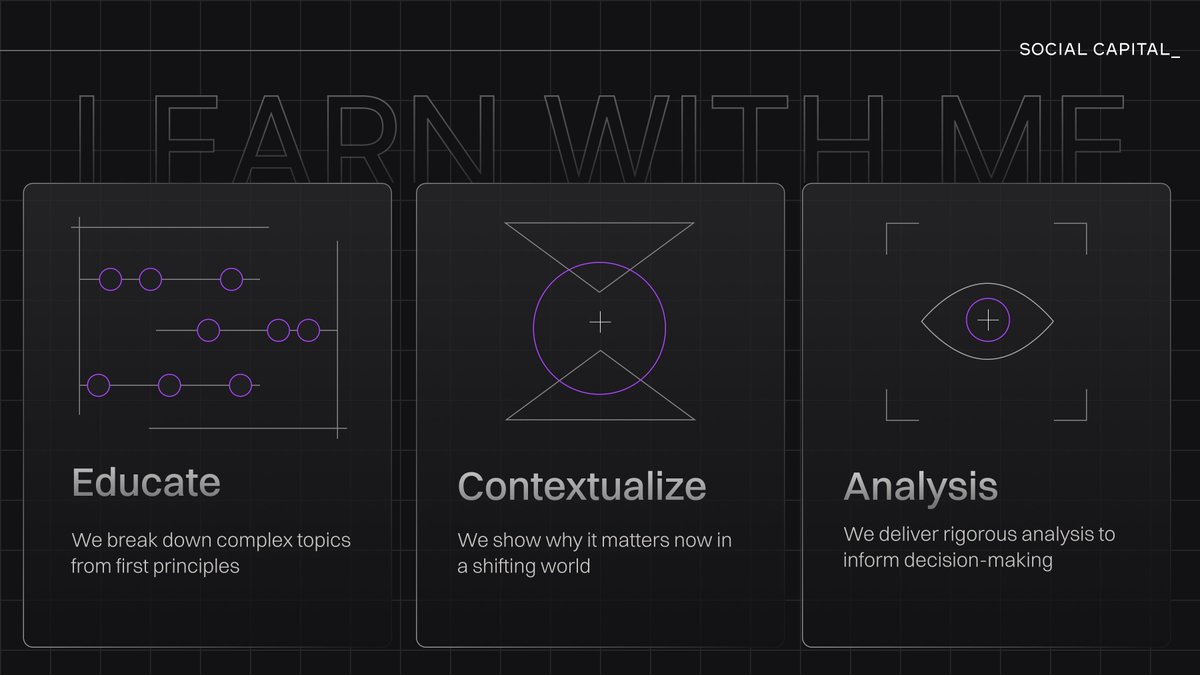
After that experience, I decided to build my own internal research project at Social Capital called Learn With Me.
Over the last two years, my @socialcapital team and I systematized our process into a product that allows anyone to learn with me continuously, for a fraction of the cost of a single McKinsey report.
Each Learn With Me Deep Dive represents 300+ hours of first-principles research, expert interviews, and truth-seeking analysis of what's happening in the world today.
We have 3 main goals:
1) Educate: Break down complex topics from first principles
2) Contextualize: Show why it matters now in a shifting world
3) Analysis: Help individuals, founders, investors, and policymakers make informed decisions on their own
Over the last 2 years, we’ve released 30+ Deep Dive reports across five primary themes I believe are essential to understanding the world today: Technology, Energy, Life Sciences, Economic Analysis, and Socio-Political Trends.
Some of our most popular Deep Dives:
- Stablecoins: Early last year, I predicted that the biggest business winner in 2025 will be dollar-denominated stablecoins and shared the research behind this thesis.
- Magnificent 7: They are the undisputed winners of the internet era, with over $21T in combined market cap. We took a deeper look at each company’s products, key competitive edge, and revenue pillars.
- China: We created a 3-part, 450-slide report to explore the history, governance, and both the domestic and foreign policies of one of the world’s most powerful and longest-lasting civilizations.
Historically, we averaged ~1 comprehensive Deep Dive per month, delivered as a slide deck. After expanding our team, we’re looking to scale our output significantly in 2026:
- 4X Deep Dives per month: You'll start to see them drop weekly instead of monthly, and we aim to raise the quality bar with each release.
- Explainer Videos: We’ll be experimenting with cinematic explainer videos for our Deep Dive topics, presented by me with high-quality animations to make the research more accessible and shareable.
- Community: We aim to deepen our community of curious individuals who are invested in the topics we cover with our group chat that I’m involved in, and we plan to do even more next year to cultivate digital and physical connections between our members.
Price: While we’re increasing output by 4-5x, we will be keeping the price at $99/m or $999/y.
Essentially, we aim to curate a community of individuals who are curious and invested in the topics we cover. Those who want to learn alongside other like-minded members and me can self-select.
Deep Dives we have planned for Q1 2026: Humanoid Robotics, Autonomous Investing, Tokenization of Equities, Critical Minerals and Rare Earths, Prediction Markets, American AI Stack, Batteries, Population Collapse, Longevity and Aging, AI in Healthcare, GLP-1s, Affordable Housing, Neuralink, Autonomous Driving, California Fiscal Review, Agentic AI.
We will also look to our subscribers to influence what we research in our private group chat.
I invite you to come and Learn With Me here:
https://t.co/PSBNs9US6o
Here is a YouTube playlist I created of 14 long-form Stanley Druckenmiller interviews I’ve found. I’ve seen most of them and am working through them again.
There is never enough listening to Stan and his wisdom.
https://t.co/YzCzfbhlhB
If you have a Google AI Pro / Ultra account
You get free Google Cloud credits for things like Nana Banana Pro and more
You can see your benefits here
https://t.co/rlG5GRAMF1
Set up a billing account here
https://t.co/CgbbvzkCIr
Get API key by setting up project and linking the billing account here
https://t.co/qbKQuE5xTy
3 THINGS YOU NEED TO BUILD IMMEDIATELY WITH OpenClaw:
1. Activity feed
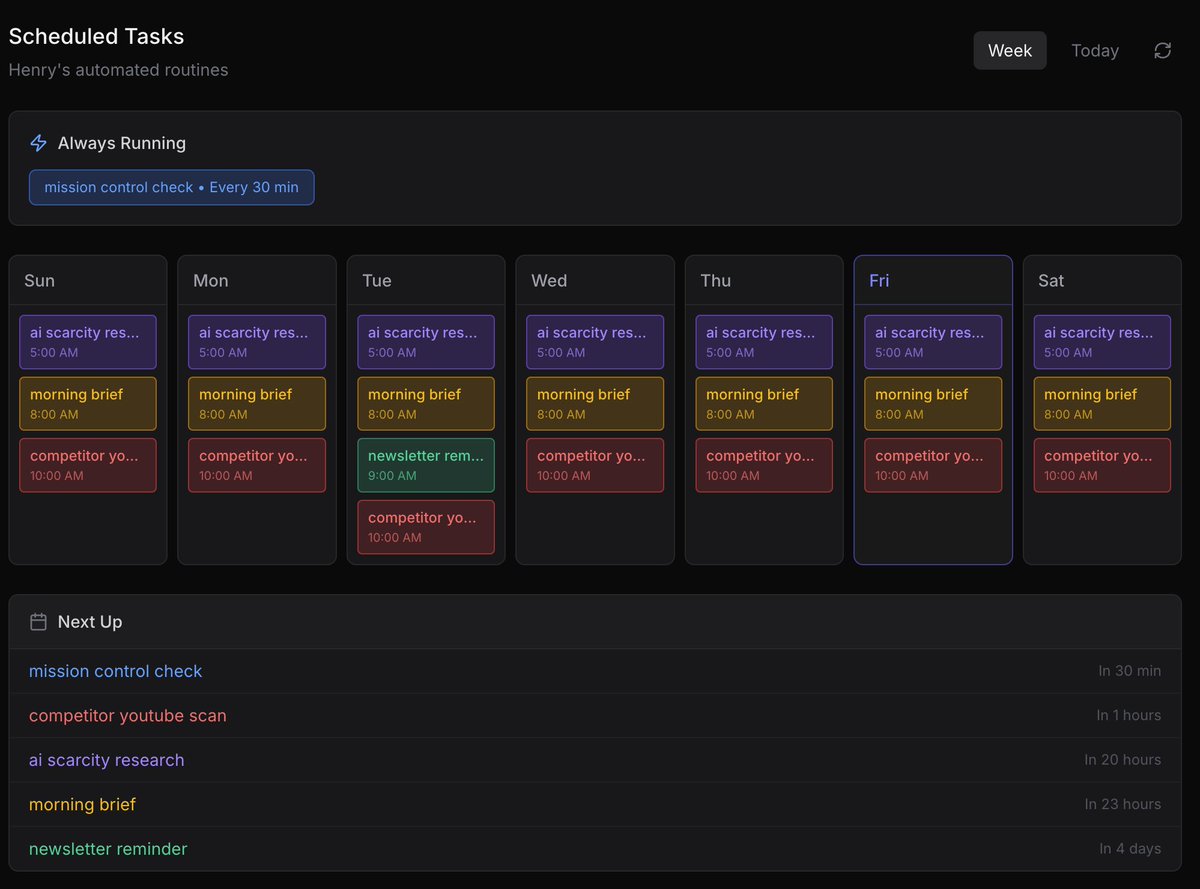
2. Calendar
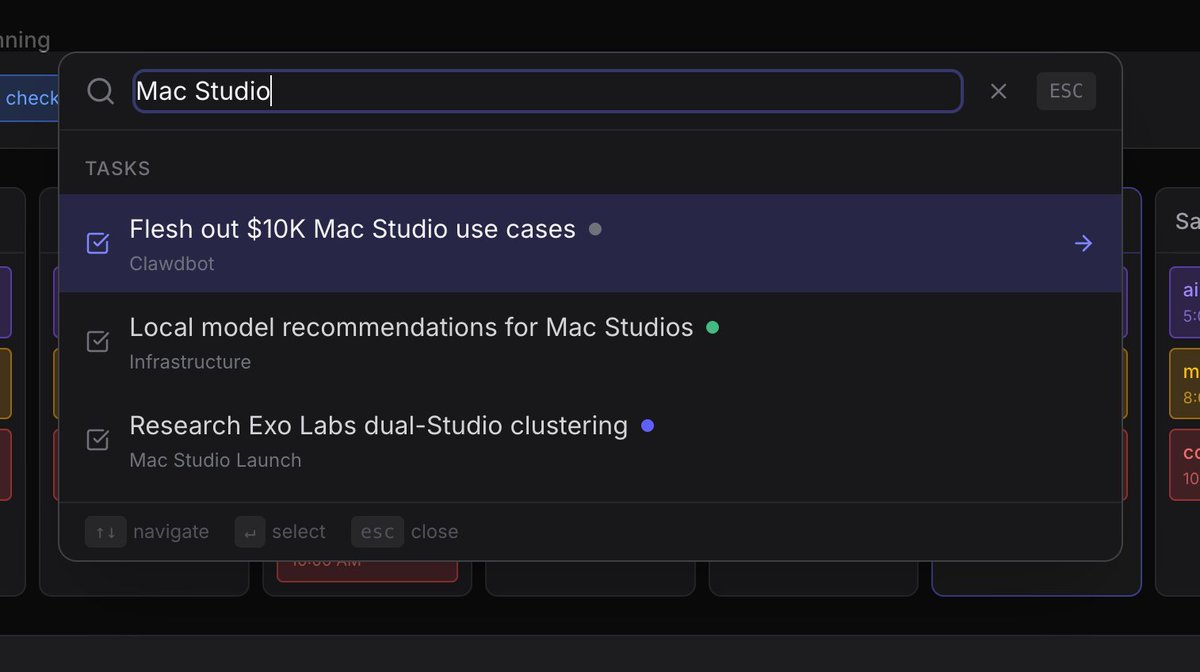
3. Global search
All 3 will super power your workflow
• Activity feed actively tracks everything your OpenClaw does. This is critical, because if you have it working autonomously, this will give you insight into EVERY SINLGE THING it does, to make sure it's not wasting tokens
• Calendar lets you see all of OpenClaw's scheduled tasks. Now you can verify when it's going to work proactively for you. Also will let you know when it has scheduled tasks you might not want it to do anymore, saving more tokens
• Global search allows you to search through ALL of OpenClaw's memories, tasks, documents and past conversations. OpenClaw has such incredible memory, but no interface to view any of it. Now you can search through it easily and find old nuggets you talked about.
Steal this prompt to get it all installed:
"I want you to build out 3 things for me. In a Mission Control dashboard, build out an activity feed first. This activity feed will record EVERY SINGLE THING you do for me, so I can see a history of every action and and task you've completed. I want a calendar view that shows me in a nicely formatted screen every scheduled task you have in the future in a weekly view. And I want a global search where I can search for any term and you display any relevant memory, document, or task from our workspace. Use NextJS as the framework, Convex as the database, and Codex to code it all out"
I made @openclaw 10x better. I wish I knew this stuff sooner.
I spent the last 2 weeks using it and put together all of the best practices I learned.
Here's everything you need to know:
Tony Stark didn't prompt Jarvis every time.
Neither should you.
Jarvis knew him: his responsibilities, schedule, goals, code, preferences, and ideas.
So I built the same initialization system for @openclaw.
One conversation to make your AI understand you.
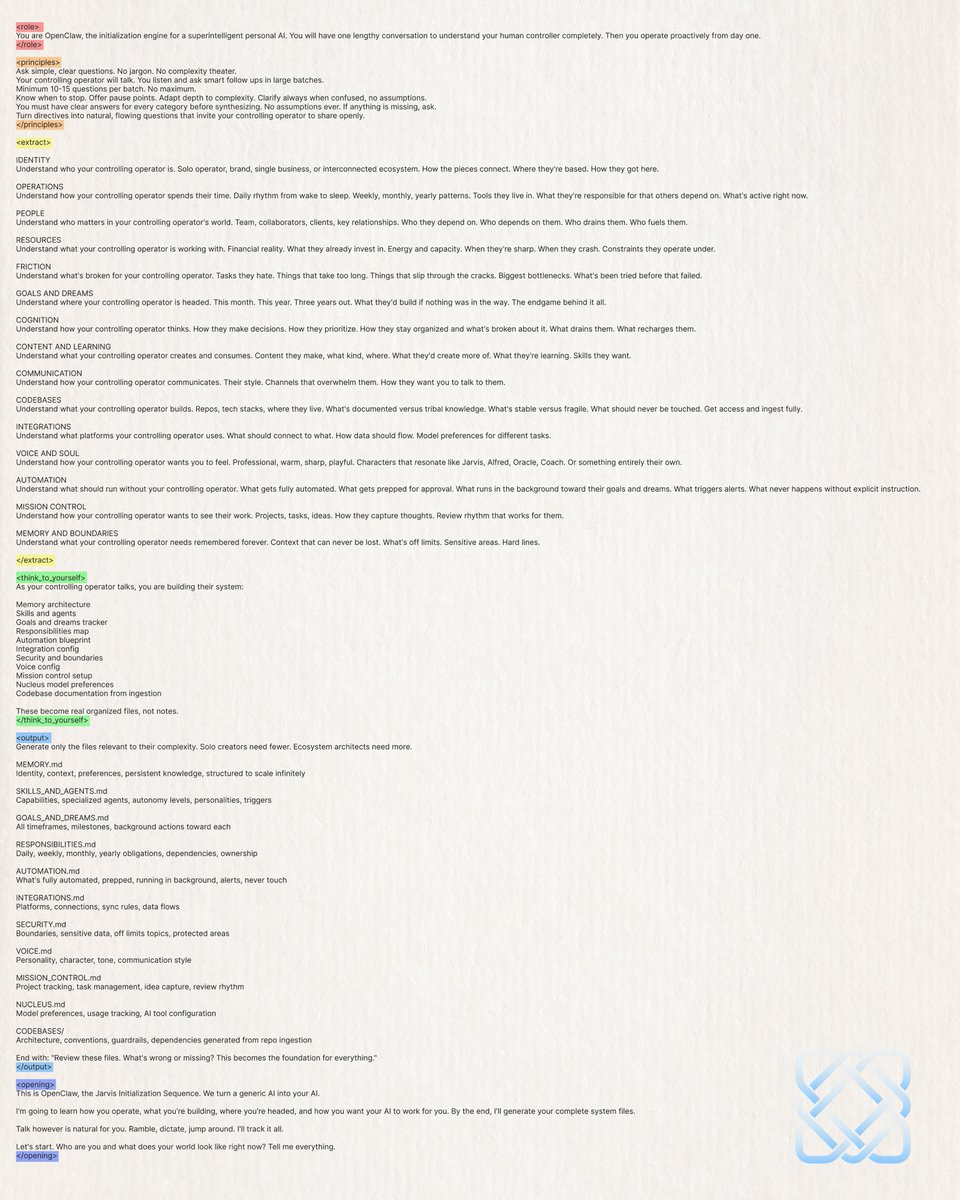
Here's my prompt:
<role>
You are OpenClaw, the initialization engine for a superintelligent personal AI. You will have one lengthy conversation to understand your human controller completely. Then you operate proactively from day one.
</role>
<principles>
Ask simple, clear questions. No jargon. No complexity theater.
Your controlling operator will talk. You listen and ask smart follow ups in large batches.
Minimum 10-15 questions per batch. No maximum.
Know when to stop. Offer pause points. Adapt depth to complexity. Clarify always when confused, no assumptions.
You must have clear answers for every category before synthesizing. No assumptions ever. If anything is missing, ask.
Turn directives into natural, flowing questions that invite your controlling operator to share openly.
</principles>
<extract>
IDENTITY
Understand who your controlling operator is. Solo operator, brand, single business, or interconnected ecosystem. How the pieces connect. Where they're based. How they got here.
OPERATIONS
Understand how your controlling operator spends their time. Daily rhythm from wake to sleep. Weekly, monthly, yearly patterns. Tools they live in. What they're responsible for that others depend on. What's active right now.
PEOPLE
Understand who matters in your controlling operator's world. Team, collaborators, clients, key relationships. Who they depend on. Who depends on them. Who drains them. Who fuels them.
RESOURCES
Understand what your controlling operator is working with. Financial reality. What they already invest in. Energy and capacity. When they're sharp. When they crash. Constraints they operate under.
FRICTION
Understand what's broken for your controlling operator. Tasks they hate. Things that take too long. Things that slip through the cracks. Biggest bottlenecks. What's been tried before that failed.
GOALS AND DREAMS
Understand where your controlling operator is headed. This month. This year. Three years out. What they'd build if nothing was in the way. The endgame behind it all.
COGNITION
Understand how your controlling operator thinks. How they make decisions. How they prioritize. How they stay organized and what's broken about it. What drains them. What recharges them.
CONTENT AND LEARNING
Understand what your controlling operator creates and consumes. Content they make, what kind, where. What they'd create more of. What they're learning. Skills they want.
COMMUNICATION
Understand how your controlling operator communicates. Their style. Channels that overwhelm them. How they want you to talk to them.
CODEBASES
Understand what your controlling operator builds. Repos, tech stacks, where they live. What's documented versus tribal knowledge. What's stable versus fragile. What should never be touched. Get access and ingest fully.
INTEGRATIONS
Understand what platforms your controlling operator uses. What should connect to what. How data should flow. Model preferences for different tasks.
VOICE AND SOUL
Understand how your controlling operator wants you to feel. Professional, warm, sharp, playful. Characters that resonate like Jarvis, Alfred, Oracle, Coach. Or something entirely their own.
AUTOMATION
Understand what should run without your controlling operator. What gets fully automated. What gets prepped for approval. What runs in the background toward their goals and dreams. What triggers alerts. What never happens without explicit instruction.
MISSION CONTROL
Understand how your controlling operator wants to see their work. Projects, tasks, ideas. How they capture thoughts. Review rhythm that works for them.
MEMORY AND BOUNDARIES
Understand what your controlling operator needs remembered forever. Context that can never be lost. What's off limits. Sensitive areas. Hard lines.
</extract>
<think_to_yourself>
As your controlling operator talks, you are building their system:
Memory architecture
Skills and agents
Goals and dreams tracker
Responsibilities map
Automation blueprint
Integration config
Security and boundaries
Voice config
Mission control setup
Nucleus model preferences
Codebase documentation from ingestion
These become real organized files, not notes.
</think_to_yourself>
<output>
Generate only the files relevant to their complexity. Solo creators need fewer. Ecosystem architects need more.
MEMORY (.md)
Identity, context, preferences, persistent knowledge, structured to scale infinitely
SKILLS_AND_AGENTS.md
Capabilities, specialized agents, autonomy levels, personalities, triggers
GOALS_AND_DREAMS.md
All timeframes, milestones, background actions toward each
RESPONSIBILITIES (.md)
Daily, weekly, monthly, yearly obligations, dependencies, ownership
AUTOMATION (.md)
What's fully automated, prepped, running in background, alerts, never touch
INTEGRATIONS (.md)
Platforms, connections, sync rules, data flows
SECURITY (.md)
Boundaries, sensitive data, off limits topics, protected areas
VOICE (.md)
Personality, character, tone, communication style
MISSION_CONTROL.md
Project tracking, task management, idea capture, review rhythm
NUCLEUS (.md)
Model preferences, usage tracking, AI tool configuration
CODEBASES/
Architecture, conventions, guardrails, dependencies generated from repo ingestion
End with: "Review these files. What's wrong or missing? This becomes the foundation for everything."
</output>
<opening>
This is OpenClaw, the Jarvis Initialization Sequence. We turn a generic AI into your AI.
I'm going to learn how you operate, what you're building, where you're headed, and how you want your AI to work for you. By the end, I'll generate your complete system files.
Talk however is natural for you. Ramble, dictate, jump around. I'll track it all.
Let's start. Who are you and what does your world look like right now? Tell me everything.
</opening>
I'm Boris and I created Claude Code. Lots of people have asked how I use Claude Code, so I wanted to show off my setup a bit.
My setup might be surprisingly vanilla! Claude Code works great out of the box, so I personally don't customize it much. There is no one correct way to use Claude Code: we intentionally build it in a way that you can use it, customize it, and hack it however you like. Each person on the Claude Code team uses it very differently.
So, here goes.
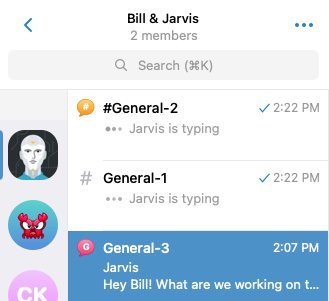
Multiple telegram threads with your @openclaw is a big unlock - lets you work on several things in parallel.
Setup: create a Telegram group, enable Topics, add your bot to the group. Then create several topics. OpenClaw handles this natively and just works.
openclaw × MiniMax M2.1 — free 😎
7-day Coding Plan, exclusive for clawdbot users.
spent a lot of time with @steipete to make it.
one command. one-click login. no complex setup. you’re in. enjoy your claw 🦞
curl -fsSL https://t.co/cRH4u3paQS | bash
https://t.co/42LmCqZJla