The transient gastric blanching with insufflation (increase gastric pressure) that resolves with deflation is "hypothesized" to reflect mesenteric ischemia. Though unvalidated, this has been recently referred to as “MIRacle sign. Some suggest CTA eval.
#Endoscopy#GITwitter
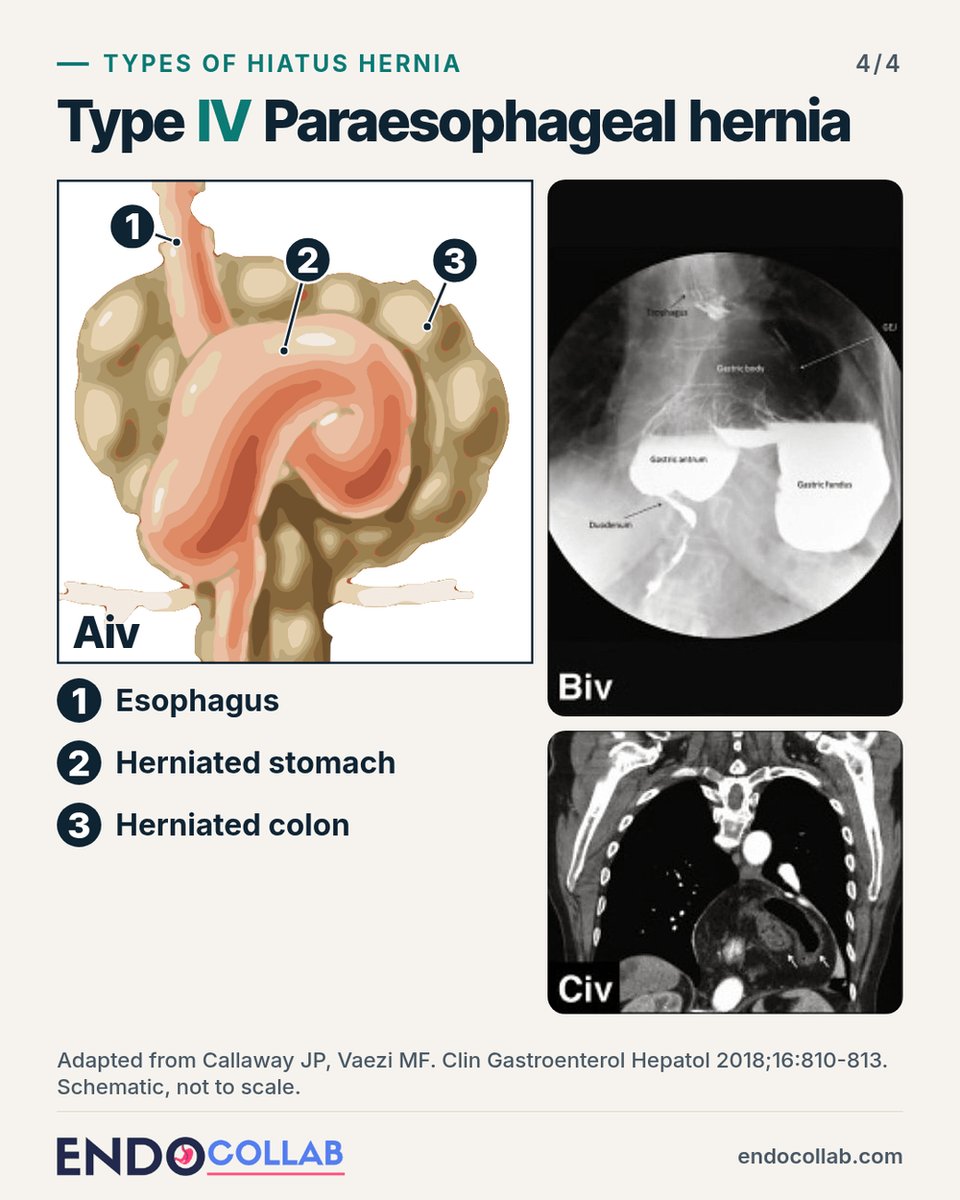
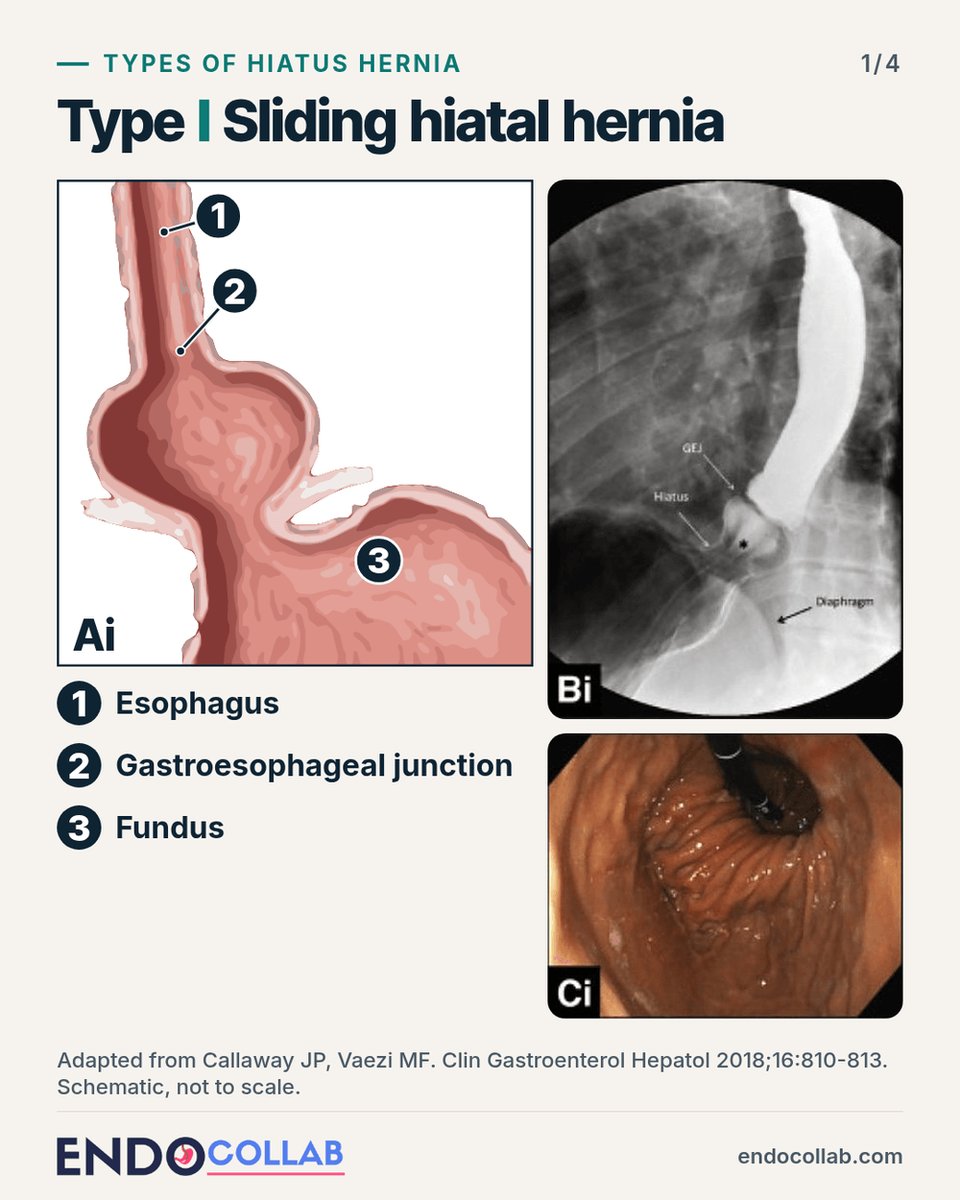
Types of Hiatus Hernia: I to IV
Type I is a sliding hiatal hernia.
Type III is mixed.
Types II and IV are both labelled paraesophageal hernia.
Type IV shows herniated stomach and herniated colon.
Adapted from Callaway JP, Vaezi MF. Clin Gastroenterol Hepatol 2018;16:810-813.
Five endoscopy classifications on one page: Prague, Hill, Forrest, Paris and EREFS.
Barrett's extent, flap valve, ulcer stigmata, lesion shape and EoE findings.
Shared grading means the next endoscopist reads your report the way you meant it.
Papilla morphology by type: Type 1 (regular), Type 2 (small), Type 3 (protruding) and Type 4 (creased/ridged).
For each type the table gives prevalence, cannulation failure (OR, with Type 1 as reference), difficult cannulation and pancreatitis.
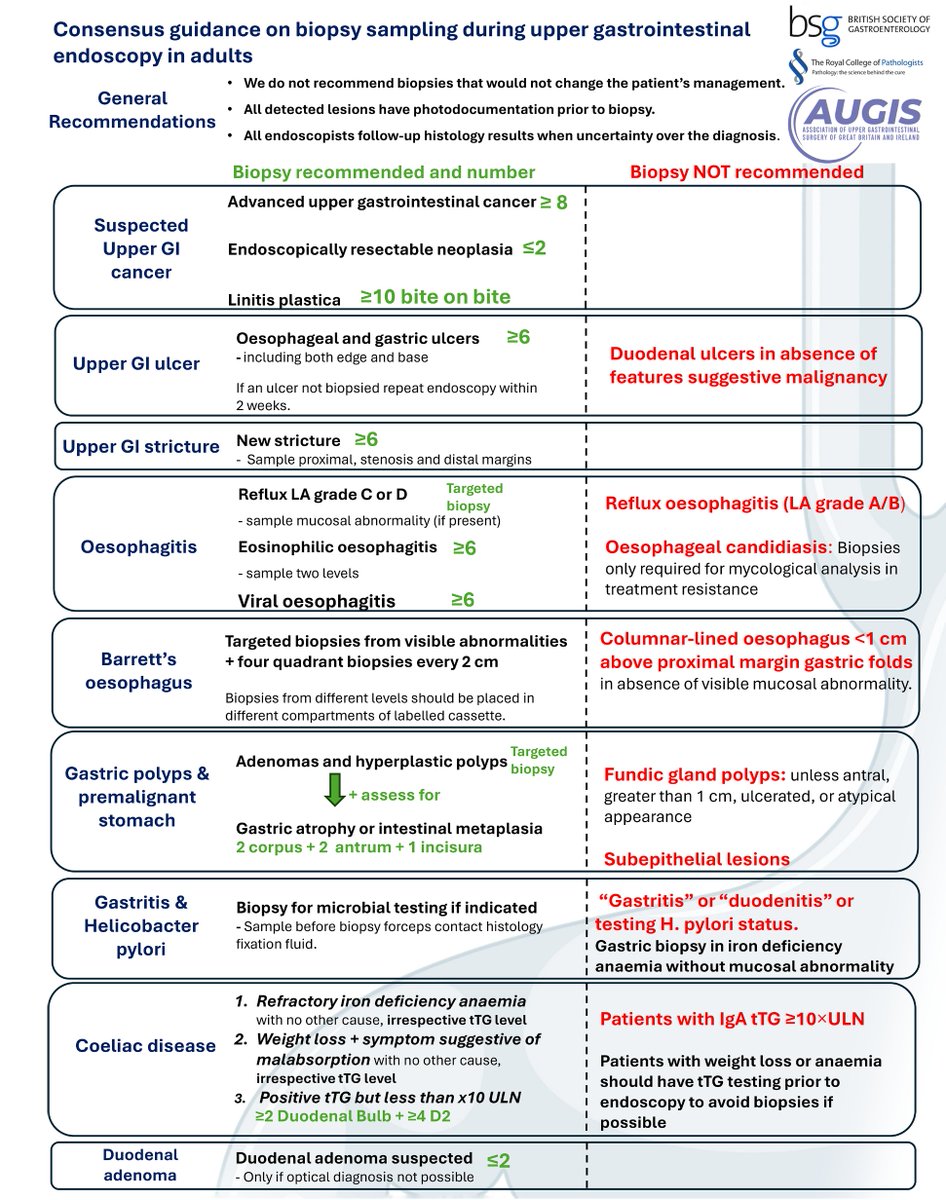
When to take biopsies and when not to in an upper gastrointestinal endoscopy, according to @BritSocGastro
Do you still biopsy subepithelial lesions?
And do you biopsy L.A. grade C/D esophagitis?
doi: 10.1136/flgastro-2025-103316
The recommendations are summarized right here 👇
Calling all ERCP endoscopists! Check out this paper on the use of Needle knife fistulotomy (NKF) in the setting of difficult cannulation, published in the journal.
✅ NKF is an effective method for achieving biliary cannulation in difficult cases on initial attempt (88.5%) and repeat attempt (92.7%), with low risks of pancreatitis (2.4%), bleeding (0.3%) and perforation (0.3%).
📈 Factors associated with higher success and lower complications included ERCP performed for stone disease and Haraldsson type 3 papillae.
⚠️ NKF should be considered early in ERCP where there is difficulty in achieving biliary cannulation, especially where there are favourable characteristics.
https://t.co/JAK9qBCr8S
With thanks to the authors: Wai Liam Lam (@bluewailiam), Michael Ding, Chia Chuin Yau, Roderik Prawiradiradja and Srisha Hebbar (@Srisha_Hebbar).
@PhilSmithIsBack@OTavabie@dr_aditi_kumar@DrJMKennedy@DunnePdj@TrevorTabone@eathar_s@IrenePerezMD@KGananandan@zare_benjamin @medicalreg @dtleiberman@drkeithsiau@DrOmerAhmad@Dunnepdj@shraddha_gulati@CardiffGastro@DrBuHayee@poodocnisha@Sharm_Sub
#ERCP #BiliaryEndoscopy #Pancreatobiliary #HPB #BileDuct #Sphincterotomy #TherapeuticEndoscopy #AdvancedEndoscopy #GIEndoscopy #EndoTwitter
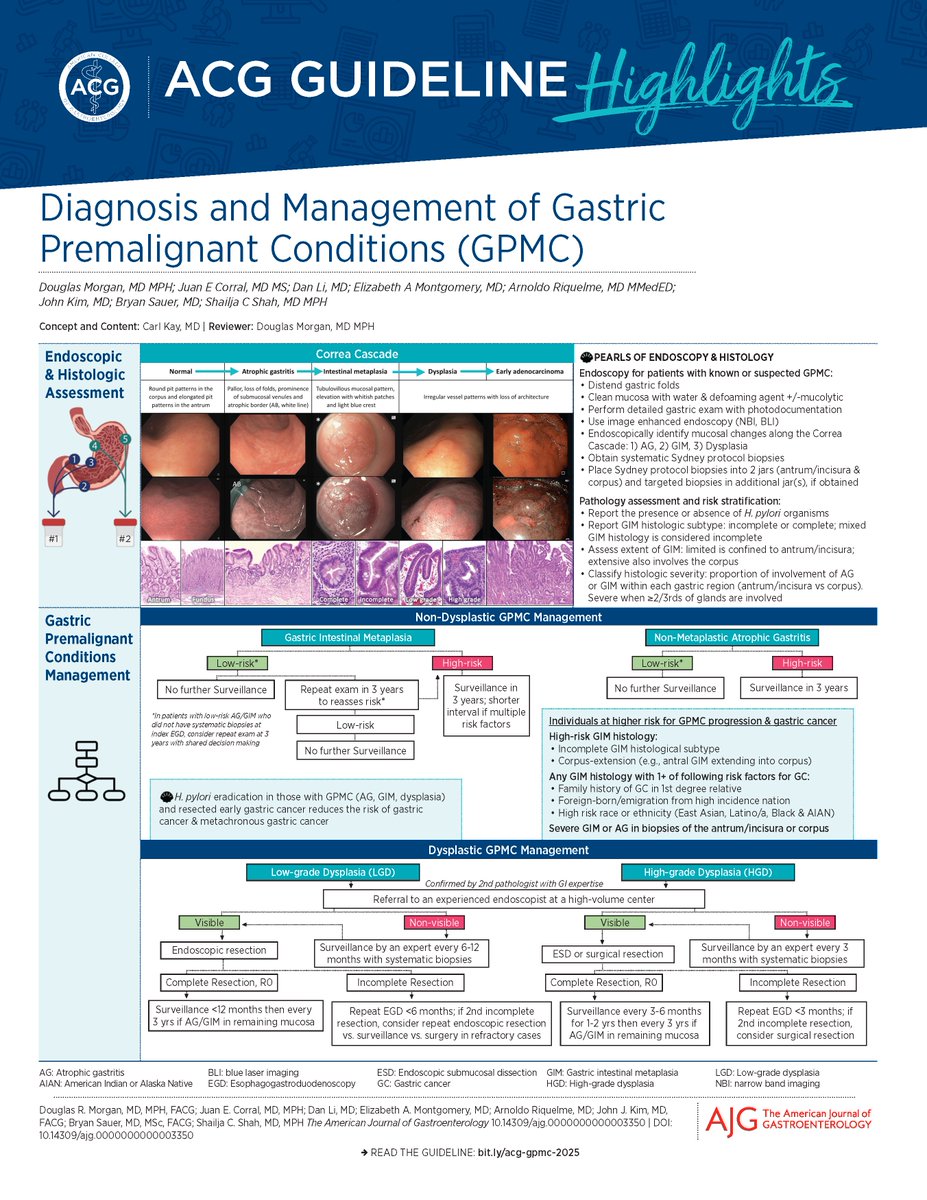
New ACG Guideline Alert!
Gastric cancer rates in the U.S. are 2-13x higher in certain non-White & immigrant populations — yet most cases are caught too late.
The latest @AmCollegeGastro guideline focuses on managing gastric premalignant conditions to change that.
Early detection matters.
https://t.co/LP2P2bXhWe
#GastricCancer #GI #GPMC #guthealth
Online now in GIE’s Articles in Press: "Safety and efficacy of underwater EMR for 10- to 20-mm colorectal serrated lesions (SEA CLEAR study)" by Kosuke Tanaka et al. https://t.co/d5kWgJcjpk
#GITwitter#GIEJournal@japanet10
Cholangiocarcinoma (CCA) is best classified according to the primary, anatomic subtype as intrahepatic CCA (iCCA), perihilar CCA (pCCA) and distal CCA (dCCA).
iCCA is located proximally to the second-order bile ducts within the liver parenchyma.
pCCA is localized between the second-order bile ducts and the insertion of the cystic duct into the common bile duct.
dCCA is confined to the common bile duct below the cystic duct insertion.