Self recommending must-read for Canadians.
“The path Canada is on, economically and culturally, is no longer sufficient to make us a flourishing world class nation.”
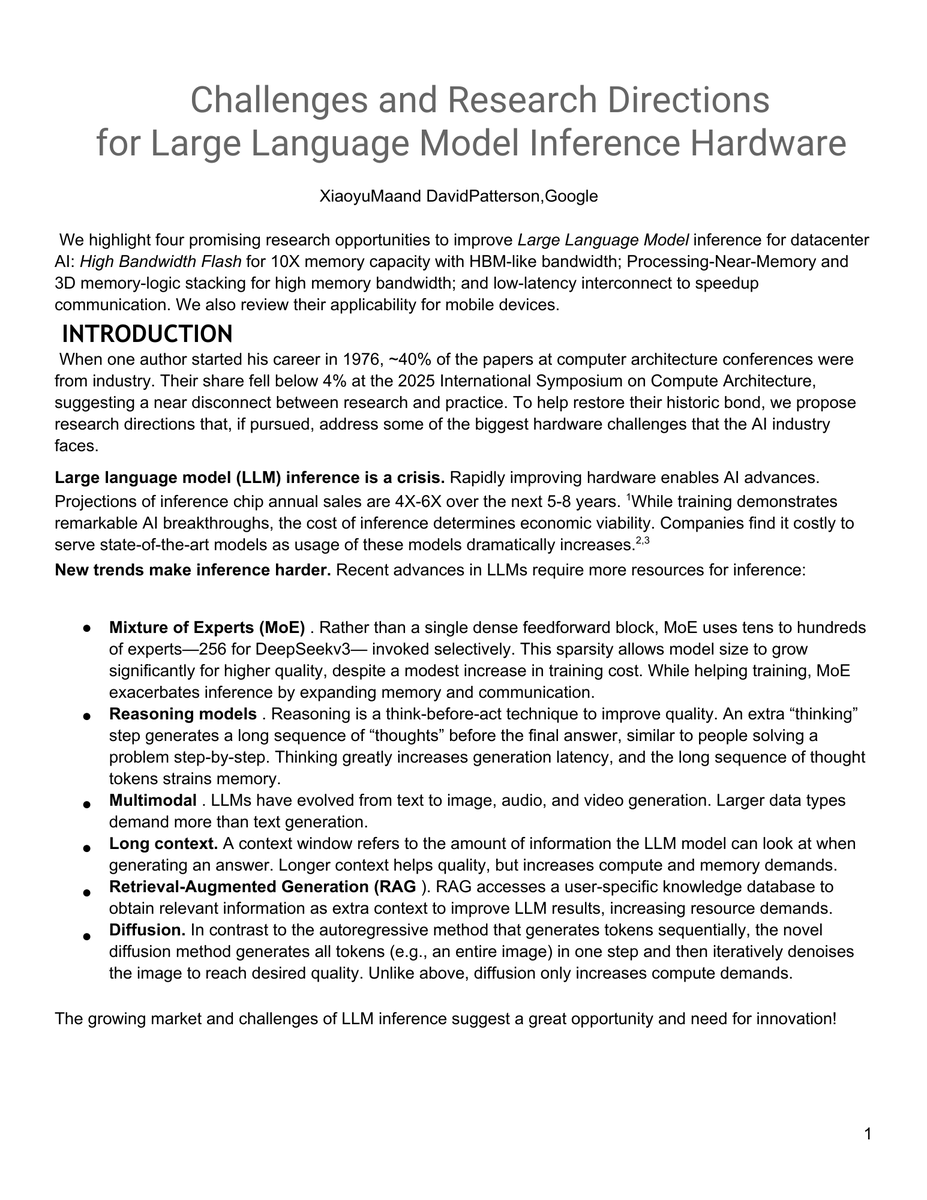
🚨 BREAKING: A Google researcher and a Turing Award winner just published a paper that exposes the real crisis in AI.
It's not training. It's inference. And the hardware we're using was never designed for it.
The paper is by Xiaoyu Ma and David Patterson. Accepted by IEEE Computer, 2026.
No hype. No product launch. Just a cold breakdown of why serving LLMs is fundamentally broken at the hardware level.
The core argument is brutal:
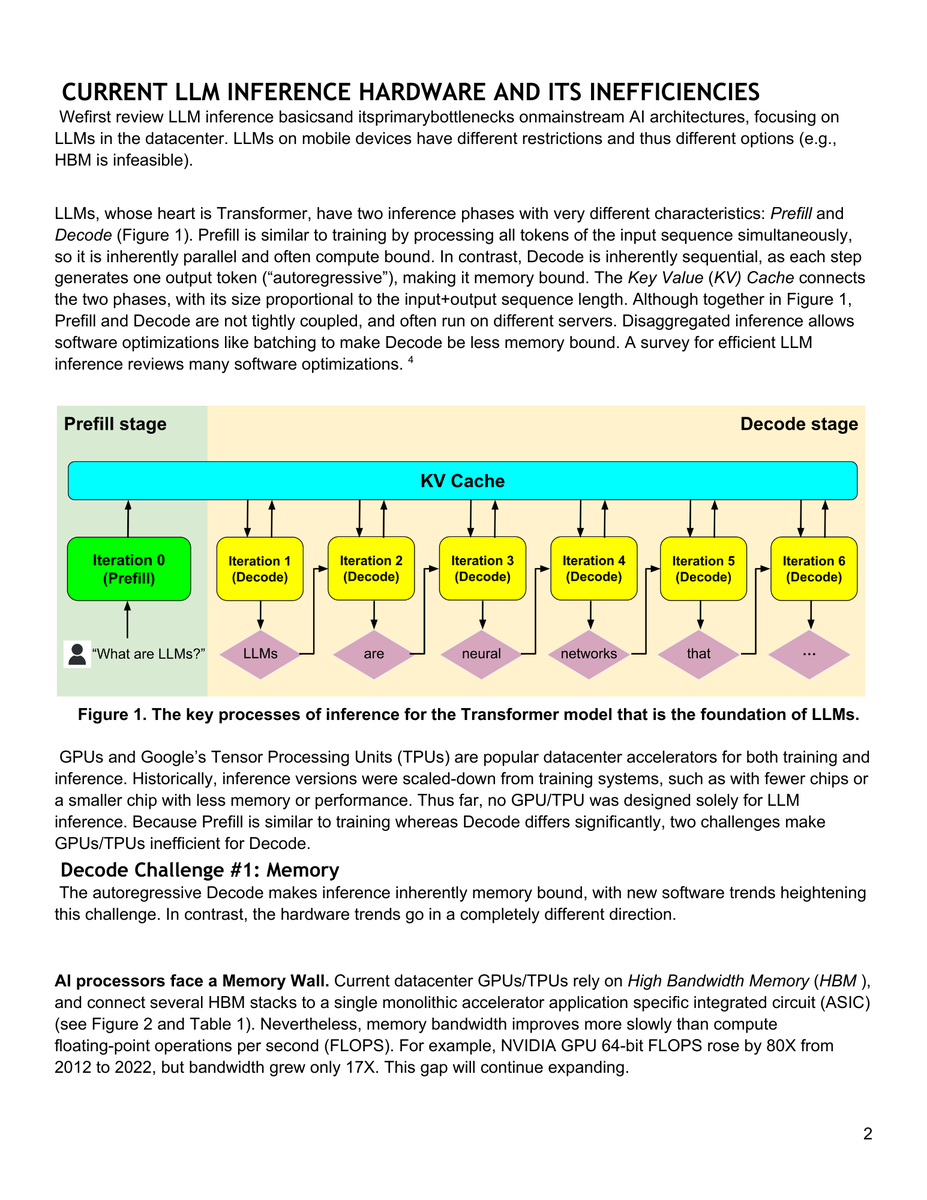
→ GPU FLOPS grew 80X from 2012 to 2022
→ Memory bandwidth grew only 17X in that same period
→ HBM costs per GB are going UP, not down
→ The Decode phase is memory-bound, not compute-bound
→ We're building inference on chips designed for training
Here's the wildest part:
OpenAI lost roughly $5B on $3.7B in revenue. The bottleneck isn't model quality. It's the cost of serving every single token to every single user. Inference is bleeding these companies dry.
And five trends are making it worse simultaneously:
→ MoE models like DeepSeek-V3 with 256 experts exploding memory
→ Reasoning models generating massive thought chains before answering
→ Multimodal inputs (image, audio, video) dwarfing text
→ Long-context windows straining KV caches
→ RAG pipelines injecting more context per request
Their four proposed hardware shifts:
→ High Bandwidth Flash: 512GB stacks at HBM-level bandwidth, 10X more memory per node
→ Processing-Near-Memory: logic dies placed next to memory, not on the same chip
→ 3D Memory-Logic Stacking: vertical connections delivering 2-3X lower power than HBM
→ Low-Latency Interconnect: fewer hops, in-network compute, SRAM packet buffers
Companies that tried SRAM-only chips like Cerebras and Groq already failed and had to add DRAM back.
This paper doesn't sell a product. It maps the entire hardware bottleneck and says: the industry is solving the wrong problem.
Paper dropped January 2026. Link in the first comment 👇
I can't believe humans were gifted a planet full of famine, disease, and death and invented fusion, vaccines, moon rockets, and so much food that most people die from obesity.
your timeline convinced you AI is in a bubble. talk to a boomer above the age 35 for 5 minutes.
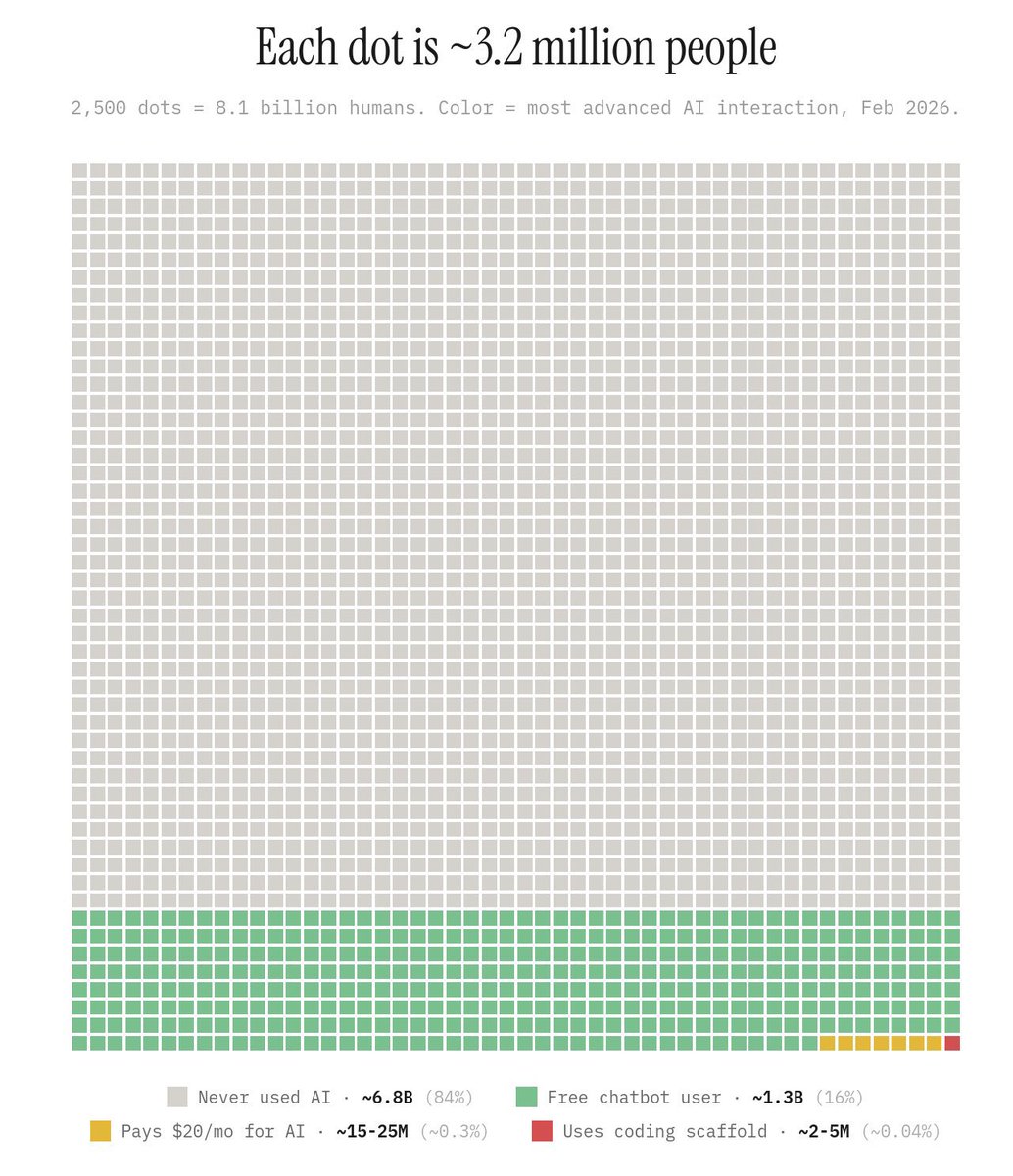
most people don’t even know what claude is.
kind of wild when you zoom out.
Project LUCI = AI Pin + Real-world memories + 🦞
We're turning AI from something you prompt into an assistant that actually knows you.
Powered by Memories AI for visual memory and OpenClaw for real-world action.
Join the waitlist.
@bullrungenius@KobeissiLetter Hence many people who would love to come to the US avoid the market. It’s a big US tax loss as these are some of the most wealthy/highest tax contributors
@bullrungenius@KobeissiLetter As a result, if you become a green card holder and you’re a Singaporean business owner, your entire business outside of the US would subject to US taxes.
@bullrungenius@KobeissiLetter Lots of successful entrepreneurs and rich avoid American permanent residency due to Obama era rules that enable the US tax your income globally, not just what is earned in the US
People who say “we don’t want t-shirt factories in America” are mistaken about the very nature of technology.
What they mean is that we don���t want Capex intense, heavily labor dependent, low margin manufacturing.
But all of those attributes—capex, labor use, margin—are subject to technology, and therefore innovation.
By exporting the industry, you are excluding the possibility of American technologists changing the *way t-shirts are made* in such a way that it is very profitable to do here.
These sorts of changes are the inevitable direction of technology. Why would you count our civilization out of that?
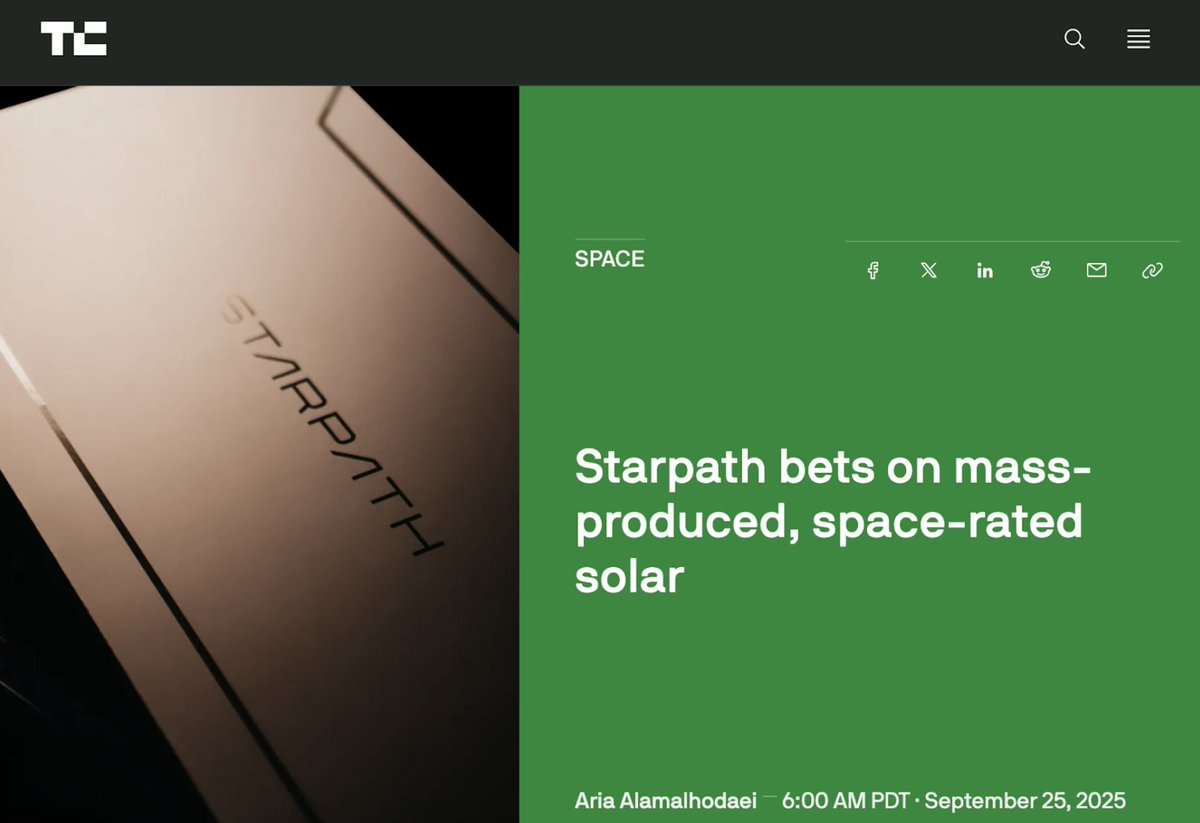
1/7 We needed power for building gas stations on the Moon and Mars.
Suppliers quoted us $100/W for solar and 14 months lead times.
So we built our own. Space-rated solar, scalable, and 90% cheaper.
Now it powers our mission. And yours.
Launching today 🧵