Screaming at employees doesn't make you a tough boss. It makes you an asshole.
Great leaders are demanding, not demeaning. They set high expectations and create accountability without abuse.
Yelling is unprofessional. Treating people with dignity is not optional—it's required.
My theory: burnout has nothing to do with how many hours or how hard you work. It's caused by working for people you don't like, towards goals you don't believe in, in systems that grant you no agency.
32 days to go. Do you live in North East Somerset? Do you know someone who lives in North East Somerset? Do you know someone who knows someone who lives in North East Somerset? Share this film with them
Most leaders value loyalty. Great leaders put a higher premium on integrity.
Loyalty is allegiance to power. You're expected to show deference and follow orders.
Integrity is allegiance to principles. You're expected to challenge orders that violate your mission or values.
Keeping an open mind is not about lacking moral conviction. It’s about maintaining intellectual humility.
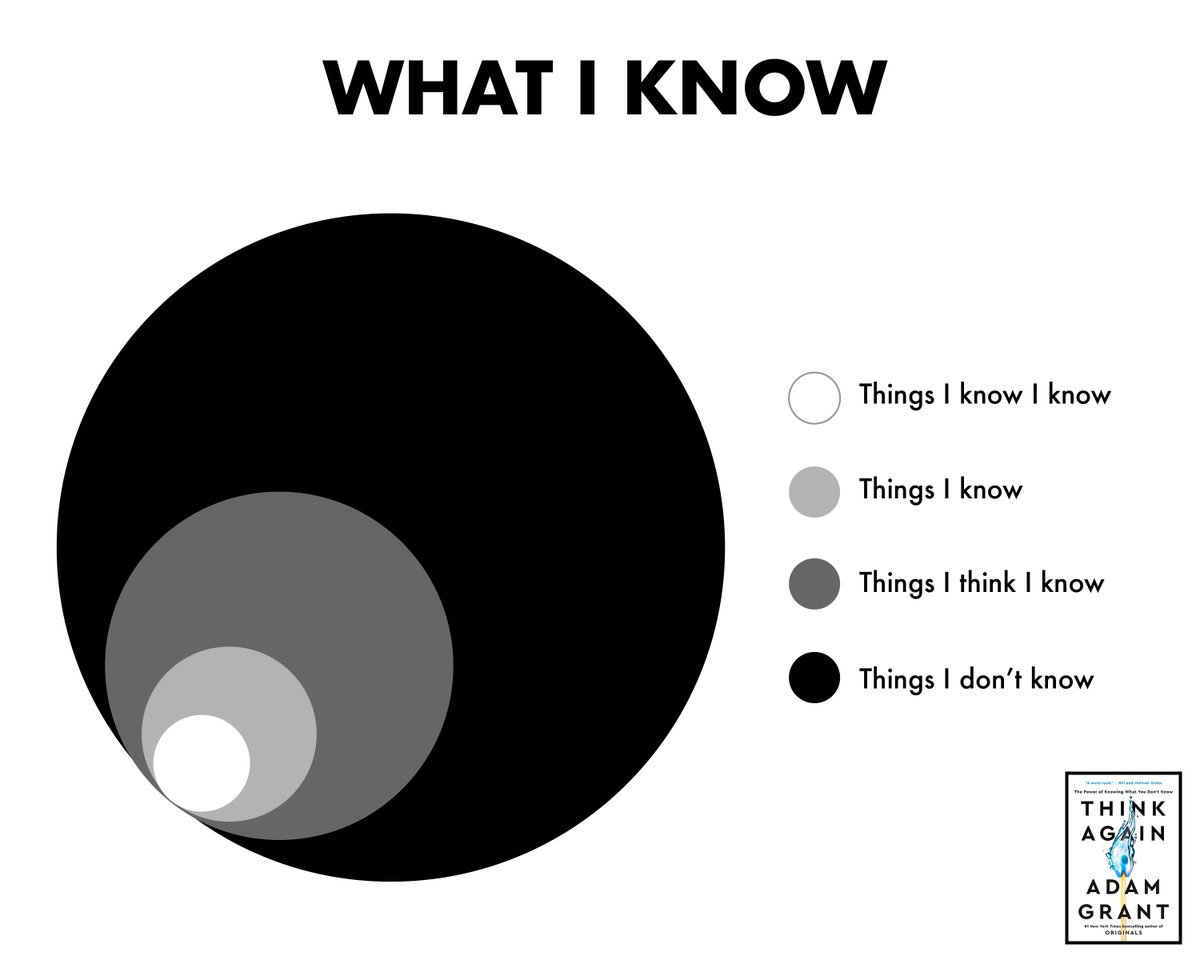
The people who leave their echo chambers are the ones who know their knowledge is incomplete.
A key to lifelong learning is engaging with others who disagree with you.
Our Director of Engineering Terry Brown put together an awesome collection of resources that may come in handy to everyone on their journey of becoming a #StaffEngineer. Any additional tips or resources that could benefit aspiring staff engineers? 🤓
https://t.co/pig5e8SEoy
Narcissistic leaders are threatened by talent. They want to be the smartest person in the room.
Humble leaders are drawn to talent. They surround themselves with people who make them smarter.
Great leaders grow talent. They strive to make everyone in the room smarter.
There's no such thing as an ideal daily routine. The best model is the one that works for you.
Successful people don't keep similar schedules. Their common practice is experimenting to learn what suits them.
Don't be a slave to others' habits. One size doesn't fit all minds.
People are more open to constructive criticism when it’s clear that you believe in their potential and care about their growth.
https://t.co/7DCpmk9GBy
As a senior executive, you care a lot about your teams moving fast.
So when a team misses its committed launch date, you show great displeasure.
You demand more accountability.
You make an example out of this team.
Other teams see this.
They are not stupid.
So they learn.
And from now on, every single team hits their committed launch dates.
You are very happy.
I can see it.
But my friend, I am so sorry to tell you:
You are no longer moving as fast as you were before.
Plus, what you ship will no longer be as high quality as before.
And over time you start to see this too.
You are not stupid.
Even though everyone is hitting their launch dates, something has changed.
Things seem to be moving slower than before.
And you have no idea why.
So you call meetings.
You set up check-ins.
You set up processes.
But despite all your efforts, nothing changes.
That gnawing feeling that you are no longer moving fast persists.
That embarrassment of seeing your teams ship a shoddy experience is all too common now.
And you have no idea why.
The answer is right there.
You are no longer moving fast because of YOUR communication.
Instead of creating a culture where teams have intrinsic motivation to move fast — because they are energetic and they care — you started punishing the odd case where a team misses its aggressive target date.
And so, by doing that you sent a message to everyone: Don't be very ambitious, because the reward for ambition is punishment.
I know that isn't the message you wanted to send.
But by doing what you did, it is the only message you will send. 100 times out of 100.
What could you have done instead?
When that team missed its launch date, you could have sent a positive message instead of punishing the team's leaders.
You could have used this opportunity to build & maintain a culture of aggression and ambition.
You could have said:
"I understand why you missed the launch date.
I'd rather that you stay aggressive and sometimes miss the date than being conservative and always hitting the date.
I don't want you to stop being aggressive by default.
And we want more teams to be like you."
At this point, you are either seeing the value of this approach or you are trying to find reasons to reject it.
And your reasons are quite flimsy, such as: "But what about launches that have an external commitment?"
You are smart. You can figure that one out.
But okay, let me spell it out for you:
1. Most launch dates should not be committed externally. So don't commit dates for most launches.
2. A few launches need external commitments (to customers, or regulators, or partners...)
3. For the launches in # 2, sure, commit a conservative launch date that you are almost certain to hit.
4. But even for those, ask the team to devise an aggressive internal target date. It's okay if they slip this date. But it's important to have that aggressive internal target.
Why? Because remember Parkinson's Law:
Work expands to fill the time allotted for its completion.
Have you ever noticed how teams always struggle to hit their launch date, no matter how conservatively they've set them?
Yes, that's because of Parkinson's Law.
Look, I know it's easy to have dogma around "always hitting dates".
Dates are an easy, but incorrect proxy for your teams' velocity, ambition, and energy.
Though if you still want to maintain your fascination with hitting all dates, I am not sure I can (or even want to at this point) convince you otherwise.
But then I also guarantee that you will spend your entire career managing teams that move slower than they really can and/or ship lower quality products than they really can, and you will spend your entire career setting up check-ins, processes, spreadsheets, and carrots/sticks trying & failing to solve a problem that you created in the first place.
Best of luck to you!