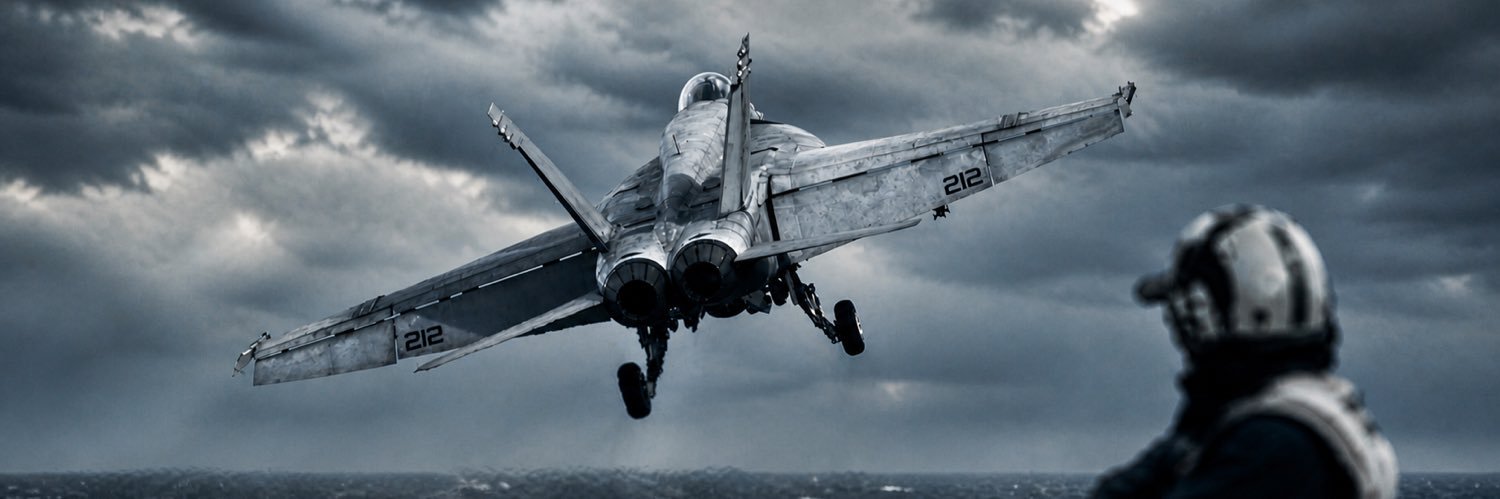
Failure to address the Myanmar conflict will undermine regional security, as transnational threats intensify and spread from the country's ungoverned and conflict-affected areas.
This chapter examines the opportunities and challenges of an enhanced role for Thailand – under ASEAN's existing Five-Point Consensus – in resolving the post-coup conflict.
Asia-Pacific Regional Security Assessment 2026 | Analysis by Morgan Michaels, Research Fellow for Southeast Asian Security and Defence, IISS
Find out more: https://t.co/yvijoamlf3
A missile system is more than just hardware; it is a signal of intent and a demonstration that the partnership means something when tested.
My take on Malaysia-Norway defence rift https://t.co/9Vdf6jgay2
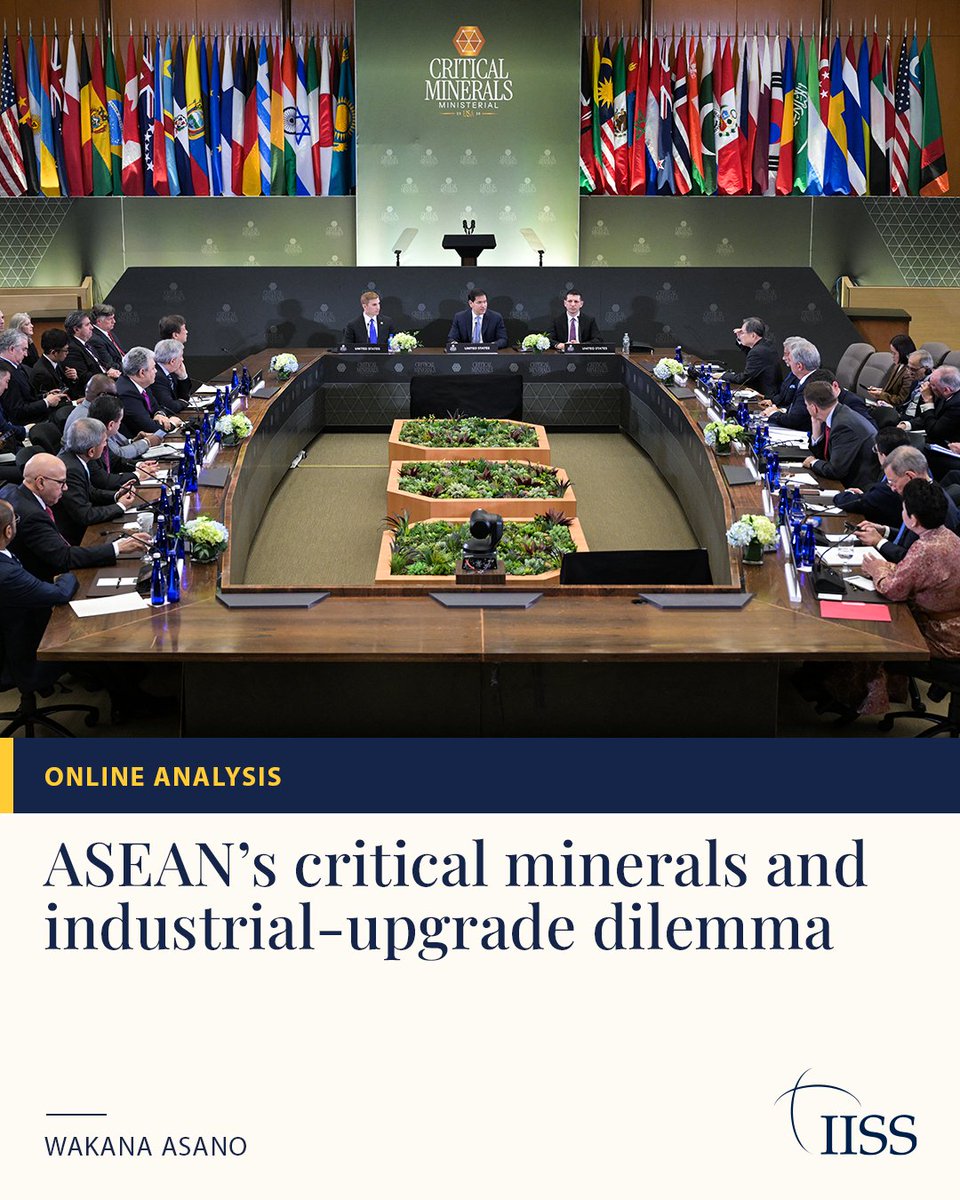
ASEAN intends to undergo a strategic pivot to become a high-value manufacturing hub for critical minerals. Financial constraints and external dependencies, however, may make this challenging.
➡️Read the latest analysis by @Wakana_Asano: https://t.co/aYA5qUFhQQ
“The challenge for the United States today is figuring out how to operate in a world that has not evolved in the liberal direction once hoped for, even as large sectors of the American public see few gains from active global engagement,” writes expert Gideon Rose.
Read more from the Future of American Strategy: https://t.co/oHi6fm6ddB
Our expert @amanda_hsiao argues that there is little risk of a military invasion of Taiwan in the near-term.
China believes its long-term strategy is working, and that unification will become easier and less costly over time.
@WarOnTheRocks
https://t.co/zESVh4Af3W
Malaysia actually tried to reduce oil dependency decades ago.
Escalating US–Iran tensions and disruptions in the Strait of Hormuz have once again exposed Malaysia’s continued vulnerability to global energy shocks. Although Malaysia is an energy producer, the country still imports a significant share of its crude oil from the Persian Gulf, leaving it exposed when global supply chains are disrupted and prices spike.
Our researcher, Azfar Hanif Azizi, highlights that while past diversification policies did reduce some dependence on oil, progress in renewable energy and alternative transport systems has been too slow to meaningfully cushion today’s shocks.
This current situation is a reminder that long-term investment in energy resilience, public transport, and diversified energy sources is no longer optional, but critical for Malaysia’s future stability.
Read the full views article via our website here: https://t.co/npoI6R4M9V
#KhazanahResearchInstitute #KRI #AdvancingMalaysia #EnergySecurity #Geopolitics
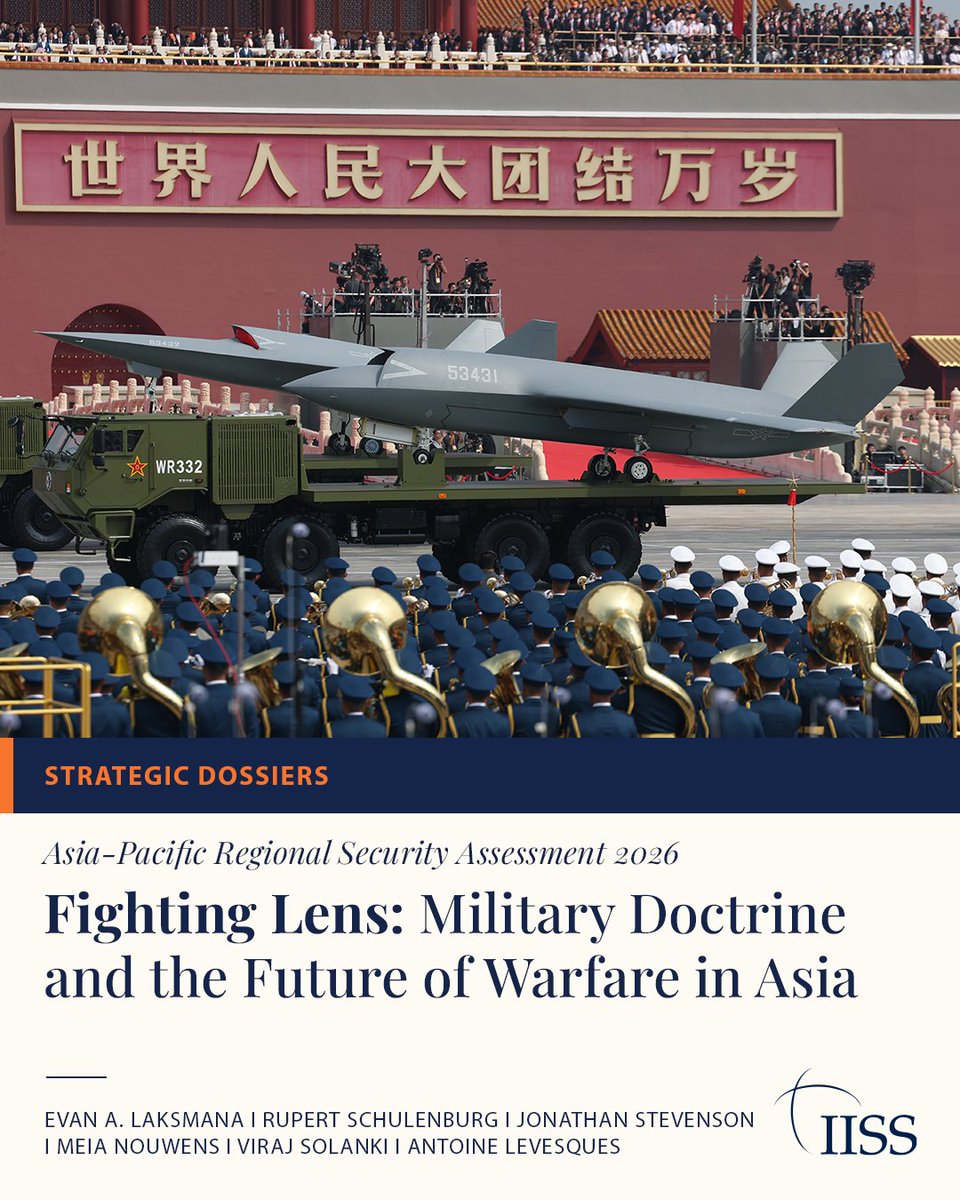
How do armed forces in the Asia-Pacific plan to fight? Military doctrine is a strong indicator of how a military prepares for war. This analysis examines the doctrines of the United States, China and India, and what they reveal about the dynamics of strategic competition in the Asia-Pacific.
✏️ Asia-Pacific Regional Security Assessment 2026 | Analysis by @EvanLaksmana, @R_Schulenburg, Jonathan Stevenson, @MeiaNouwens, Viraj Solanki & Antoine Levesques
FREE TO READ: https://t.co/AFBPk9ptUE
Malaysia will not rush to increase its defense budget despite US pressure for partners to become more self-reliant, Defense Minister Mohamed Khaled Nordin said https://t.co/tM8E75aqMB
Why do maritime incidents cluster around security posts in the Straits of Malacca and Singapore?
Our latest @IISS_org Southeast Asian Security and Defence programme research paper explains 👇
Download: https://t.co/X2pa1g2O7D
“Right now, obviously the market is all focused on what's going to happen with Hormuz,” says our expert @gbrew24.
“But as we exit this crisis, I think we're going to be entering a global oil market that is more volatile, more uncertain, that has fewer guardrails, and now has actors that are going to pursue their own interests rather than attempting to follow any kind of production plan.”
@TheDispatch
https://t.co/34JiyTkX1A
PRC: China Institute of International Studies under Ministry of Foreign Affairs issues "Report on the Global Security Situation (2025)" https://t.co/Rcv2zeg5TN
and
https://t.co/S9o9QH6tVF
Abd Latif Utoh was a good friend of mine.
His friendship meant a lot, and it will never be forgotten.
May his soul rest in peace.
He will always remain in our hearts.
THE TIGER SHOW RAW | S2 | EP16 | Selamat jalan Latiff (Monkey Joe)
https://t.co/oELjq7FlMM via @YouTube
Malaysia’s maritime authorities detained two tankers and its crew members suspected of conducting an illegal ship-to-ship diesel transfer off Penang, in one of the latest crackdowns on illicit fuel activities in the country’s waters https://t.co/nAmUrgX8p2
"The United States may have struck a fragile ceasefire deal with Iran, but the war has inflicted damage on U.S. relationships in Asia that were already strained after more than a year of President Trump’s unpredictable approach to foreign policy," writes expert @JoshKurlantzick.
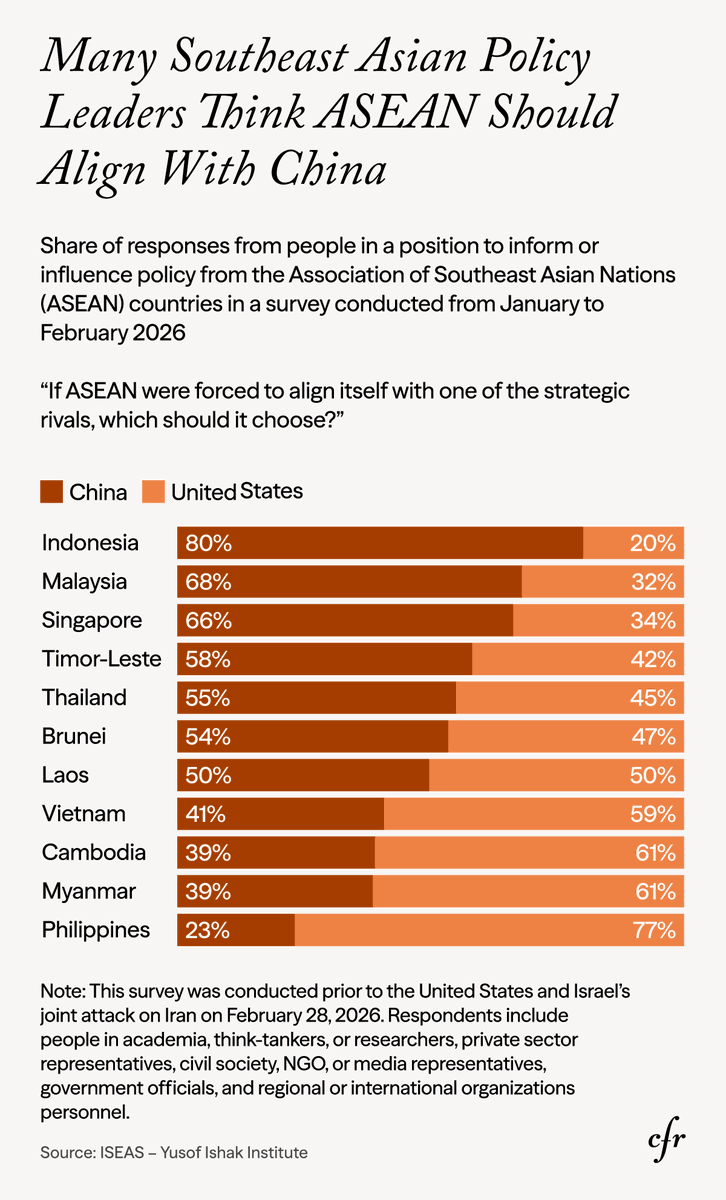
China has again surpassed the United States to become the preferred partner for a majority of states in Southeast Asia, according to a new survey: https://t.co/r3IBI3pgCL
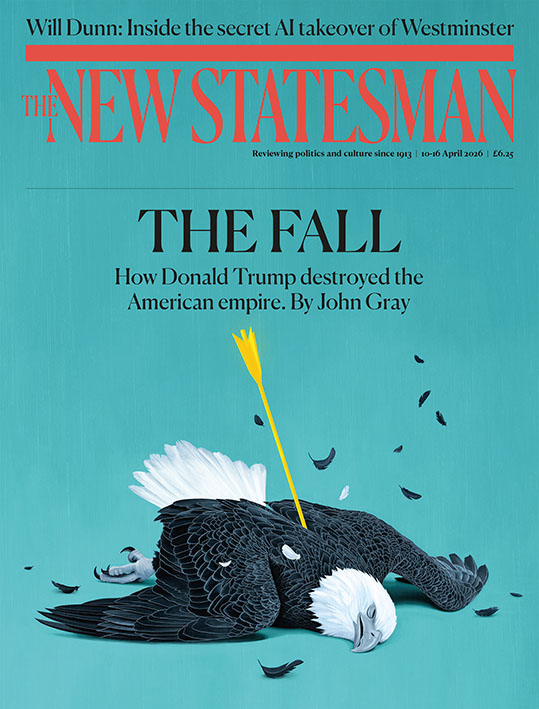
THE FALL by John Gray
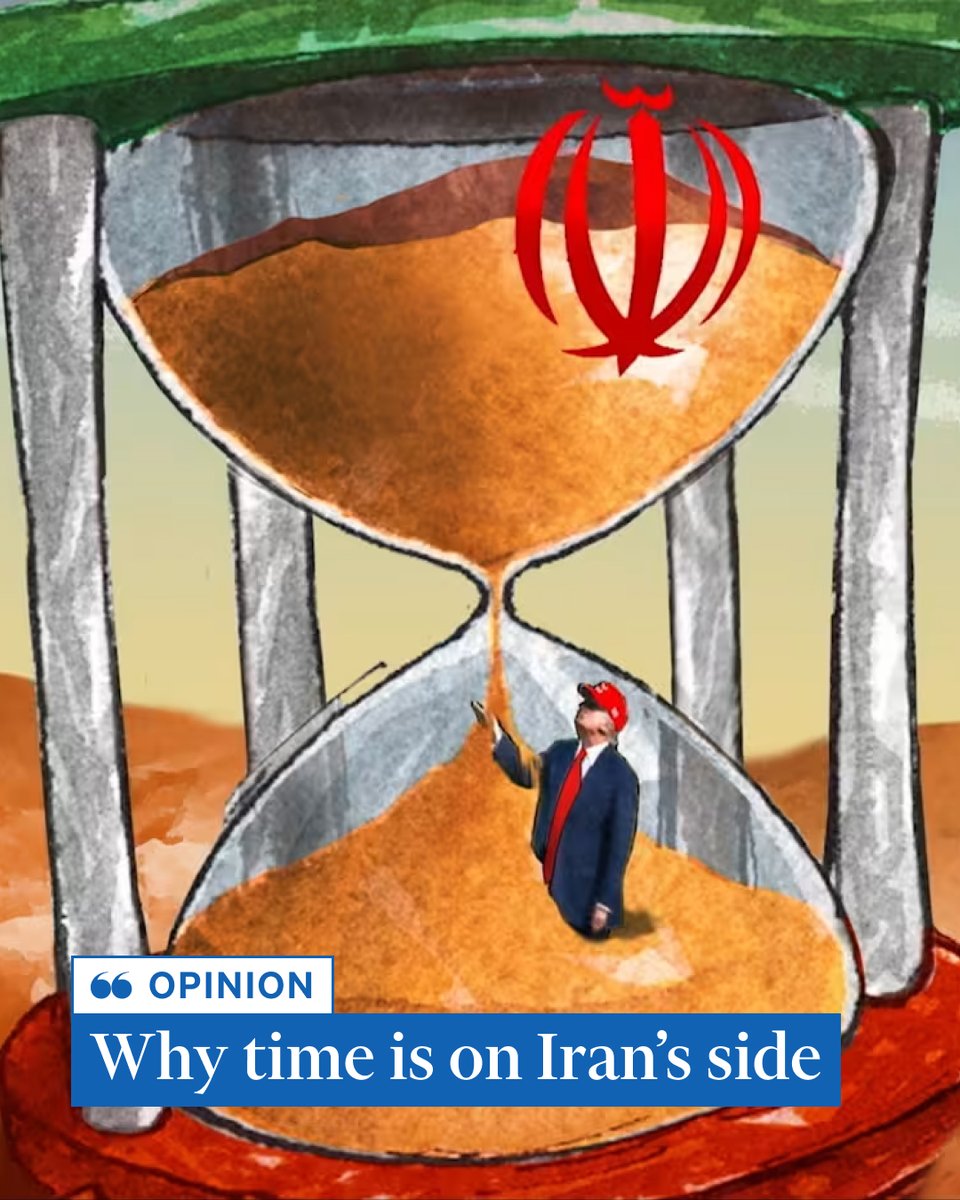
Donald Trump's self-described "little excursion" in Iran has proved to be a march to disaster. His "major combat operation" has shifted from aiming to block Iran achieving a nuclear capability that was supposedly "obliterated" last June to unblocking the Strait of Hormuz and restoring the situation that existed before the operation began. Whatever the objective may be, the pre-war status quo is irretrievable. Trump cannot declare victory and walk away without surrendering the vital shipping conduit to Iran. With its proven capacity to wreak havoc on the world economy, a bombed-out military-theocratic dictatorship has begun the final unravelling of US imperial power.
In the Middle East, the war has undercut the financial foundations of US hegemony. However the war ends, the result will be the re-emergence of Iran as a major power. As the arbiter of passage through Hormuz, Iran has become the deciding force in the global oil economy. If Trump opts to "finish the job" and launches a ground operation, the US will be dragged into a debacle larger than Vietnam, Afghanistan and Iraq combined.
While Nato may linger on in name, the transatlantic alliance is operationally defunct. America is returning to its pre-1914 trajectory as a civilisation separate from Europe. In the UK, the default position is to wait out the storm until sanity returns to Washington. Why Putin or Xi Jinping should exhibit similar patience is not explained. Could there be a better time for them to act? Ramping up hybrid warfare in under-defended Europe will give Putin leverage in any peace deal in Ukraine. With Trump having shifted military assets from the Asia-Pacific to the Middle East and running down munitions, Xi may be able to absorb Taiwan without firing a shot.
This is not simply a case of the lessons of history being ignored. Trump's war looks more like an example of what Sigmund Freud described as repetition compulsion – an unconscious process in which the mind acts out what it cannot properly remember. A creature of the moment as he may be, Trump seems driven by an impulse to reimagine the past and reassert American – and his own – greatness. When an infantile fantasy of omnipotence comes up against unyielding realities, the response is inchoate rage.
Psychopathology may be more illuminating than geopolitics at this point. In a more profound sense than is commonly recognised, Donald Trump does not know what he is doing. His little excursion is a point of no return in America's retreat as a global power.
Cover art by Cracked Hat