Codex app update: Codex joins the ChatGPT desktop app
What changed:
• Codex is now part of the ChatGPT desktop app on macOS and Windows.
• New features: inline Markdown and code editing, GitHub PR review in the sidebar, and multi-repo project support.
• Computer Use faster with GPT-5.6; mobile connection reliability improved.
Details in thread.
(1) Today we're releasing Muse Spark 1.1 -- a strong agentic and coding model at a very low price. It's available through our new Meta Model API and in Meta AI.
GPT-5.6 is rolling out in the API.
Sol is our flagship model, leading in coding, knowledge work, cybersecurity, and science.
Terra delivers performance competitive with GPT-5.5 at lower cost. Luna is our fastest, most affordable model for high-volume tasks.
We’re bringing Codex and ChatGPT together in one desktop app.
The same powerful coding agent, now alongside ChatGPT Work, with new coding workflows, a new Chrome extension, revamped in-app browser, and faster Computer Use powered by GPT-5.6.
https://t.co/9hOtxyDEw5
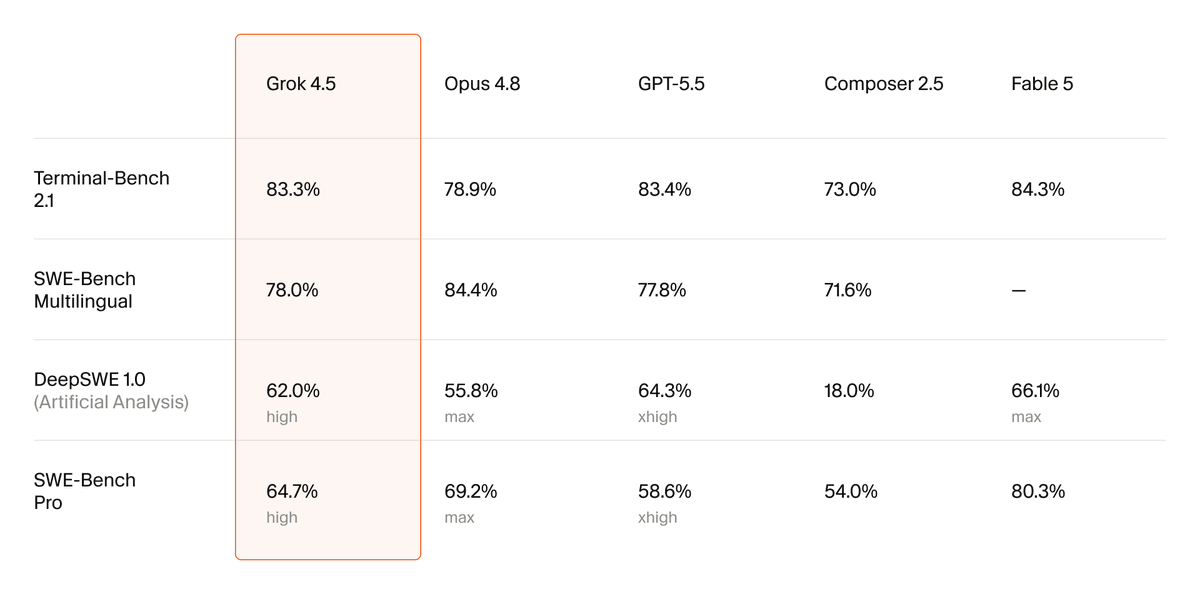
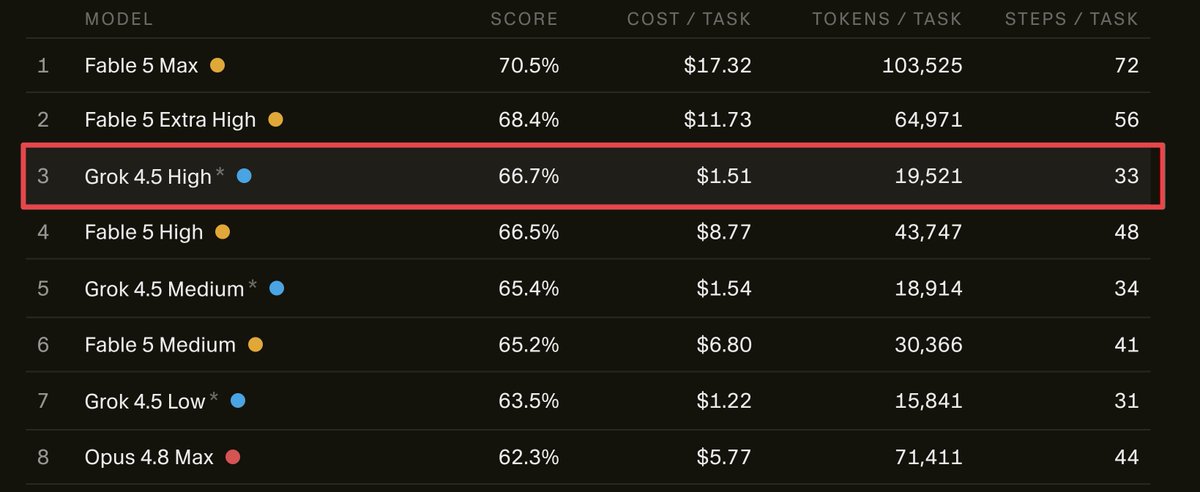
New CursorBench results just dropped and Grok 4.5 is the story.
#3 overall at 66.7%. Right behind Fable 5 Max at 70.5%.
Now look at the cost column.
Fable 5 Max: $17.32 per task
Grok 4.5 High: $1.51 per task
That is Fable level performance at roughly 1/10th the cost.
And it beats Fable 5 High and Opus 4.8 Max outright.
The intelligence war just became a price war.
6 months of Claude Max 20x, on us.
We're expanding Claude for Open Source to more of the community.
If you're a maintainer, a core contributor, someone landing PRs across the ecosystem, or someone keeping a critical package alive, apply today!
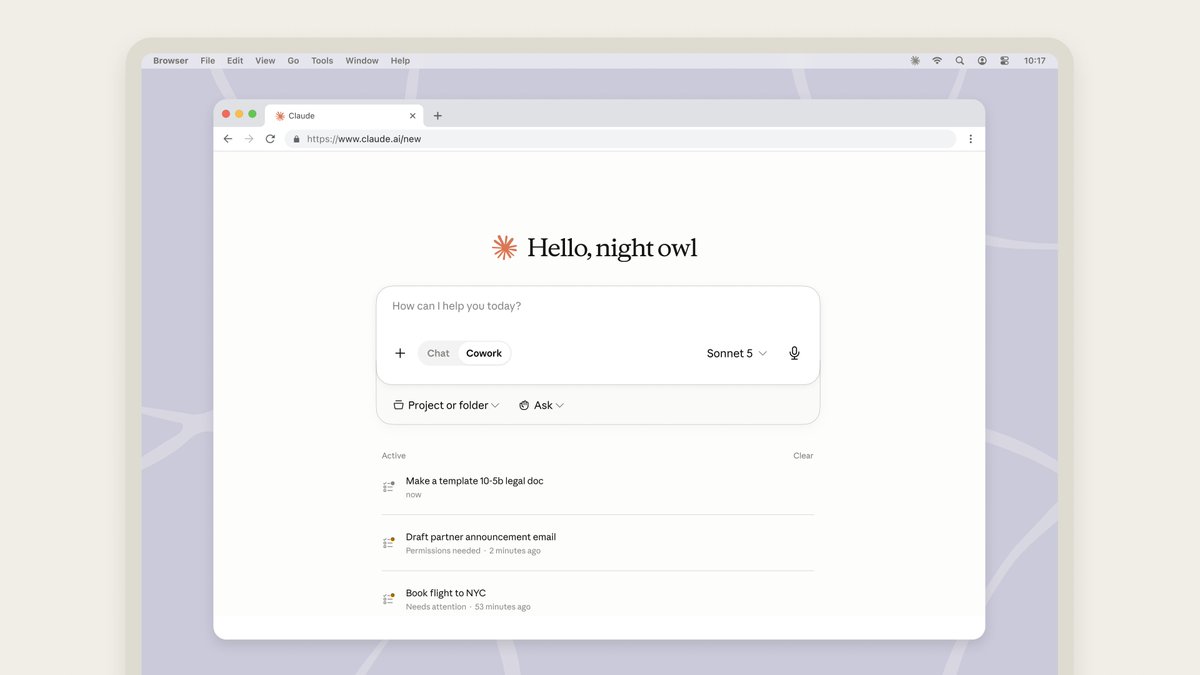
Chat and Cowork are moving into one home on web and desktop, with one place for your projects and artifacts across both.
Handing Claude a task starts the same way a conversation does.
CHINA CONSIDERS RESTRICTING OVERSEAS ACCESS TO CUTTING-EDGE AI MODELS
China’s Ministry of Commerce has led meetings over the past month with major AI companies, including Alibaba, ByteDance, and https://t.co/YDe0KRldDB, to discuss measures that would restrict overseas access to cutting-edge AI models, including models that have not yet been released.
The discussions reportedly include not only closed-source models but also open-weight models. However, the scope of application is still under debate, and the rules may ultimately apply only to future frontier models.
Officials have also discussed designating the leakage or theft of proprietary AI technologies as a national security crime, with stronger penalties, as well as restricting the types of foreign capital that can invest in Chinese AI startups.
The backdrop is the U.S. move to strengthen export controls on AI models, along with national security concerns over cutting-edge models that could possess advanced cyberattack capabilities.
Chinese authorities are reportedly concerned that advanced U.S. cybersecurity AI models could be used to exploit vulnerabilities in Chinese software.
Since the beginning of this year, China has continued to tighten measures to prevent AI technology from being transferred overseas. Authorities have investigated whether Chinese AI startups that relocated abroad violated export control laws, while also strengthening oversight of overseas transactions involving Chinese investors, technology, data, and national security concerns.
Future regulations could take the form of a tiered framework based on technological capability. Basic open-source AI models may be managed through a filing system, high-performance models may be subject to security reviews, and the most sensitive frontier models may be banned from public release or restricted to use within China.
CHINA CONSIDERS RESTRICTING OVERSEAS ACCESS TO CUTTING-EDGE AI MODELS
China’s Ministry of Commerce has led meetings over the past month with major AI companies, including Alibaba, ByteDance, and https://t.co/YDe0KRldDB, to discuss measures that would restrict overseas access to cutting-edge AI models, including models that have not yet been released.
The discussions reportedly include not only closed-source models but also open-weight models. However, the scope of application is still under debate, and the rules may ultimately apply only to future frontier models.
Officials have also discussed designating the leakage or theft of proprietary AI technologies as a national security crime, with stronger penalties, as well as restricting the types of foreign capital that can invest in Chinese AI startups.
The backdrop is the U.S. move to strengthen export controls on AI models, along with national security concerns over cutting-edge models that could possess advanced cyberattack capabilities.
Chinese authorities are reportedly concerned that advanced U.S. cybersecurity AI models could be used to exploit vulnerabilities in Chinese software.
Since the beginning of this year, China has continued to tighten measures to prevent AI technology from being transferred overseas. Authorities have investigated whether Chinese AI startups that relocated abroad violated export control laws, while also strengthening oversight of overseas transactions involving Chinese investors, technology, data, and national security concerns.
Future regulations could take the form of a tiered framework based on technological capability. Basic open-source AI models may be managed through a filing system, high-performance models may be subject to security reviews, and the most sensitive frontier models may be banned from public release or restricted to use within China.