نصيحه من اعماق قلبي اي وحده تبي ظهرها ینشد شد واكتافها تستقيم تعمل
Prone Y-Raises تمارين ع اثر مانمدح فيها للبنات الا اني ما تعبت لان جد مفيدة حتى وقفتك بتتغير والتمارين تقدري تعتمديها علاجيا مفيدة للظهر والاكتاف ويعالج الشد لانه يحرك عضلات كثير ف اللي يقعدوا كثير بالمكاتب بيفيدكم
ماذا يتمنى مرضى الفيبروميالجيا أن يعرفه ممارسوهم الصحيون؟في دراستنا الجديدة المنشورة في BMC Musculoskeletal Disorders استمعنا إلى المرضى، وكانت أمنياتهم بسيطة: أن يُسمَعوا، وأن يُفهَموا، وأن يحصلوا على رعاية ترى الإنسان كاملاً. #الفيبروميالجيا https://t.co/0y9pOBtygb
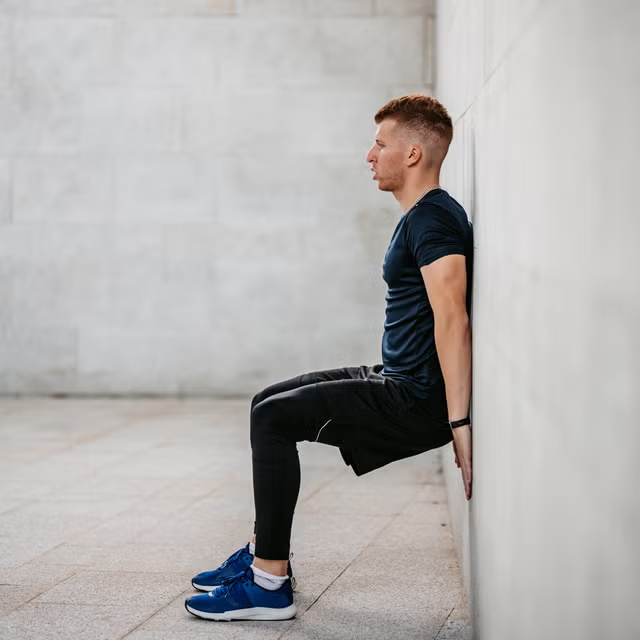
"Assis" contre un mur (wall sits), l'arme secrète contre l'hypertension.
Un essai clinique randomisé sur des adultes hypertendus montre qu'en pratiquant chez soi cet exercice très simple à raison de 4 séries de 2 minutes (avec 1 à 2 min de repos), 3 fois par semaine, on réduit la pression systolique de 12,9 mmHg en 12 semaines.
C'est aussi bien, en moyenne, qu'un traitement médicamenteux.
Le bon plan pour la suite :
• 3 séances par semaine = baisse maximale (-13 à -14 mmHg).
• Réduire à 1 ou 2 séances par semaine permet de conserver une grande partie des bénéfices (environ 7 mmHg de baisse) pendant encore un mois.
• Arrêter complètement fait remonter la tension.
Conseil pratique : Le dos bien à plat contre le mur, descendez le buste pour avoir les cuisses parallèles au sol : elles doivent faire un angle de 90° avec le tibia ; ne bloquez jamais votre respiration pendant l'effort isométrique.
🦶 The Talar Tilt Test assesses lateral ankle ligament stability. The examiner stabilizes the lower leg and inverts the hindfoot, comparing laxity with the opposite ankle. Increased tilt may suggest ligament injury.
🔗 Link: https://t.co/4pyODxw5sq
#SportsMedicine #AnkleInstability #AnkleSprain #PhysicalExam #MedicalEducation
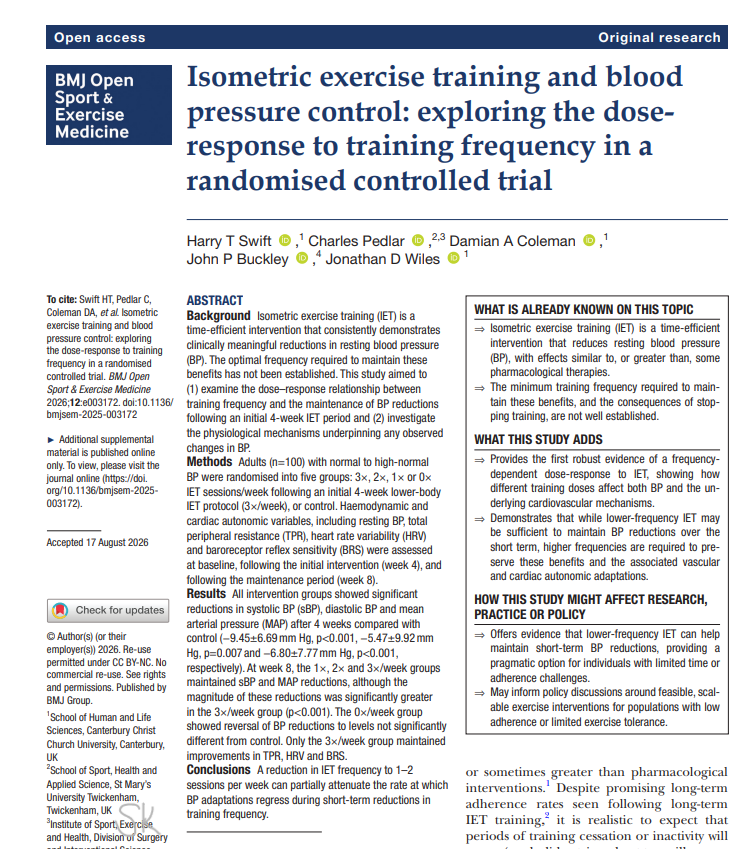
Wall-Sit (or wall Squat) is one of the most effective exercises for lowering Blood Pressure (BP)
➡️Though all forms of exercises lower the BP, isometric exercises such as wall sit and planks are the best (overall) to lower the systolic and diastolic BP.
➡️The reductions in blood pressure after aerobic exercise training amounted to 4.49/ 2.53 mmHg; 4.55/3.04 mm Hg after dynamic resistance training; 6.04/2.54 mmHg after combined training; 4.08/2.50 mmHg after HIIT; and 8.24/4 mmHg after isometric exercise training.
✅Wall squats (isometric) and running (aerobic) were the most effective individual exercises for reducing systolic blood pressure (90.5%) and diastolic blood pressure (91%), respectively, with isometric exercise, overall, the most effective for reducing both blood pressure elements.
You can start wall sit with 15-20 seconds duration and gradually increase to two minutes. Ideally you should do 4 sets of wall sits (2-minutes wall sits with two minutes rest in between sets); three times a week (on alternate days) for optimum benefits on blood pressure.
Reference: https://t.co/APQEDPYEnw
Can a simple wall sit help lower blood pressure?
🔸Research suggests that isometric exercises such as wall sits are among the most effective exercise strategies for reducing blood pressure.
✅Recent research found that just 4 weeks of wall-sit training (3 sessions/week) lowered systolic BP by ~9 mmHg on average, a reduction that can meaningfully lower cardiovascular risk.
What seems to work?
✅Wall sits 3 times/week produce the largest and most sustained BP reductions.
▶️After an initial training period, even 1 session/week helped maintain some BP-lowering benefits for about 4 weeks.
🟠Stopping completely led to loss of most BP benefits within weeks.
▶️In this study, the greatest BP reduction occurred in those who continued wall sits 3×/week, with systolic BP falling by ~14 mmHg from baseline.
🔸Benefits were smaller but still present with 1–2 sessions/week.
Why might wall sits lower BP?
Researchers found improvements in:
1. Blood vessel function and reduced vascular resistance
2. Nitric oxide availability (helps arteries relax)
3. Reduced sympathetic ("fight-or-flight") activity
4. Improved parasympathetic ("rest-and-digest") tone
5. Better baroreflex function, helping the body regulate BP more effectively
The key message:
✅Think of 1 session/week as maintenance, but 3 sessions/week as the target if your goal is maximum BP reduction and cardiovascular benefit.
▶️Important point:
Wall sits are not a substitute for prescribed medications in people with hypertension, but they can be a useful addition to lifestyle therapy. Discuss with your doctor if you have significant heart, vascular, or joint problems.
Dr Sudhir Kumar @hyderabaddoctor
Four weeks of wall squats reduced systolic blood pressure by nearly 10 points in adults with high blood pressure.
Researchers then compared continuing three sessions weekly with reducing to two, one, or none for another month. Systolic pressure remained roughly 7 mmHg below starting levels in the once- and twice-weekly groups. Continuing three sessions weekly produced the greatest reduction of about 14 mmHg. In those who stopped completely, blood pressure moved back toward baseline.
This fits with a previous analysis of randomized trials that identified isometric exercise, which involves holding a muscle contraction, as an effective way to lower resting blood pressure.
What interests me is the practical question - how much of an exercise benefit can we preserve when we temporarily have less time? This study suggests that reducing the frequency can retain part of the benefit for up to a month.
‼️Anterior Tibial Stress Fractures are high risk.
They present with more focal anterior tibial pain than Medial Tibial Stress Syndrome (MTSS) so be specific about pain location and behaviour when taking a history.
Anterior Tibial BSIs can lead to a true fracture of the tibia and require surgical intervention. They’re associated with prolonged periods away from sport and a high complication rate so need urgent investigation and careful management are needed including exploring energy availability and bone health.
Las sentadillas contra la pared te hacen arder las piernas y en este ensayo con adultos hipertensos, 4 series de 2 minutos, 3 días por semana durante 12 semanas, redujeron la presión sistólica una media de 12,9 mmHg.
Niv 1: 3x30–45 sg
Niv 2: 3–4x60 sg
Niv 3: 90–120 sg o con carga
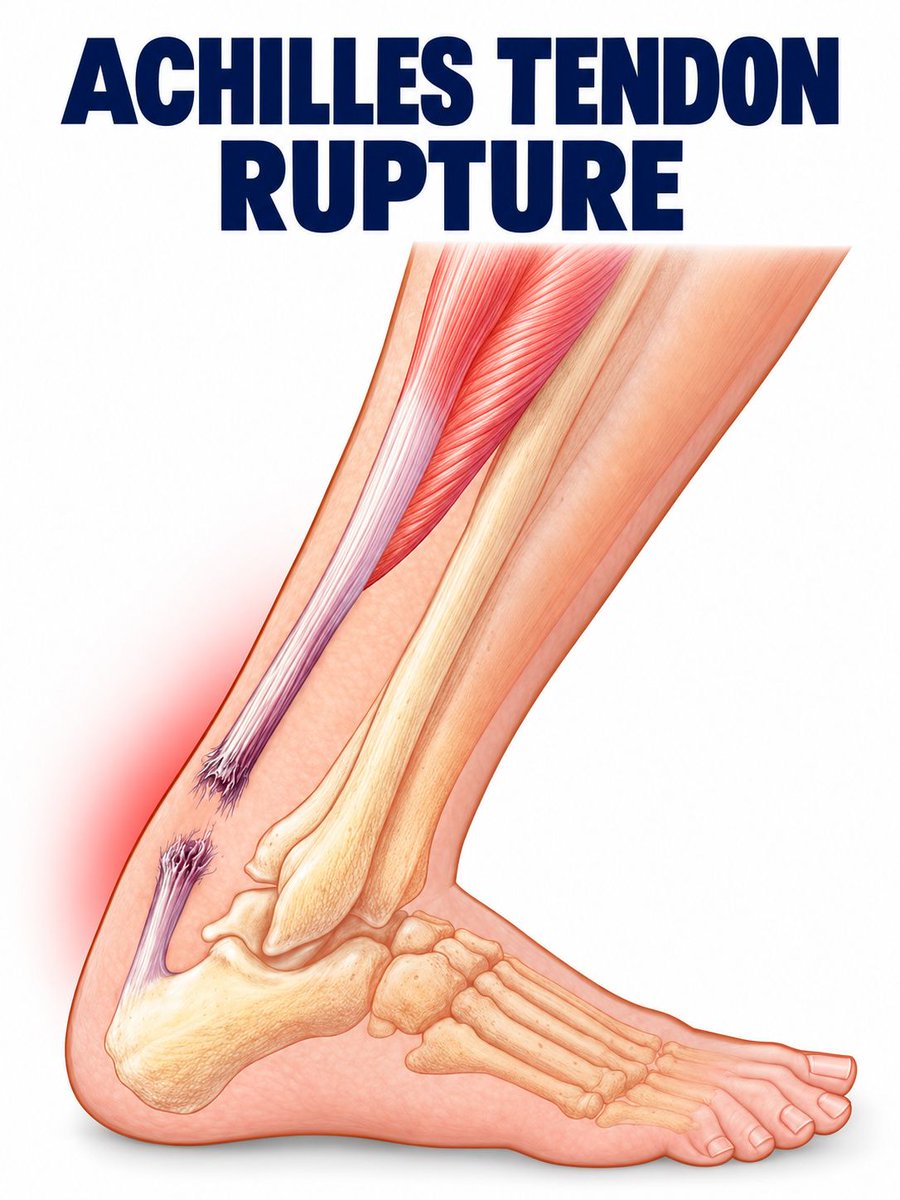
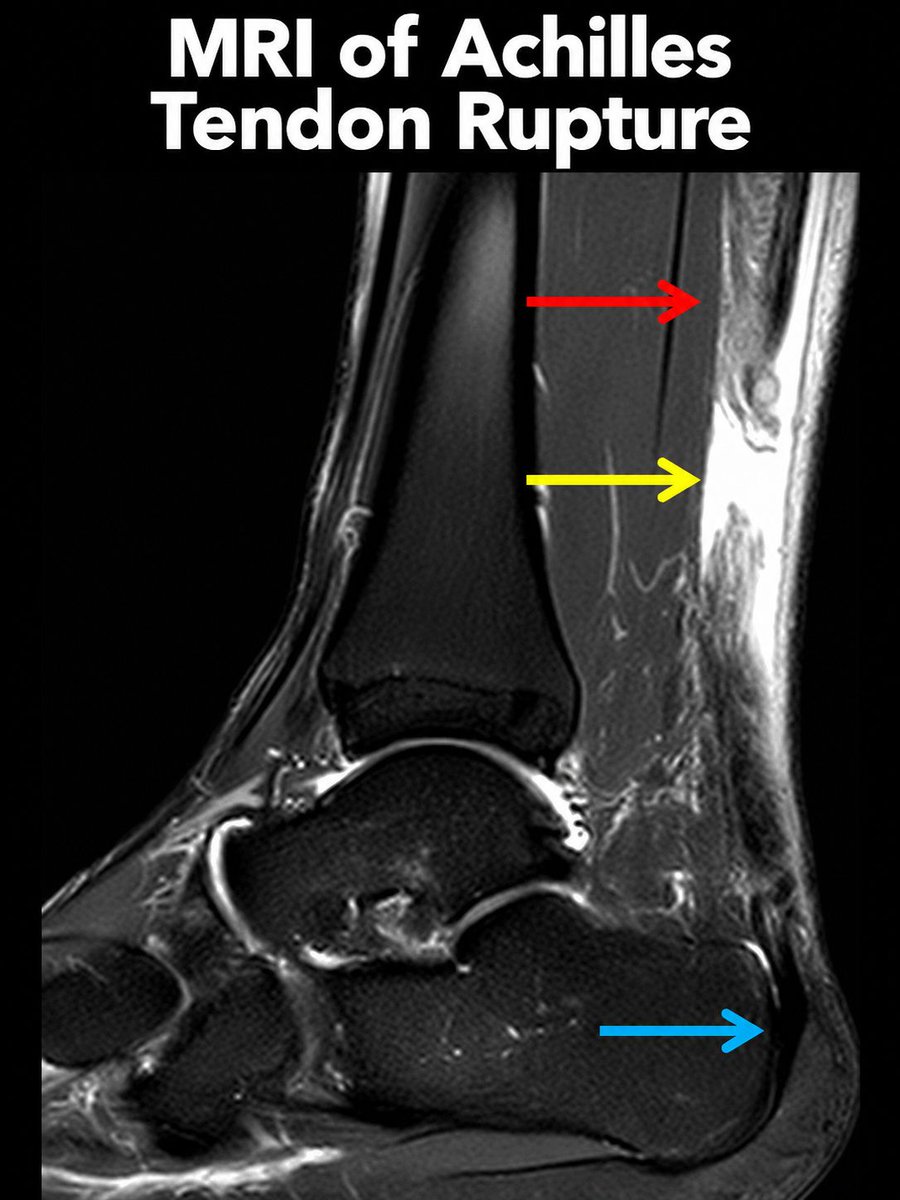
🦶 Thompson Test for Achilles Tendon Rupture
With the patient lying prone and feet hanging off the table, squeeze each calf and compare foot movement. An intact Achilles tendon produces plantarflexion; absent or reduced movement suggests a rupture.
🔗 Link: https://t.co/MInQdaDzfV
#SportsMedicine #PhysicalExam #AchillesTendon #Orthopedics #MedicalEducation
🖐️ Tabletop Test
Can the palm and fingers lie flat on a table? Inability to do so is a positive Tabletop Test, suggesting a flexion contracture associated with Dupuytren’s disease.
🔗 Link: https://t.co/cCPQpcuic5
#DupuytrensContracture#HandExam#SportsMedicine #Musculoskeletal #MedicalEducation
Behind every step: bones, cartilage, ligaments, tendons, and muscles working together.
Explore the knee with SciePro’s detailed 3D anatomy model, built for anatomical accuracy.
Medical visuals and licensing → first reply.
#SciePro#KneeAnatomy
Here’s a simple hack to potentially enhance rectus femoris development.
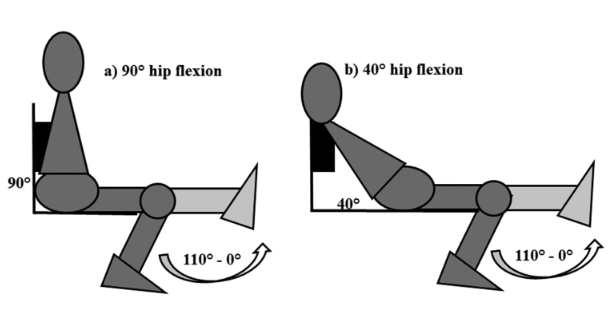
Instead of performing leg extensions in the traditional upright position (90° of hip flexion), try reclining the backrest to reduce the degree of hip flexion. This places the rectus femoris at a longer muscle length, conceivably increasing passive tension and thus providing a greater stimulus for hypertrophy.
In support of this strategy, a recent study by Larsen et al. (PMID: 39699974) found that performing leg extensions at 40° versus 90° of hip flexion produced appreciably greater rectus femoris growth at both the proximal (12.4% vs. 4.6%) and distal (15.8% vs. 10.9%) regions. Alternatively, no meaningful differences were observed in vastus lateralis hypertrophy, highlighting how changes in exercise positioning can differentially affect the growth of individual quadriceps muscles.
Bottom line: Small adjustments in exercise setup can make a meaningful difference in muscle development, underscoring the importance of understanding applied anatomy to optimize hypertrophic outcomes. Sometimes, a simple change in positioning is all it takes to enhance your training stimulus.
https://t.co/7JYYh0C8Hd
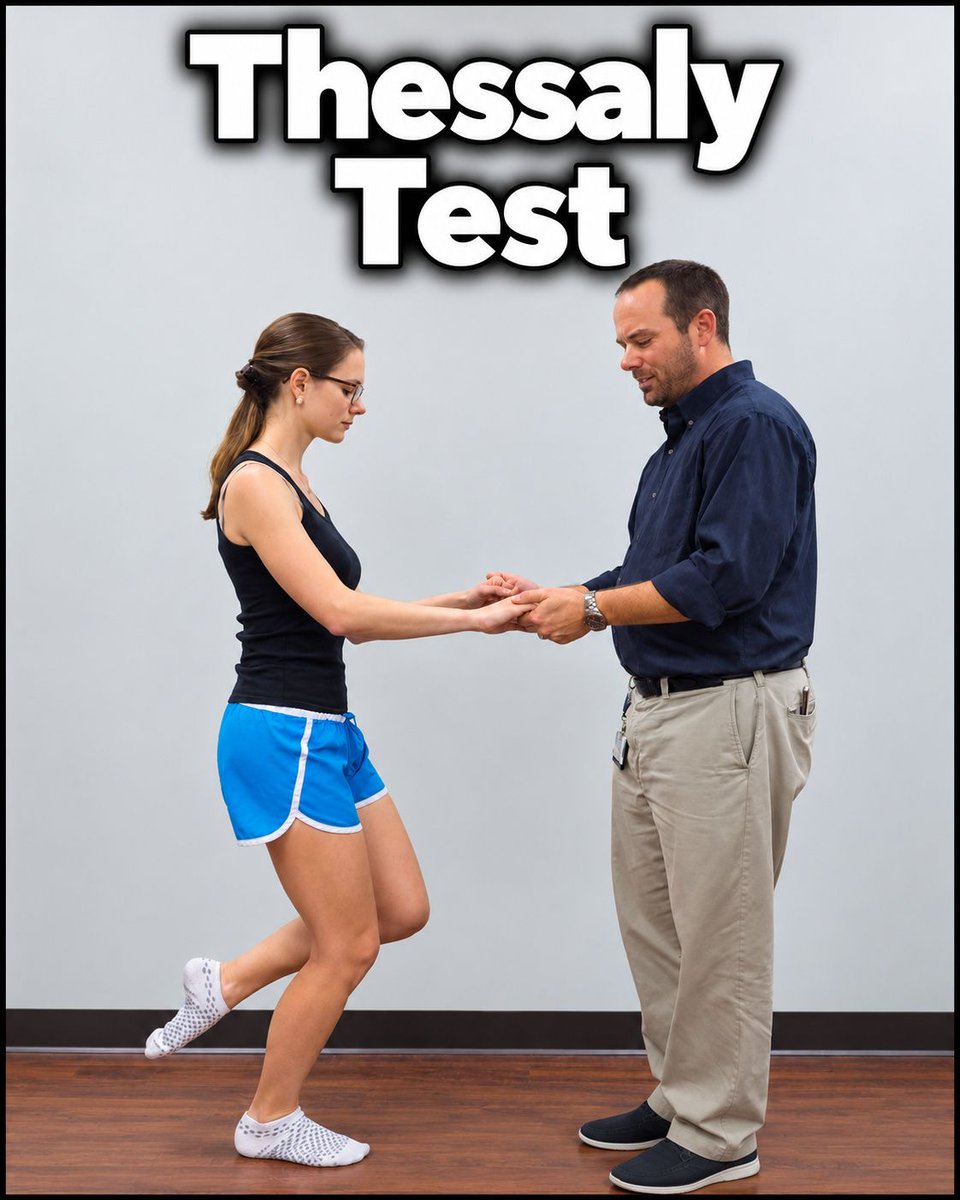
🦴 Thessaly Test for Meniscus Tear
The Thessaly test evaluates knee pain using a weight-bearing rotational maneuver. With support for balance, the patient stands on the affected leg and rotates inward and outward 3–4 times at 5° and 20° of knee flexion.
Start on the unaffected side to practice. Reproduction of joint-line pain suggests a positive test and should be interpreted alongside the history and other examination findings.
🔗 Link: https://t.co/Qpo7dyrAPN
#SportsMedicine #Orthopedics #PhysicalTherapy #MedicalEducation #KneePain
- اختبار Arm Squeeze test من الفحوصات الي مسحوب عليها مقارنة بفحوصات أخرى معروفة لكن دراسة اليوم غيرت نظرتي فيه إليك ماتقوله هذه الدراسة
- هدف الدراسة: الباحثون أرادوا اختبار مدى فائدة ودقة اختبار اسمه Arm Squeeze Test (اختبار ضغط الذراع) للتمييز بدقة عما إذا كان ألم الكتف ناتجاً عن مشكلة في الرقبة ؟
- طريقة عمل الاختبار (How the test is performed) :
يقوم أخصائي العلاج الطبيعي أو الفاحص بالضغط بقبضة يده على الثلث الأوسط من العضد (Middle third of the upper arm) للمريض.
- يُعتبر الاختبار إيجابياً إذا شعر المريض بألم شديد وصل إلى (3 نقاط أو أكثر) على مقياس الألم (VAS Scale) وقت الضغط، مقارنة بشعوره لو ضغطت على مفصل الترقوة الأخرمي (AC Joint) أو المنطقة الأمامية للكتف.
- عينة الدراسة ومن شارك فيها؟ (Methodology & Sample) :
الدراسة شملت 1,567 مريضاً تم تشخيص حالاتهم بدقة مسبقاً عبر الفحص السريري وأشعة الرنين المغناطيسي، بالإضافة إلى 350 شخصاً سليماً تماماً (كعينة ضابطة - Controls).
- تم تقسيم المرضى إلى مجموعات حسب تشخيصهم الصحيح:
903 مرضى لديهم تمزق في الكفة المدورة (Rotator Cuff Tear).
155 مريضاً لديهم تيبس أو التهاب محفظة الكتف (Adhesive Capsulitis / Frozen Shoulder).
101 مريض لديهم خشونة أو مشاكل في مفصل الترقوة الأخرمي (AC Joint Arthropathy).
55 مريضاً لديهم التهاب أوتار تكلسي (Calcifying Tendonitis).
48 مريضاً لديهم خشونة في مفصل الكتف الرئيسي (Glenohumeral Arthritis).
305 مرضى لديهم ضغط على جذور الأعصاب العنقية من الفقرة C5 إلى T1 (والتي تسبب ألماً يمتد للكتف).
- النتائج بالأرقام الدقيقة (Results)
لما طبقوا "اختبار ضغط الذراع" على كل هذه المجموعات، كانت النتائج كالتالي :
🔷 مجموعة ضغط الأعصاب العنقية (Cervical Root Compression - 305 مرضى):
🔷 الاختبار كان إيجابياً في (295 مريضاً) من أصل 305!
🔷 يعني نسبة النجاح في رصد المشكلة العنقية بلغت 96.7%.
- مجموعات مشاكل الكتف :
🔶 في مجموعة تمزق الـ Rotator Cuff (903 مرضى): فقط 37 شخصاً طلع عندهم الاختبار إيجابياً (نسبة ضئيلة جداً 3.87%).
🔶 في مجموعة التيبس (155 مريضاً): فقط 3 أشخاص (1.93%).
🔶 في مجموعة خشونة مفصل الترقوة (101 مريض): صفر%
🔶 في مجموعة الالتهاب التكلسي (55 مريضاً): مريض واحد فقط (1.81%).
🔶 في مجموعة خشونة مفصل الكتف (48 مريضاً): 4 مرضى (8.33%).
🔶 في الأشخاص الأصحاء الـ 350: فقط 14 شخصاً أعطوا نتيجة إيجابية (4%).
- القيم الإحصائية للاختبار (Sensitivity & Specificity):
الحساسية (Sensitivity = 0.96):
النوعية (Specificity = 0.91 إلى 1):