We didn't hear much about Hurricane Isaias after it made landfall earlier this month, but the reality is it shifted at the last minute, and the damage to Southeast cotton farmers was devastating.
With winds topping 118 mph, Florida’s Panhandle lost an estimated 95% of its cotton crop. Alabama farmers are also facing significant harvest losses after an already tough growing season.
The winds grew more severe AFTER Isaias made landfall. And it didn't just damage unharvested crops, but also important infrastructure, fertilizer warehouses and peanut buying points. Farmers tell me cleanup in fields will likely last until spring. @NCottonCouncil
https://t.co/9W34cCppyd
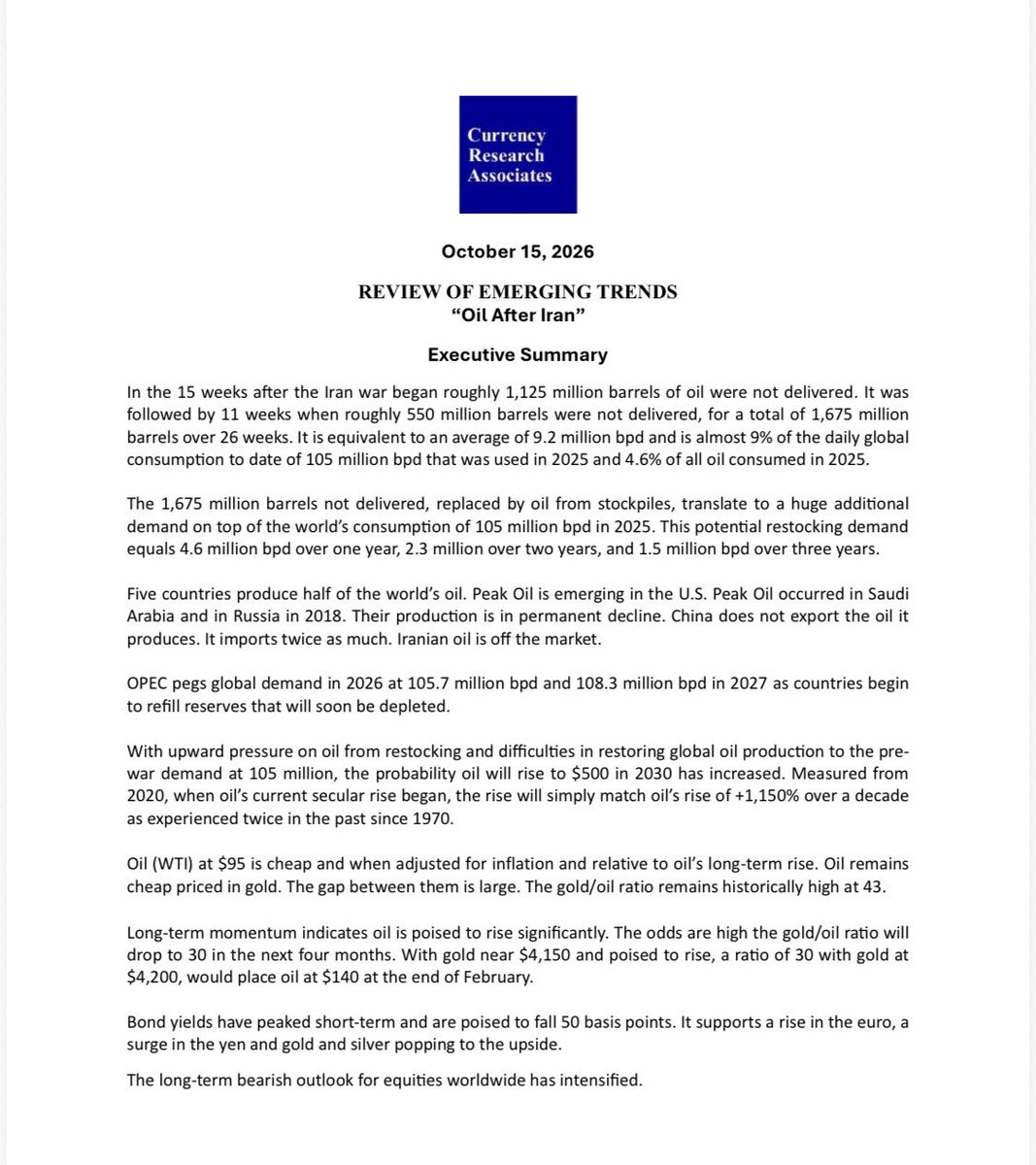
I am only sharing their content because they were the first one in Oct 2025 who recommended buying oil with an initial target of $100 by August 2026.
I honestly cannot digest an oil of $500 so this is not my view.. but these guys have nailed the last year.
Also the publisher of this report “ulf” is an award winning currency strategist with 35 years of experience.
Power of global indices like MSCI. Indonesian market drops more than 10% to new lows as MSCI weighs downgrading Indonesia out of its global emerging market index! Time for all emerging markets to get into the reasons.
https://t.co/KzcRO4V8CW
Spot ZINC treatment changes (TCs) continue to fall further into negative territory. Since the end of last week's Golden Week holiday, TCs have edged down again to NEGATIVE $150 - $160 per tonne... or $235 – $245 per tonne BELOW the 2026 benchmark of $85 per tonne of zinc concentrate.
While zinc concentrate spot TCs have traded in and out of negative territory over the past ~2 years (see chart 👇), this week's spot prices (-$150 to -$160) are an all-time low.
As mentioned before with copper, given the wide gap between spot and benchmark TCs, there is a real chance, once negotiations start next week, that we won't reach a benchmark settlement for 2027.... for the first time ever. This would mean industry-wide copper concentrate offtake agreements shift to rolling spot-market index pricing…. A SIGNIFICANT industry shift.
Unlike copper, while tight zinc concentrate supply has also driven a wide gap between spot and benchmark zinc concentrate TCs, we don't see any risk of this market moving to a rolling spot-market index...
What we do expect is that the miners will continue to have greater negotiating power and so the annual benchmark price will fall further.... PLUS we expect to see the introduction of payables for other metals like germanium...
The annual benchmark for zinc TCs typically doesn't get decided until February, so we are still a few months away until we'll find out.
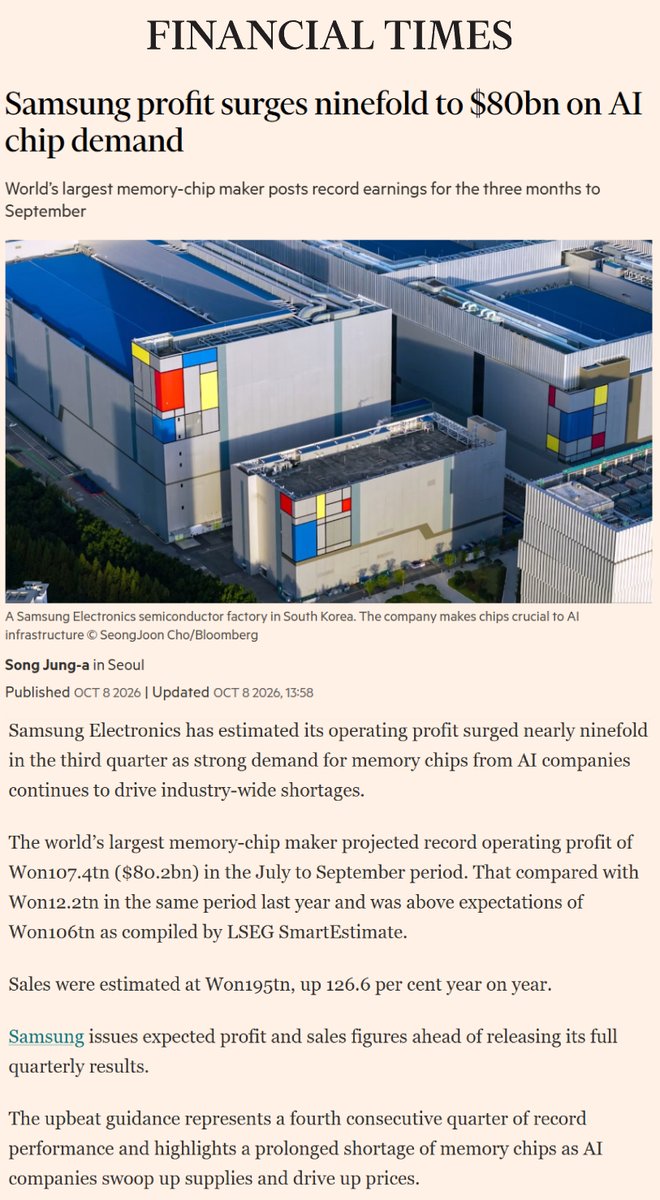
Be hungry like Samsung.
Samsung has just recorded a quarterly operating profit of USD 80 billion or almost Rs 8 lakh crore! Its annual profit may exceed the combined profits of all listed companies in India.
Its story is very amazing. Unlike the US tech companies which were founded as tech companies, Samsung was founded as a trading company which moved into textiles and food processing. Much later, it moved to consumer electronics like ACs and mobile phones. And from there into cutting-edge memory chips. What an evolution.
Companies like Samsung generate lakhs of jobs in Korea and other countries, including India. And women are a big part of the workforce.
Samsung, which is owner-driven, has shown how companies must remain hungry and dynamic to do more even when they have achieved considerable success.
Keep growing and innovating. Nothing is impossible.
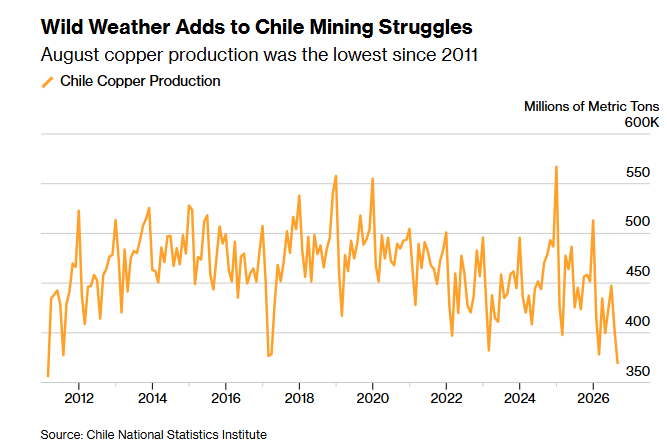
Copper production slumped at two of Chile’s major mines in August, contributing to a sharp decline in output from the world’s largest copper producing country 🇨🇱 .
- Production at @bhp’s Escondida mine, the world’s largest copper mine, fell 28% year-on-year to 76,100 tonnes of copper… a 15% month-on-month decline.
- Production at @AngloAmerican and @Glencore’s Collahuasi mine, fell by 25% to 26,500 tonnes of copper… a 31% month-on-month decline.
- The combine declines contributed to Chile’s total copper production falling 13% year-on-year to 366,300 tonnes of copper in August.
- The causes of the declines cited were a mix of operational setbacks, accidents and severe weather.
- State-owned copper miner @codelco bucked the trend, increasing copper production by 9% year-on-year to 101,700 tonnes of copper, but this was a 10% month-on-month decline.
Source: @bloomberg
LME week, or London Metals Week, gets underway in a weeks time. The week is the traditional starting point for negotiations between copper miners and smelters over the ‘annual benchmark’ for Treatment Charges & Refining Charges (TC/RCs), which are used in long term copper concentrate supply contracts.
Spot TC/RCs are over $250 per tonne & 25 cents per pound LOWER than the 2026 benchmark of $0 per tonne & 0.0 cents per pound (set in November 2025). This is because over the past 12 months the market has entered an unprecedented concentrates deficit.
In other words, instead of paying for concentrate to be smelted, miners are currently PAID BY SMELTERS over $250 per dry metric tonne of concentrate delivered and 25 cents per contained pound of copper refined.
When negotiations start next week, the expectations between the miners and smelters regarding the 2027 TC/RC benchmark will be very far apart.
There is a real chance, for the first time ever, that no annual benchmark settlement will be reached for next year. If that happens, the copper concentrate industry will need to adapt to life without widely accepted annual benchmark terms. This would mean concentrate offtake agreements moving to rolling spot market index pricing.
We cannot understate how significant a change this is.
With no change to the deficit in copper concentrate supply, the negotiation power stays with the miners… so TC/RCs will remain deeply negative.
Cotton has never been an easy crop.
It has weathered drought. Markets. Rising costs. Changing policies. Changing times.
And still, every year, producers put seed in the ground believing in what comes next.
That’s the story of cotton worth telling today.
On World Cotton Day, we celebrate more than a crop. We celebrate the people who keep choosing it, fighting for it and building its future — one season at a time.
Cotton is resilient because cotton people are resilient.
#WorldCottonDay #Cotton #TexasCotton #CottonFirst
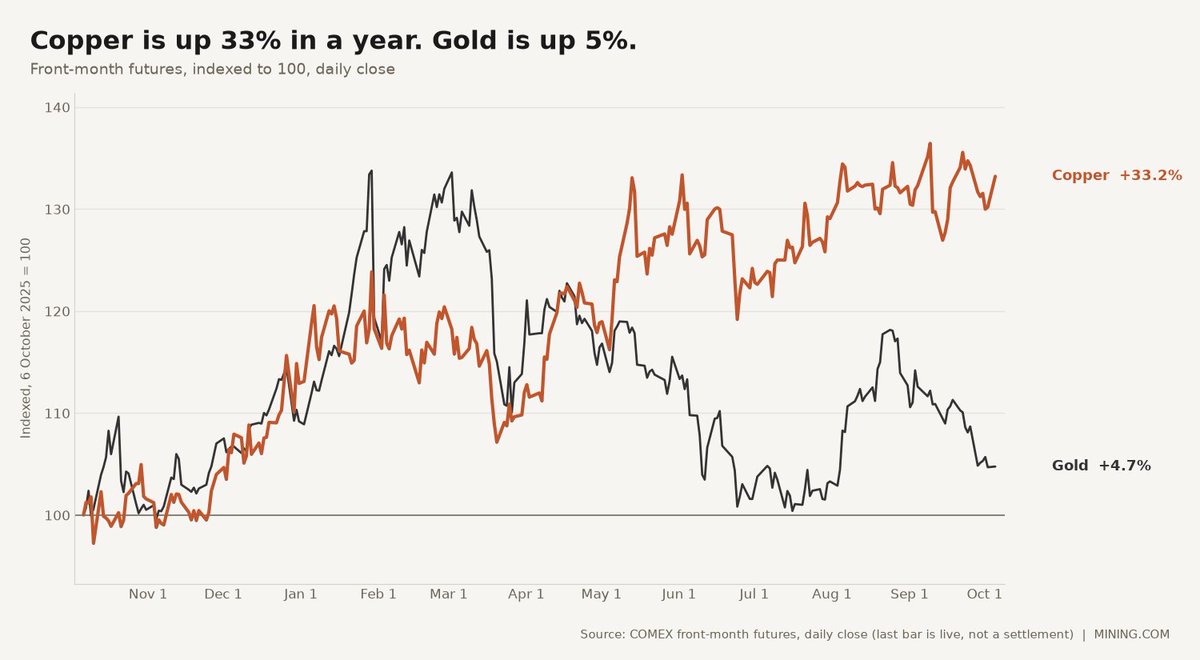
Copper prices are soaring📈
⚠️The biggest miners are producing less.
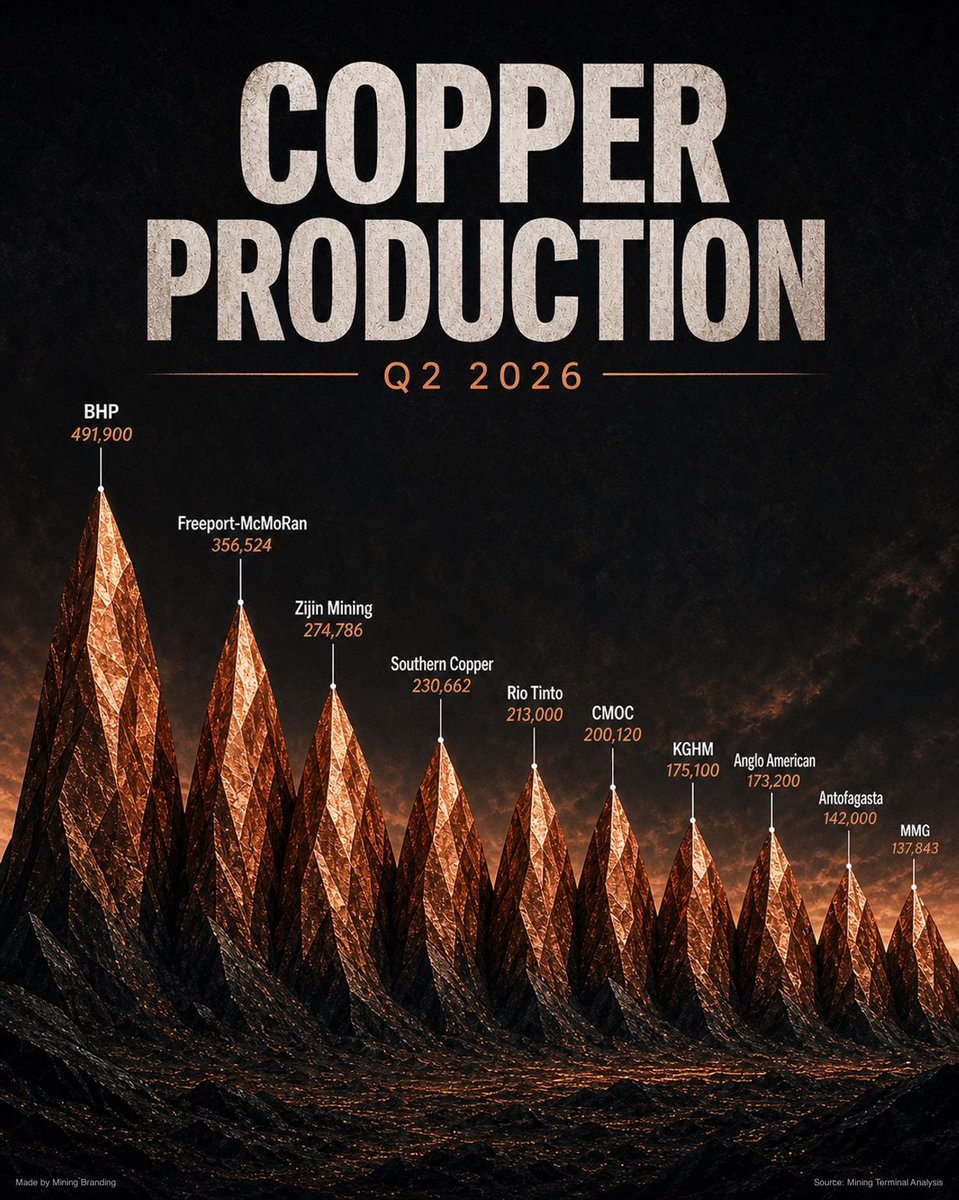
🇦🇺BHP, the world's largest copper miner, produced 492kt in Q2. That's down 5% year on year.
It expects to produce 1.65 to 1.80 Mt next year, against 1.95 Mt this year.
🇨🇱Codelco's own mines produced 564kt in H1, down 11%.
Freeport's output fell after the mud rush at 🇮🇩Grasberg.
Meanwhile prices have jumped.
BHP's average realised copper price was $5.74/lb this financial year, up 35%. Freeport got $6.17/lb in Q2, against $4.54 a year earlier.
The reason is geology.
The giant mines are getting old.
At Escondida, the world's largest copper mine, ore grade fell from 1.02% to 0.90%.
That means more rock moved for less metal.
New mines take more than a decade to build, so high prices can't fix supply quickly.
The incentives point one way… Miners earn more from fewer tonnes: Codelco's H1 EBITDA rose 68%.
Grids, data centres and EVs all need copper, and US power demand alone is heading for a fourth straight record.
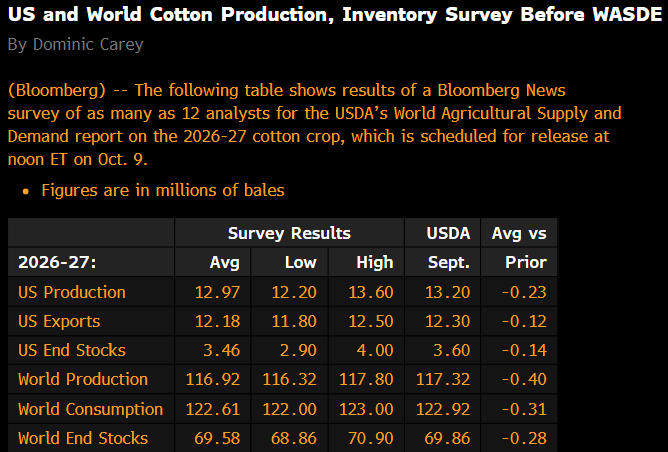
Bloomberg's analyst survey for US and global #cotton for October's WASDE report on Friday, October 9. The mean pre-report survey estimates that US production will decline to 12.97 mb (we're at 12.90 with downside room) and ending stocks at 3.46 mb, -.14mb from September.
Deutsche Bank's head of metals research says the US and China have probably locked up about 70% of the world's aboveground copper.
His target: $22,050 a tonne by Q2 2027, almost 50% above today.
Ghali calls it the most acutely scarce copper market since the 1980s.
Copper supply from Chile, the world's largest producer, continues to underperform.
@Bloomberg reports that copper production in Chile was 369,500 tonnes during August 2026 .... vs 403,424 tonnes in July... and 423,643 tonnes in August 2025.
In addition, the Shanghai Futures Exchange (SHFE) recently released its weekly metal stockpiles for the week ending September 30th. Copper stocks are 38,744 tonnes.... down 18% (-8,403 tonnes) week on week). At the start of the year, SHFE stocks were over 400,000 tonnes.
https://t.co/NZ2x3BObRt
Coming Soon In my new Article - COPPER :)
Smelter profit now comes from sulphuric acid, not from copper.
Hindalco MD said in Aug 2026: with the TC/RC so low, we are counting on sulfur. Sulphur is above $1,000/t because of the West Asia war and the Hormuz disruption. China banned acid exports from 1 May 2026.
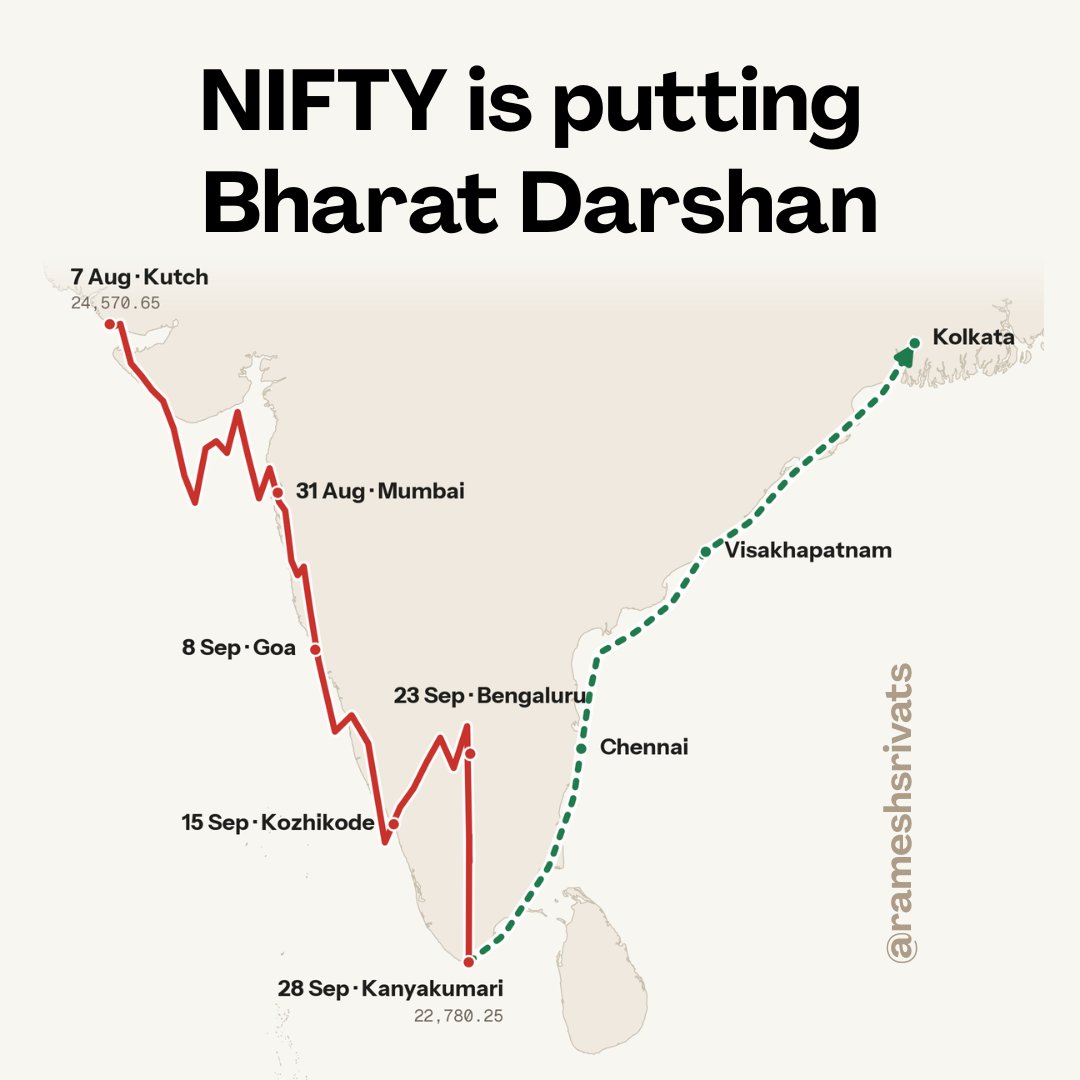
Investors, no need to panic. NIFTY is just putting one quick Bharat Darshan.
Started at Kutch, and then Mumbai, Goa, Kozhikode, Bengaluru, and now at Kanyakumari.
Let's hope it goes on to visit Chennai, Vishakapatnam & Kolkata soon.
Funds dumped Softs in the latest COT report, led by Cotton, Sugar, Coffee & Cocoa. 🍬☕📉
Selling continued through Friday as the Trump-Xi meeting produced no ag purchase headlines. Quarter-end and USDA Grain Stocks are up next. 🌾📊
#ags#hedgefunds#moneyflows
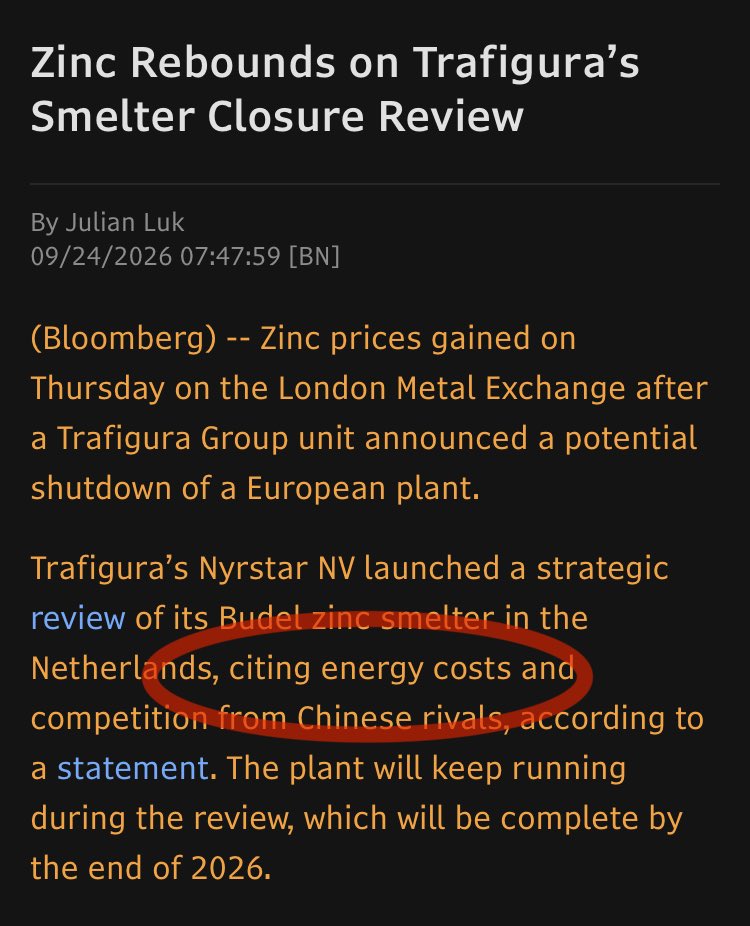
Major zinc smelter in Europe may shut down on energy costs.
(Stuff like this is generally designed to light a fire under the government’s ass to do something to keep it running)