She was seventeen years old. Her rapist offered her “honor.” She said no.
In 1965, Franca Viola was kidnapped in Sicily and held captive for eight days. She was beaten and sexually assaulted by Filippo Melodia. Then he offered her a way out. Marry him, and the shame would disappear.
Under Italian law at the time, a rapist could avoid punishment by marrying his victim through a practice known as “reparatory marriage.” Families were expected to accept it. Communities demanded it. Refusing could bring lifelong shame.
Franca refused.
When police rescued her, she rejected the marriage, rejected the silence, and refused to let her attacker decide her future. Her community turned against her family. Their vineyards and olive groves were burned. Neighbors stopped speaking to them. The message was unmistakable: this was the punishment for saying no.
But Franca’s father, Bernardo, stood beside his daughter.
In 1966, Franca entered an Italian courtroom and publicly testified against her attacker. She was only seventeen. But her voice forced an entire country to confront a law that treated a woman’s “honor” as something that could be repaired by marrying the man who had violated her.
Melodia was convicted and sentenced to eleven years in prison. Franca became the first Italian woman to publicly reject reparatory marriage and successfully prosecute her attacker.
The law remained. It was finally abolished in 1981.
Franca never wanted fame. She wanted justice.
In 1968, she married Giuseppe Ruisi, a childhood friend who had stood beside her through the ordeal. They built a quiet life together in Sicily.
She had survived something terrible. But she refused to let it define her — or any other woman after her. 🌹
Dear brothers & sisters (Indians),
We deserve a society of mutual respect, not hate each other on the basis of caste/ religion.
Responsibility lies on our shoulders.Parents must raise children to face the outer world,admission in IIT/ medical/ IIM is not goal,is beginning life.
Sahil, a B Tech student at IIT Bombay, died by suicide after being caught using a phone during an exam. IIT said he uploaded the paper to ChatGPT for answers inside the exam hall.
Police booked the faculty who caught him under the SC/ST Atrocities Act on the complaint of Sahil's father, because why not. If there’s a mechanism to spin the story from "died by suicide out of fear after getting caught cheating" into "died after being forced to cheat because evil faculty relentlessly tormented him for his caste and threatened to fail him," you might as well pull that lever.
Sahil’s father claimed that "under instructions from IIT Director", faculty member Suryanarayan Dulla had been targeting his son with casteist slurs since long, a revelation that apparently only struck him post-tragedy.
Caste-based activist groups and political parties will inevitably exploit this to engineer Rohith Vemula 2.0. We are drifting toward an educational environment where faculty members dare not report academic dishonesty or fail underperforming students, wary that a Atrocities case could be weaponized against them retrospectively.
Bishnupriya Manipuri raasleela 😻🪷
(Also thanks to siddharth sinha for sharing this beautiful dance of his sister!)
Truly India that is Bharath is so diverse 🇮🇳
“आप हमको चाइनीज़ बोलने से बहुत गुस्सा होता है, बहुत दुखी होता है। प्लीज़ हमको ऐसे मत बोलो। हमको इंडिया बोलो इंडिया, हमको चाइनीज़ मत बोलो…”
- ईटानगर से प्यारी छोटी इंडियन की फ़रियाद
On one mountain,
Pakistan buried peace beneath the snow.
In Lahore, leaders smiled for the cameras.
In Kargil, Pakistani soldiers climbed towards India.
And Delhi heard nothing.
20 February 1999.
Atal Bihari Vajpayee entered Lahore.
Nawaz Sharif welcomed him.
Tables carried diplomacy.
And biryani too.
The Lahore Declaration was signed.
Peace had found its photograph.
But above Dras.
Kaksar.
Batalik.
Mushkoh.
Pakistan’s soldiers were stealing the winter.
Indian troops had left some frozen heights.
Pakistan used the silence.
Pakistani’s crossed the LoC.
Bunkers rose on Indian soil.
Pakistani Guns watched the Srinagar-Leh highway.
Vajpayee returned with promises.
Pakistan stayed behind with positions.
Our intelligence saw fragments.
But missed the invasion.
3 May.
Not a satellite.
Not a secret agency.
A Ladakhi shepherd saw strange movement.
Tashi Namgyal raised the alarm.
Patrols climbed.
Some never returned.
Only then did India understand.
This was no infiltration.
This was an occupation.
26 May.
Operation Vijay was underway.
The Air Force launched Operation Safed Sagar.
Now the story has changed.
Indian soldiers climbed cliffs at night.
Thin air.
Heavy rifles.
Death waiting above.
At Tololing.
Tiger Hill.
Point 5140.
Point 4875.
They climbed into machine-gun fire.
They fought bunker to bunker.
Some fought while bleeding.
Some died before the Tricolour reached the summit.
Pakistan held the height.
India held the nerve.
India did not cross the LoC.
That restraint isolated Pakistan.
The world saw through it.
26 July 1999.
The peaks were ours again.
And the tricolor again flew high.
But victory had a bill.
527 Indian soldiers were dead.
1,363 were wounded.
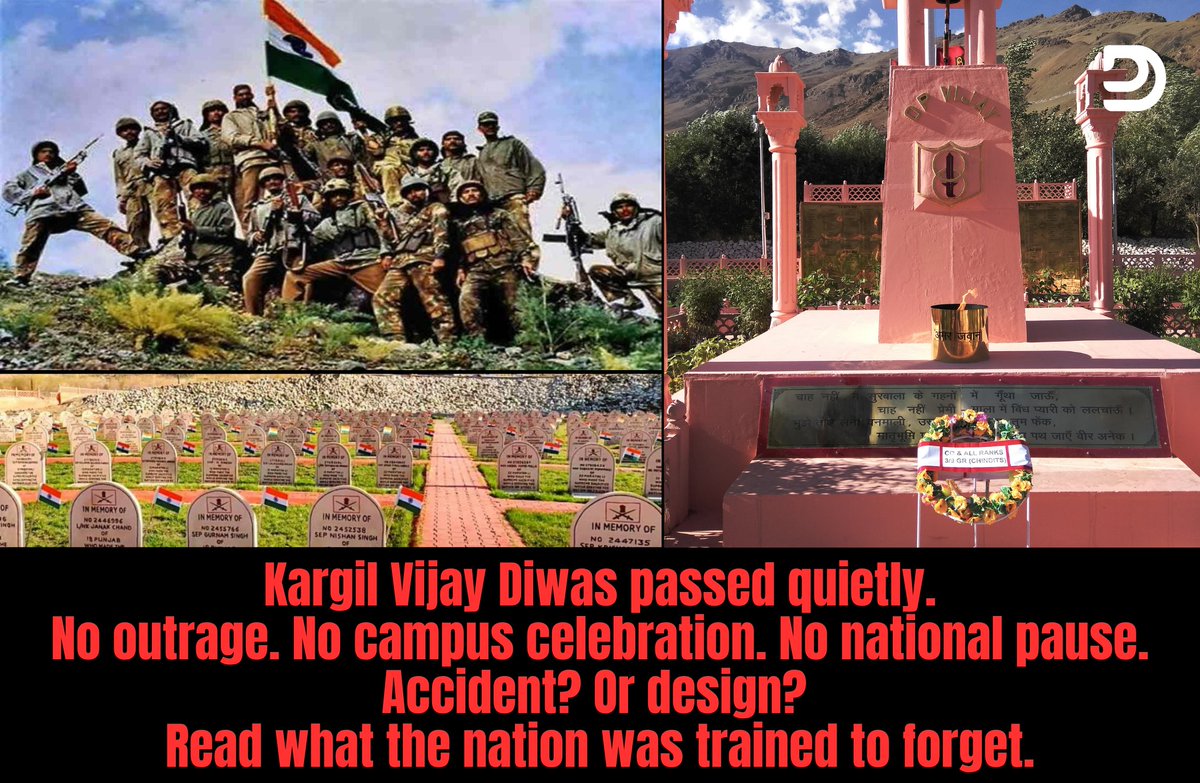
26th July 2026.
Was Kargil Vijay Diwas.
Yet our feeds remembered protests.
Resignations.
Influencers.
Jantar Mantar drama.
The men who returned our mountains received recycled posts.
And India still avoids the deeper lesson.
In 1947.
Aggression met hesitation.
In 1971.
India captured over 90,000 prisoners,
yet failed to secure PoJK.
In 1999.
Lahore hospitality hid Kargil betrayal.
Months later,
IC-814 was hijacked.
India released three terrorists.
One was Masood Azhar.
He built Jaish-e-Mohammed.
India still pays the interest.
Our soldiers show the nation how to stand.
Our politicians keep teaching it how to bend.
Then the enemy crossed mountains.
Today, pressure rises inside our streets.
Abuse is now mainstream.
Vulgarity has shifted from Bollywood to Roads.
Slurs on the Prime Minister are normalised.
Insults on the Indian forces are tolerated.
And yet, the uniform held the line.
Will the political class ever grow the same spine?
But perhaps the question is also for us.
Why does Kargil Vijay Diwas pass quietly?
Why are schools silent?
Why are universities indifferent?
Why do families not gather?
We celebrate Diwali with lamps.
But the men who protected every festival, receive one forgotten post.
Why?
Everyone knows the Uphaar cinema fire. Fifty nine people who went to watch a war film in Delhi and never came home.
Almost nobody knows that the safest man in that hall, the one person trained and calm enough to walk straight out, chose to stay inside until it killed him.
His name was Captain Manjinder Singh Bhinder.
On the thirteenth of June 1997, he was at the Uphaar cinema in Green Park watching Border, the film about the soldiers of Longewala. He was a real one.
An officer of the 61st Cavalry, a national level horseman who had just won gold at the National Games and was being talked about for the next Asian Games. He was there with his wife and his four year old son.
Partway through the film, a transformer in the building caught fire. Thick black smoke began filling the balcony. The exits were few, badly lit, and some were blocked. People had minutes, and most of them did not know which way to move.
He got his own family up and moving toward the way out, the way any man would.
And then he turned around and went back in.
He understood what a panicking crowd in the dark does. It bunches at the wrong doors, it freezes, it tramples itself. So he put himself in that stairwell and did the job he was trained to do.
He took charge. He steadied people. He guided women and children through the smoke toward the narrow passage that led out, group after group, breathing that air the whole time.
More than a hundred and fifty people got out of that cinema alive because a soldier stood in the dark and refused to leave until they did.
He did not get out. Neither did his wife. Neither did his little boy.
There is a Netflix series about the Uphaar fire. It is told, rightly, through the eyes of two parents who lost their children and spent decades fighting for justice. His name is not in it.
And there is one more thing the country should be made to sit with. After he died saving over a hundred and fifty of its citizens, his elderly parents had to fight the defence ministry for years for his pension, because a clerk's rule said he had not died fighting an enemy.
He walked out of that fire once, with his family, and he was safe. Then he heard the people still screaming inside, and he went back.
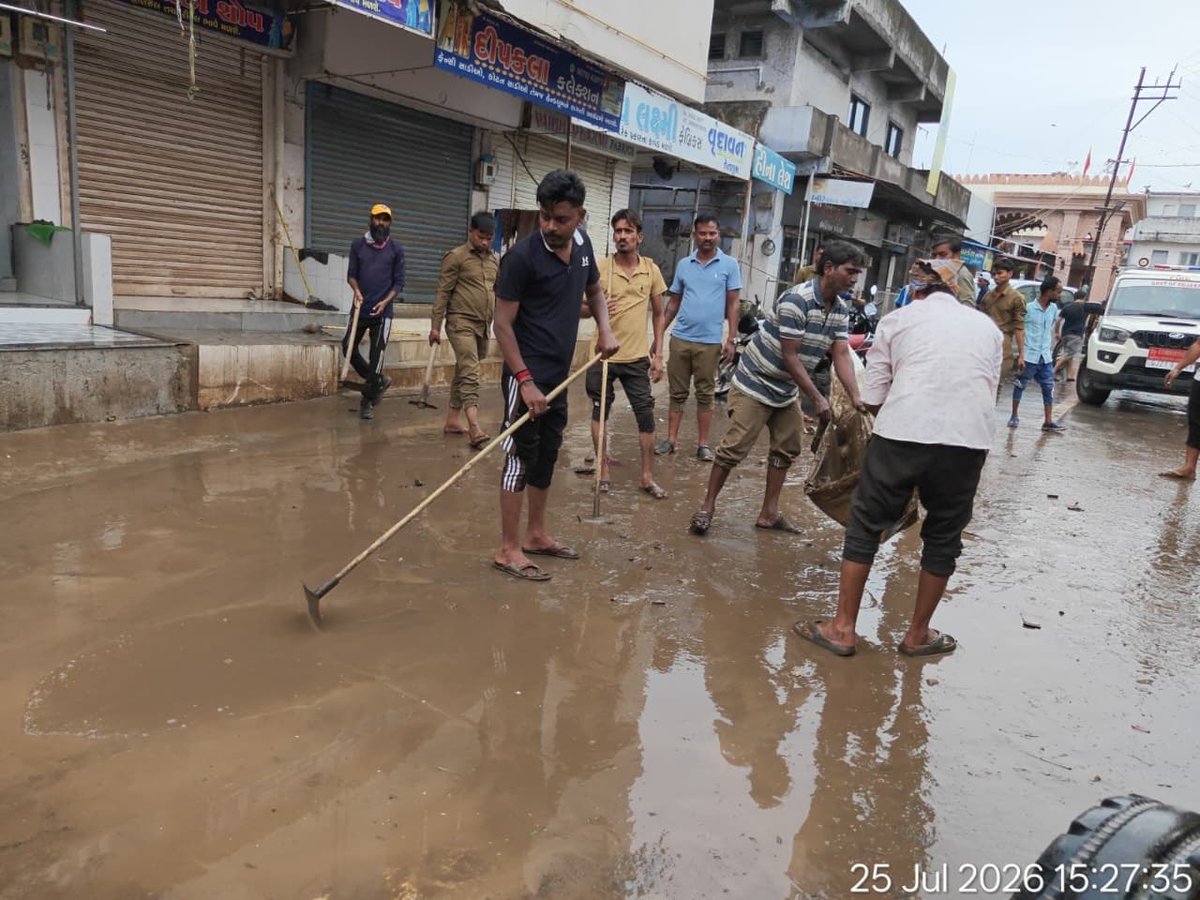
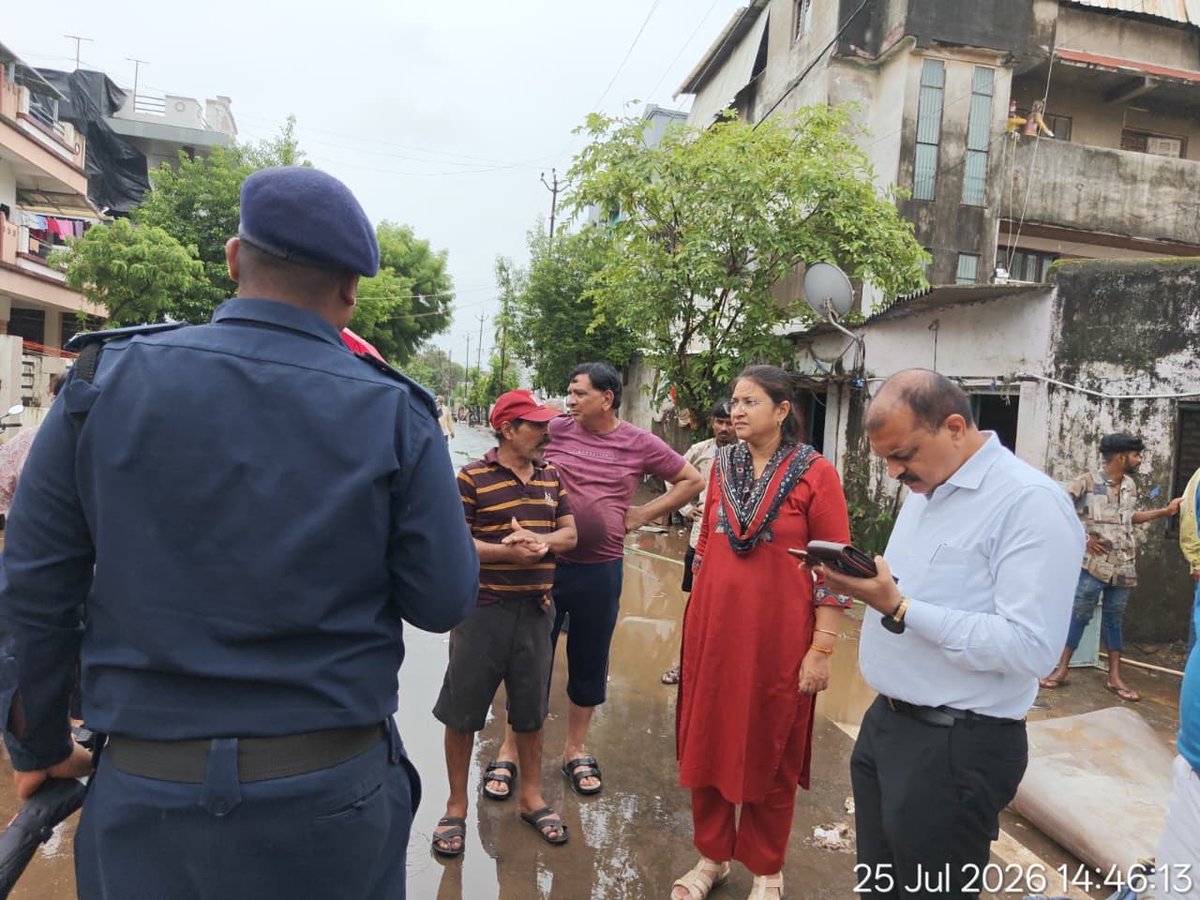
માન.પ્રભારી સચિવશ્રી આર્દ્રા અગ્રવાલ દ્વારા નવસારી શહેર અને ગણદેવી તાલુકાના ગડત, વાઘરેચ ગામ અને બીલીમોરામાં પૂરગ્રસ્ત વિસ્તારોની મુલાકાત લઇ સર્વે કામગીરીનું નિરીક્ષણ કરવામાં આવ્યું તથા જરૂરિયાતમંદ લોકોને કેશડોલ ચૂકવણા કરવા સૂચના આપવામાં આવી.
@Bhupendrapbjp@CMOGuj
The Taj was burning and full of terrorists, and he spent the whole night getting his guests out. What almost no one knew was that his own wife and his two little boys were trapped upstairs in the fire the entire time.
His name is Karambir Singh Kang.
On the night of 26 November 2008, ten gunmen came out of the sea and tore Mumbai apart. One of their targets was the Taj Mahal Palace hotel. He was its General Manager.
He was not staying late at work. He lived in the hotel, in a suite on the sixth floor, with his wife Neeti and their two sons, aged fourteen and five.
When the attack began, he was downstairs. And downstairs is where he stayed, because the building was full of guests who were his responsibility, and someone had to get them out. Through the smoke and the gunfire, all night, he organised evacuations, guided people to exits, and kept working the floors.
He knew the fire had reached the sixth floor. He knew his family was up there. His wife managed to call for help. He could not get to them, and he made the impossible choice to keep doing his duty to a few hundred strangers while his own family was beyond his reach.
By morning, Neeti and both boys were dead.
He had lost everything a man can lose, in his own home, on his own watch. And here is the part that tells you who he is. He did not leave the Taj. He stayed on as its General Manager and helped rebuild it, and when it reopened he was still there, standing in the lobby.
He said something afterwards that is almost too much to bear. That a captain does not leave his ship. That the hotel was his responsibility, and the people in it were his responsibility, and on that night he did the only thing he knew how to do.
He saved hundreds of people's families by giving up any chance of saving his own.
The Taj was burning and full of terrorists, and he spent the whole night getting his guests out. What almost no one knew was that his own wife and his two little boys were trapped upstairs in the fire the entire time.
His name is Karambir Singh Kang.
On the night of 26 November 2008, ten gunmen came out of the sea and tore Mumbai apart. One of their targets was the Taj Mahal Palace hotel. He was its General Manager.
He was not staying late at work. He lived in the hotel, in a suite on the sixth floor, with his wife Neeti and their two sons, aged fourteen and five.
When the attack began, he was downstairs. And downstairs is where he stayed, because the building was full of guests who were his responsibility, and someone had to get them out. Through the smoke and the gunfire, all night, he organised evacuations, guided people to exits, and kept working the floors.
He knew the fire had reached the sixth floor. He knew his family was up there. His wife managed to call for help. He could not get to them, and he made the impossible choice to keep doing his duty to a few hundred strangers while his own family was beyond his reach.
By morning, Neeti and both boys were dead.
He had lost everything a man can lose, in his own home, on his own watch. And here is the part that tells you who he is. He did not leave the Taj. He stayed on as its General Manager and helped rebuild it, and when it reopened he was still there, standing in the lobby.
He said something afterwards that is almost too much to bear. That a captain does not leave his ship. That the hotel was his responsibility, and the people in it were his responsibility, and on that night he did the only thing he knew how to do.
He saved hundreds of people's families by giving up any chance of saving his own.
Sharvaanica, India’s Young Chess Prodigy, Became A World Champion At Just 10 And Is Making The Nation Proud With Her Brilliant Mind On The 64 Squares 🇮🇳♟️🏆
Salute 🫡 Dr.Nagendra Sharma, a calming doctor for a large group of patients , he helped him living life free of stress,strain & acquiring smooth non- jerky life.
True social service, a great Nationalist approach & pride of medical fraternity. 🇮🇳🙏
For the last 26 years, Jodhpur’s Dr. Nagendra Sharma has been treating epilepsy patients completely free of cost—not for recognition, but to fulfill a promise he made to his mother in her final moments.
A highly respected neurosurgeon, Dr. Sharma chose a path that very few take: ensuring that no one suffers because of poverty, myths, or lack of medical awareness.
Growing up in severe poverty near Ratangarh–Churu, he saw his mother struggle for five long years with an illness no one could diagnose. Just before passing away, she told him:
“Be a doctor who feels the pain of the poor and never uses medicine as a business.”
Becoming a doctor felt almost impossible—his family didn’t even have enough for daily needs. Yet, he fought every obstacle, completing his MCh in Neurosurgery from Seth GS Medical College & KEM Hospital, Mumbai, in 1987. By 1989, he had set up Western Rajasthan’s first Neurosurgery Department.
In 1999, he was deeply disturbed by how epilepsy patients were treated—people were made to smell shoes, beaten with slippers, or sent to fake exorcists instead of receiving medical help. Costly treatment and lack of education meant many never got proper care.
Determined to change this, Dr. Sharma started free epilepsy camps on 28 February 1999, arranging medicines from pharma companies so every patient could receive treatment without worrying about money.
Since then, over 80,000 individuals have been treated. Thousands of women have safely become mothers, and countless children with epilepsy now go to school without discrimination.
Decades have passed, but his mission hasn’t slowed down. His free epilepsy camps continue to bring relief, dignity, and hope to those who have nowhere else to turn.
Let’s honour real-life heroes like him.
#InspiringIndia #Healthcare #EpilepsyAwareness #DoctorsOfIndia #Neurosurgery #Rajasthan #FreeMedicalCamps #RealHeroes
Mohammed bhai,
There is no Muslim/Hindu rapist🙏 . Rapist is criminal. They shouldn’t be part of any society. Rally is not verdict.
An Indian doctor going to USA, raping many including 2 yrs , OMG ,this shame for India & US. Black Dot. Allah will never forgive him.
@total_woke_ Yes, Ashok Kharat, Asaram Bapu, Ram Rahim, etc... are Muslims.
No Muslim would support any rapist or murderer, but Hindus take out rallies in support of rapists and murderers
I agree, advantage should reach to families who are still underprivileged. Those come under reservation category who already took advantage are privileged & there are many who are in need of support from government/ society because they come from poor/interior part of India.
The inspect of Bhartiy Sanskriti
Mr. Kenichiro Toyofuku, Director of Sustainability at Maruti Suzuki
India Limited.
A Japanese man... fully vegetarian. How? 20 years ago he came to India, picked up yoga, and his teacher changed everything - his food, his mindset, his entire life.
From meat to vegetables, from Japan to India — this is one of the most powerful transformation stories we've heard.
शिमला में किसान विरोध प्रदर्शन कर रहे थे जिससे ट्रैफ़िक पूरी तरह से रुका हुआ था।
लेकिन, जैसे ही भारतीय सेना का एक ट्रक आया, सभी किसानों ने उसके लिए रास्ता बना दिया।
एक बात तो तय है, हमारी सेना ही एकमात्र ऐसी संस्था है जिससे देश का हर नागरिक सचमुच प्यार करता है और जिसका सम्मान करता है।