@patrickc@brenthoberman Which economies are doing well then? Looking the Stripe data alone? Entrepreneurship shows health of innovation and autonomy of wealth creation.
You have no experience.
You’ve never started a company.
You’ve never had a full time job.
Nike is going to kill you.
You’re a kid.
You don’t have technical skills.
You shouldn’t build hardware.
Apple is going to kill you.
You can’t build hardware.
You can’t measure heart rate non-invasively.
Athletes don’t care about recovery.
Under Armour is going to kill you.
It won’t be accurate.
You don’t listen.
You’re an ineffective leader.
You can’t recruit great talent.
You’re going to have to pay every athlete.
You can’t measure sleep non-invasively.
It’s too expensive to research.
Athletes are a small market.
The product costs too much to make.
The product costs too much to sell.
Your valuation is too high.
Consumers aren’t going to want it.
Hardware is too hard.
You should measure steps.
Fitbit is going to kill you.
You can’t build a marketing engine.
You can’t raise enough money.
You need a real CEO.
Google is going to kill you.
You can’t be a subscription.
You can’t build a brand.
You can’t do consumer in Boston.
Your valuation is too high.
You shouldn’t make accessories.
You shouldn’t make apparel.
Lululemon is going to kill you.
You can’t predict Covid.
Stay in your niche.
You are going to run out of money.
You can’t build a health platform.
Amazon is going to kill you.
You can’t measure blood pressure.
You can’t get medical approvals.
The market is too small.
You don’t understand AI.
The market is too competitive.
It won’t work internationally.
The supply chain is too complicated.
You can’t build an AI.
You can’t raise enough money.
It’s too competitive.
Healthcare isn’t going to want it.
…
Just keep going ✌️
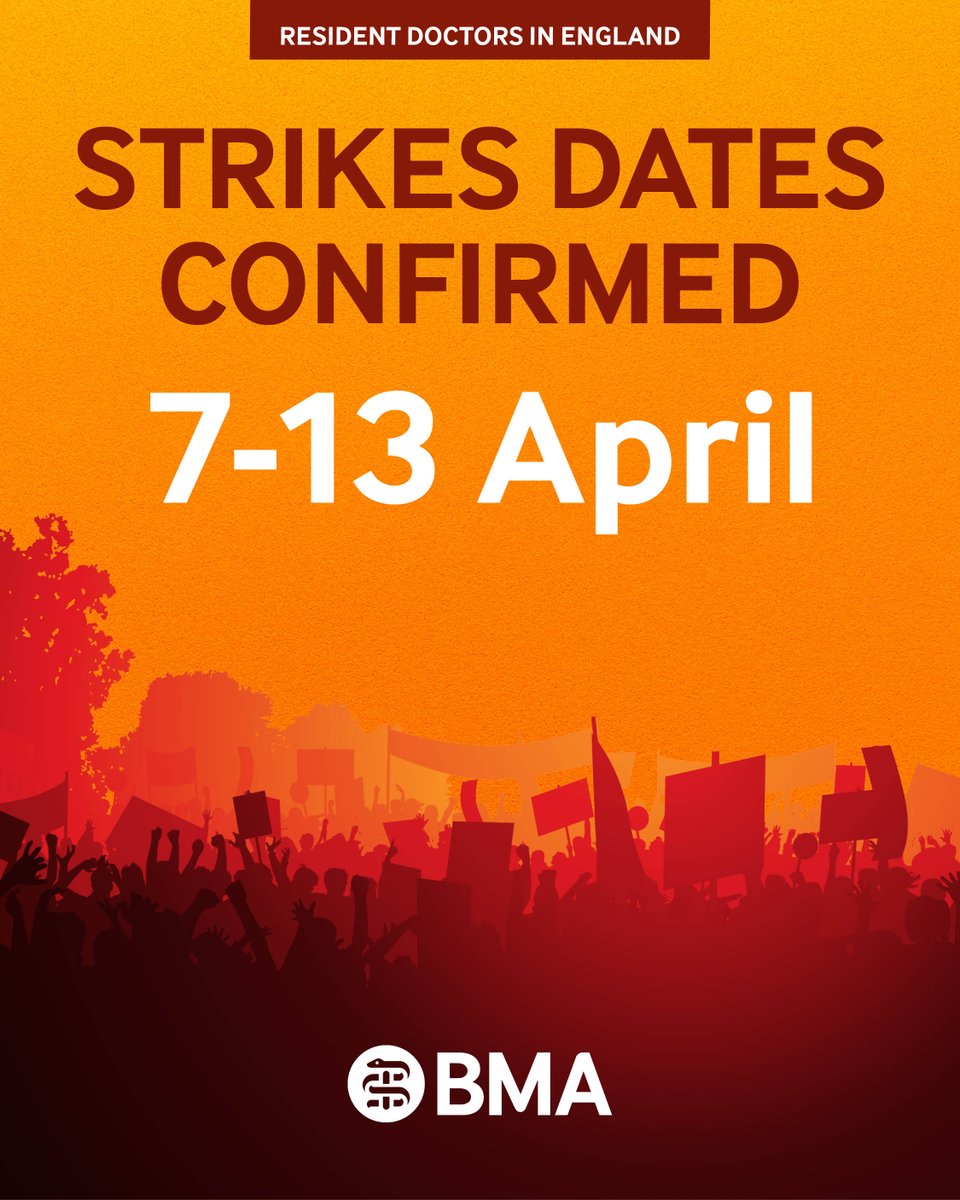
Resident doctors have been left with no choice but to strike. Weeks of negotiations with the Government have failed to deliver enough progress on pay, with the goalposts being moved at the last minute.
We have called six days of industrial action to make the Government listen, stop the game playing, and come back with an offer that delivers fairly on both jobs and pay.
Stressors shorten life and quality of life. For this reason, along with three days LTFT, I don’t do nights. Disruption in circadian rhythm affects mood. The best thing I ever did and super proud of is retire my mum. My goal is retire my family so they do the things that they love doing. This doesn’t mean not work; just not stressful work. Relationships are better for it.
I’ve been started on dupixent 🙌 a week ago. The biggest factor for inflammation is stress so I’ve been trying to reduce it as much as possible. My goal is to focus on doing my best work and leverage.
1. Stable relationships - I visit friends and family regularly. I go to therapy twice a week. I’m actively learning patience and being a presence for emotional security - so much so that some clinicians think I’m not bipolar.
2. Family death regret - I support my parents’ living costs. Try my best to fulfil their desires.
3. Academic pressure - I do a little bit every often to make sure I spread the stress of exams.
4. Work pressure - I have balanced my hospital life by doing three times a week. I also don’t do nights.
5. Serious illness - I commit to staying healthy and fit.
6. Sleep deprivation - I use eightsleep to control the temperature of my bed as a consequence I now get up early every day.
7. Uncertainty about future - I plan goals and try my best to stick to them. I don’t deep failing to reach my goals; they’re ambitious already.
8. Overcommitment and pressure - every week I prioritise my task and commitments and make sure I’m not stretching myself.
9. Daily/weekly hassles - PA to organise my calendar to limit commitments, do errands. Cleaner to keep things clean and tidy. If I need good whole foods, I will order the food.
10. Financial problems - I have savings and maximise my pension. I have a growing company and stable income.
Mental health toolkit: my schedule allows booking a flight and travelling whenever I need to change my environment. I went to Sri Lanka in April last year.
Friend told me about his attachment style which was super different to what I thought avoidance was. And I’m now sure I don’t have avoidance.
He said if he gets close he then starts not liking the person and convincing himself that he doesn’t actually need them. He has started writing 10 things he likes about the person.
I don’t get that way. I still want to connect but am scared I’m going to get hurt just like in previous relationships/situationships. I don’t feel like I don’t need them. This has made me more sure I’ve got FA.
Given how it may look to the woman, I can appreciate why it’s frustrating. This gives me something to work on, and what I’m working on this year.
It’s communication and connection I want now. Not just the intense moments in life. The older I’ve got I’ve moved away from thrill seeking behaviours. My goal is to become boringly stable. I’ve learned to admire order and mutual work.
Pulse oximetry is a mainstay of anaesthetic monitoring but can be inaccurate in estimating #SpO2 in complex cases and in patients with darker skin. #AI could be used to ensure equitable, robust SpO2 monitoring
https://t.co/MN3XQilnh7
Congratulations to Himidi (L6 CS), Saul (SFM1), Daniel (10C2), Veer (10H1) and Victor (10J1) who have been accepted into the prestigious National Youth Theatre, after auditioning against 4,500 other students 🙌 This brings the number of Habs students accepted into NYT to 35! 🎭
Something I've been thinking about: gene editing drugs (like Casgevy, Luxturna, Zolgensma) are a new paradigm in therapeutics, where it may be possible to cure many diseases with single administrations rather than managing them continuously via drugs that require ongoing use. Despite that promise, though, the CRISPR-focused biotech firms (CRSP, NTLA, EDIT, BEAM) have not been doing well.
There are a lot of problems with imperfect financial incentives in healthcare. Is this an important new one?
In particular: why would insurance companies pay enough for the benefits here? An average enrollee lasts only a few years in the US, so any given insurance company internalizes only a small portion of the benefit from a permanent cure. But if insurance companies (rationally) underfund, pharma companies will then (rationally) underinvest.
In theory, single-payer systems should pay more because of better incentive alignment, but in practice they don't have a tradition of paying enough for pharma innovation. (For the most part, they tend to ride on US coattails.)
So what do we do?
https://t.co/PMbHd90bsD
I’m this close to getting the new pod 5 upgrade. I’ve slept so much better with @eightsleep. I’ll just transfer the pod 4 to my spare double room.