For anyone with endless ideas, this agent age is nirvana as those ideas are met with endless execution, endless exploration. I've never had has much fun working with computers as I do right now. What a time to be alive.
en lo que llevo en el mundo dev, me he topado con varios proyectos en los que he trabajado (y open source) que no llevan una buena práctica de releases
👇
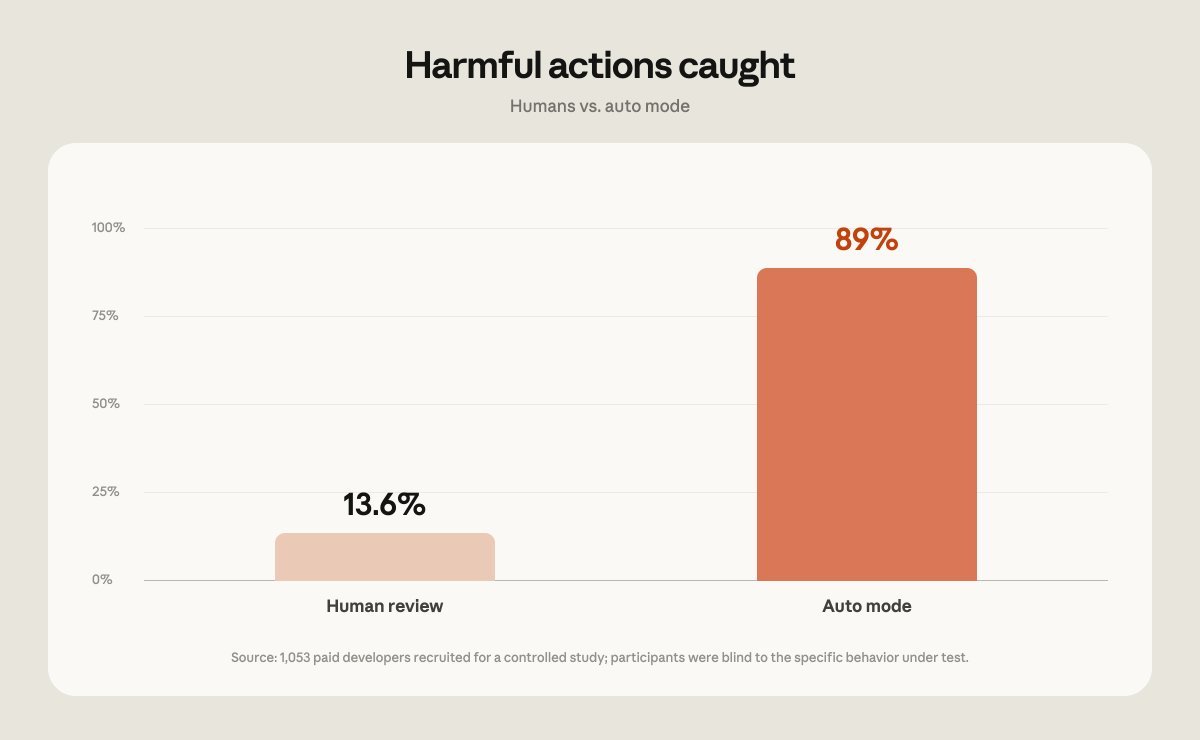
automode is much safer than any other permission system out there, especially reviewing them yourself
excited to announce we're rolling it out to everyone by default, with no overhead cost for the classifier
New in Claude Code: your sessions can now message each other.
Instead of having to re-explain yourself in another session, you can now tell Claude to do it. It sends a summary (not your history or files), and the other session picks it up mid-task.
New in Claude Code: your sessions can now message each other.
Instead of having to re-explain yourself in another session, you can now tell Claude to do it. It sends a summary (not your history or files), and the other session picks it up mid-task.
https://t.co/6H1qq4SyFS is now in the Cloudflare dashboard
make your site agent ready — one-click to enable Markdown for Agents, Content Signals and more
https://t.co/FKLrE85m83
Cloudflare built a browser that runs INSIDE a Cloudflare Worker 🤯
Cloudflare Agents Week day 4 is here, and it's a banger:
🪁 Kitesurf: agent-first browser running on Workers
🕸️ WebMCP: Give any website an MCP interface
⚒️ The next generation of MCP is here
🔍 AI Search improvements + pricing announced
🤖 AI Readiness in the Dash & AEO diagnosis
🌎 Building an open Agentic Internet
🪁 Kitesurf: agent-first browser running on Workers 🪁
There are projects that come up from time to time that are uniquely Cloudflare, and Kitesurf is one of them. Workers are an insanely powerful primitive, and there is very little they can't do these days.
Kitesurf is a browser built for the agentic web. Chromium-backed browsers are large, and use a lot of memory. There simply isn't enough memory for every agent in the world to have a browser. That's where Kitesurf comes in, a lightweight alternative to Chromium-based browsers.
It uses WebAssembly, Dynamic Workers, Durable Objects and more to make this happen. And yes, it can run Doom.
Best of all, it's available in open beta to try today for free, via Browser Rendering's CDP endpoint and Quick Actions.
If you want to see it in action, there's a public playground too, linked below, as well as the full blog post - which is packed with interesting technical details!
🕸️ WebMCP: Give any website an MCP interface 🕸️
WebMCP is a new browser standard that lets any website expose itself via MCP. Rather than an agent having to click around the website, it can interact with it using MCP instead.
You could implement this yourself, but why would you, when Cloudflare can enable it on your site with one toggle?
You can enable this in the dashboard today under Agent Readiness > Labs. There's currently two groups of featuers you can enable, called packs, to help agents browser your website.
⚒️ The next generation of MCP is here ⚒️
The Model Context Protocol (MCP) has evolved over time, and the latest iteration makes it simpler than ever. How? By making it so that an MCP server can be stateless. That removes the burden of sticky sessions and other complexities from running an MCP server.
With the rapid movement of the AI landscape, it's important for companies to move in the direction the puck is going. Once again, Cloudflare is ready to receive the puck, as stateless MCP servers have been possible on Cloudflare for some time.
That means, from day one of the specification being announced, it has been supported on Cloudflare when using the official MCP SDKs.
There's a bunch of other changes as part of this spec, including:
- Elicitation no longer needs an open stream
- Mcp-Method and Mcp-Name in HTTP headers, to avoid parsing request bodies for features such as rate limiting
- MCP now prefers pre-registered clients when the server and client already have a relationship, then Client ID Metadata Documents (CIMD) for dynamic registrations, with Dynamic Client Registration (DCR) as a fallback
And much more. This is a good one to read yourself, as there's a lot of technical depth to the article!
🔍 AI Search Improvements 🔍
AI Search is Cloudflare's offering to solve the problem of how you give your AI agent access to specific knowledge to improve its work. In simple terms, it makes the RAG aspect of your AI agents effortless.
AI Search already lets you ingest data into an R2 bucket, scrape your own website, along with an array of options at search time.
AI search can now:
- You no longer need a sitemap to ingest your website's data, Cloudflare will discover the pages automatically
- Get a single public endpoint for searching across a namespace (both /search and /mcp).
- Add a custom domain to your public AI search namespaces
- Add semantic search to your sites built on EmDash (Cloudflare's WordPress successor) with AI Search plugin
AI Search always identifies itself when crawling websites, and respects bot protections that website owners put in place.
Pricing is also being announced today, as AI Search has been in beta since its release. As always, there's a generous free plan too, with full details in the blog post.
🤖 AI Readiness in the Dash & AEO diagnosis Share of Voice
Getting your website ready for the agentic era is no small feat. There's a ton of protocols, and a bunch of considerations around how to make your website accessible to AI agents.
In April, Cloudflare launched a tool to check your website's readiness for AI agents. That tool is now available in the dashboard for all your websites hosted on Cloudflare.
Alongside the check, the tool provides actionable insights on how to improve your website's agent readiness.
Now, if you thought getting your website ready for agents was some dark art, then AEO takes that to another level.
AEO is the practise of getting your website content surfaced in public LLMs such as ChatGPT and Gemini.
Working out if your website is AEO optimised is incredibly hard. That's why Cloudflare is launching a new tool today that allows you to get insights into how your website performs on the AEO front, with insights such as:
- Citation Rate
- Prominence
- Mention Rate
- Share of Voice
Putting your website behind Cloudflare has always been a no-brainer, but it's rapidly becoming a deal breaker with the new tools available to websites hosted on Cloudflare, such as the new AEO tool.
🌎 Building an open Agentic Internet 🌎
AI agents are a new kind of web user, they are already overtaking humans in terms of request volume.
Every request has a paying human behind it, so if you treat agents the same way you do web scrapers, you're potentially blocking paying customers.
That's why Cloudflare is working hard to set the standards to make the web ready for the agentic era. These are based on open standards such as x402, MCP, Web Bot Auth and PACT.
There's four pillars that Cloudflare believes paves the way for an Agentic web:
- Readable, so agents can read content cheaply via Markdown (and Kitesurf, a lightweight agent-first browser!)
- Discoverable, meaning agents can find things through AI Search, and sites measure their agent visibility with AEO
- Callable, with sites exposing actions directly to agents via WebMCP and Code Mode
- Payable, with agents paying per use with Wallets and x402. Monetization Gateway lets sites charge agents in a few clicks, replacing broken ad models of what came before.
Ultimately, Cloudflare's mission is to help build a better Internet. Today, it is reaffirming that aim in the era of the agentic web, with the aim to enable AI agents and website owners to thrive on the agentic internet.
If you made it this far, thank you for reading - it was a pretty chonky one today, and there's one more day of announcements tomorrow! What did you think of today's announcements?
@T_Zahil@orca_build is 👌🏻
Have your agent read the docs and skills, then have it read your session history and write the setup scripts each project actually needs.
I mostly use it to run several worktrees at once and orchestrate across Claude and Codex.
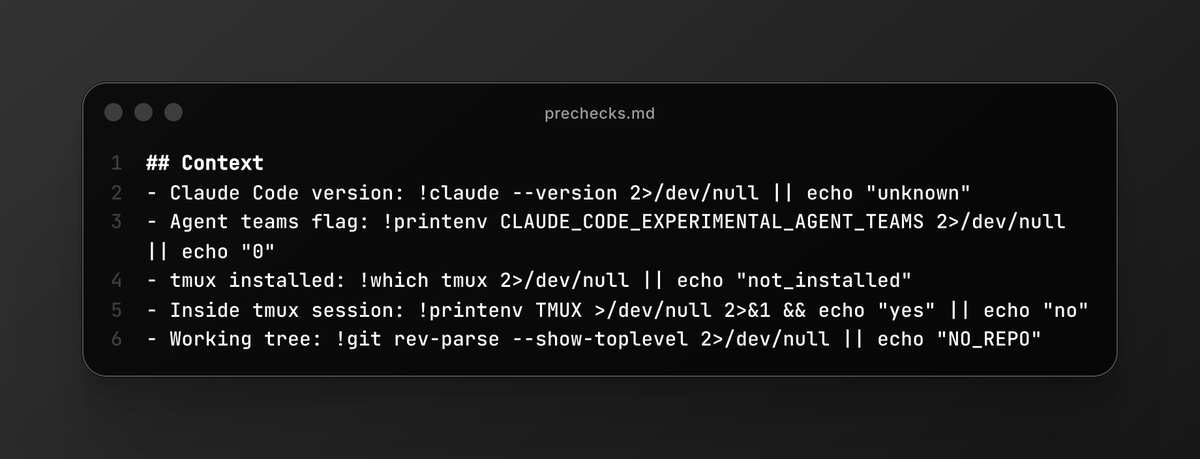
@mattpocockuk I've got a personal /team-orchestrate skill that spawns a set of agents using Claude agent teams. It also runs prechecks first.
Lately I've also been using @orca_build with its /orchestration skill. Really liking it, and it's where I get to run Codex and Claude together.
Hono v4.13.0 is out now!
* Performance improvement up to 1.25x
* HTTP QUERY method support
* Method Not Allowed middleware, and more
Enjoy!
https://t.co/sJnjxRgwDK
Hello people of Sol! I've reset usage limits for all ChatGPT Work and Codex users. Together with that, a quick update on GPT-5.6 Sol usage limits.
Over the past few weeks, many of you have told us that Sol was using your Codex limits faster than expected. To be clear, we have not reduced usage on any subscription plans.
We’ve been digging into what was happening and have landed several improvements. As a result, we expect your usage to last around 18% longer during typical use of Sol. Some of you should already see significantly larger improvements from today. Tomorrow, we’ll also restore the five-hour limit that we temporarily paused while investigating.
Here’s what we found:
- GPT-5.6 Sol is much more willing to work for longer, make additional tool calls, and coordinate complex workflows across tools and subagents. That makes it better at solving hard problems, but some tasks were using far more than we intended.
- Sol also works harder at the same reasoning effort than previous models. High on Sol can use more tokens than High did on GPT-5.5.
- Programmatic tool calling, also referred to as code mode, gives Sol much more flexibility to run tool calls in parallel or continue working while waiting. But it also led to more responses per turn, more cached input tokens, and higher usage than expected.
- This was particularly noticeable when Sol was waiting for tool calls to finish or running many web searches. We’ve improved how we handle both cases and are continuing to make code mode more efficient.
- The impact was also very uneven. The median user actually found Sol quite token efficient, while some power users working on harder tasks saw their usage drain much faster. We were very focused on average and median usage before launch and missed some cases where the long tail could use significantly more usage.
Sol is a significant step forward in what Codex can do, but capability and efficiency do not always improve at the same pace, and some issues only become clear once people are using the model at real-world scale. We should have recognized this sooner and been more upfront about it.
You keep pushing the frontier and we’ll keep improving efficiency and sharing updates as we go.
AI agents can write code many times faster than a human. What this means is that you, the programmer, have a large amount of time to use those agents to write unit tests, to write acceptance, tests, to write property tests, to torture test, to mutate test, to QA test, and to otherwise ensure that the code meets its functional and quality requirements. And even after spending all that time, you will still be many times more productive than a human programmer, and the result will be better.