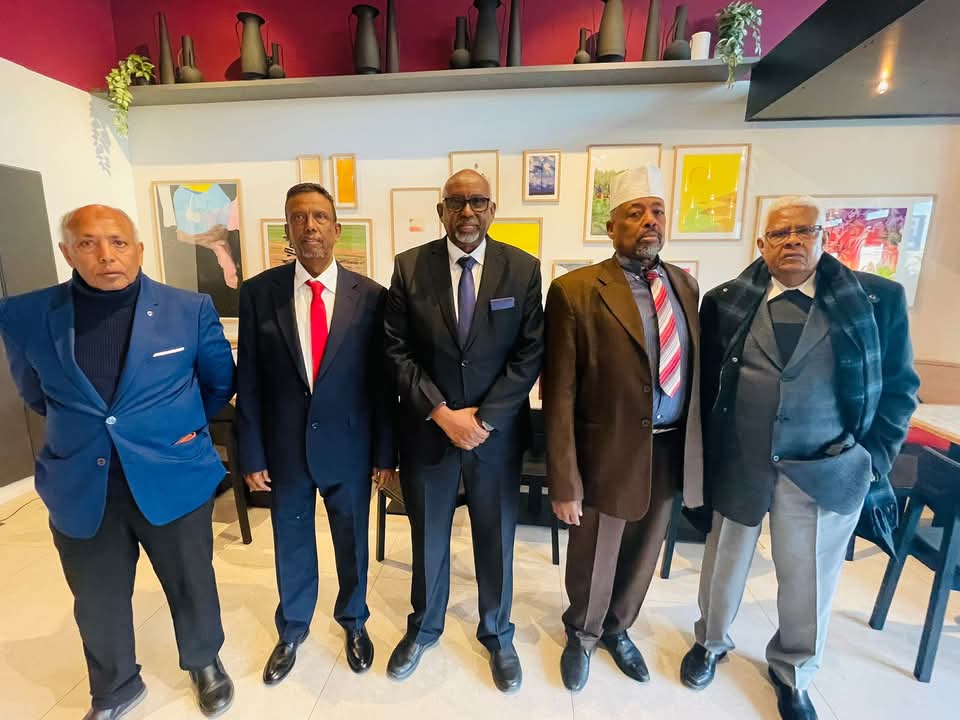
The Somali and Oromo peoples share a deep, historical , and multifaceted relationship rooted in their common linguistic heritage , centuries of interaction , and neighboring homelands across the Horn of Africa. Over generations , their histories have been shaped by cultural exchange , trade, pastoral traditions, intermarriage, and, in many communities, shared religious and social ties. As culturally and geographically close neighbors, they have forged enduring connections that have fostered cooperation, mutual influence, and resilience.
At the same time their relationship has experienced periods of misunderstanding on territorial boundaries and competition over natural resources. Overall, the relationship between the Somali and Oromo peoples are characterized by a dynamic interplay of cooperation, coexistence,reflecting both their shared heritage and the complexities of life in the Horn of Africa.
#NoMoreWars #NoMoreConspiracy #nomoreidps
#highlightseveryone #highlight
Why Ethiopia Rejects Egypt's Position on the GERD?
AMN Plus-July 23, 2026
Egypt's opposition to Ethiopia's Grand Ethiopian Renaissance Dam (GERD) stems not only from concerns about the dam itself, but from a fundamental disagreement over how the waters of the Nile should be governed.
For decades, Egypt has based much of its legal position on two agreements: the 1929 Anglo-Egyptian Treaty, negotiated during British colonial rule, and the 1959 Nile Waters Agreement between Egypt and Sudan. Together, these accords allocated almost all of the Nile's waters to Egypt and Sudan while excluding the other upstream countries, including Ethiopia. Ethiopia was never a party to either agreement. Consequently, it maintains that it is neither legally nor morally bound by treaties negotiated without its participation or consent.
From Ethiopia's perspective, colonial-era arrangements cannot define the rights and responsibilities of sovereign African states in the twenty-first century. While some in Egypt argue that these agreements established permanent or "historic rights" over the Nile, Ethiopia rejects that interpretation. It contends that no colonial power had the authority to allocate the waters of an international river on behalf of countries that were neither represented nor consulted during the negotiations.
A frequently cited historical parallel is Egypt's own rejection of colonial control over the Suez Canal. In 1956, President Gamal Abdel Nasser nationalized the canal, asserting Egypt's sovereign right to control a strategic national asset. Ethiopia argues that, by the same principle, it cannot be expected to accept colonial-era arrangements that sought to determine the use of its natural resources without its consent.
Ethiopia further argues that the Nile is a shared international river whose management should be guided by the principles of modern international water law. These principles emphasize equitable and reasonable utilization, cooperation among riparian states, and the obligation to avoid causing significant harm. Under this framework, no single country enjoys exclusive ownership of the Nile, nor should the development aspirations of one nation permanently override those of the others.
The Grand Ethiopian Renaissance Dam was designed primarily to generate renewable hydroelectric power rather than consume water through large-scale irrigation. Ethiopia has consistently stated that the project is intended to expand access to clean energy, support national and regional economic development, and foster greater cooperation among the countries of the Nile Basin.
As populations continue to grow and development needs increase across the region, Ethiopia argues that a modern, inclusive, and cooperative framework is essential. The Nile Basin Cooperative Framework Agreement (CFA), negotiated by the basin countries themselves, represents such an approach. It seeks to promote equitable and reasonable utilization of the Nile while strengthening cooperation and sustainable management among all riparian states. Ethiopia, Burundi, Rwanda, Tanzania, Uganda, and South Sudan have ratified the agreement.
From Ethiopia's perspective, lasting peace and prosperity in the Nile Basin cannot be built on colonial-era arrangements that excluded most of the countries sharing the river. Instead, they require mutual respect, meaningful dialogue, and a shared commitment to fairness, cooperation, and international law.
Rather than relying on agreements inherited from the colonial past, the countries of the Nile Basin have an opportunity to build a future founded on equality, shared benefits, and sustainable development. Ethiopia maintains that such an approach offers the most constructive path toward regional stability and prosperity for both present and future generations.
#Highlights
By Birhanu Workneh
This contradiction cannot simply be dismissed as political flexibility or cultural sensitivity. Rather, it reflects a deliberate strategy of ideological duplication. In one political arena, Mustafe positions himself as a defender of Ethiopian centralism – a system historically associated with Somali marginalization – while in another, he invokes Somali nationalist symbolism.These positions are fundamentally difficult to reconcile and instead suggest a leader willing cheaply to adapt core political narratives based on audience and political expediency. Such strategic identity shifting has undermined public trust, and raised a central question: which version of Mustafe Omer is genuine? The inability to reconcile these competing narratives exposed the fact that both are politically instrumental performances rather than deeply held principles.
The article’s failure to critically interrogate these contradictions significantly weakens its journalistic credibility. Rather than challenging Mustafe on his shifting political identity, the interview largely allows him to advance a sanitized narrative centered on development and governance while avoiding deeper questions of ideological coherence. As a result, the piece functions less as critical political journalism and more as reputation management. By neglecting the strategic manipulation of identity across linguistic and political contexts, the article overlooks one of the most politically consequential dimensions of Mustafe’s leadership.
These concerns become even more pronounced when Mustafe’s developmental claims are examined. The interview constructs a narrative of extraordinary transformation in Somali Regional State, emphasizing infrastructure expansion, service delivery, and modernization. Yet closer analysis of his historical claims reveals substantial inconsistencies that cast doubt on the reliability of this development narrative. For instance, in 2019, Mustafe claimed that his administration had facilitated the construction of over 400 schools within a single year – an extraordinary figure given the region’s logistical, financial, and infrastructural constraints. However, when contrasted with current claims suggesting that only around 300 schools were built over the following seven years, the inconsistency becomes glaring. If his administration could indeed construct over 400 schools in one year, it is difficult to rationalize a significantly lower output across a much longer period. This discrepancy strongly indicates that both figures have been politically inflated, undermining confidence in the credibility of his broader developmental rhetoric.
Similarly, Mustafe’s claims regarding large-scale infrastructure projects raise further skepticism. One particularly striking example is the reported assertion that, in June 2019, a dam constructed in Dagahmadaw could irrigate approximately 71,000 hectares of land while also providing water supply services to an estimated 60,000 people and up to 48,000 head of livestock. While such a claim would represent a transformative agricultural breakthrough, it appears implausible when subjected to basic hydrological scrutiny. Irrigating such an expansive area would require immense and sustained water resources, and a local dam in the Somali Region cannot realistically achieve such capacity—especially when even the Wabi Shabelle River itself does not possess that potential. These exaggerated infrastructure narratives reinforce concerns that Mustafe’s developmental discourse often prioritizes perception over measurable reality.
Two Faces of Mustafe Omer: A Critical Analysis of His Reporter Interview, Political Contradictions, and Questionable Development Narratives
The interview with Mustafe Omer published by The Reporter Ethiopia reveals far more than a standard discussion on governance and development in Ethiopia’s Somali Regional State. As is often the case with such platforms, it exposes profound inconsistencies at the core of his political leadership. While the article attempts to portray him as a pragmatic reformer committed to both national unity and regional progress, closer scrutiny of his rhetoric across different linguistic and political audiences suggests a far more calculated and contradictory strategy. Rather than reflecting ideological consistency, the president’s messaging appears highly audience-dependent, having shifted significantly from his recent Somali nationalism–laden rhetoric to one now tailored to Amharic- and English-speaking national audiences. This duality raises serious questions not only about his political sincerity but also about his broader credibility as a leader.
In English and Amharic political settings, Mustafe consistently presents himself as an advocate of a centralized Ethiopian state. His rhetoric often aligns with narratives associated with the historical Ethiopian imperial tradition, emphasizing national unity, state consolidation, and the integration of Somali populations into a unified Ethiopian political identity. This positioning appeals directly to certain and specific political elites, who prioritize centralized governance. Through this lens, Mustafe seeks to project himself as a dependable regional leader aligned with Ethiopia’s broader state-building agenda, often downplaying Somali nationalist sentiments in favor of an over centralized Ethiopian nationalism.
However, this carefully crafted image contrasts sharply with his rhetoric in Somali-language contexts, where he frequently adopts the language and symbolism of Somali nationalism. In these settings, he emphasizes Somali historical pride, cultural identity, and cruel treatment and marginalization experienced by the region in the hands of Ethiopian regimes. More notably, his symbolic engagement with Somali nationalist themes extends to public associations with songs and political imagery rooted in the Siad Barre era, including slogans such as “Somali baan ahay” (“I am Somali”). Such messaging is politically significant, as it evokes historical traditions of Somali nationalism that have often stood in ideological opposition to the centralized Ethiopian state framework he promotes elsewhere. By invoking these symbols, Mustafe seeks to cultivate local legitimacy among Somali audiences by presenting himself as authentically aligned with Somali nationalist aspirations.
However, with regard to Somaliland issue, his framing effectively lends tacit support to its independence. By consistently treating Somaliland as a separate political and economic entity, he departs from the conventional Somali position that views Somaliland as an integral part of a unified Somalia. More striking, however, is his complete silence on Somalinnimo, which he had been repeatedly emphasizing in recent times. Instead, he shifted the focus toward Ethiopian identity.
Via @SrajNews
Education in Steep Decline
The education sector is deteriorating:
• Poor school infrastructure
• Demoralized teachers
• Weak oversight
• No visible reform strategy
An entire generation risks being left behind.
Agriculture Without Results
The Regional Bureau of Agriculture has failed to deliver measurable outcomes. There is no clear improvement in:
• Productivity
• Food security
• Farmer support systems
For a region where agriculture and pastoralism sustain most livelihoods, this is a strategic failure.
Healthcare on the Brink
Health centers across the region suffer from:
• Lack of equipment
• Shortage of qualified staff
• Minimal service delivery
Citizens face preventable illnesses without adequate care.
Human Rights Violations and Breakdown of the Rule of Law
Beyond development failure lies a more serious concern: the erosion of justice and human dignity.
Credible reports and testimonies point to:
• Secret detention facilities
• Torture and ill-treatment
• Arbitrary arrests without due process
• Politicized courts under executive control
• Detentions and releases based on loyalty, not law
Citizens are imprisoned without trial and released without legal explanation. This undermines the constitution, rule of law, and public trust.
Clan Politics, Exclusion, and Uneven Development
Governance in the Somali Region has become increasingly characterized by:
• Clan favoritism
• Nepotism
• Exclusionary politics
Entire zones, Afdheer, Erer, Nogob, Dawa, Libaan, Doolo, and others have seen little or no meaningful development projects during the past seven years. Some have not witnessed a single transformative investment.
Such uneven development deepens resentment, weakens unity, and threatens long-term stability.
Rising Cost of Living and Economic Pressure
Uncontrolled inflation and rising living costs have further burdened citizens. With limited job creation and weak economic planning, ordinary people continue to pay the price for administrative failure.
Conclusion: Seven Years, Billions Spent, 2% Results
This article is not a call for confrontation. It is a call for:
• Accountability
• Institutional reform
• Transparent budgeting
• Independent oversight
• Merit-based governance
• Respect for human rights
The Somali Region does not lack potential. It lacks effective, accountable leadership.
Seven years in power is not a short trial period. History will judge this administration not by speeches, ceremonies, or borrowed achievements but by results.
Seven years.
Billions in resources.
A publicly acknowledged 2% performance.
The people of the Somali Region deserve better.
Ethiopia deserves regional governments that strengthen not undermine the federal vision of justice, development, and unity.
The moment for honest reckoning and corrective action is now.
@AbiyAhmedAliAhmed Ali
@prosperityParty - ብልፅግና
@AddisAbabaProsperityParty - ብልፅግና
@OFFICEOFTHEPRESIDENTEthiopia
@PMEthiopia
@mayorofficeofAddisAbaba
@DeputyPrimeMinisterOfficeFDRE
@ministryofpeaceየሰላምሚኒስቴር
@ministryofwaterandenergyEthiopia
@ministryofirrigationandlowlandsEthiopia
@HouseofFederationofEthiopia
@EthiopiaInsider@EthioPress
@Ethiopiansecretsecurityintelligencefactfinderssector
#@
@ethiopianpressAgency /የኢትዮጵያ ፕሬስ ድርጅት/
@EthiopianAirlines
@EthiopianHumanRightsCommission
@SomaliProsperityPartyብልጽግና
@somaliregionalStateCommunicationBureau
@xafiiskacaafimaadkaDDS: SRHB- Somali Regional Health Bureau.
@RedwanHussien@TemesgenTiruneh - ተመስገን ጥሩነህ
#AbiyAhmedAli
@AdAmFaRaH
#MustafaMOmar
@Ibrahumosman@Mustafe_M_Omer
#highlightseveryone
#DDS
via: @mohammedomar
The Somali Region at a Crossroads: Seven Years of Missed Opportunities, Governance Failure, and a 2% Performance Reality
For over seven years, the Somali Regional State of Ethiopia has been governed by President Mustafe Omer (Haji Mustafe). This period followed a historic political transition that promised reform, justice, and development after decades of repression and instability. The expectations were high, and the opportunity unprecedented.
Today, however, the Somali Region stands at a crossroads burdened not by a lack of resources or federal support, but by a failure of regional governance.
This article is not an attack on Ethiopia’s federal system, nor a denial of federal efforts. It is a fact-based, constructive critique of a regional administration that failed to convert opportunity into results, autonomy into service delivery, and budgets into meaningful development.
Federal Projects Marketed as Regional Achievements
Many of the flagship projects frequently cited by the Somali Regional Government as evidence of success were neither initiated nor financed by the regional administration. They were largely implemented through federal government funding and international partners, particularly the World Bank.
These include:
• Gode Airport Terminal
• Jijiga Corridor Road
• Gode Water Supply Project
• Shabelle Tourism Resort
• Major intercity and regional roads
• Aishia Electricity Project
• Oil refinery initiatives
• Gode Fertilizer Factory
These projects demonstrate federal commitment to the Somali Region, not regional innovation or leadership capacity. Yet, they are routinely used for political branding by the regional administration.
After seven years in power, there is no clear evidence of major, independently conceived, regionally planned, and successfully executed development projects comparable in scale or impact to federal led initiatives.
This reality has led ordinary citizens to ask a simple but powerful question:
What has the regional government itself genuinely delivered?
A Failure Publicly Acknowledged at the Highest Level
These criticisms are not fabricated, exaggerated, or politically motivated claims. They are now supported by an explicit public assessment from the Prime Minister of Ethiopia.
During the inauguration of the Shabelley Resort Project, Prime Minister Abiy Ahmed openly stated that the performance of the Somali Regional Administration under President Mustafe Omer and his cabinet over the past years does not exceed 2%.
This was not an offhand remark, it was a damning official evaluation.
When a regional government receives a 2% performance rating after seven years, it represents:
• An acknowledgment of governance failure
• Confirmation of widespread public frustration
• National validation of long-standing local grievances
A 2% score is not merely embarrassing, it is a political and moral indictment.
Not Federal Neglect, but Regional Mismanagement
It must be stated clearly: the federal government has not abandoned the Somali Region.
Under Prime Minister Abiy Ahmed, the region has received:
• Substantial budget allocations
• Expanded political autonomy
• Reduced federal interference
• Support for major infrastructure projects
Yet, these advantages were not translated into improved living conditions. The failure lies in:
• Poor planning and weak institutions
• Widespread corruption
• Clan based favoritism
• Absence of accountability
• Governance driven by loyalty rather than merit
This is not a shortage of resources it is a crisis of leadership and administration.
Collapse of Public Services and Core Sectors
Chronic Water Crisis in Jijiga
Despite billions of birr reportedly spent on water projects, Jijiga, the regional capital still suffers from severe water shortages. This failure has persisted for seven years, symbolizing systemic mismanagement and lack of transparency.
Examining the President’s remarks regarding the Kaali Mool fire disaster, it becomes clear that the issue extends beyond the fire itself, revealing deeper problems related to leadership style, understanding of governance, and the relationship between the administration and the public.
This analysis seeks to systematically outline these shortcomings so they can serve as lessons rather than mere points of debate. The public holds serious doubts about the President’s mental awareness and judgment, given his apparent denial of reality and the way he confidently presents statements that are visibly false, sometimes contradicting himself within moments.
1. Confusion Over Government Responsibility
One of the most prominent aspects of the President’s remarks is the attempt to deny or minimize the government’s role in the disaster.
Modern governance defines that:
• the state is the primary engine of development and the highest institution responsible for public safety
• responsibility begins not only after a crisis occurs, but with prevention and preparedness
When leadership treats disasters as matters beyond government responsibility, it indicates:
• a harmful neglect of citizens
• a weak and incomplete understanding of governance
• or a political attempt to evade accountability
2. Decline in Leadership Communication Standards
Describing critics as ignorant is not only a political mistake, but also a sign of a deeper problem in leadership communication.
Leadership theory states that:
• criticism is a tool for correcting mistakes
• respect for the public is the foundation of trust
When criticism is met with mockery:
• public trust weakens
• the relationship between leadership and society deteriorates
This suggests that the issue is not merely about words, but about a mindset that may require serious reassessment.
3. Diversion of the Debate and False Comparisons
Comparing the Kaali Mool fire to global war situations is a tactic that diverts attention from the real issue.
Logical reasoning identifies this as:
• false equivalence, a comparison without a valid basis
Its effects include:
• avoiding the core question
• concealing internal systemic failures
The central question remains:
Why did the emergency response system fail to operate effectively around the clock?
4. Blaming the Victim
Shifting responsibility onto the public by blaming construction methods or electricity usage contradicts the principles of administrative justice.
Governance theory clearly states:
• the government establishes the system
• citizens operate within that system
When the system fails:
• primary responsibility lies with those who designed it
This reveals a contradiction between rhetoric and administrative reality.
5. The Gap Between Words and Reality
Claiming the existence of freedom while complaints of fear and restriction persist highlights a gap between perception and reality.
Democratic theory defines:
• freedom is not what is declared, but what is experienced
If citizens fear speaking:
• freedom becomes nominal rather than real
6. Insufficient Apology in Modern Governance
An apology is important, but insufficient in the face of large-scale disasters.
Modern governance requires:
• compensation
• rehabilitation
• accountability
7. Misunderstanding the Role of Government
Comparing government to a family diminishes the understanding of state institutions.
A government is:
• a system with legal authority
• executive institutions
• a national framework
When its role is simplified:
• the weight of responsibility is reduced
• accountability is weakened
Conclusion: Lesson or Defense?
From a scientific perspective, the President’s remarks highlight several issues:
• confusion of responsibility
• decline in communication standards
• diversion of debate
• victim-blaming
• a gap between words and actions
Taken together, these indicate that the problem is not an isolated incident.
A Response Reflecting Mockery and the Undermining of Public Understanding
When the public complained about the drought and expressed their need for assistance and support, the President’s response, “Did you hear from us that we control the rain?”, was not merely a diversion from the real question, but clearly reflected a tone close to mockery.
Leadership studies and political psychology indicate that:
When a leader responds in a way that undermines the public’s understanding, it suggests:
• that he perceives the public as lacking a deep understanding of the situation
• and that he is detached from the suffering of the victims
That response was not an administrative explanation; rather, it appeared to downplay the public’s grievances, indirectly implying that the problem lies beyond the government’s control, instead of acknowledging the government’s role in managing the impact of drought.
Psychology uses the term sadistic tendencies to describe a pattern in which a person shows a lack of empathy or even a tendency to derive satisfaction from the suffering of others, particularly when such responses take on a mocking or belittling tone.
When a humanitarian crisis is addressed with language resembling humor or mockery:
• public trust is damaged
• a significant gap emerges between leadership and society
When examined deeply, this issue raises a question that goes beyond ordinary politics:
A Misunderstanding of Immediate Responsibility
When the President stated that “leaders around the world are awakened from sleep,” it did not reflect a leader moved by the suffering of the people; rather, it appeared to serve a single purpose, defending the reported inaction or sleep of the city mayor.
He attempted to suggest that emergencies are sudden and cannot be fully prevented. However, this understanding overlooks a fundamental principle clearly defined in modern governance:
A leader may be awakened, but the system must already be functioning.
In well-governed states, disasters such as urban fires are not handled only through reactive responses after waking up; instead, there are:
• 24-hour operational systems
• pre-established contingency plans
• institutions that respond immediately to emergencies
Therefore, that statement indirectly indicates:
• the absence of a functioning system
• and reliance on delayed reaction
The key question that arises is:
If the leader must be awakened when disaster strikes, who was working before that moment?
Beyond Political Error: Indicators of Leadership Behavior
A deeper analysis of the President’s statements shows that the issue goes beyond ordinary political mistakes; it reflects a behavioral pattern that requires serious evaluation.
The combination of:
• minimizing government responsibility
• mocking criticism
• blaming victims
• and diverting the discussion
creates an image of leadership responses driven not by empathy and accountability, but by defensiveness and avoidance.
Leadership and political psychology suggest that:
A leader who shows no empathy during major crises
and who minimizes or avoids the burden of responsibility
demonstrates traits that are dangerous to public trust.
It is also evident that some of the language and responses lack the emotional awareness expected from leadership facing a painful humanitarian situation.
When public suffering is met with defensive or mocking language, an important question emerges:
Is this merely political defense, or does it reflect a deeper decline in moral responsibility and collective empathy?
This text does not issue a final judgment on personality, but it highlights that such actions and statements clearly create the perception that:
• the leadership is detached from the suffering of victims
• and does not fully assume the responsibility required by its position
Political Hypocrisy or Leadership Failure? A Scientific Analysis of the President’s Remarks on Kaali Mool
via :#Ethioobserver
#highlightseveryone
What is happening in Jigjiga—and across the region? Who is quietly siphoning off public resources meant for the people?
Serious concerns continue to emerge over the management, cost, and transparency of major public projects. The renovation of the former Municipal Office in Jigjiga—now designated to become a One-Stop Service Center—is reported to have cost approximately 550 million birr. For a G+1 structure, such an amount raises fundamental questions about cost efficiency and accountability. By any reasonable construction standard, this figure appears grossly disproportionate.
At the same time, the reconstruction of the Taiwan Market, which was destroyed by fire, is said to exceed 8 billion birr. This staggering figure invites scrutiny and comparison with major international commercial developments. Are these costs based on realistic assessments—or are they inflated beyond justification?
The concerns do not end there.
The newly inaugurated livestock market in Dhagahbur town, officially opened by Regional President Mustafa Mohammed Omar alongside Federal Minister of Trade and Industry Mr. Kasa, was reportedly constructed at a cost of 63 million birr. While such projects are presented as development milestones, serious questions remain about whether the cost reflects actual value on the ground, or whether it is yet another example of inflated budgeting under the guise of public investment.
Across these projects, a troubling pattern is becoming evident.
Who is receiving these contracts? Through what process are they awarded? Are competitive and transparent procurement procedures being followed?
Available information suggests that multiple projects have been awarded under opaque conditions, often to select contractors, while due process is either bypassed or manipulated. Municipal and sectoral offices—mandated to safeguard public interest—appear to be operating under pressure to comply directives originating from higher political authorities. This undermines institutional independence and erodes public trust.
Further reports indicate that some officials and ministers are being pressured to approve pre-arranged contracts. In certain cases, documents are delivered directly to their offices—complete with digital devices and finalized agreements—leaving little room for review, verification, or accountability. This raises a fundamental question: are these institutions functioning as legitimate arms of government, or merely as conduits for predetermined deals?
Even more concerning are the voices from within the system itself. Several department heads have reportedly raised objections, calling for at least minimal inclusion of local stakeholders and fair access to opportunities. Appeals such as “let at least one contract go to the communities we represent” have reportedly been dismissed. This signals a governance structure that prioritizes narrow interests over equitable development.
Taken together, these cases point toward a broader pattern of alleged corruption, mismanagement, and lack of transparency in public spending. What is presented as development increasingly appears to be overshadowed by questionable financial practices and concentration of benefits among a limited network.
If left unchecked, such trends risk institutionalizing corruption, weakening governance, and deepening public frustration.
Jigjiga, Dhagahbur, and the wider region deserve better. Public funds must be protected, procurement processes must be transparent, and leaders must be held accountable to the people they serve.
If these issues are not addressed today, tomorrow may indeed be too late.
May justice prevail, and may the people be safeguarded from systemic abuse of power
#AbiyAhmed #highlight #followers #Prosperityparty
Ramadan Mubaarak to all Muslims through out the world 🌙✨ May our fasts, prayers, and good deeds be accepted. Wishing you and your family a month filled with barakah and joy .
🌙✨ May this holy month bring peace blessings and endless mercy.
Enhancements in Social Services: Should the ONLF and SRDA effectively collaborate on social policies, there may be improvements in health, education, and welfare services. A focused approach to governance may lead to better resource allocation for community needs and improved quality of life for the population.
Conclusion
The collusion between the ONLF and SRDA is a pivotal development that carries substantial implications for the Somali Region and Ethiopia as a whole. While it offers the potential for increased political representation local empowerment and economic development it also poses challenges including the risk of escalating tensions and conflict.
The intertwined nature of these political economic and social dimensions means that the outcomes of this collaboration will significantly influence the overall stability and development trajectory of the region and the Continent . Continuous monitoring and engagement by various stakeholders including the Ethiopian government civil society and international partners will be essential to foster peace and sustainable development in this context.
The collusion between the Ogaden National Liberation Front (ONLF) and the Somali Regional Democratic Alliance (SRDA) has significant political, economic, and social implications for the Somali Region of Ethiopia and the country as a whole. Here’s a detailed analysis of these interconnected dimensions:
Political Implications
Increased Regional Autonomy: The partnership between ONLF and SRDA could serve to amplify demands for greater autonomy within the Somali Region. This might empower regional actors to advocate for self-determination and assert more influence over regional governance challenging the federal government.
Shifts in Power Dynamics: The collaboration could lead to a reconfiguration of power dynamics both within the region and at the national level. A strengthened ONLF-SRDA coalition may position itself as a significant political force potentially influencing federal government policies at various levels.
Potential for Conflict: Given the historical context of the ONLF’s resistance against the federal government a strong coalition may lead to heightened tensions escalating into conflict. The Ethiopian government might perceive this alliance as a threat to national sovereignty .
Negotiation Opportunities: On the other hand the ONLF-SRDA collaboration could open channels for dialogue with the federal government. If both entities advocate for their political goals through peaceful negotiations this could lead to meaningful discussions about regional good governance and representation at fedral level .
Economic Implications
Resource Management and Equity: One of the core issues in the Somali Region has been the management and distribution of resources. The ONLF and SRDA alliance might work together to advocate for more equitable resource governance ensuring that local populations benefit from the region's wealth ( Petroleum ).
Investment and Development: The political stability resulting from effective governance could enhance the investment climate in the Somali Region. If the ONLF and SRDA can maintain a constructive relationship it may attract local and foreign investment aimed at infrastructure agriculture and other sectors.
Local Economic Initiatives: The collaboration could facilitate the implementation of localized economic initiatives potentially leading to job creation and community empowerment. If the coalition focuses on grassroots economic development it might improve livelihoods and reduce poverty.
Impact on Traditional Economic Structures: The alliance might challenge existing economic structures and relationships. Established interests that have historically held power over resources and economic activities might resist changes proposed by the ONLF and SRDA leading to social and economic friction.
Social Implications
Inter-Ethnic Relations: While the ONLF-SRDA collaboration may unify some factions within the Somali community it could also exacerbate ethnic tensions with other groups in the region. If the coalition is perceived as favoring one or two ethnic group over others it could lead to polarization and conflict.
Civic Engagement and Mobilization: Enhanced political awareness and civic engagement could arise from the collaboration between ONLF and SRDA. Their unified stance may encourage local populations to participate in political processes demand accountability and advocate for their rights.
Human Rights and Governance: The approach taken by the ONLF and SRDA in governance will significantly influence human rights conditions in the region. If they prioritize inclusive governance and respect for human rights, it could foster a more supportive social environment; however, any repression or authoritarian measures could lead to widespread discontent.
Enhancements in Social Services: Should the ONLF and SRDA effectively collaborate on social policies, there may be improvements in health, education, and welfare services.