So excited to announce that I’ll be starting my lab as an Assistant Professor at @wakeforestmed in November! My lab will study the neuronal circuitry driving negative emotional states in stress disorders and alcohol use disorder. Can’t wait to join such a fantastic department!
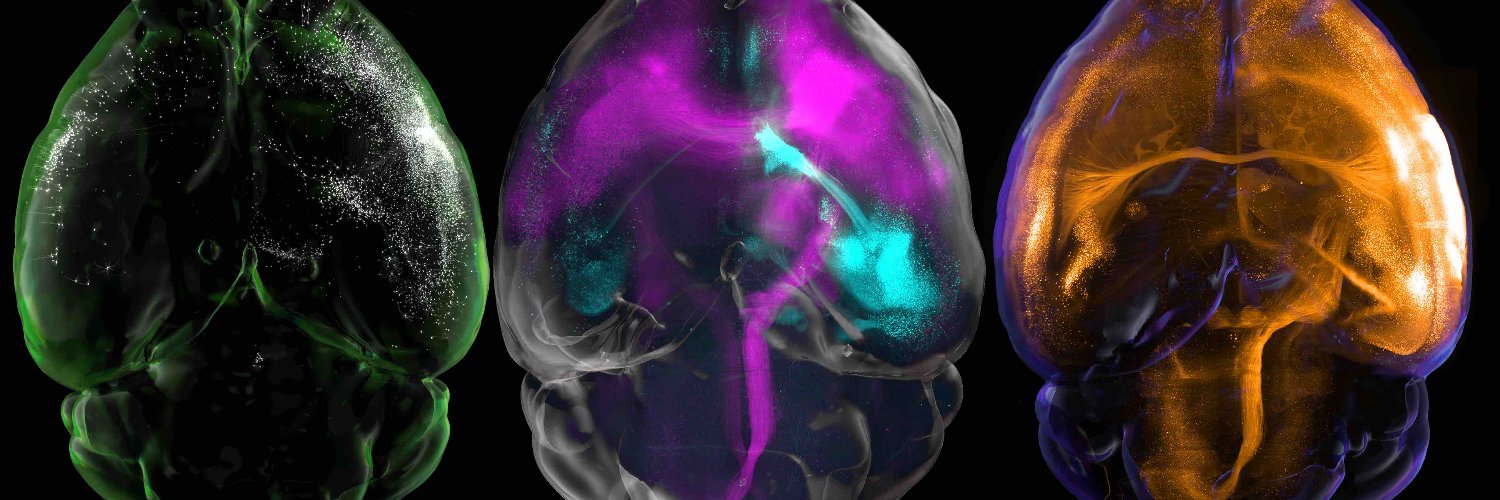
Also incredibly honored that our image was selected as the cover art for this issue. We used viral tracing and whole-brain light sheet microscopy to map the brain-wide collateral targets of primary somatosensory cortex neurons that project to the insula. @TatiyanaAdkins
This Week in The Journal #JNeurosci | Exploring Backpropagating Signals in Foveal Cones; Why Do Cochlear Implants Lead to Residual Hearing Loss? https://t.co/WZBI03R5QB
Really excited to finally have this paper published 🎉🎊. A true team effort spanning several years and multiple lab members. Special thanks to @mandysalazar21 for launching the project and @TatiyanaAdkins for leading the final push. Proud of everyone who contributed
#JNeurosci: Adkins et al. explored how binge alcohol exposure and protracted abstinence impact the S1-insular circuit in mice, revealing how alcohol can reshape sensory processing to drive alcohol use disorder-related behavior.
https://t.co/SZpF2V8hmD
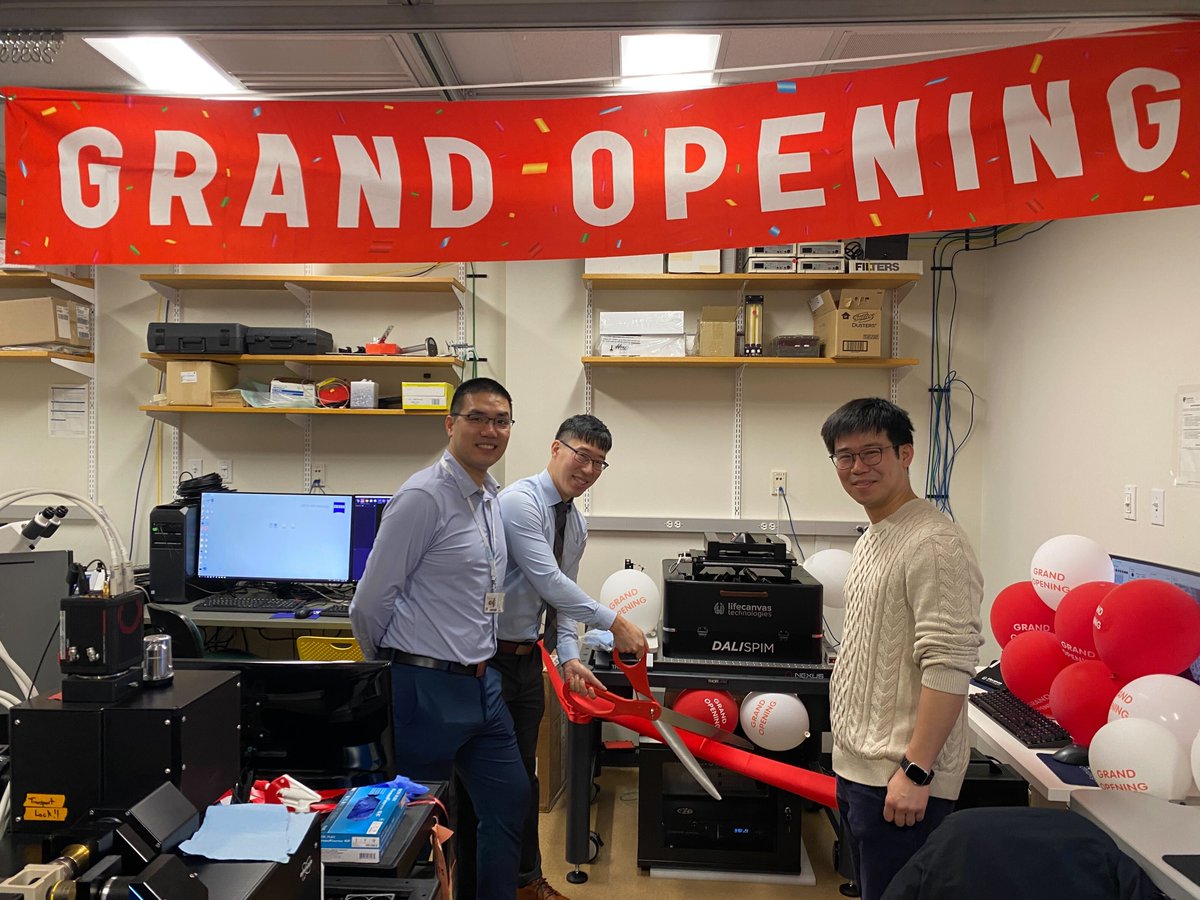
Happy #MicroscopyMonday! Our Head of Innovation Hsuan Lee shared these photos from Peter Sorger's lab (@Harvard_Lab), where we just installed our first #DALISPIM open-top light sheet microscope. Stay tuned for another exciting announcement later this week!
Not sure who is still out there but we're proud of this work led by @lodder_bart that (1) propose a new method to turn intensity sensors into lifetime sensors and (2) applies it to GCAMP8m to make an excellent lifetime Ca sensor.
https://t.co/K5GRDLfNYe
🚨New lab paper! TL;DR we ID'd interesting connections between alcohol naïve stress-induced insula activity, and negative affect-like behavior in abstinence after chronic alcohol exposure. An AUD susceptibility marker? Congrats to 1st author Ben Williams! https://t.co/0lpI7c8dR5
Want to combat the Thanksgiving food coma? Grab a cozy spot on the couch and read our new paper in Psychopharmacology's upcoming special issue honoring the late Dr. Klaus Miczek's seminal contributions. Congrats co-first authors Aditi Buch & @avashipman_! https://t.co/LxAsmW46ix
Next big lab news: we’ve received an R01 from @NIAAAnews to study the role of the insular cortex in stress and alcohol use disorder-related behavior! It’s been a longgg road to get here, but I’m incredibly excited (and grateful) to finally be able to pursue this research
All my trainees have been crushing it lately- receiving awards, submitting manuscripts and grants, giving phenomenal talks, posters, etc. Special shoutout to PhD student Aditi Buch, for receiving an F31 NRSA from @NIAAAnews! She developed an awesome project.
I’ve been quiet here for a while partly to tune out the inescapable negativity. But i'll admit I miss the good side of science social media- celebrating wins and learning about the cool science others are doing. I’ve got some exciting lab updates to share. Stay tuned!
I am not normally an alarmist, but these are not normal times. This change would cripple research infrastructure at hundreds of US institutions, and threatens to end our global superiority in scientific research.
https://t.co/sa1GFM2YgP
And what did the taxpayer get?
Watching flies mate led to the sterile insect technique, eradicating the screwworm fly from North America, saving the livestock industry over $20 billion and reducing beef prices by 5%.
Since we're talking about funding of absurd research by NIH and other federal agencies, the funded scientists:
- watching flies fuck
- giving rats massages
- spending years digging into why jellyfish glow
- tracking penguin poop from space
- using horseshoe crab blood
I'm excited to share the lab's first pre-print on @biorxiv_neursci! We uncovered a sex-specific, insula-BNST-driven link between stress response & susceptibility to heightened alcohol abstinence-induced negative affect. Check it out: https://t.co/43KB2HM7KM
Just Published: Sex Differences in Mouse Models of Voluntary Alcohol Drinking and Abstinence-Induced Negative Emotion @SamCentanni@mandysalazar21 https://t.co/X34lnrcGKr