How does fire behave in microgravity, and why does it matter for crew safety? 🔥
This @SpaceApps challenge asks teams to turn decades of NASA microgravity combustion research into an interactive dashboard for fire safety on future missions. Explore: https://t.co/y4Ai7ga2L6
The NASA Open Science Data Repository (expansion of @NASAGeneLab) has enabled biological & health discoveries helping humanity become multi-planetary by helping life thrive in deep space on Mars and 🌘 OSDR stores precious data anyone can use and analyze, plus a community of collaborative users anyone can join, and several public tools/trainings (including AI/ML) for space biology available 🧵
🦵Low-intensity electrical stimulation may help keep astronauts’ muscles strong in space, despite some challenges for slower muscles such as the soleus. Let's see if this newly released #OSDR transcriptomics dataset 'sparks' research for you!
🌐OSD-783: https://t.co/OeXwYwR6Z7
📣 OSDR has new management! Sylvain Costes has taken a new role as the Science Data Officer within the BPS Division. Sam Gebre is the new PM, while Danielle Lopez will serve as the Deputy PM. Join me in congratulating Sylvain, Sam, and Danielle! Read more: https://t.co/o2qsIXH4pa
📣 The ESA #SpaceOmics#Hackathon brought together 10 teams to tackle challenges like "Reproducibility in space omics" using NASA #OSDR data! The top 3 teams will present their solutions on Oct 17 at 17:00 CET—don't miss it! More info here: https://t.co/q7R3L00Tpy. #OpenScience
Congrats @AfshinBeheshti et al. on this great use of #opendata from @ImmPortDB generated by @MarchofDimes researchers!
Exciting to see the data being used with @NASAGeneLab to advance understanding the impact of space travel on female reproductive health! https://t.co/EvP5mIF2If
"If we want to keep up with the pace of humanity’s aspirations to travel further and for longer ... open science is one of the best tools we have for achieving those dreams."
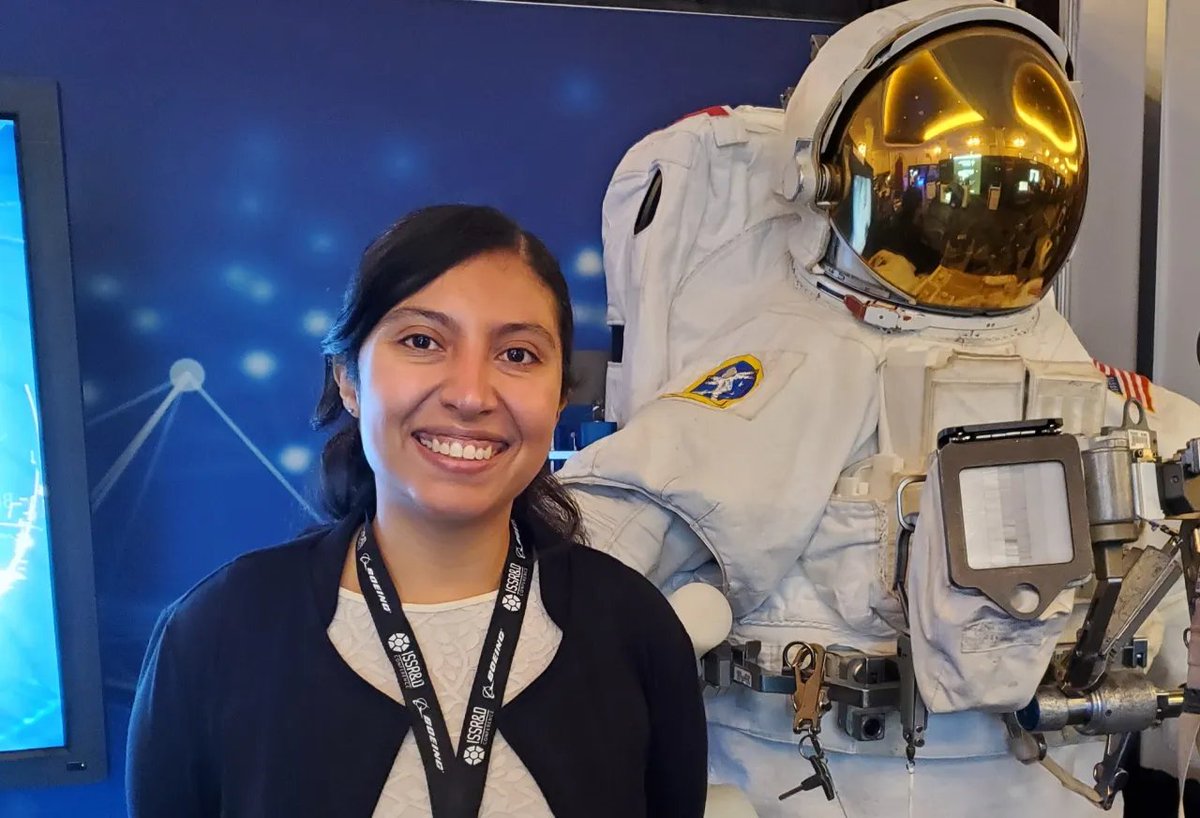
America Reyes Wang leads a @NASAAmes program sharing space biology resources. #HispanicHeritageMonth
📣 Big news! The GeneLab and OSDR websites have merged into one streamlined platform. Explore the revamped site for an enhanced, user-friendly experience that offers GeneLab and OSDR tools and resources! #SpaceBiology#OpenScience#GeneLab#OSDR
🔗 https://t.co/hkPmSaCkwp
🎉 Celebrating 30 years of access to #SpaceBiology data! ALSDA and GeneLab are proud to provide open access to NASA’s Space Life Sciences data, driving innovation in space biology and beyond. Here's to the next era of exploration! #OSDR
📰 Read pub now: https://t.co/m4Wwl0z0b6
📣 New "Meet the Authors" series featuring authors of publications enabled by #OSDR coming Oct 3 @ 9am US Pacific! Hear their insights, ask your questions, and connect with the minds behind current research! 👨🚀🧬 #SpaceResearch#STEM
🔗 Register here: https://t.co/KCLlfow0lh
Excited to share new Open Science research with brilliant @GonzalezEmBio, fantastic @NASAGeneLab, @GL4HS, and the Genelab Microbes AWG team: Spaceflight alters host-gut microbiota interactions. 🔗 https://t.co/ycLZUqLD53
A NASA/IBM collaboration created a suite of large language models (LLMs) tailored for the domains of Earth science, biological and physical sciences, heliophysics, planetary sciences, and astrophysics.
➡️Read more: https://t.co/xOAzvCuvFN
🙌 Props to our #AWGcommunity, 35 @NASAAmes personnel, and summer #students for contributing to the #NaturePress package of publications! 33 publications were featured in eight #Nature journals. Check out these stellar manuscripts! 📰🚀🌌
🌐 https://t.co/PtqafHC61P
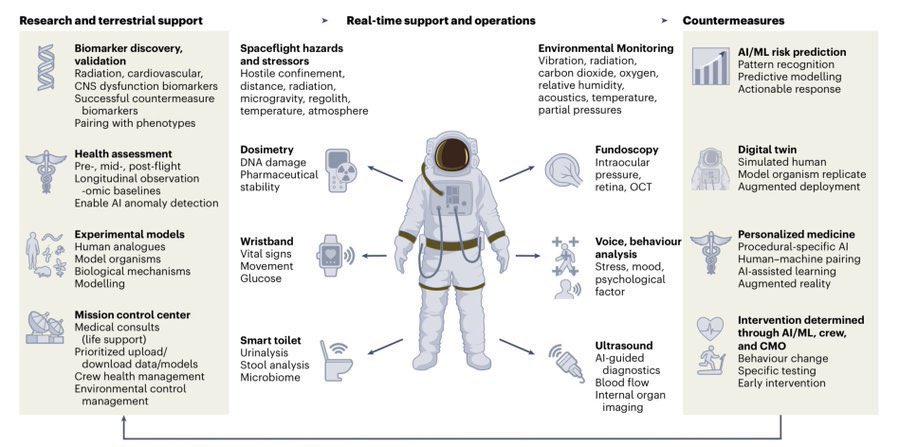
The Space Omics and Medical Atlas (SOMA) package, published across Nature Portfolio journals, provides insights into how spaceflight affects human biology. It represents the largest compendium of data for aerospace medicine and space biology to date. https://t.co/CEGiszNJuw