Hi everyone, I’m Marvellous, some of you know me as Ini. I’m a few months from finishing my MPH at NYU. I planned for this year with a student loan and a summer internship but it didn’t come through. Then this month, MPOWER shut down. I was on their waitlist.
#FundDrMarvellous
@ThinksDylan@ThinksDylan Figured the best way to respond to this was to actually do the outbound work.
I mapped 20 prospects for Pond with decision-makers, triggers and the specific task I’d pitch each one. Sent the full sheet to your email.
Major cheat code for life: Assume good things are still ahead. You are not behind. You are not too late. You are not disqualified by your past. One new season can change the entire story. Keep showing up with belief. The best chapters are often written after the hardest ones.
It is highly interesting and deeply ironic that Nigeria is currently being paraded as having the "world's best-performing stock market."
To put statistical illusion into clear mathematical perspective, South Korea comfortably has over 200 publicly traded companies with an individual market capitalization exceeding $1 billion USD. In stark contrast, the total number of companies on the Nigerian Stock Exchange with a market cap exceeding that same $1 billion mark sits at a measly, fluctuating 11 to 18. Furthermore, the South Korean Stock Exchange is home to over 2,500 listed companies, whereas the entire Nigerian stock exchange is struggling to maintain even 150. To make matters infinitely worse, the annual revenue of just one single South Korean conglomerate, Samsung, comfortably exceeds the entire, devalued annual Gross Domestic Product (GDP) of the Federal Republic of Nigeria.
So, it is obviously completely insane and deeply delusional to imagine that Nigeria is genuinely outperforming the rest of humanity in its actual economic output, industrial productivity, or stock market indices. Nigeria is currently the undisputed poverty capital of the world, where small businesses are collapsing by the dozens every single day. So that begs the question: what does this glowing market report actually mean for the ordinary people of Nigeria?
Well, for one, if a struggling, debt-ridden developing nation suddenly starts to heavily outperform advanced, highly industrialized nations on its stock exchange, it is actually a massive, flashing red indicator that the country in question is facing a severe and monumental hyperinflation. Nigeria is currently experiencing historic, record-breaking inflation, so this stock market boom is merely an indicator that wealthy oligarchs, institutional investors, and local investment banks have smartly recognized that if they hold their cash in standard bank accounts during this highly volatile period, they will lose their purchasing power every single day. Since they cannot easily access scarce foreign currencies like US dollars or Euros due to strict government currency controls, they desperately dump their fast-depleting Naira into solid, tangible local stocks like Dangote Cement, BUA Group, or MTN Nigeria just to preserve their wealth.
So, this triumphant news report that we are passionately commanded to celebrate is actually a terrifying warning sign that Nigeria is experiencing severe, runaway inflation. The local elites, corporate cartels, and bank directors are frantically tripping over themselves to buy blue-chip local stocks strictly to hedge against currency collapse, and this sudden, desperate surge in local demand has artificially driven up the prices of these shares to such a disproportionate, heavily padded percentage that on paper, it looks much more profitable to invest in the Nigerian stock market than in the highly productive, technologically advanced South Korean stock exchange.
Another major reason for this artificial stock market spike is the aggressive, reckless increase in interest rates by the Central Bank of Nigeria on behalf of the IMF and the World Bank. While this brutal rate hike has successfully collapsed thousands of local manufacturing businesses because commercial banks are now charging as high as 40% interest on business loans, it has also temporarily attracted a massive influx of volatile "hot money" from foreign speculators who are lending money to the Nigerian government by purchasing short-term treasury bills and sovereign bonds just to greedily exploit these high yields.
It is crucially important to historically emphasize that Nigeria is absolutely not the only developing country to be declared the "best-performing stock market in history." Mexico proudly achieved this exact same fraudulent title in the run-up to 1994, and it ended up almost collapsing their entire national economy into absolute oblivion. At the time, the Mexican government, acting on the strict advice of the World Bank, aggressively increased interest rates and adopted painful Structural Adjustment Programmes that triggered massive hyperinflation across the country. This temporarily, artificially increased their foreign reserves as yield-hungry international speculators dived in to exploit these high interest rates, causing their local real estate markets and stock exchanges to explode into a virtual goldmine for foreign investors. But this artificial boom did not even last for a few years. The moment the United States Federal Reserve increased its own interest rates, international investors panicked, liquidated their assets overnight, and pulled their hot money completely out of Mexico. This massive, sudden capital flight almost collapsed the Mexican Peso, forcing their desperate government to raise domestic interest rates to an astronomical 70%, but even this extreme measure was not enough to save the country from descending into total state failure. This was the exact moment Mexico was forced to accept a humiliating, sovereignty-destroying bailout from the IMF and the United States totaling a massive $57 billion. Exactly $20 billion of that came directly from the US treasury, but it came with the highly insulting, neocolonial condition that all revenues from the global sales of Mexican state-owned oil must be deposited directly into the Federal Reserve Bank in New York City as collateral to secure the debt, while the IMF forced even more brutal, structural adjustment programs on Mexico that the country has still not fully recovered from even to this very day.
So, while this stock market boom is currently being heavily marketed as another monumental, ground-breaking macroeconomic achievement by the Tinubu Administration, it is in reality extremely dangerous, deceptive, and reckless. Not only does it completely fail to reflect the actual, material reality on the ground, which is that Nigeria is currently the bleeding poverty capital of the world, but this exact, artificial economic bubble has the direct, terrifying potential to completely collapse the Nigerian economy, trigger massive capital flight, and permanently reduce the country to a subservient, bankrupt puppet state run entirely by the harsh austerity measures, economic dictates, and financial chains of boardroom terror organizations like the IMF and the World Bank.
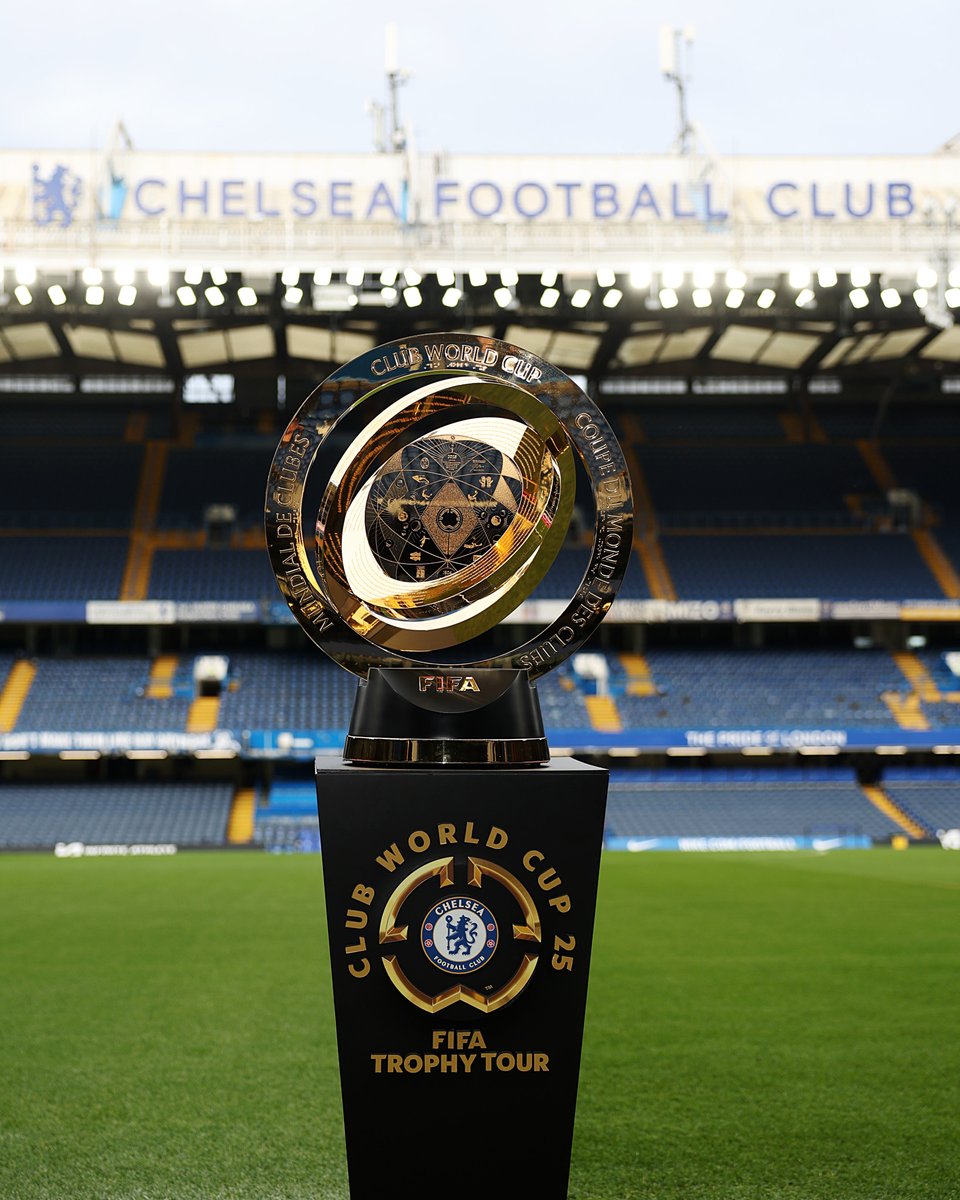
Come and visit London’s Home of Trophies. 🏆
Book your Stadium Tour at Stamford Bridge now. ⭐️⭐Come and visit London’s Home of Trophies. 🏆
Book your Stadium Tour at Stamford Bridge now. ⭐️⭐Come and visit London’s Home of Trophies. 🏆
Book your Stadium Tour at Stamford Bridge now. ⭐️⭐Come and visit London’s Home of Trophies. 🏆
Book your Stadium Tour at Stamford Bridge now. ⭐️⭐Come and visit London’s Home of Trophies. 🏆
Book your Stadium Tour at Stamford Bridge now. ⭐️⭐Come and visit London’s Home of Trophies. 🏆
Book your Stadium Tour at Stamford Bridge now. ⭐️⭐️
Even the most successful websites eventually need a redesign. Take @Stripe for example.
After six years with the same homepage, Stripe recently unveiled a brand new site that reflects how the company has evolved over the past few years.
So when is the time right for a new landing page? And what should you prioritize in the redesign?
In this episode of Design Review, YC’s @aaron_epstein sat down Stripe’s Head of Design Katie Dill (@lil_dill) to pull the curtain back on their high profile redesign and to discuss how their team is evolving in a world dominated by new AI design tools.
00:30 - The Old Site
05:30 - “What is the point of a website?”
06:00 - Breaking down the new homepage
07:10 - The GDP counter (and how Stripe builds trust)
08:45 - The Bento Box that fixed the homepage
11:37 - Why great design feels effortless
15:40 - Craft, iteration, and getting it right
19:11 - Inside Stripe’s design process
27:10 - How AI is changing design
35:00 - The fight against mediocrity
40:00 - Walking the Store: Stripe’s Secret to Better Product Design
After advising 50+ consumer companies over the last year, the one thing that separates those who can execute and those who can't:
Having a full-time designer in the room at all times
I've met with countless companies that have raised millions—and even one that has raised billions—that do not even have a designer on payroll.
This makes product development broken:
1/ You simply cannot have constructive conversations about ideas without visualizing them in real-time
2/ Your experiments will frequently have inconclusive results because users cannot discover features or they misunderstand how they work
3/ There is no one who can galvanize the team with a vision of what the product could look and feel like
And to be abundantly clear: I'm not referring to visual UI or graphics. I'm talking about someone who can think through the fundamental building blocks of product comprehension—like navigation, interaction and copywriting—and is technically savvy enough to visualize those components in high resolution.
There can certainly be exceptions to not having a designer, like where the CEO is an exceptional visual thinker, but that does not scale beyond a small team.
At the end of day, products live and die in the pixels: it's what the users see and tap. And without someone shepherding that process, you are effectively wandering the desert blind.