🌌 One galaxy. Two completely different ways of seeing the universe.
On the left, the Hubble Space Telescope captures the Whirlpool Galaxy in visible light, revealing its elegant spiral arms, glowing star clusters, and vast clouds of gas stretching across tens of thousands of light-years.
On the right, the James Webb Space Telescope peers deeper in infrared light, uncovering a hidden cosmic web of warm dust and intricate structures invisible to Hubble. What once looked smooth and graceful suddenly becomes chaotic, textured, and alive with activity.
The Whirlpool Galaxy, also known as M51, is located about 31 million light-years from Earth and is one of the most famous spiral galaxies ever observed. Thanks to Webb, astronomers can now study how stars form inside dense clouds of dust that visible light cannot penetrate.
Two telescopes. Two wavelengths. One deeper understanding of the cosmos.
Image Credit: NASA, ESA, CSA, STScI
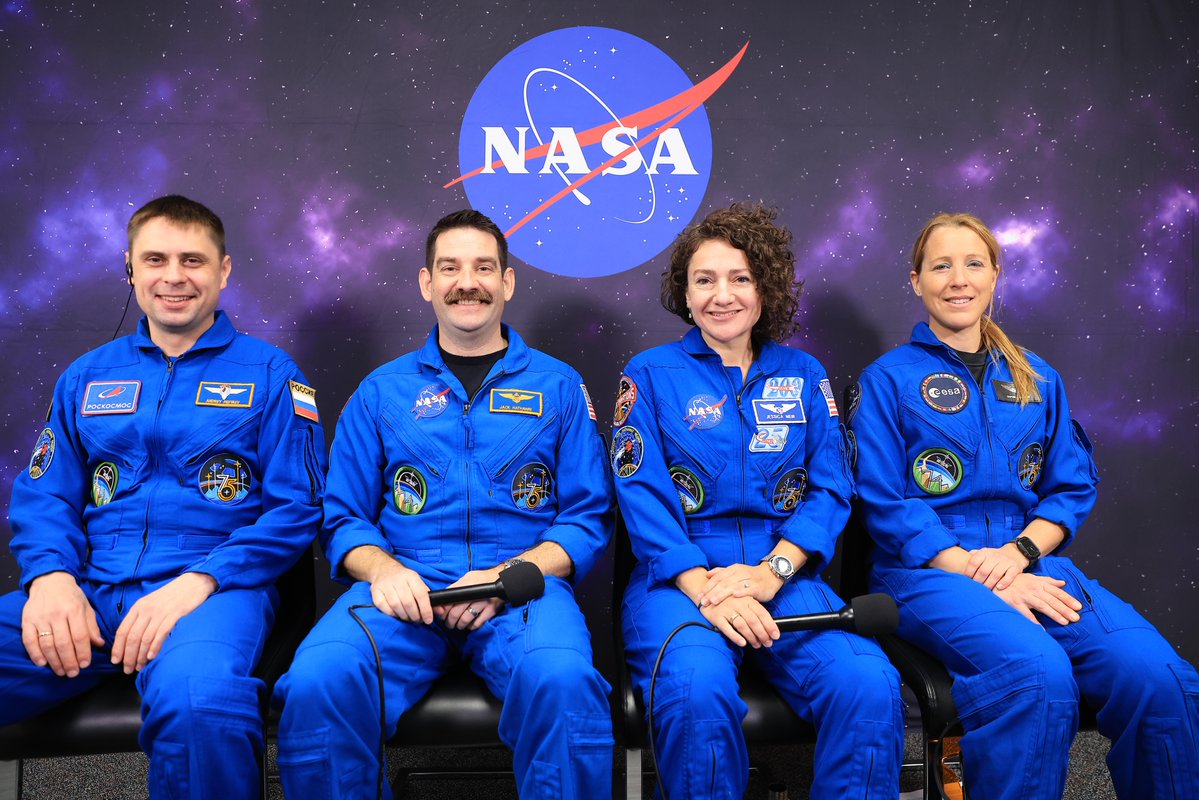
Our Crew-12 mission is heading to the @Space_Station soon!
Learn more about the four-person crew and their mission of scientific discovery: https://t.co/8s9ExkWuna
To all the athletes representing @TeamUSA: I'm so proud of you. Your talent and perseverance have brought you to this moment, and Michelle and I will be joining Americans from across the country cheering you on.