Build dApps Faster with AlgoKit 3.0 🏃
Tokenize assets in minutes, not months. Build on Algorand and access tools to skip the complexity of smart contracts.
@marcvl May be answer can be found.Why Algo price is still 22 cents? after so many things has been done.Who is shorting the coin? If you bought the coin at 60 cents who cares about the 7% APR when it is selling 22 cents and dropping further with any type of wind
1/ Quantum Computers Will DISRUPT Cryptocurrency in 5 Years! 🤯
Catch @JohnAlanWoods, CTO of @AlgoFoundation, sharing bold insights on the future of AI and Quantum Computing!
Catch the full podcast in comments ⬇️
New #FIFACollect Surprise Premium - National Treasures Part 3 Secondary Sale
micpolay bought Iconic USA Team Package RTB M32 and M59 #23 from Collector21515 for $998.00.
https://t.co/R6mEl4afva
USA Team Package RTB M32 and M59
we can confidently say that relay nodes in Algorand cannot censor transactions or blocks. Their role is strictly limited to relaying protocol messages, without any authority to modify, validate, or selectively withhold them. The cryptographic integrity of the messages ensures that any attempt to tamper with or suppress them would be detectable, and the existence of even a single honest relay in the network guarantees that transactions and blocks can still propagate.
As for whether Algorand is a highly decentralized chain even with relays, the answer is a nuanced yes. The relay nodes do introduce a degree of centralization in the communication layer because they are a subset of the network, often run by entities with higher resources, and not every node is a relay. This has been a point of discussion in the community—some argue that the reliance on a smaller number of relays (compared to participation nodes) creates a potential bottleneck or point of failure, even if they can’t censor content.
However, the decentralization of Algorand shines in its consensus layer. The Pure Proof-of-Stake (PPoS) mechanism ensures that block proposal and validation are handled by randomly selected participation nodes, not relays. Anyone with a stake in ALGO can run a participation node and contribute to consensus, which distributes power broadly across token holders. This randomness and low barrier to entry (no heavy computational requirements like in Proof-of-Work) make the consensus process highly decentralized.
So, while the relay infrastructure might not be as decentralized as the participation layer—since relays are fewer and often operated by trusted or well-resourced parties—the system as a whole remains robustly decentralized where it matters most: in governance and block production. The relays’ inability to censor further supports this, as it ensures they can’t undermine the network’s integrity even if their deployment is less distributed.
In short: relays can’t censor, and Algorand’s design, particularly its PPoS consensus, makes it a highly decentralized chain, even if the relay layer introduces some practical trade-offs for efficiency.
From Grog
Algorand's relay nodes are designed to act as communication hubs, passing protocol messages (including transactions and blocks) across the network. They don’t have the ability to censor transactions because they don’t play a role in block construction or validation—that’s handled by the participation nodes, which are selected randomly via Algorand’s Pure Proof-of-Stake (PPoS) consensus algorithm. The relays simply forward messages, ensuring connectivity across the decentralized network.
The key point here is that as long as there’s at least one honest relay node in the communication path, a transaction (or block) can propagate successfully. This is because the protocol messages are cryptographically signed and verifiable, so a relay can’t alter or selectively drop them without it being evident. Even if some relays were malicious or colluding to suppress certain transactions, the decentralized nature of the network—combined with the fact that participation nodes independently propose and validate blocks—means that censorship becomes impractical as long as that single honest path exists.
Blocks themselves are indeed just another type of protocol message, broadcast after being proposed and certified by the consensus process. Relays don’t decide their validity; they just move the data along. This design minimizes the trust required in any single relay and keeps the system resilient against censorship attempts.
It’s a clever separation of duties that enhances both security and decentralization.
Enabling P2P communication doesn't make the network more secure or more permissionless; it makes message passing more robust. The network is already secure and permissionless today.
Don't listen to amateurs, listen to Silvio.
https://t.co/oAktKhV9RC
@Justin_Bons@AlgoGrinding Relays can't censor txs because they don't construct blocks. All they do is send protocol messages around and a single honest path is enough to receive these messages including "censored" txs. The same is true for blocks because they too are just a message.
@Justin_Bons@AlgoGrinding Even if relays colluded all they could do is censor winning blocks (~20 each round). But that's hiding the next block which is different from censoring specific transactions. Censoring transactions would be much worse because you can cherry pick which get in. They can't do that.
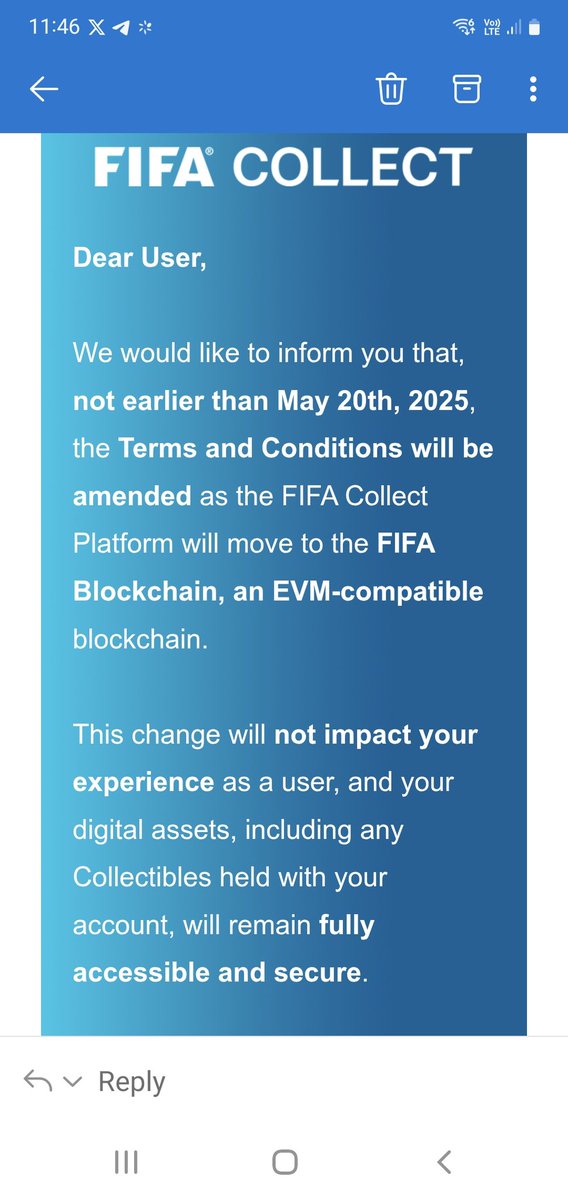
Other chains would rather cut their arm just to be able to get FIFA Collect and FIFA coin. FIFA Collect was a lottery back at 2022. Eventhough, Algorand works amazing at FIFA Collect . It is super reliable, super scalable, very fast, Quantum resistant, green and highly decentralized & super low cost. Getting FIFA coin to Algorand will still require huge effort.
100 %....Other chains would rather cut their arm just to be able to get FIFA Collect and FIFA coin. FIFA Collect was a lottery back at 2022. Eventhough, Algorand works amazing at FIFA Collect . It is super reliable, super scalable, very fast, Quantum resistant, green and highly decentralized. Getting FIFA coin to Algorand will require huge effort. @silviomicali@StaciW_DC@marcvl@JohnAlanWoods
@alphaarcade@FIFAcom With FIFA Collections on Algorand, bringing FIFA Coin to the platform is within reach. However, FIFA President Gianni Infantino has called for open collaboration with others. Let’s stay proactive and take decisive steps to secure a win for both Algorand and its technology.
@alphaarcade@FIFAcom We must recognize that other blockchains may offer financial incentives to attract FIFA Coin to their platforms. Given the significant role financial incentives play in the crypto space, Algorand must take this matter seriously and remain vigilant.
@marcvl@EldarDRM@StaciW_DC
@EldarDRM According Grog 3. Bank of Italy Digital Sureties is already alive at Algorand in some form. Can anybody see the traces of this activity on blockchain? or Is it operating on Algorand side chain?
Algorand is Technically more capable than the contenders as far as speed, reliability, scalability, security and decentralization and low cost .It has a proven success record with FIFA Collect. Problem is big decisions are made relationships with who knows who and other incentives play huge role as well. In my opinion, If Algorand kept atleast of the FIFA sponsorship at 2022.They would have been in the decisions making process with FIFA before anybody else as far as FIFA coin and others.Back in 2022 Silvio played a big role on getting FIFA Collect. We don't hear from Silvio anymore. Without a huge effort like signing sponsorships with FIFA and establishing great relationships. I don't think FIFA coin will be launched at Algorand. Regional sponsorship probably cost $30_$50 https://t.co/K77xLc9UPN this price and market cap Can Algorand afford to pay that much?