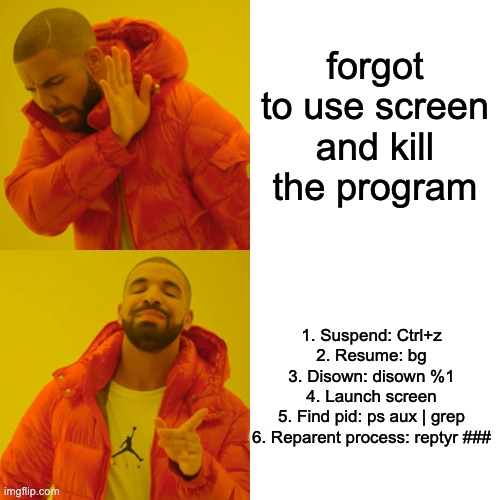
1/ You launched a long-running program...
And forgot to use screen or tmux.
Now you're terrified to close your terminal.
I’ve been there.
Here’s how to rescue it like a pro.
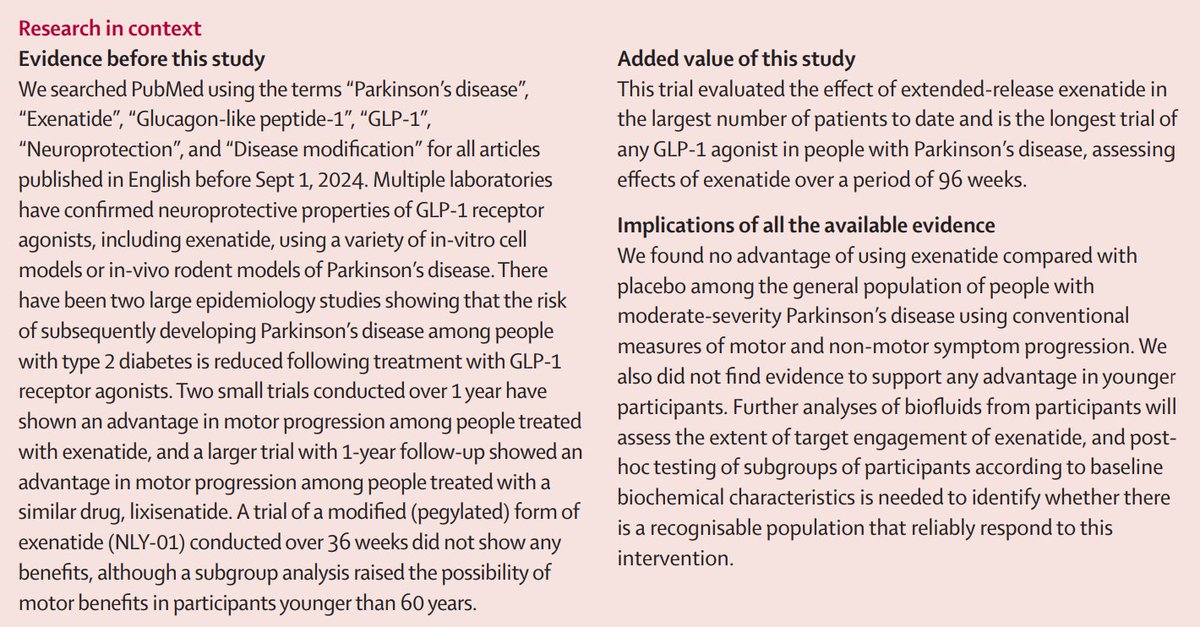
Parkinson's disease is the second most common neurodegenerative disease.
A recent study investigated whether the GLP-1 receptor agonist, exenatide, could slow the rate of progression of Parkinson's disease: https://t.co/WTtYCJZnjf
A Review published in Translational Neurodegeneration explores the connection between Parkinson’s disease and abnormal glucose metabolism, focusing on the underlying pathophysiological mechanisms.
https://t.co/ggGiCOk7mm
🦋 for Science
Starter packs for genomics, bioinformatics, #Rstats, Nextflow. Moderation lists. Feeds. Let's rebuild the old scitwitter community and keep this place nice.
https://t.co/8QxQUcHiV0 🧬🖥️🧪
In one of our first "A path towards AGI" posts we discussed Neuro-symbolic systems.
Here's a new example of their implementation👇
Neuro-Symbolic Predicates (NSPs) are smart rules that help robots think by combining visual perception (neural) with logical rules (symbolic). With NSPs robots can easier plan and tackle complex tasks.
NSPs use programming basics (conditions, loops) and can connect with VLMs that understand images and text.
Here are the details about:
- 2 types of NSPs
- selecting NSPs
- task planning with learning High-Level Actions (HLAs)
🧵
At the @nextflowio summit @EvanFloden & @SashaDagayev demonstrating @SeqeraLabs AI (https://t.co/QuutQj8rrj) for writing Nextflow code that generates DSL2 Nextflow code that actually runs, with a button to run in a sandbox with nf-core test data! Live: https://t.co/1lBCoDvBiy
"Common pitfalls in drug target Mendelian randomization and how to avoid them" published at @BMCMedicine and led by @dpsg108: https://t.co/cfn6xXBcf1. Have previously re-tweeted, but worth a quick thread:
🗨️ WANNA TALK TO YOUR CELLS? Try out CellWhisperer – our new multimodal AI that turns single-cell RNA-seq analysis into a conversation. No coding needed, just chat in plain English. Short walkthrough below. Web app & bioRxiv preprint linked in the thread. Let's dive in! (1/9)
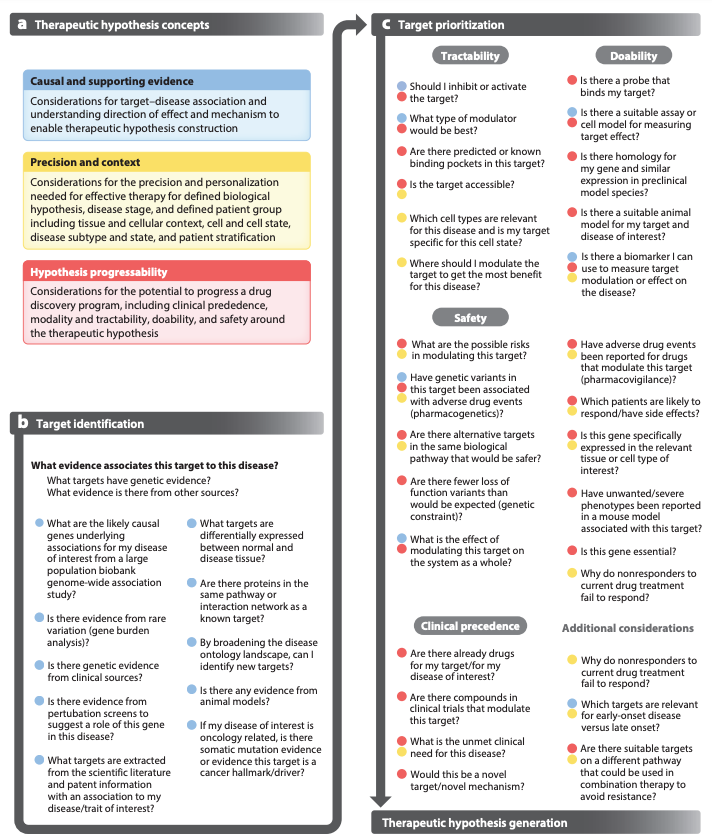
Out now in @AnnualReviews!
We share our perspective on using human genetics for drug target identification, with examples from our work of the past 10 years, and our framework for building therapeutic hypotheses
#OpenTargetsat10
https://t.co/9LzTJPh2Ja
Data keeps emerging that suggests GLP-1RAs like #Ozempic curb all sorts of appetites... not just appetite for food. Brief thread on some new findings...
Excited to share our latest paper, where we describe ITSN1 as a novel risk gene for Parkinson's disease!
We found that rare loss-of-function variants are associated with a 10-fold increased odds of PD. As far as we know, this is the largest effect size reported for sporadic PD to date
https://t.co/QDXWVEHlGg
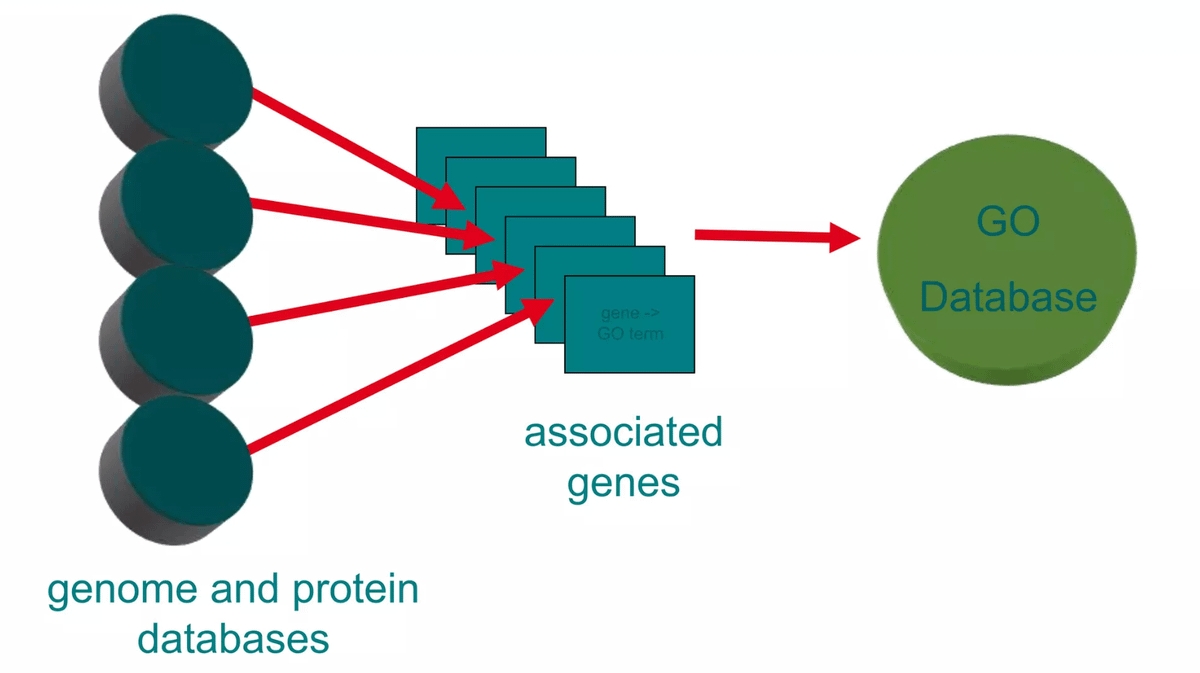
GO annotations are associations between gene products and GO terms. These come with evidence codes indicating the basis for the association, such as experimental evidence, computational prediction, or expert curation of scientific literature.
A week ago, I posted that I was cooking a logical reasoning benchmark as a side project. Now it's finally ready! Introducing 🦓 𝙕𝙚𝙗𝙧𝙖𝙇𝙤𝙜𝙞𝙘, designed for evaluating LLMs with Logic Puzzles. ⬇️
Quick summary:
- Each example is a Zebra Puzzle (a type of Logic Grid Puzzles), which requires multiple high-order thinking skills (see an example next).
- Claude Sonnet 3.5 (@AnthropicAI) is the best, while it can only solve 12% of the Hard puzzles.
- 🐳 DeepSeek V2 - 0628 (@deepseek_ai) is the best Open-weight LLM, much better than Llama-3-72b.
- GPT-4o-mini (@OpenAI) is particularly strong!
- Gemini 1.5 Pro (@GoogleDeepMind) doesn't show expected results.
- Smaller LMs under 10B struggle to solve these puzzles; most of them cannot even solve 1% of hard puzzles.
More details are in the blog and the below thread: ⬇️
📰 Blog: https://t.co/gZLqKWsT81
🤗 Leaderboard: https://t.co/XSPeHJ8fiX
🦓 Data: https://t.co/9PgJTEiH5Z
💻 Code (eval): https://t.co/dsUh9Ze6go
[1/n]









![billyuchenlin's tweet photo. A week ago, I posted that I was cooking a logical reasoning benchmark as a side project. Now it's finally ready! Introducing 🦓 𝙕𝙚𝙗𝙧𝙖𝙇𝙤𝙜𝙞𝙘, designed for evaluating LLMs with Logic Puzzles. ⬇️
Quick summary:
- Each example is a Zebra Puzzle (a type of Logic Grid Puzzles), which requires multiple high-order thinking skills (see an example next).
- Claude Sonnet 3.5 (@AnthropicAI) is the best, while it can only solve 12% of the Hard puzzles.
- 🐳 DeepSeek V2 - 0628 (@deepseek_ai) is the best Open-weight LLM, much better than Llama-3-72b.
- GPT-4o-mini (@OpenAI) is particularly strong!
- Gemini 1.5 Pro (@GoogleDeepMind) doesn't show expected results.
- Smaller LMs under 10B struggle to solve these puzzles; most of them cannot even solve 1% of hard puzzles.
More details are in the blog and the below thread: ⬇️
📰 Blog: https://t.co/gZLqKWsT81
🤗 Leaderboard: https://t.co/XSPeHJ8fiX
🦓 Data: https://t.co/9PgJTEiH5Z
💻 Code (eval): https://t.co/dsUh9Ze6go
[1/n]](https://pbs.twimg.com/media/GS14t4SasAAKWpA.jpg)


