PGY4 @HopkinsHeart
Interests: Stats, EP, critical care
Via @PennIMResidents @YaleMed @AIIMS_nd @MAMC_NewDelhi
Coffee aficionado and random trivia enthusiast
It's always bothered me that medical research papers are static. A PDF, showing you what the authors thought were the important findings.
I think we're ready for a paradigm shift and I did a little proof of concept...
Summary-
Good data to help guide therapeutic decisions regarding AC beyond the initial 6mo in patients with active cancer. Evidence supports a low dose apixaban regimen in this setting.
Clinically relevant bleeding - 12.1% vs 15.6% (sHR 0.75, 0.58-0.97) was also reassuring.
Equivalence was also shown in rates of major bleeding, all-cause mortality and other safety/efficacy endpoints.
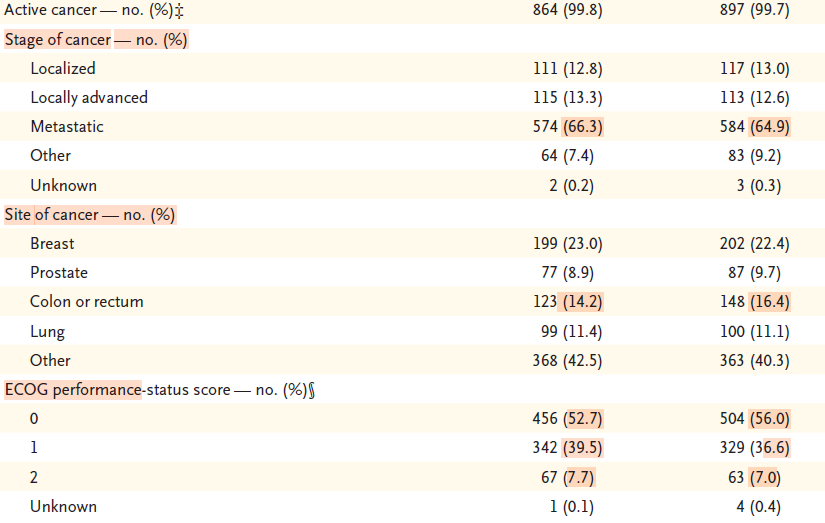
They also enrolled different kinds of cancer, cancer treatments, ECOG status and different initial AC regimens that improve generalizability.
However, race/ethnicity data was not collected and f/u was upto 12mo only. ~20% had Rx <6mo but this was balanced b/w arms.
A total of 1766 (866 to 2.5mg, 900 to 5mg) patients were randomized with similar characteristics at baseline.
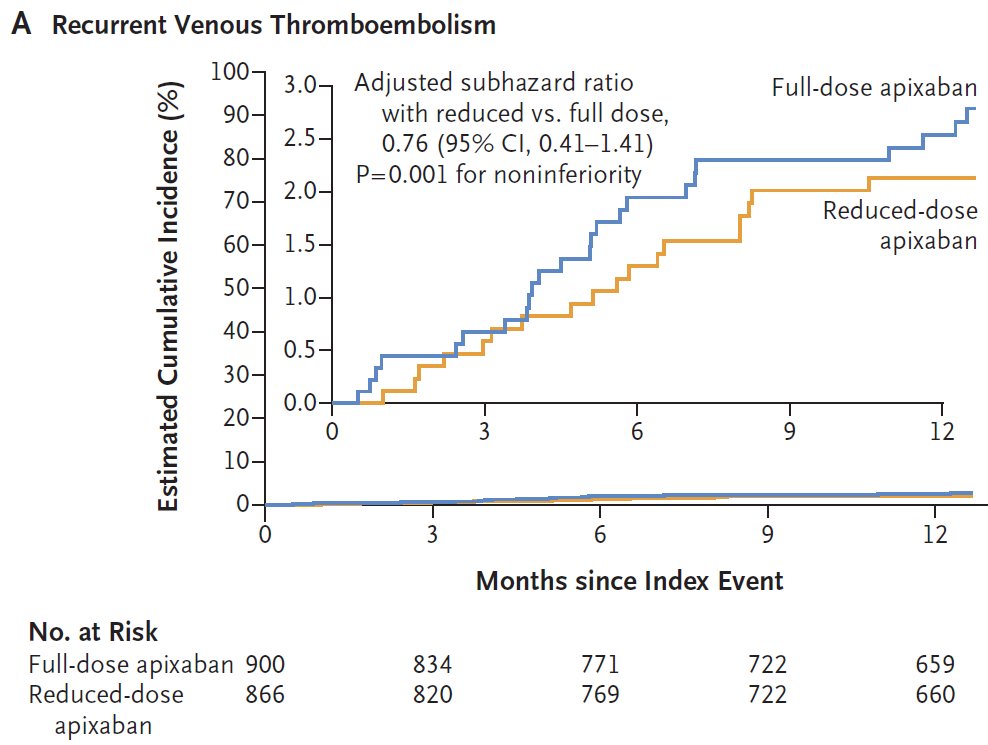
Recurrent VTE occurred in 2.1% (2.5mg) vs 2.8% (5mg), with sHR 0.76 (0.41-1.41) at a median Rx duration of 11.8mo. The sHR was below the non-inferiority margin
Patients with active cancer are at a high risk of thrombosis.
While indefinite AC is recommended for proximal DVT/PE in this population, this is confounded by a high bleeding risk.
Can a lower dose of DOACs beyond 6mo help?
Primary outcome was recurrent VTE analyzed using a Fine-Gray model (due to death being a competing risk), with a pre-specified sub-hazard (sHR) non-inferiority margin of 2.00 for the upper bound of the 95% CI
API-CAT was a double-blind, non-inferiority RCT that enrolled patients w/proximal DVT of lower extremities or >=segmental pulmonary embolism AFTER completing 6mo of AC.
Patients were randomized to reduced dose (2.5mg) vs full dose (5mg) apixaban twice daily and followed for 1y
Incredibly humbled and honored to receive this award in honor of the inspiring physician scientist Iva Dostanic & for the opportunity to share our prelim data & ongoing RCT of SGLT2i in acute CRS. I'm so grateful to my mentor @fperrywilson, patients, AHA @YaleNephrology@YaleIMed
Researchers have identified a biomarker panel that improves the assessment of chronic kidney disease (CKD) progression in children.
Learn more about the research.
@YaleNephrology@YalePediatrics@JasonHenryG@fperrywilson
https://t.co/4TiDDcp9lz