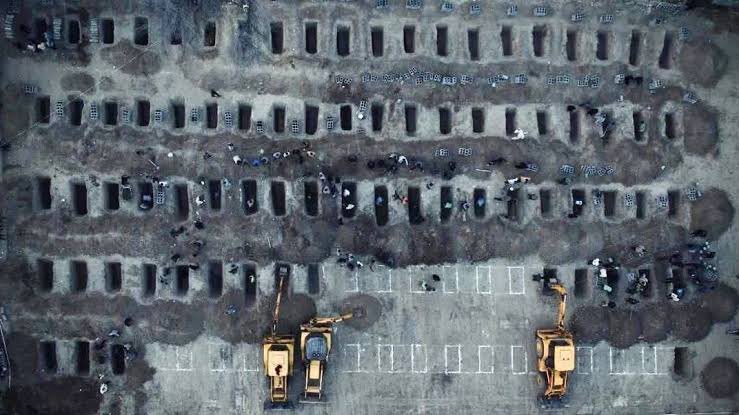
𝐆𝐮𝐢𝐝𝐞𝐥𝐢𝐧𝐞 𝐖𝐚𝐭𝐜𝐡: The newest Surviving Sepsis guidelines shift to a more nuanced, patient-centered approach and away from strict targets for all patients. Dr. Patricia Kritek highlights what's new: https://t.co/umWhGTEIIu
Our internal data shows Claude is accelerating AI development—a possible path to recursive self-improvement, or AI autonomously building a more capable successor.
It’s happening faster than we thought, and the implications deserve greater attention. https://t.co/OVVPJO7VQx
Can AI company Anthropic hold on to its ethical founding principles as it strides to market with its most powerful and unnerving tool yet?
In the latest FT Weekend Magazine cover story, Madhumita Murgia reports on Anthropic’s relentless race to the top https://t.co/aYI2azKXbc
Building takes decades. Destroying takes days. Stability requires hundreds of billions of dollars in defense, intelligence, and cybersecurity. Instability can be achieved with $20K drones. My @TheAtlantic essay on Iran, the UAE, and the global economy. https://t.co/LagP2TWdiv
The Iliad and Odyssey are the only nearly complete survivors of the Epic Cycle, an 8 part collection of ancient Greek epics that once told the full mythological story of the Trojan War.
Homer’s poems cover only a small portion of this larger saga, with the Iliad focusing on a brief period near the end of the war and the Odyssey detailing Odysseus’ return home.
The other lost epics, including the Cypria, Aethiopis, Little Iliad, Iliou Persis, Nostoi, and Telegony, expanded the narrative to include the origins of the war, Achilles’ later battles, the fall of Troy, the Greek heroes’ returns, and Odysseus’ final fate.
Though these poems were once foundational to Greek literary culture, they were gradually lost as manuscript traditions declined, leaving behind only fragments, summaries, and references from later classical writers.
#drthehistories
Everyone knows about the 300 Spartans at Thermopylae.
Almost nothing they know is the full story.
Start with the number. There weren't 300 Greeks at that pass. There were around 7,000. Spartans, Thespians, Thebans, Phocians, Locrians, Arcadians, Corinthians. Citizen-soldiers from across Greece who marched north knowing they'd be facing the largest army the ancient world had ever assembled.
The 300 is just the headline. The ones who stayed to the end.
Now the men themselves. King Leonidas wasn't some chiseled 30-year-old. He was roughly 60 years old when he led that march. And the 300 he picked weren't his strongest warriors. They were specifically men who already had living sons. Spartan law demanded it. Leonidas wasn't choosing an army. He was choosing men whose bloodlines could survive their deaths. Every one of them knew what that meant before they ever saw a Persian.
They marched anyway.
And they didn't march alone in the way movies suggest. Each Spartan citizen-soldier was accompanied by helots, the enslaved underclass that propped up the entire Spartan economy, outnumbering their masters roughly seven to one. Hundreds of helots fought and died at Thermopylae too. They get no statues. No films. No name on the monument.
The pass itself was barely 15 meters wide in 480 BC (it's silted up now and looks nothing like it did then). That bottleneck is the only reason a few thousand men could hold off a Persian force modern historians estimate at 70,000 to 300,000. Herodotus said 1.7 million. He was lying, or possibly counting cooks, slaves, and camp followers, but even the conservative number is staggering.
For two days, they held. Wave after wave broken against bronze and discipline. Xerxes reportedly leapt from his throne three times in fury watching his men die. He sent in the Immortals, his elite personal guard, supposedly invincible. They weren't. Not in that pass.
Then the Greeks were betrayed.
A local man named Ephialtes, whose name still means "nightmare" in modern Greek, sold the Persians a goat path through the mountains that flanked the pass. The Phocians assigned to guard it scattered when the Immortals appeared in the dawn fog. Leonidas knew by morning he was surrounded.
He dismissed most of the allied Greek forces. Saved their lives. But here's what almost nobody talks about: roughly 700 Thespians, led by a man named Demophilus, refused to leave. They were citizen-farmers from a small town that knew Persia was coming for them next no matter what. They chose to die beside the Spartans rather than run. About 400 Thebans stayed too, though their motives were murkier and many surrendered when the end came.
So the "last stand of the 300" was actually closer to 1,500 men. The Thespians died to the last. Their town was burned to the ground by the Persians weeks later anyway. They're a footnote in a story that should bear their name.
The final fight happened on a small hill called Kolonos. Spears shattered. Swords broken. Herodotus says they fought with hands and teeth at the end. Leonidas fell early, and the Spartans fought four times over his body to keep the Persians from taking it.
They lost.
Xerxes had Leonidas decapitated and his body crucified, a violation of Persian custom so extreme it tells you exactly how badly that old man had humiliated the king of kings. Forty years later, Sparta sent a delegation to recover his bones and bring him home.
Two Spartans survived the battle. One, Aristodemus, had been sent away with an eye infection. He returned to Sparta and was treated as a coward, shunned, refused fire, refused conversation, until he threw himself into the front line at Plataea a year later and died seeking redemption. The other survivor, Pantites, was sent on a diplomatic errand and missed the fight. He hanged himself from the shame.
That's the world they lived in.
The epitaph carved at the site doesn't brag. It doesn't even mention victory, because there wasn't one. Roughly translated, it just asks the traveler to tell Sparta that her sons died here, obedient to her laws.
A small group of farmers, an old king, an enslaved underclass written out of history, and a town that vanished from the map. Together, for three days in August of 480 BC, they did the math on freedom and decided the price was worth it.
We remember 300 of them.
There were always more.
These are really challenging times for academic medicine. You have to set your goals. If you want to be at the top of the field what matters is truly enduring contributions that help improve patient outcomes. Visibility, titles, fame are transient. Enduring contributions to your field or to the delivery of excellent care at your own institution will set you apart.
Success in any field needs a huge amount of hard work, talent, perseverance, and yes, luck. You need to want to do what you are doing. Passion.
Whether your efforts are in research, practice or education, what will set you apart is always hard work, talent, and perseverance. With that luck is more likely to be on your side.
I wrote this in a moment I never would have chosen. A sudden pause that made me see my life clearly.
The meaning of our work is profound. This experience simply helped me see more clearly what matters most.
“Time is Finite” JAMA
https://t.co/IwkKdyeEWx
You’ve read heaps about the Strait of Hormuz recently.
This visual guide by Al Jazeera features cool maps (worth skimming over even if you’ve done your research already). Source: https://t.co/Tw5EvqY7nd
Bhutan’s biggest issues are primary economic and are structural. Unless there are reforms made aggressively, inflation is likely to erode any GDP growth gains as consumption gets curtailed by high household expenditures. https://t.co/LHd0xrG61U