Future Destroyers of the Indian Navy: P-18 NGD (next generation destroyer) 🇮🇳🤯
Current status:
-Under design by Indian Navy’s WDB (warship desg. bureau)
-Expected to be significantly larger (~14,000 tons displacement), entering cruiser category.
-Will replace the aging Rajput-class destroyers.
Armament and Capabilities:
-Planned to have 144 VLS cells.
-Will deploy extended-range BrahMos missiles, hypersonic BrahMos-II, and BMD missiles (A1, A2).
-Equipped with advanced ADs capable of intercepting ballistic missiles up to 150km.
Timeline and Funding:
-No official timeline or funding released yet.
-Estd. cost per ship likely over $1.2 billion
P-18 NG-destroyers will mark a quantum leap in size, firepower (144 VLS), and capabilities including BMD and hypersonic missile deployment. P-18 faces funding and timeline uncertainties but is critical for future naval strength.
When I joined the Navy, all that my mom wanted of me was to become the Commanding Officer of INS Venduruthy.
That was the aura of that post.
I must have disappointed her big time because I left without commanding anything.
I am reminded of this story every time someone brings up INS Venduruthy. More so since it is its 83rd anniversary.
Congratulations!
100 Years of Vice Admiral Mihir Kumar ‘Micky’ Roy
Today marks the birth centenary of Vice Admiral Mihir Kumar Roy, PVSM, AVSM - one of the @indiannavy 's most distinguished admirals. #ThisDayInIndianNavy
An aviator, spymaster, submariner, combat leader, strategist, and scholar, Micky belonged to a generation that helped shape the post-Independence Indian Navy into a confident and capable maritime force.
Born #OTD in 1926 in Bogra in present-day Bangladesh, he grew up in the Madras Presidency, thanks to his Imperial Forest Service Officer father, Bejoy Kumar Roy. He was fluent in Tamil and Telugu, which would hold him in good stead in his later life. He attended the Presidency College, Madras and the Britannia Royal Naval College, Dartmouth, before serving on cruisers, battleships and destroyers. At London, he met and forged a lifelong friendship with Raja Ramanna.
Back in India, he joined the aviation branch and become India’s first observer (now called Naval Air Operations Officers) in May 1952. He commanded the Fleet Requirements Unit (FRU), followed by stints at NHQ and the High Commission in London.
He then commissioned the INAS 310, the famed Cobras squadron, in Hyeres in France. The Cobras with the iconic Alizés was India’s first ASW squadron. Micky successively commanded the 22nd destroyer squadron (as CO INS Godavari), the naval air station INS Garuda and the 16th frigate squadron (as CO INS Brahmaputra).
In 1970, Micky took over as Director Naval Intelligence and during the #1971War oversaw one of the most innovative operations of the war. Operation X saw the Indian Navy raise a naval guerrilla force of Mukti Bahini frogmen that struck ports, shipping and inland waterways across East Pakistan. It remains one of the most successful covert maritime campaigns in South Asian history.
After the war, he attended RCSS and returned to become the first aviator to command the aircraft carrier INS Vikrant. He brought her out of refit, took her on a diplomatic cruise to Iran, and achieved 1000 landings in a short time.
In his flag appointments, Micky served as Assistant Chief of Personnel, commanded the Eastern Fleet, and served as Senior DS at NDC, before taking over as the 7th Commander-in-Chief of the Eastern Naval Command.
As the CinC with the longest tenure, Micky’s biggest contribution was to develop the naval aviation infrastructure in the East. He was instrumental in establishing four naval air stations and a naval air enclave.
After retiring from the Navy, Micky, as the founding Director General of the Advanced Technology Vessel (ATV) Project, laid the foundations of India's indigenous nuclear submarine programme - one of the country's most ambitious strategic endeavours. For nearly a quarter of a century thereafter, he remained a tireless advocate for maritime consciousness, national security, and sea power, carrying the Navy's message into the corridors of power, academia, think tanks, and the wider strategic community.
The story of the modern Indian Navy cannot be told without telling the story of Vice Admiral MK Roy.
@srikantkesnur@zwerubae@SanjoyRoyTWA@probirpaymate@kirtitejas@SandeepUnnithan@MHSofIndia@thisdayin_IN
Today in Kolkata, INS Dunagiri, INS Sanshodhak and INS Agray were commissioned. They reflect India’s growing maritime capabilities, our commitment to safeguarding national interests across the seas and the remarkable strides being made towards self-reliance in defence manufacturing guided by the vision of Aatmanirbhar Bharat.
@indiannavy
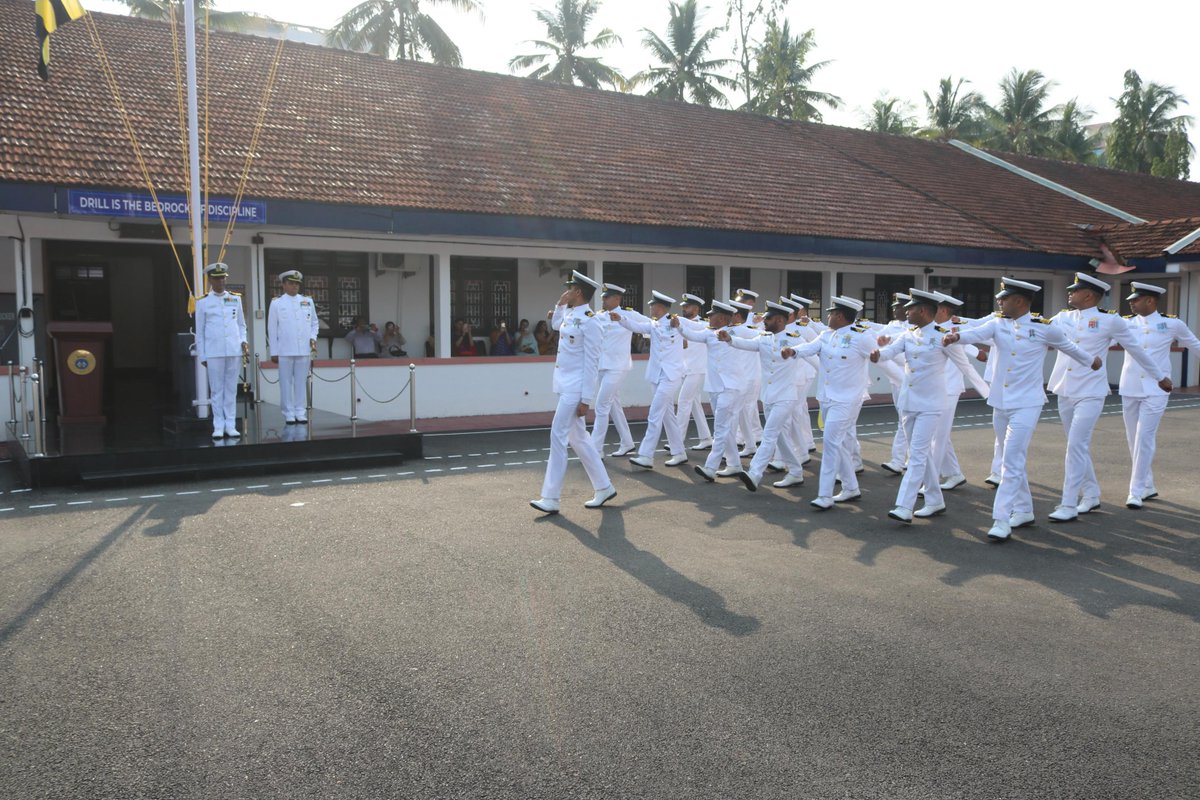
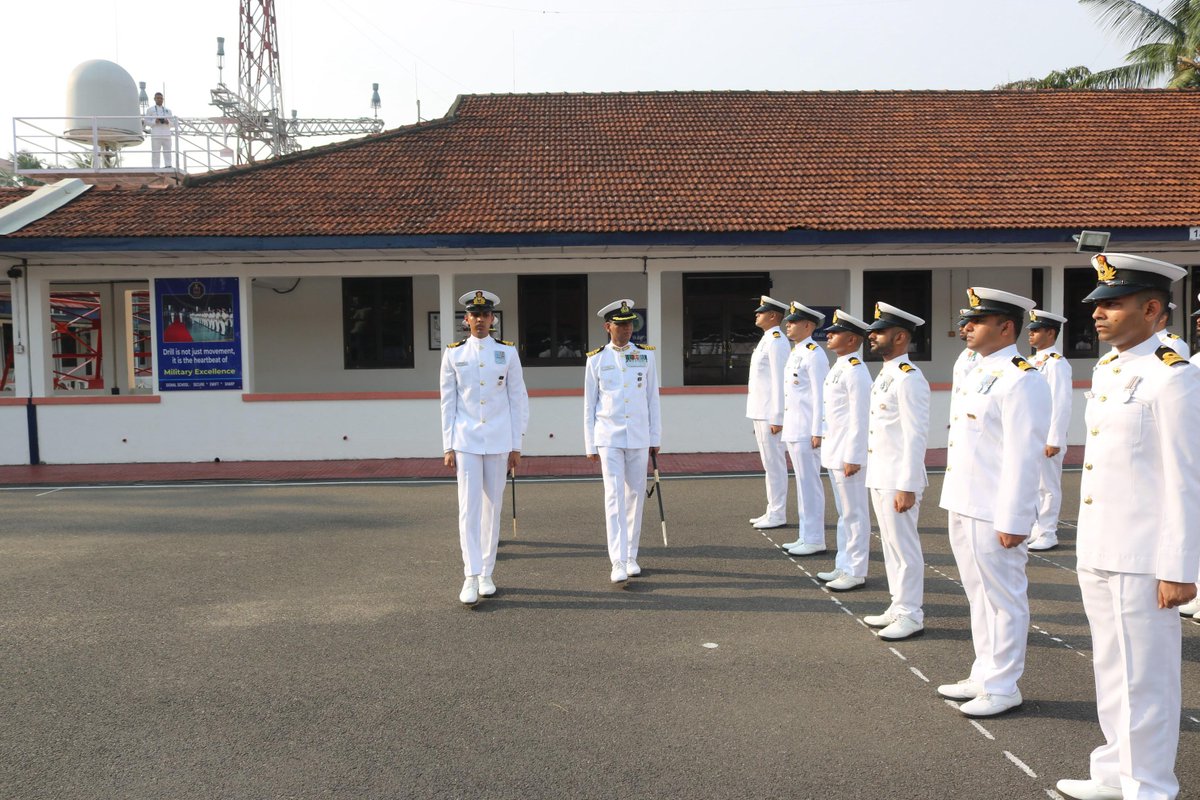
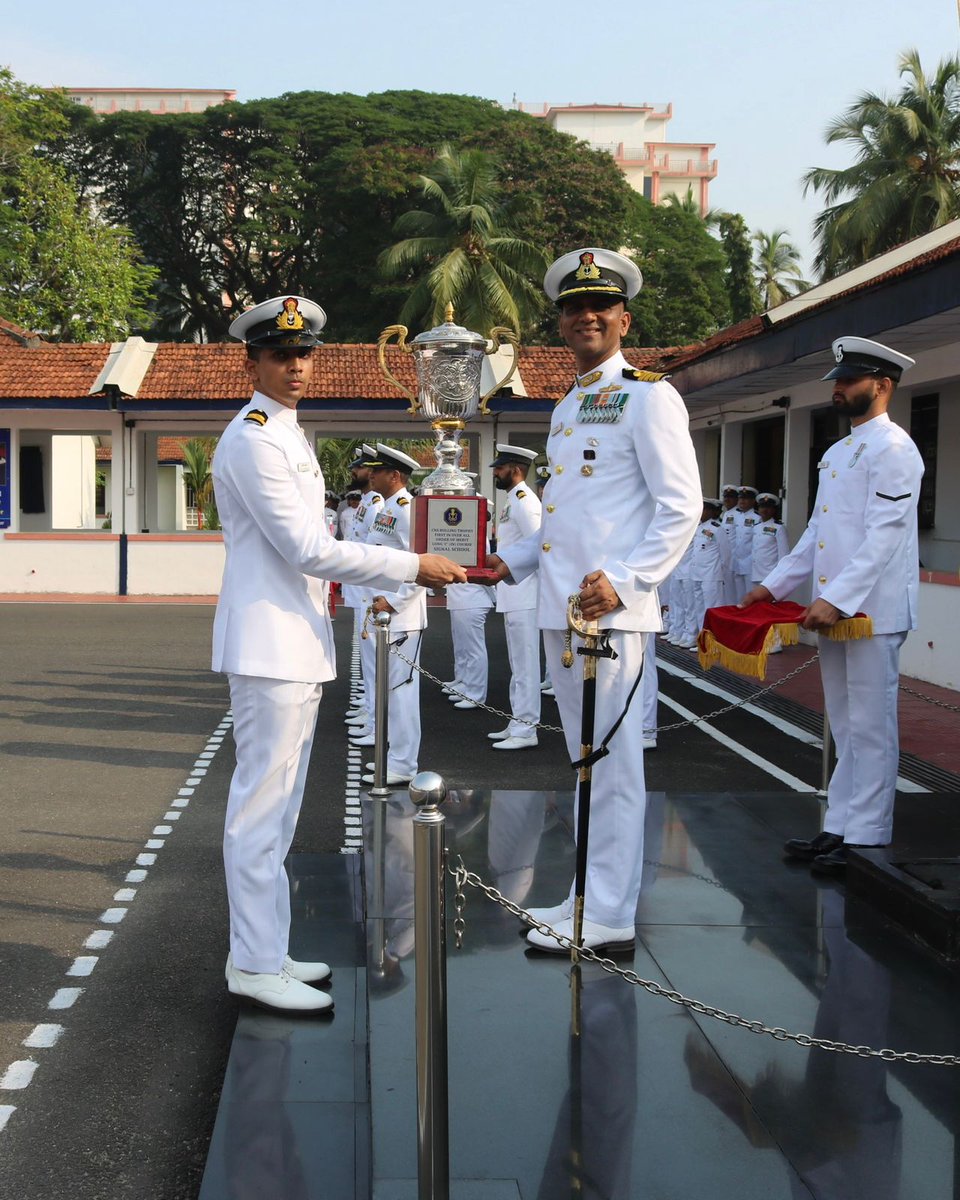
Passing out Parade was conducted on completion of an intensive 48 weeks Long Communication specialisation #Signalschool training program encompassing communication, electronic warfare, information warfare, cyber security and network centric operations. Officers of the Indian Navy and Indian Coast Guard have successfully qualified in the course and trainees with outstanding performance were felicitated during the ceremony #IndianNavy
Lt Cdr Aditya Krishnan secured First in Overall Order of Academic Merit and Lt Cdr Sanjeev Kumar Singh was adjudged the Most Spirited Officer for showcasing best all round performance.
@indiannavy@IN_WesternFleet@IN_EasternFleet@IN_WNC@IN_HQENC@IN_HQSNC@IN_ASW_School@IN_NDSchool@IN_Dronacharya
#IndianArmy#IndianNavy#IndianAirForce
-Some very senior generals have lauded my article & quoted it at various forums
-Thank you so much sirs/friends for reaching out to me and appreciating the article:
https://t.co/82vW0l93rx
Lessons from the Hormuz Humiliation: Why India Must Abandon it’s Surface-Fleet Fantasy and Master Choke Points
The most powerful navy in history has just confessed defeat in the 33-kilometre-wide Strait of Hormuz. In March 2026, as the US-Iran war entered its third week, reports revealed that the US Navy has rejected near-daily requests from the global oil industry for escorts through the Strait of Hormuz. Three American supercarriers — Abraham Lincoln, Gerald R. Ford and George H.W. Bush — plus French and British warships sit idle in the Arabian Sea, Red Sea and Mediterranean. Though their collective military might outguns most nations, none of it can safely escort even a single oil tanker through the narrow corridor. Iranian kamikaze drones, swarms of fast-attack boats, naval mines and coastal anti-ship missiles have turned the tight waterway into a lethal gauntlet. A mere $500 contact mine can cripple a $4-billion destroyer. The best surface radars cannot detect submerged threats, and air power has proven equally ineffective at sweeping shipping lanes.
This is not merely an American failure. It is a warning written in fire for every navy that still dreams of blue-water dominance in the age of aerospace power. For India, staring at a peer competitor across the Indian Ocean, the message is brutally clear: surface ships and aircraft carriers are not assets; they can rapidly become liabilities. In any conflict with China — or even a superpower like the United States — our carriers and destroyers will become expensive coffins the moment hostilities begin. The Indian Ocean is no longer a safe playground for carrier strike groups. It is a contested littoral where geography, not tonnage, decides victory.
India’s naval planners have long chased the Mahanian dream: three carriers, a 175-ship fleet, blue-water power projection from the Gulf of Aden to the South China Sea. INS Vikrant is commissioned; INS Vikramaditya soldiers on; a third carrier is on the drawing board. Billions have been poured into surface combatants that look magnificent during naval reviews but will be dead meat in real war. Chinese anti-ship ballistic missiles (DF-21D, DF-26), hypersonic glide vehicles, satellite-linked drone swarms and quiet diesel-electric submarines have turned the Indian Ocean into an anti-access/area-denial (A2/AD) killing zone. Even the Americans, with three carrier strike groups, cannot protect a tanker in Hormuz. What chance do our smaller, less-protected surface ships have when the People’s Liberation Army Navy brings the same arsenal into waters closer to its bases?
The recent US-Iran war has laid bare the arithmetic. Surface ships are sitting ducks for air-power assets — land-based missiles, aircraft, drones and mines. A carrier’s air wing is powerful only if it survives the first salvo. In narrow seas or choke points, it becomes a floating bullseye. Mines laid by fast boats or submarines cannot be cleared by Aegis destroyers. Kamikaze UAVs overwhelm point-defence systems. One lucky hit on an Indian carrier group would produce exactly the strategic humiliation Washington is now desperately avoiding. India cannot afford that humiliation; our economy depends on energy flows through the very same ocean.
Fortunately, geography has gifted India a far cheaper and more lethal alternative. Instead of scattering scarce rupees across vulnerable surface fleets, we must concentrate every paise on the natural choke points our island territories already dominate. Four corridors matter above all:
The Malacca Strait approaches, controlled from the Andaman and Nicobar chain.
The Hormuz lesson is merciless but mercifully timely. India’s defence forces must learn it before Chinese missiles teach it to us the hard way. In the 21st-century Indian Ocean, geography is destiny — and surface fleets are dinosaurs. Choke points, submarines, missiles and island bastions are the future. Let us seize it before it is too late.
Spirit in every splash, teamwork in every wave.
The Annual Mass Relay Swimming Championship - Jal Taran was conducted on 14 Feb 26 at Kochi. R Adm Deepak Singhal, VSM, CSO (Training), SNC graced the occasion as the Chief Guest. In a thrilling showdown, 5 teams battled it out in the swimming pool for supremacy which reflected spirit of sportsmanship, camaraderie and tenacity. Team ASW/Diving emerged as Winners while Team Signal/Dronacharya were Runners up.
#JalTaran #TeamSpirit #OperationalExcellence
There are moments in sport when the scoreboard becomes irrelevant, when what unfolds in front of us feels less like competition and more like history. Under the lights of Rod Laver Arena tonight, Novak Djokovic @DjokerNole stood across the net from time itself—and refused to step aside.
He didn’t win the historic 11th Australian Open title. And yet, what Novak produced felt even more improbable than just another record. At the age of 38, he played on equal terms with Carlos Alcaraz @carlosalcaraz, the best player in the world today—a player who was just ONE year old when Novak played his first Australian Open.
Let that sink in.
This wasn’t a symbolic appearance or a nostalgic echo of former greatness. This was Novak Djokovic competing, suffering, adapting, and believing at the highest possible level—against youth, speed, and the new era embodied in Alcaraz. Nobody in tennis has ever managed anything remotely close to this. Not across eras. Not across generations. Not with this level of relevance.
What we saw in Australia was courage in its purest form. The courage to step onto the biggest stage knowing that time, physics, and history are stacked against you—and conquering it anyway.
Novak’s greatness has never been only about his innumerable titles—it is about his character. About standing alone. About enduring doubt, pressure, and expectation, and still showing up with the same fire.
That is why he belongs in the company of figures larger than sport itself. Like Muhammad Ali, he carried conviction and fought battles far beyond the scoreboard. And he will continue doing so.
Novak Djokovic didn’t lose in Melbourne tonight. He showed us what timeless greatness looks like.
🇮🇳 Admiral Dinesh K Tripathi, #CNS, visited #EasternNavalCommand, #Visakhapatnam on 07 Jan 26 and reviewed the Command’s combat readiness and operational preparedness.
⚓️The #CNS interacted with VAdm Sanjay Bhalla, FOCINC (E), reviewing key operational imperatives, progress of critical infrastructure projects and preparations for IFR 2026, Ex MILAN 2026 and the IONS Conclave of Chiefs—reinforcing the Navy’s focus on mission readiness and maritime security.
#MissionReadiness #Leadership #maritimesecurity
Clearest picture of the J-20 with 4 drop tanks
The 4 tanks increase the range of the J-20 from 4000 to 5500km, but sacrifices stealth, ideal for long range ops
The internal weapons bay, can still carry 6 AAMs, including 4 long range PL-15s and 2 PL-10s
Many delightful& inspirational stories. Here’s one.
Vishesh Kumar from Muzaffarnagar, #UP born to a simple, farming family learnt the values of #discipline & #perseverance. He joined as a sailor, then selected for commissioning; latest achievements -
the PGM & SLT’s stripes!
Homecoming : COAS Visits Sainik School Rewa
In a moment steeped in pride and nostalgia, #GeneralUpendraDwivedi, #COAS and Admiral Dinesh K Tripathi, #CNS returned to their Alma Mater - Sainik School Rewa - where their journey of discipline, courage and leadership first took shape.
Walking once again through the corridors that forged their spirit, they shared memories and motivation with the young cadets - reminding them that true leadership begins with character, service and an unwavering love for the nation.
The visit celebrated mentorship, gratitude and the timeless legacy of Sainik Schools - the cradle of India’s future leaders.
#IndianArmy
#YuvaShakti
#VeerYuva
#NationBuilding
@DefenceMinIndia@SpokespersonMoD@HQ_IDS_India
🇮🇳 Vice Admiral Sanjay Bhalla assumed charge as Flag Officer Commanding-in-Chief, Eastern Naval Command #FOCINC#ENC at an impressive Ceremonial Parade held at #Visakhapatnam today, upon superannuation of Vice Admiral Rajesh Pendharkar.
Commissioned into the #IndianNavy in 1989, VAdm Bhalla has commanded frontline ships #INSNishank, #INSTaragiri and #INSBeas, as well as the Eastern Fleet #FOCEF @IN_EasternFleet.
⚓️A specialist in Communication and Electronic Warfare, the Admiral has held various Command and Staff appointments during a distinguished career spanning over 36 years. His important staff appointments include Chief of Staff @IN_WNC, ACOP (HRD) at NHQ, Director MDCC and a diplomatic assignment overseas.
⚓️He is an alumnus of the Royal College of Defence Studies, #RCDS, #London, Naval War College, #Goa @IN_NWC and the Defence Services Staff College #DSSC, Wellington.
Prior to assuming command of the Eastern Naval Command, he served as Chief of Personnel at Naval Headquarters, #NewDelhi. The Flag Officer is a proud recipient of #AVSM and #NM for distinguished service.
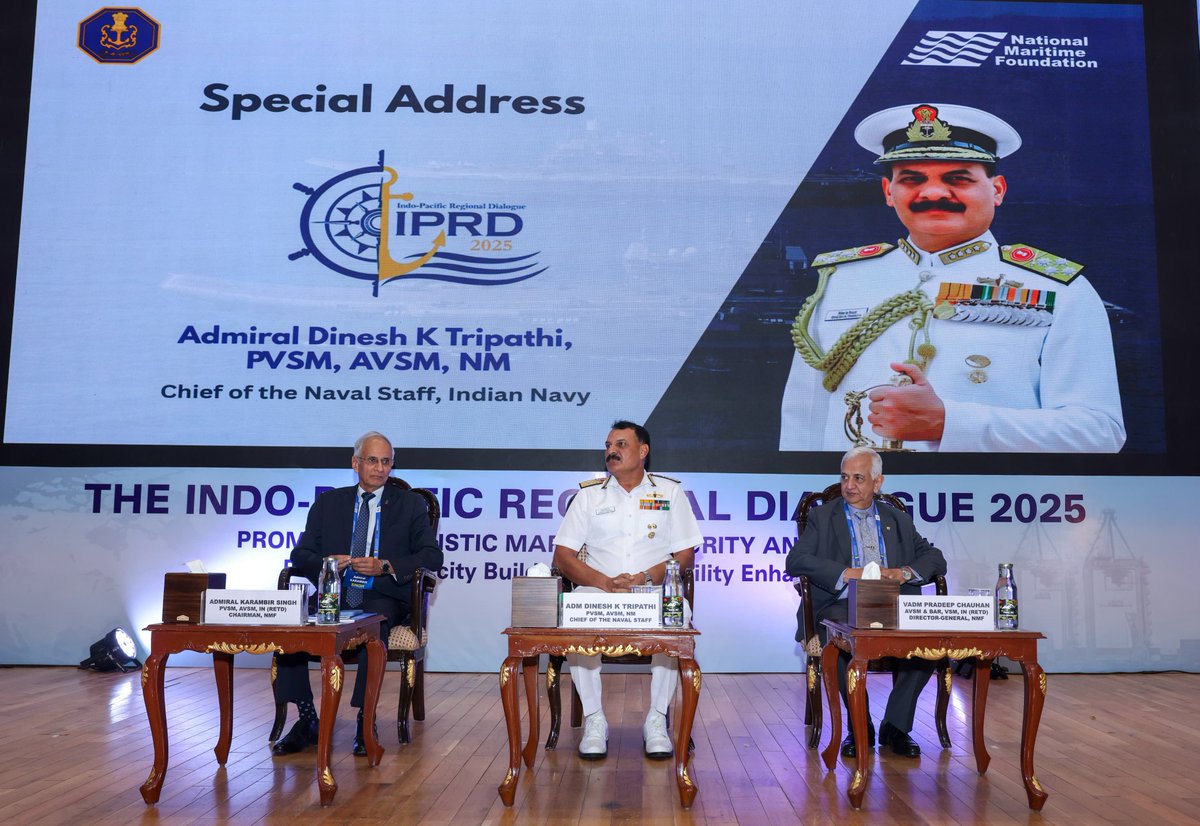
Adm Dinesh K Tripathi #CNS, delivered the Special Address at the Indo-Pacific Regional Dialogue #IPRD2025, at the Manekshaw Centre in New Delhi on #28Oct 25.
Emphasising the #IndianNavy's role in advancing India’s maritime vision from #SAGAR to #MAHASAGAR - Mutual and Holistic Advancement for Security and Growth Across Regions - the CNS underscored the need for holistic #maritimesecurity, regional #capacitybuilding, and #capability enhancement - crucial levers to sustain other pillars of the Indo-Pacific Oceans Initiative #IPOI
Highlighting challenges such as commercial disruptions, transnational crimes, and technological vulnerabilities, #CNS called for collective, context-sensitive solutions.
CNS also cited initiatives like the #AIKEYME and the Indian Ocean Ship Sagar #IOSSAGAR, and the @IFC_IOR, as examples of India’s collaborative approach.
CNS stressed that maritime security and prosperity are intertwined and urged for sustained dialogue and cooperation to ensure peace, stability, and growth across the #IndoPacific.
CNS expressed confidence that IPRD-2025, steered in coordination with the National Maritime Foundation @nmfindia, would generate new ideas & partnerships for a secure and sustainable maritime future.
VAdm Sameer Saxena, assumed charge as the Flag Officer Commanding-in-Chief, Southern Naval Command on #31Oct 25. @IN_HQSNC
He succeeds VAdm V Srinivas PVSM, AVSM, NM who superannuated after an illustrious career close to four decades in the #IndianNavy.
Commissioned into the #IndianNavy on 01 Jul 1989, the Flag Officer is an alumnus of the National Defence Academy, Khadakwasla, Defence Services Staff College, Wellington and the @NavalWarCollege, USA.
The Flag Officer has held several key #operational, staff and #Training appointments. His Command tenures include the Mauritian Coast Guard ship Guardian, #INSKulish and #INSMysore. He also served as Fleet Operations Officer of @IN_WesternFleet.
His important appointments ashore include Joint Director of Personnel and Principal Director Foreign Cooperation at #NHQ. He has also served as the NA to the CNS, and the Naval Adviser at @HCI_London.
On promotion to the rank of Rear Admiral in Feb 2020, he served as the ACNS (Policy & Plans). Thereafter, he commanded @IN_WesternFleet, #FOCWF. In Nov 22, he took over as the Flag Officer Commanding @IN_GDD.
On promotion to Vice Admiral, the Flag Officer took over the responsibilities of #COS, @IN_HQENC.
He was awarded NM in 2017 and AVSM in 2023. He has also been commended by the #CNS and the Commissioner of Police of #Mauritius, both times for acts of gallantry at sea.
He is married to Mrs Laboni Saxena who has been committed to the @NWWA_INDIANNAVY activities over the years.
https://t.co/SewznXkMh1
Vice Admiral Ajay Kochhar, AVSM, NM assumed command of Andaman & Nicobar Command (#ANC) as the 19th Commander-in-Chief Andaman & Nicobar Command (#CINCAN) on 01 Oct 2025. He laid a wreath at Bayonet Square and reviewed the Guard of Honour at #ANC, India’s only Joint Services Command.
A seasoned Flag Officer, he has commanded frontline warships, led critical operational and training assignments, and held key leadership roles including Assistant Controller of Carrier Projects (ACCP), Assistant Controller of Warship Production & Acquisition (ACWP&A), Commandant NDA, and Chief of Staff Western Naval Command, contributing significantly to India’s maritime security.
@HQ_IDS_India@DefenceMinIndia@SpokespersonMoD@IndiaCoastGuard@MIB_India@PIB_India@adgpi@IAF_MCC@IndianNavy@indiannavymedia