अधजले सिगरेट,
अनकही कहानी..
जाने वो किस गम को,
किसी कश में भर कर ,
इक उलझी सी छल्लों में,
धुएं सा उड़ा देता..
बेचैनी कुछ अजीब सी,
की हर कश पे कुछ जल उठता..
लाल आखों की सूरत पर.
लकीरें और गहरा जाती..
सुलगती जिंदगी,
कुछ और फिर..
धुओं में,
बिखर-सी जाती..
#संजीवनी
Why are there two dots under 'n' in the abbreviated form of junction?
#DidYouKnow The two dots (or a solid line with dots) under a raised letter in old abbreviations are traditional 19th-century English grammatical contraction marks used to show that letters from the middle of a word have been left out.
Before typewriters and digital screens, writing a raised letter with dots or lines underneath was the formal, standard way to indicate an abbreviated word (much like how we use a simple period like Jn. today). While modern writing has dropped this style, older railway shorthand and legacy signboards kept this classic formatting frozen in time. #IndianRailways #abbreviations
Imagine sitting in a high-stakes board exam, your palms sweating as the ticking clock echoes through the silent hall, when suddenly your pen hits a microscopic air pocket, the steel scratch slices through the paper, & a massive, ugly glob of blue ink explodes across your answer sheet, ruining months of brutal preparation in a single, terrifying second.
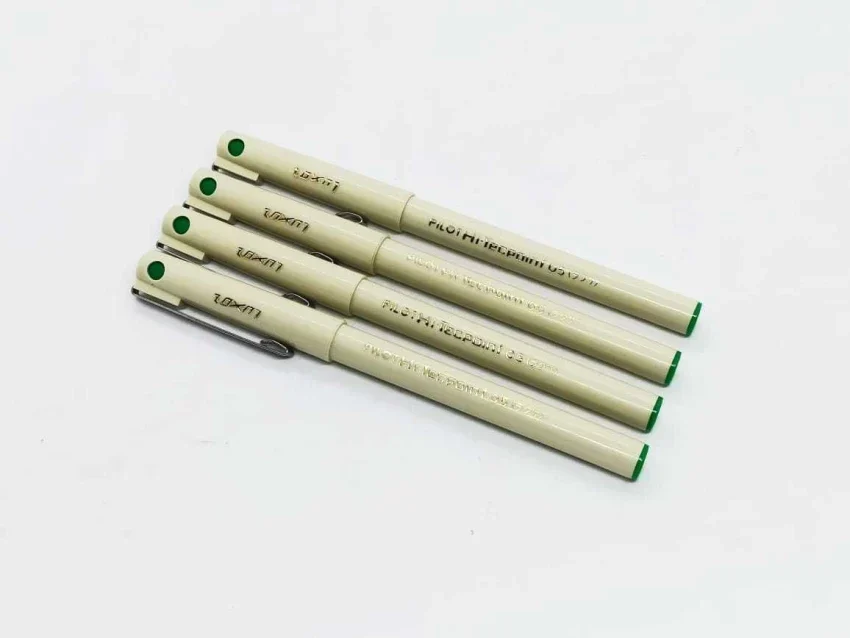
The name evokes images of a daring fighter pilot soaring through the clouds. But in the 1980s & 90s, the Pilot Pen was not famous for flying high; it was the ultimate, elite weapon of survival for every ambitious Indian student trying to conquer the grueling board exams. It was a status symbol, a security blanket, & the only pen trusted not to bleed to death on the cheap, rough recycled paper of an Indian examination booklet.
But behind the clinical, flawless engineering of that iconic needle-point tip lies a 40 yr story of an audacious Indian businessman who bet his entire life savings on a Japanese mechanism that the rest of the world thought was a gimmick.
In 1963, a young entrepreneur named Davinder Kumar Jain known to the industry simply as D.K. Jain started a tiny stationery business in New Delhi with an initial investment of just ₹5K & five employees. He named his brand Luxor.
At the time, the Indian market was fiercely divided. On 1 end were messy, leaky fountain pens that required constant, blue-stained refills; on the other were cheap, scratchy ballpoint pens that skipped words & forced students to press down so hard their wrists cramped. Jain realized that Indian students were desperate for a writing instrument that combined the fluid, effortless glide of a fountain pen with the clean convenience of a ballpoint.
In 1980s, Jain flew to Tokyo & knocked on the doors of the Pilot Pen Corporation, a Japanese giant founded in 1918 by a marine professor named Ryosuke Namiki.
The Japanese engineers had just perfected a radical piece of technology: a micro-engineered, ultra-fine liquid ink rollerball pen with a needle-point tip. Instead of a traditional thick ball, the ink flowed through a precision-cut tube made of stainless steel, delivering a perfectly regulated, mathematically exact line of water-based ink.
Jain looked at it & knew it was the holy grail for India.
He signed a historic partnership to bring Pilot to India under the Luxor umbrella. But when the 1st shipments landed, Indian shopkeepers were horrified by the price. In an era where a standard Reynolds ballpen cost ₹2, the new Pilot Hi-Tecpoint V5 & V7 series were priced at a staggering ₹15-20. Shopkeepers openly laughed at Jain. "Who will pay the price of a full meal just for a single pen?" they asked.
Jain refused to blink. He knew the Indian middle class: parents would skimp on their own clothes & food, but they would spend their last rupee if it gave their child an edge in education.
Luxor launched a massive, targeted marketing campaign aimed straight at the anxieties of students & parents. They positioned the Pilot pen not as stationery, but as an investment in a child’s future. The tagline promised flawless flow, zero smudge, & a tip that would never scratch/tear the paper during the most critical 3 hrs of a student's life.
The gamble paid off spectacularly. By the late 1980s, owning a Pilot V5/V7 became a rite of passage. Passing from the 7th to the 8th standard did not just mean a new grade; it meant your parents finally trusted you with a Pilot pen. Students would clip them proudly to their school uniform pockets like a badge of honor. The distinct, translucent cap with its metallic clip became the universal sign of an intellectual.
For 4+ decades, the partnership b/w Luxor & Pilot ruled the premium writing market in India. It survived the invasion of cheap gel pens, the rise of computers, & the decline of the traditional fountain pen.
But as the decades rolled on, a quiet corporate friction began to brew in the shadows. Luxor, while managing Pilot, had also grown into a massive empire selling its own homegrown pens, alongside other licensed global giants like Parker & Waterman. The Japanese executives at Pilot headquarters in Tokyo felt their legendary products were no longer getting the exclusive spotlight they deserved in the booming Indian economy.
In a stunning corporate twist, Pilot Corporation decided it was time to cut the cord. After a historic, unbroken 40 yr marriage, Pilot officially ended its partnership with Luxor.
Instead of retreating, the Japanese titan doubled down on its belief in the Indian writer. They poured ₹70 crore into setting up their own massive, state of the art manufacturing plant right on Indian soil, launching an aggressive solo journey to penetrate deep into Tier-II & Tier-III towns, vowing to put a high-tech needle-point pen into the hands of a whole new generation.
Pilot did not capture the Indian heart because of aggressive corporate discounts/flashy western aesthetics. It conquered the nation because a visionary Indian businessman recognized that in a country obsessed with academic excellence, a pen that never skips a drop of ink is a holy relic.
The next time you sign a contract/watch a student frantically scribbling notes in a cafe, take a moment to look at the tip of the pen; for that tiny, gleaming silver needle is not just holding a drop of liquid ink, it is holding the collective, anxious memories of millions of Indian children who stared down the terror of a blank exam sheet, & wrote their way into the future.
In May 2022, while digging into National Horticulture Board data, I discovered that Bihar was India's top mushroom producer - a fact the state's Agriculture Department, despite being supported by a top global consultancy firm, was utterly clueless about.
My revelation forced a media frenzy... Ministers and officials immediately claimed credit in newspapers next day... Funnily enough, the data had been public for months, yet it was ignored until I brought it to light. Three years on, official publications and officers still peddle this outdated figure. This isn't just incompetence. It's a blatant disinterest in truly marketing Bihar.
Even though I generally avoid criticising the state (due to professional ethics)... something has triggered me now.
Recently I came to that Bihar boasts a turmeric variety with an impressive 8.4% curcumin content... Rajendra Sonia, a Bihar-developed turmeric has high yields (400-450 quintals/ha) and disease resistance. However, it's virtually unknown globally due to poor marketing by the state. Try to find this on @agribihar's social media account. You won't get it.
The world knows Lakadong turmeric from Meghalaya as the Indian variety with one of the highest curcumin contents globally, typically 8%, with some batches reaching up to 9% curcumin concentration.
Curcumin is the primary bioactive compound responsible for turmeric's medicinal value... During 2023-24, India exported 1.62 lakh tons of turmeric, earning $226.5 million in export revenue... Accounts for >62% of the total global turmeric trade.
Our failure isn't circumstance... it's a lack of intent and passion.
In May 2022, while digging into National Horticulture Board data, I discovered that Bihar was India's top mushroom producer - a fact the state's Agriculture Department, despite being supported by a top global consultancy firm, was utterly clueless about.
My revelation forced a media frenzy... Ministers and officials immediately claimed credit in newspapers next day... Funnily enough, the data had been public for months, yet it was ignored until I brought it to light. Three years on, official publications and officers still peddle this outdated figure. This isn't just incompetence. It's a blatant disinterest in truly marketing Bihar.
Even though I generally avoid criticising the state (due to professional ethics)... something has triggered me now.
Recently I came to that Bihar boasts a turmeric variety with an impressive 8.4% curcumin content... Rajendra Sonia, a Bihar-developed turmeric has high yields (400-450 quintals/ha) and disease resistance. However, it's virtually unknown globally due to poor marketing by the state. Try to find this on @agribihar's social media account. You won't get it.
The world knows Lakadong turmeric from Meghalaya as the Indian variety with one of the highest curcumin contents globally, typically 8%, with some batches reaching up to 9% curcumin concentration.
Curcumin is the primary bioactive compound responsible for turmeric's medicinal value... During 2023-24, India exported 1.62 lakh tons of turmeric, earning $226.5 million in export revenue... Accounts for >62% of the total global turmeric trade.
Our failure isn't circumstance... it's a lack of intent and passion.
In my career, journalists have called me:
"Temjin"
"Timjen"
"Temken"
Once, memorably, "the short minister from somewhere in the Northeast"
And yet, I love the press.
Because even when they spell my name wrong, they showed up. To Nagaland. To cover a story most of India ignores.
On #WorldPressFreedomDay, I salute every journalist who travels to the Northeast, who tells our stories, who puts a face to a region many still cannot locate on a map.
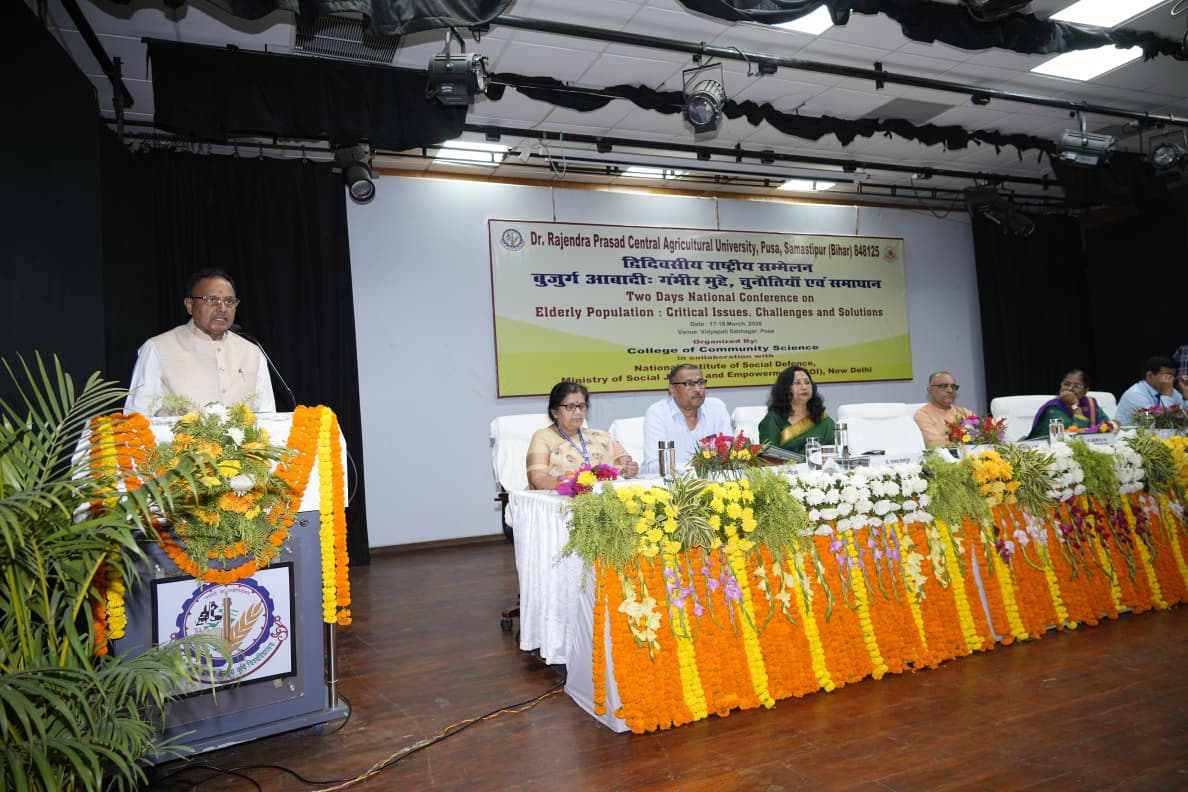
माननीय कुलपति ने अपने संबोधन में प्राकृतिक खेती के क्षेत्र में विश्वविद्यालय की पहलों और भविष्य की संभावनाओं पर विशेष जोर दिया और कहा कि विश्वविद्यालय ने इस दिशा में अग्रणी पहल करते हुए School of Natural Farming की स्थापना की है।
#NaturalFarming#RPCAU#OrganicFarming#Bihar
Dr. Tanya Sengupta, Research Officer, NISD (Sr. Citizen & Elderline); Dr. Usha Singh, Dean, College of Community Science; Prof. Vishala Patnam, Former Dean, CCSc., Parbhani; Dr. Abhijit K. Dam, National President, NAPCAIM.
A two-day National Conference on “Elderly Population: Critical Issues, Challenges and Solution” in collaboration with National Institute of Social Defence, Government of India, was inaugurated by Hon’ble Vice-Chancellor Dr. P.S. Pandey in the gracious presence of