Hey Twitter 🙋🏻♂️
I'm a:
Passionate Educator | Corporate Trainer | Consulting | Research
Blessed to be in the Education space for the Continuous Learning it provides :) | Armed with a PhD in Finance | Interested in Research in Finance + Analytics
Happy to collaborate 🤜🏻🤛🏻🤝 🤗
Today India signed a deal to sell supersonic missiles to the world’s largest Muslim-majority country.
In the same set of agreements: India will restore their 1,170-year-old Shiva temple.
If that surprises you, you don’t yet understand how India plays. Let me explain.
Indonesia is India’s largest maritime neighbour. Indira Point, our southernmost tip, sits closer to Aceh than to mainland India.
We don’t share a border. We share a sea.
And we’ve been crossing it for 2,000 years.
Kalinga traders sailed to Java before Christ; Odisha still celebrates Bali Jatra for those voyages. In 1025 CE, Rajendra Chola sent a war fleet across these exact waters.
The Ramayana travelled with the traders. It never left.
Indonesia’s national airline is Garuda. Every full moon at Prambanan, the Ramayana is performed as ballet.
Mostly by Muslim artists.
Indonesians say it themselves: we changed our religion, not our culture.
1947: The Dutch are trying to recolonise Indonesia. Biju Patnaik flies a Dakota into occupied Java and smuggles out their Prime Minister.
Jakarta never forgot. The story goes Sukarno asked Patnaik to name his newborn daughter: Megawati, later President of Indonesia.
And when India held its first ever Republic Day parade in 1950, the chief guest was Sukarno.
1955, Bandung: the same two giants co-wrote non-alignment itself. The instinct: nobody’s junior partner.
Then both drifted for decades.
The last decade rebuilt the bridge. Act East. MAHASAGAR. The 2018 partnership that quietly got India access to Sabang. Prabowo as Republic Day chief guest in 2025, exactly 75 years after Sukarno.
That was the runway. Today was the takeoff.
What got signed:
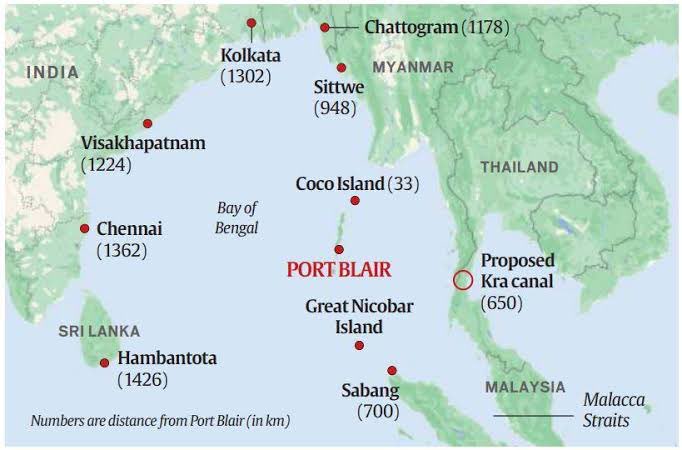
The port. India and Indonesia will jointly develop Sabang, at the northern mouth of the Malacca Strait, 160 km from India’s own Great Nicobar project.
A fifth of global trade and a third of the world’s seaborne oil passes through that strait. Most of China’s energy too. Beijing has called it the “Malacca Dilemma” for 20 years.
India now sits at both ends of the entrance.
Nobody needs to choke anything. Sitting at the gate is the position.
The missiles. Indonesia becomes the FIRST foreign buyer of India’s Astra missile, and is expanding its BrahMos arsenal.
ASEAN’s largest military, spending its own money, after watching Indian systems perform in May 2025.
India’s defence exports this year: Rs 38,424 crore, up 62% (official MoD numbers).
Meanwhile, our western neighbour spent months planting anonymous stories about JF-17 sales. To Libya (under a UN arms embargo). To Sudan (in a civil war). Even to Indonesia.
And the country actually named in those stories? It just signed with India, President in the room.
Markets are the one audience propaganda cannot capture.
The minerals. India will build nickel, steel and rare earth magnet manufacturing inside Indonesia, where Chinese firms dominate processing today.
Remember Indian automakers panicking within weeks of China’s magnet export curbs?
This is the answer.
The trust layer. UPI integrates with Indonesia’s payments. IIM Bangalore opens a campus there. India helps build their voting machines. And Indian archaeologists will restore Prambanan.
A country lets you touch its elections and its temples only when the trust is total.
Now zoom out.
The world is hardening into two blocs. Every middle power wants a third option: capability without allegiance.
That is India’s entire product. Missiles without bases. Investment without debt traps. Rails without surveillance.
India isn’t building a bloc. It’s building the alternative to blocs.
The two countries that wrote non-alignment in 1955 just wrote its 2026 edition.
A thousand years ago, a Chola fleet crossed these waters and the world took note.
Today India returned. Not with a fleet. With ports, missiles, payment rails and archaeologists.
Empires announce themselves.
Civilisations just resume 🇮🇳 🇮🇩
🚨 A Heartburn moment for Liberals
Indonesian (Muslim dominated country) President Prabowo Subianto to PM Narendra Modi:
"I try to COPY you. Your career and the way you work INSPIRE me deeply."
"It's a GOOD thing you haven't COPYRIGHTED all of it." 🔥
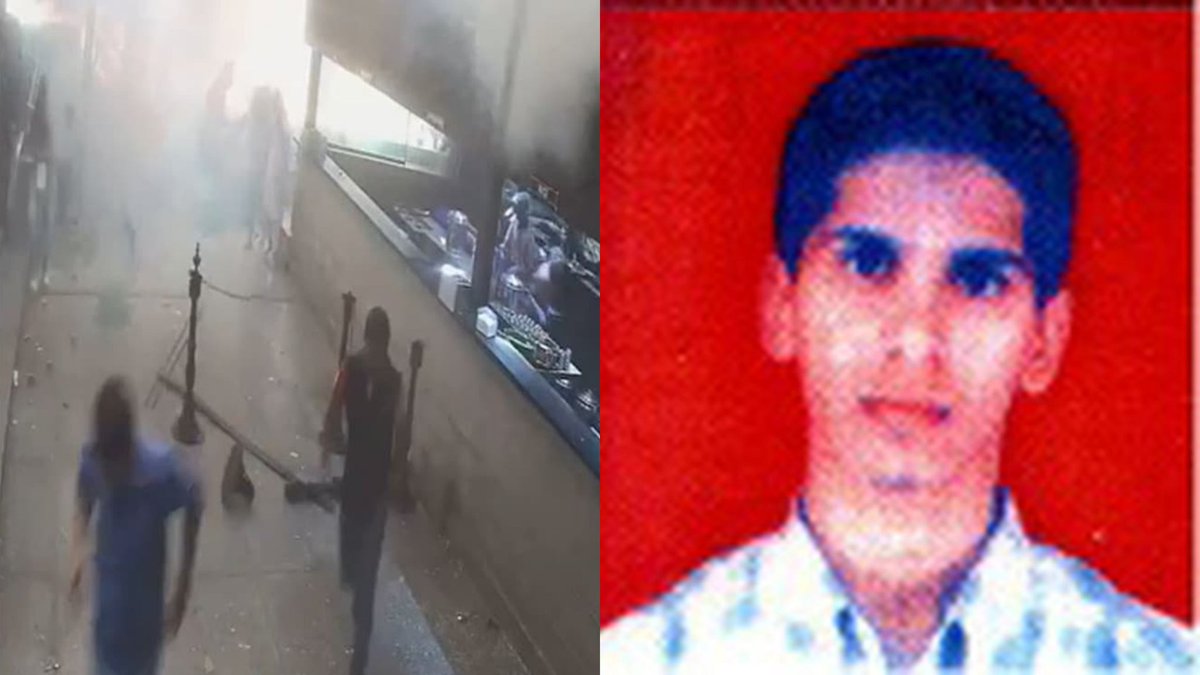
He is Mohammed Shahid Faisal, an engineer who studied at Ramaiah Institute of Technology, Bengaluru.
He left India, never returned, and is now living in Pakistan.
He is one of the key handlers of the Rameshwaram Cafe blast in 2024. The MHA has now included him in its list of designated terrorists.
He is highly educated and comes from a well-to-do family.
A perfect example that clearly proves terrorism is not a product of poverty, illiteracy, or unemployment. Education is no immunity against radicalization.
There is a big difference between Indian Muslims and Indonesian Muslims.
Indonesia is 90% Muslim country, yet its people proudly acknowledge their Hindu ancestors. Many carry Sanskrit names, and epics like the Ramayana and Mahabharata are taught in their schools. They identify themselves as Indonesians first, and Muslims second.
Indian Muslims, on the other hand, tend to resonate more strongly with Arab identity. They often prefer Arabic names and identify as Muslims first, and Indians later.
I believe Indian Muslims should learn from their Indonesian counterparts and reconnect with their Indian-Hindu civilizational roots rather than prioritizing Arab influences.
बाईस साल पहले हिमाचल प्रदेश के एक गाँव से एक पत्र रक्षा मंत्रालय के पास पहुँचा....
पत्र लिखने वाले एक स्कूल के शिक्षक थे....उन्होंने अनुरोध किया था कि यदि संभव हो तो क्या उन्हें और उनकी पत्नी को उस स्थान को देखने की अनुमति दी जा सकती है...?????
जहाँ कारगिल युद्ध में उनके पुत्र की मृत्यु हुई थी....
उनकी पहली मृत्यु की बरसी 07/07/2000 को थी, उनका कहना था कि यदि यह राष्ट्रीय सुरक्षा के विरुद्ध है तो उस स्थिति में वे अपना आवेदन वापस ले लेंगे.... कोई जबरदस्ती नहीं करेंगे.....
पत्र पढ़ने वाले विभाग के अधिकारी ने सोचा कि उस शहीद के माता पिता के दौरे को प्रोयोजित करने में काफी रकम का खर्च आयेगा।
पर इससे कोई फर्क नहीं पड़ता कि उनके दौरे की कीमत क्या है....
पत्र पाने वाले उस अधिकारी ने सोचा कि अगर विभाग तैयार नहीं होता तो इस दौरे के खर्च को वह अपने वेतन से भुगतान कर देगा.....
उसने एक आदेश जारी किया कि उस शिक्षक और उनकी पत्नी को उस स्थान पर ले जाया जाए जहाँ उनका इकलौता बेटा शहीद हुए था.....
अतः उस दिवंगत नायक के स्मरण दिवस पर बुजुर्ग दंपत्ति को सम्मान के साथ बुलाया गया....
जब उन्हें उस स्थान पर ले जाया जा रहा था जहाँ उनका पुत्र शहीद हुए था तो ड्यूटी पर मौजूद सभी लोगों ने खड़े होकर सलामी दी.....
लेकिन एक सिपाही ने उन्हें फूलों का गुच्छा दिया और झुककर उनके पैर छुए।
दोनों माँ-बाप की आँखें पोंछीं और उन्हें प्रणाम किया....
शिक्षक ने कहा: आप एक वरिष्ठ अधिकारी हैं। आप मेरे पैर क्यों छूते हो...?????
"ठीक है, सर!"
उस अधिकारी ने कहा!
"मैं यहाँ अकेला हूँ जो उस समय आपके बेटे के साथ था,जिसने आपके बेटे की वीरता को मैदान पर देखा था...
पाकिस्तानी अपने एल.एम.जी. से प्रति मिनट सैकड़ों गोलियां दाग रहे थे। हम में से पाँच जवान तीस फीट की दूरी तक आगे बढ़े....हम सब एक चट्टान के पीछे छिपे हुए थे...
मैंने कहा: " सर, मैं 'डेथ चार्ज' के लिए उनकी गोलियों के सामने जा रहा हूँ।
मैं उनके बंकर में जाकर ग्रेनेड फेंकूँगा। उसके बाद आप सब उनके बंकर पर कब्जा कर सकते हैं....
मैं उनके बंकर की ओर भागने ही वाला था, लेकिन.......
आपके बेटे ने कहा:
क्या तुम पागल हो ? "तुम्हारी पत्नी और बच्चे हैं।
"मैं अविवाहित हूँ,""मैं जाता हूँ।"
"आई विल डू द 'डेथ चार्ज' एंड यू डू द कवरिंग!"
बिना किसी हिचकिचाहट के उसने मुझसे ग्रेनेड छीन लिया और 'डेथ चार्ज" के लिए भागे.....
पाकिस्तान की ओर से
एच.एम.जी. की गोलियां बारिश हो रही थीं........
आपका बेटा उन्हें चकमा देते हुए गोलियों को अपनी छाती पर झेलते हुए पाकिस्तानी बंकर के पास पहुंचा, ग्रेनेड से पिन निकाला और उसे ठीक बंकर में फेंक दिया।
तेरह पाकिस्तानियों को मौत के घाट उतार दिया गया।
उनका हमला समाप्त हो गया और क्षेत्र हमारे नियंत्रण में आ गया।
मैंने आपके बेटे का शव उठा लिया सर!
उसे बयालीस गोलियां लगी थीं।
मैंने उसका सिर अपने हाथों में लिया।
उसी वक्त पेट के बल उठकर उसने अपनी आखिरी साँस के साथ कहा;
ये दिल मांगे मोर
"जय हिंद!"
मैंने अपने सीनियर से कहा कि वह आपके बेटे के ताबूत को आपके गाँव लाने की अनुमति दे! लेकिन उसने मना कर दिया।
मुझे इन फूलों को उनके चरणों में रखने का सौभाग्य कभी नहीं मिला!
लेकिन मुझे उन्हें आपके चरणों में रखने का सौभाग्य मिला रहा है, श्रीमान.....
शिक्षक की पत्नी अपने पल्लू के कोने में धीरे से रो रही थी, लेकिन शिक्षक नहीं रोया.......।
उस शिक्षक ने जवान से कहा कि मैंने अपने बेटे के छुट्टी पर आने पर पहनने के लिए एक शर्ट खरीदी थी !
लेकिन वो कभी घर नहीं आया और कभी आएगा भी नहीं।
सो मैं वो शर्ट वहीं रखने को ले आया हूं जहाँ पर वो शहीद हुए थे......
पर अब आप इसे क्यों नहीं पहन लेते बेटा......
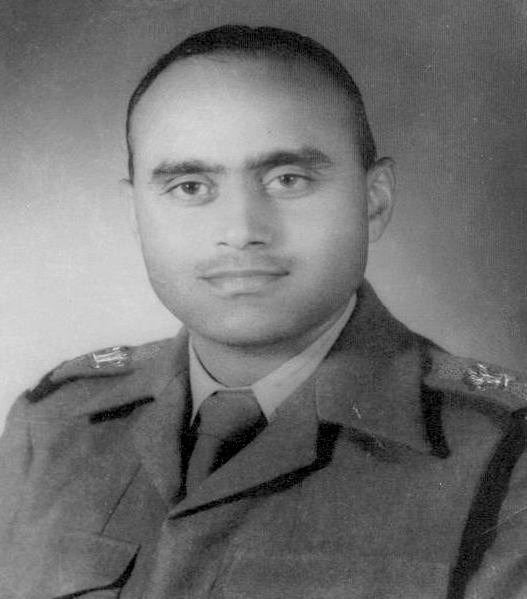
कारगिल के इस नायक का नाम था कैप्टन विक्रम बत्रा।
उनके शिक्षक पिता का नाम गिरधारी लाल बत्रा है..... उनकी माता का नाम कमल कांता है...
(खैर अब माता जी की मृत्यु हो चुकी है )
मेरे प्यारे दोस्तों।, यही हमारे असली हीरो हैं,,,,,,,
जय हिन्द ,,नमन कैप्टन विक्रम बत्रा सर को....Read News
#WATCH | Indonesia: At a community event in Jakarta, President of Indonesia Prabowo Subianto says, "I don't want to be involved in domestic Indian politics. I'm a friend of all Indians but I want to admit one thing and my close associates and colleagues will testify that I am a great admirer of Narendra Modi ji. I'm not a professional politician. The proof that I'm not a professional politician is I took part in five general elections. I lost four times... Even before I became president, I studied the policies of prime minister (Narendra Modi) and because there are no copyright, I copied many of his policies. But, Prime Minister Modi graciously, allowed me to copy his policies. So I cannot be sued in any court..."
He also says, "Indonesians must learn from the experience of India. Our civilization, our culture are strongly influenced by Indian civilization. Our language is around 50% from Sanskrit. Many of our names are Sanskrit names. Therefore, there is this closeness and, we welcome more close cooperation..."
(Source: ANI/DD News)
Her name is Avani Chaturvedi.
In all the years the Indian Air Force had existed, no Indian woman had ever flown a fighter jet into the sky alone. She was the first.
She grew up in a small town in Madhya Pradesh, the daughter of a government engineer. Her elder brother joined the army, and watching him, she decided she did not just want to serve the country. She wanted to fly for it.
At the time, that dream had a wall around it. The fighter cockpit, the fast jets, the whole combat stream, all of it was closed to women in India. No matter how good she was, the door said men only.
Then in 2015, the country finally opened the fighter stream to women. Avani and two other young women, Bhawana Kanth and Mohana Singh, walked through that door first.
In June 2016 they became the first women fighter pilots India had ever commissioned.
But flying with an instructor beside you is one thing. Flying a fighter jet completely alone, with no one to take the controls if something goes wrong, is another.
On 19 February 2018, Avani Chaturvedi climbed into a MiG 21 Bison, one of the fastest and most unforgiving jets in the fleet, a machine that has killed many experienced pilots. She took off from Jamnagar on her own. For about thirty minutes she owned the sky. Then she brought it down safely.
With that one flight, she became the first Indian woman to fly a fighter jet solo.
When people asked her what it felt like to do it as a woman, her answer was simple. The machine does not know if the pilot is a man or a woman. It only knows who can fly.
The girl from a small town who was once told the cockpit was not for her now writes her name across the sky at the speed of sound.
After watching this, Bollywood folks are going to go crazy. 🤣
They could never make a movie like this in a lifetime. #Nagabandham has set the screen on fire. The acting is flawless, and every emotion hits hard.
The VFX are next level, and the story stays with you long after it ends.
Har Har Mahadev 🙏🚩
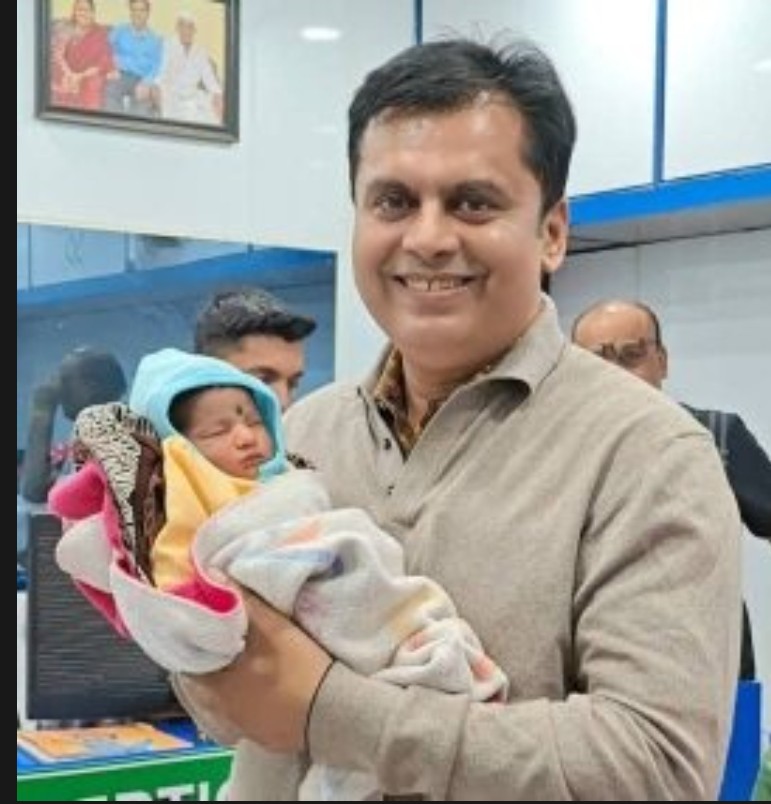
A laborer working on a site near a hospital in Pune came to the hospital with his pregnant wife in an emergency. Dr. Ganesh Khairi examined the woman and said, "I have to perform a cesarean section immediately to save the mother and child." For a moment, the laborer thought he would be stuck with a huge expense, but with no other option, he allowed the doctor to perform the operation.
The operation was successful, and a daughter was born. The laborer's biggest question was how to pay the bill. When the laborer met Dr. Ganesh and asked how much the bill would be, Dr. Ganesh smiled and said, "I don't charge for the birth of a daughter." The laborer was astonished.
The doctor clarified, "Every daughter is an incarnation of Lakshmi. How can money be taken during Lakshmi's incarnation?" When I was studying, my mother told me that when God sends a daughter into this world, to help her and her family in every possible way. Obeying my mother's orders, I don't take any money at the time of my daughter's birth."
The laborer immediately fell at Dr. Ganesh's feet and said, "You are truly a manifestation of God." It's been a decade since Dr. Ganesh opened his hospital. In ten years, nearly 1,000 daughters have been born at his hospital, and not a single penny has been charged to the parents of any daughter.
This village has 91 millionaires and if you get bit by a mosquito , the gram sabha pays you Rs 100. It took only one man to transform this village from what it was. It’s Hivre bazaar near Ahmednagar in Maharashtra.
Who is next after the Ramanujan?
In the mid-20th century, Western academic cartels claimed that advanced mathematics was a European construct, brought to a colonized India via British education. Tekkath Amayankottukurussi Kalathil Sarasvati Amma responded by spending decades deep in the forgotten archives of Kerala, translating archaic Sanskrit palm-leaf manuscripts with razor-sharp mathematical precision.
She proved that centuries before Sir Isaac Newton/Gottfried Leibniz were even born, unheralded Indian astronomers had already built the foundations of calculus & high-level geometry. This is the story of how an Unsung Scholar reclaimed the Intellectual Sovereignty of a Nation.
For generations under colonial rule, a deeply damaging psychological narrative was hammered into the Indian psyche: Your ancestors were mystics & poets, but they lacked the rigorous, logical discipline for advanced science & mathematics. The global academic consensus was that high-level geometry, infinite series, & calculus were the exclusive property of Europe.
India was viewed as a nation that needed to be civilized with Western numbers, completely oblivious to the fact that it had once been the mathematical capital of the world.
T.A. Sarasvati Amma was born in Kerala, a land with a deeply hidden, rich intellectual undercurrent. She was not an "uneducated" woman in the literal sense, she was a brilliant scholar of Sanskrit & Mathematics, but to the global elite who only validated degrees from Oxford/Cambridge/Harvard, she was an outsider working in the shadows.
In the 1950s & 60s, while working under the guidance of legendary scholars like Dr. V. Raghavan at the University of Madras, she realized that the history being taught in schools was a lie. She did not seek validation from Western journals. She went straight to the dirt, the dust & the decaying private libraries of old Kerala families.
She began unearthing 100s of brittle, centuries-old palm-leaf manuscripts written in a highly technical, coded astronomical Sanskrit.
Sarasvati Amma undertook a brutal, lonely intellectual pilgrimage. For yrs, w/o the aid of computers/digital databases/massive research grants, she painstakingly translated & mathematically mapped out texts like the Yuktibhasa, the Karanapaddhati & the Tantrasangraha.
Her pitch to the skeptical academic community was uncompromising: "I will not give you theories. I will give you the exact geometric proofs, calculated centuries before your European heroes walked the earth."
She discovered that in the 14th century, a mathematician named Madhava of Sangamagrama & his disciples in the Kerala School of Mathematics had already solved problems that Europe would not touch until the late 17th century.
Against all odds, in 1979, Sarasvati Amma published her magnum opus: "Geometry in Ancient and Medieval India." It was a masterclass in mathematical archaeology that fundamentally shook the foundations of global history.
She systematically proved that:
The Madhava-Gregory Series: The infinite series for pi*(4 X (1 - 1/3 + 1/5 - 1/7.......), attributed to the Scottish mathematician James Gregory in 1671, was recorded in India 300 yrs earlier.
For the 1st time in modern history, the West could not look down its nose. The proofs were right there, written on palm leaves, preserved by a quiet woman who refused to let her nation’s history be erased.
Sarasvati Amma’s work didn't build corporate empires/software companies, but it did something far more powerful: it restored the intellectual self-respect of an entire civilization. Her book became the absolute gold standard reference for the history of mathematics worldwide, forcing global historians to slowly & reluctantly rewrite their textbooks.
She lived a fiercely quiet, simple life, retiring as a prof & spending her final yrs in her hometown in Kerala, completely disconnected from the blinding lights of fame. She passed away in 2000, largely unknown to the millions of Indian students who daily study the very calculus her work reclaimed.
T.A. Sarasvati Amma proved that the ultimate form of patriotism is the preservation of truth. She showed that a nation’s backbone is nott just built by industrial concrete/military might, but by its memory.
T.A. Sarasvati Amma proved that a lone Indian woman, armed with nothing but dusty palm leaves & an iron will, could rewrite the mathematical history of the world.
Gold medals don't grow in gyms... they grow through discipline, sacrifice & unwavering determination.
Congratulations to Lily Hasnu on winning gold at the 16th South Asian Bodybuilding & Physique Sports Championship 2026 in Bhutan.
Nagaland is proud.
India is proud 🇮🇳
Keep inspiring the next generation to dream bigger and lift higher!
✨Did you know???✨
There’s a 1,600-Year-Old Iron Pillar That Still Defies Time…in the heart of Delhi, within the Qutub complex, stands one of the world’s most remarkable achievements in ancient metallurgy!!!
⚜️ Forged around 402 CE during the Gupta Empire…this iron pillar stands over 7 meters (23 feet) tall…weighs more than 6,000 kilograms…and is made of high-purity wrought iron.
⚜️ What makes it extraordinary is its resistance to corrosion.
Despite standing outdoors for over 1,600 years through monsoons, heat, and changing seasons, it has developed only minimal rust compared with ordinary iron structures.
⚜️ Scientists have identified much of the reason.
The pillar’s unique composition…especially its high phosphorus content…and ancient forge-welding techniques allowed a thin protective layer of iron hydrogen phosphate hydrate (often called misawite) to form over centuries…shielding the metal from further corrosion.
⚜️ This pillar remains a masterpiece of ancient engineering.
Producing such a massive..:high-quality wrought iron structure with 5th-century technology was an extraordinary achievement, reflecting the skill of Gupta-era metallurgists and blacksmiths.
⚜️ For generations…visitors have shared a local tradition: stand with your back against the pillar and wrap your arms around it…legend says a wish comes true if you can do it!!!
Whether or not the legend is true…the pillar itself is a reminder of the ingenuity of the craftsmen who created it.
More than sixteen centuries later…it still stands as a testament to the scientific knowledge, craftsmanship, and metallurgical excellence of ancient India.
#IronPillar #Delhi #AncientIndia #GuptaEmpire #IndianHistory
Great to see that Rubika Liyaquat is EXPOSING sexual exploitation of Muslim women in the name of Halala👏
Now all Maulanas & Sickulars gonna call her Sanghi❗️
*An advice from a senior citizen currently visiting the US*
Dear friends,
We have been staying in Seattle, Washington, for the past two months. My wife was suffering from a severe respiratory issue when we left India. After using those medicines from India,here in the US, she had almost recovered.
However, as our supply ran out, So, I asked my daughter to schedule an appointment with a pulmonologist (respiratory specialist) in Seattle.
we had to consult a general physician first. We were given an appointment for a week later—and that too, only via a video call.
We spoke to the doctor on the phone for about 10 minutes.He said he understood the issue and prescribed appropriate medicines, stating that we could pick them up from a pharmacy.we were told the medicines were not immediately available and would take 4–5 days to arrive.
We finally received the medicines on the fifth day. Surprisingly, the medicines were manufactured by 'Cipla' and bore the label 'Made in India'. Even after a 50% discount through US medical insurance, we still had to pay an equivalent of ₹21,000. This means medicines costing just ₹2,500 in India cost a staggering ₹42,000 in the US.
It took us 12 days to obtain medicines here that are readily available at any pharmacy in India. A week later, we received a bill of $283 (approximately ₹23,000) for the doctor's consultation fee.
Consider yourselves to be fortunate to be living in India during your retirement years.
We often look abroad in search of a "good life." But if we pause to think... certain everyday conveniences—unavailable even to billionaires in London or New York—are easily accessible to the middle class in India.
Here are *7 examples* showing that even the life of a common person in our country is a **VIP lifestyle**:
*1 Data Democratization:*
While countries around the world spend over $50 (approx. ₹4,000) a month for basic internet, we enjoy high-speed 5G data for just ₹300. We have the cheapest data in the world! This is what has digitally transformed our economy.
*2 The "10-Minute" doorstep delivery:*
Run out of ginger for your tea or out of milk? Place an order on Blinkit, Zepto, or Swiggy Instamart, and the item is in your hands before the water even boils. In Europe, by contrast, you’d have to put on a coat and walk 15 minutes in the cold to a store—and you wouldn't be surprised to find it already closed.
*3 Instant Healthcare:*
Need to see a specialist? You can go straight to the hospital. Need a blood test? A lab technician comes to your home as early as 6 AM to collect the sample, and the report arrives on your WhatsApp by afternoon. We don't face the three-month waiting lists or the nightmare of "insurance approvals" common elsewhere even for trivial ailments.
*4 Human Support System:*
Having people to help with house cleaning, cooking, and driving isn't a luxury reserved only for the wealthy here; it is the backbone of middle-class life. It offers something incredibly valuable: it saves **TIME**.
*5 The UPI Revolution:*
From a ₹5 roadside tea to a ₹50,000 laptop—everything is just a scan away! No need for wallets, no excuses like "the card machine isn't working," and absolutely no transaction fees. In this regard, the rest of the world lags far behind us.
*6 *"Free" Little Joys:*
No matter which restaurant you visit, you get a glass of drinking water for free (whereas elsewhere, they’d charge you $5). There’s an ironing man / chai wallah right at the end of the street to take care of our instant needs. It is these little things that make life run so smoothly.
*7 Social Bonds (Social Safety Net):*
We don't live in a culture of legal notices and courts; we live in a culture of relationships. If we face a problem, a neighbor won't send a court notice—they’ll lovingly cook and send over some *khichdi*.
*The Bottom Line:*
India is not merely a country; it is a wonderful world filled with conveniences at every turn.
His name was Major Shaitan Singh.
He was told to abandon his post. He was outnumbered, out of range of his own guns, and no help was coming. He was ordered to fall back. He refused.
He was born on 1 December 1924 in Jodhpur, into a family of soldiers. By 1962 he was a major in the 13 Kumaon, commanding a company of 120 men, most of them Ahir farmers from Haryana who had followed him to the roof of the world.
Their post was called Rezang La. A pass in Ladakh at nearly 16,000 feet, guarding the road to Chushul. Behind it lay Leh. If Rezang La fell, Ladakh lay open.
There was one cruel problem. A ridge stood between his company and the Indian artillery. It meant that if the Chinese came, his 120 men would fight without a single supporting gun. They knew it. They dug their trenches into the frozen rock anyway.
On the freezing dawn of 18 November 1962, the Chinese came. Not in dozens. In waves. Hundreds at a time, wave after wave, up the ravines below the pass.
Shaitan Singh's men cut them down and kept cutting them down. When one post was overrun, he moved to the next, and the next, walking through machine gun fire to hold his men together. He was hit. He kept going. He was hit again.
By the time the guns fell silent, almost all of his company was gone. 114 of the 120 were dead. But they had made the enemy pay in blood for every foot of that ridge.
The snow closed over the battlefield. For three months no one could reach it.
When the thaw came and the recovery teams finally climbed to Rezang La, they found the men of Charlie Company still in their trenches. Frozen. Weapons still in their hands. The mortar man with a bomb still in his grip. They had died exactly where they had been told to stand.
Shaitan Singh was found on that ridge, beside his men. He was given the Param Vir Chakra, the highest honour India has.
He was told to fall back. He chose the mountain.
On May 8, 2025, as Pakistani drones and missiles were intercepted over Indian airspace during Operation Sindoor, a retired scientist watched the reports come in on television. "This is the happiest day of my life," said Dr. Prahlada Ramarao. He had spent 15 years building the weapon that was doing the intercepting.
The story begins in 1983 at DRDO's laboratory in Hyderabad, where Prahlada was a junior scientist working alongside Dr. APJ Abdul Kalam. India had just approved the Integrated Guided Missile Development Programme, charged with building five missile systems from scratch. Kalam chose Prahlada, still in his thirties, to lead Akash, the most complex of the five.
"I was young and scared about handling such a massive responsibility," Prahlada would later say. Kalam's instruction was simple: get it done.
The challenge was daunting. India needed a surface-to-air missile capable of engaging multiple fast-moving aircrafts simultaneously, each equipped with electronic warfare designed to defeat the radar tracking it. The Rajendra Radar, a Passive Electronically Scanned Array system, was Akash's eye and ear for every engagement. Prahlada coordinated 1,000 scientists across 12 laboratories, solving signal processing failures and electronic jamming in a phased array comprising roughly 4,000 discrete elements. Development took fifteen years from first principles to battlefield readiness.
The Rajendra can track up to 64 aerial targets and engage 12 of them concurrently. Akash's total development cost came in 8 to 10 times lower than comparable foreign systems. Countries including Armenia have since placed export orders. Prahlada received the Padma Shri in 2015, virtually unknown to the public he spent a career protecting.
More than four decades after Kalam handed him the project, his missile system went to war for India.
That is what indigenous defence technology looks like when it is given the time, the trust, and the people it deserves.
पेरिस से दूर अटलांटिक के पार अमेरिका के एक शहर में 10,000 अप्रवासी एकत्रित हुए।
उन्होंने दंगा नहीं किया.
उन्होंने लूटपाट नहीं की.
उन्होंने पुस्तकालयों और कारों में आग नहीं लगाई।
उन्होंने टेक्सास के एलन ईस्ट सेंटर में गुरु पूर्णिमा पर भगवद गीता का जाप किया।
फिर उन्होंने सामूहिक लंगर भोज का आयोजन किया जिसमें 50000 लोगों ने खाना खाया
भोजन करने वाले ज्यादातर अमेरिकी मूल के थे
यह सनातन हिन्दू धर्म है...
WATCH: Amarnath Yatra pilgrims travelling on the Vande Bharat Express from Jammu to Srinagar under the protection of Indian Black Commandos.
— Har Har Mahadev 🔱