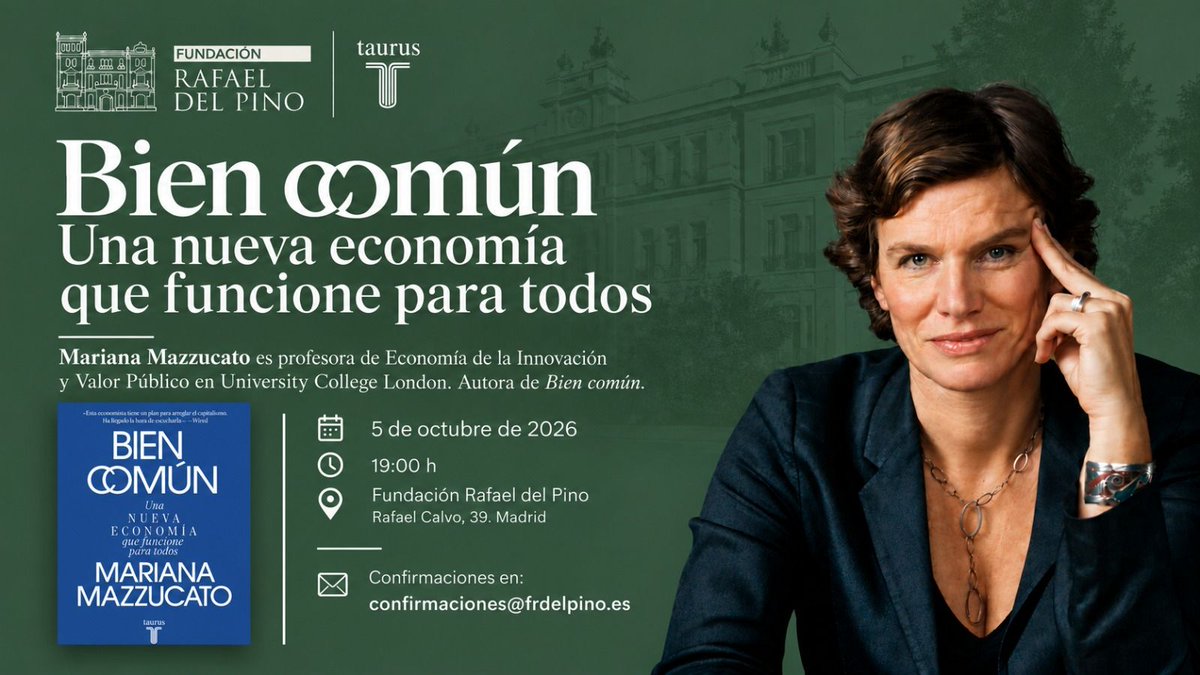
In Madrid on a tumultuous day for Spain. Citizens are right to demand housing as a human right and the foundation of everything else. Not as an asset class for speculation.
Spain is not alone. We need a different economics and economy: one that sets the objective first and builds the tools and relationships to reach it.
Speaking about this tonight at the Spanish launch of my new book “Bien común” at Fundación Rafael del Pino in Madrid.
More on Bien Común: https://t.co/SrB8G8en89
Tesla received billions in government loans, tax credits and subsidies, making Elon Musk the world's richest person. The public? No equity stake, no profit-sharing, no guarantee of affordable access.
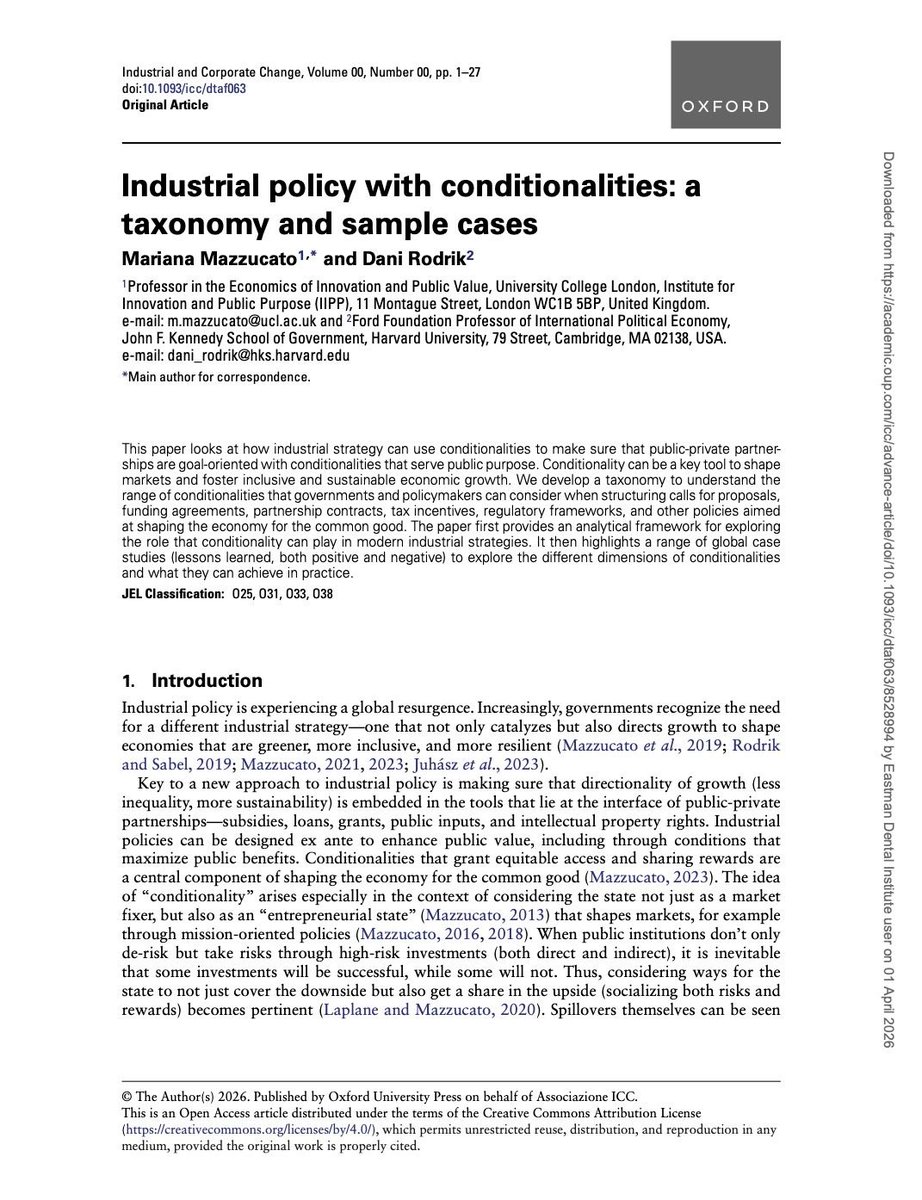
My working paper with @rodrikdani has now been published in Industrial and Corporate Change. It explores the conditionalities—profit-sharing, reinvestment requirements, knowledge transfer—that can ensure industrial policy delivers public value, not just private wealth. [LINK IN NEXT POST]
Today, speaking at @SocialEnt_UK's
Social Value Leaders Summit on The Common Good Economy-a framework for understanding what 'good' looks like in economics.
To maximise the creation of public value, you need to define what 'good' looks like. A topic neoclassical economics has struggled to do convincingly. The book provides five compass points as preconditions: purpose and directionality, co-creation and participation, collective learning and knowledge sharing, access for all and reward sharing, transparency and accountability.
Pre-order Common Good Economy (out June 4th) ➡️ https://t.co/nhvxW32TzJ
Hoy @FinancialTimes destaca que España 🇪🇸 es ejemplo a seguir a la hora de afrontar la crisis energética derivada del conflicto en Oriente Medio
Gracias a las renovables
⚡️ Precios de la electricidad más bajos
⚡️ Autonomía energética
+info https://t.co/v0rOOLBXj4
“🇩🇰has proposed a really modest wealth tax on the super rich of 0.5%.
There are people who say it would be an economic disaster.
It’s absurd. Does anybody think that if you tax Bill Gates by 0.5%, he will stop working?” - @JosephEStiglitz at @EUparliament#TaxMix2050@EU_Taxud
Inspiring to see @LulaOficial and @sanchezcastejon lead a coalition defending multilateralism and international law against Trump's war on Iran.
In addition to the sovereignty and solidarity principles they're championing, we need clarity on the economic framework that underpins this new multilateralism—moving from market-fixing to market-shaping, reforming the global debt architecture, strengthening state capacity to align finance with development goals.
It's more urgent than ever. We’ll be building on our work with Brazil, Spain, and South Africa over the last year, as we wrote about in our joint letter in the @FT ➡️ https://t.co/tnwGc1fve8
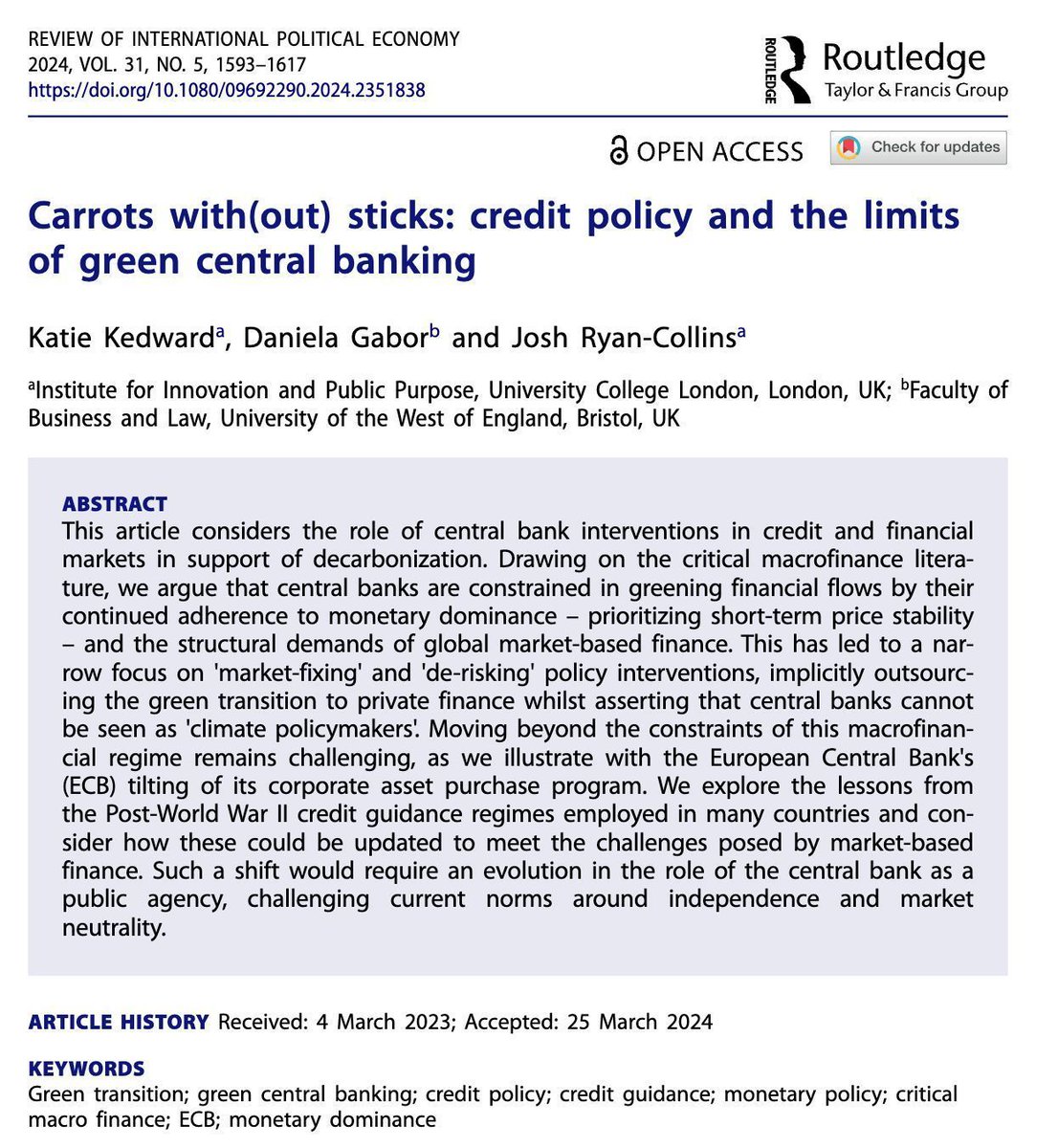
🥕 Carrots with(out) sticks
@IIPP_UCL's Katie Kedward and @jryancollins, together with @DanielaGabor, explored the role of central bank interventions in credit and financial markets in support of decarbonization.
🔗 Learn more here: https://t.co/GA6moYc6gd
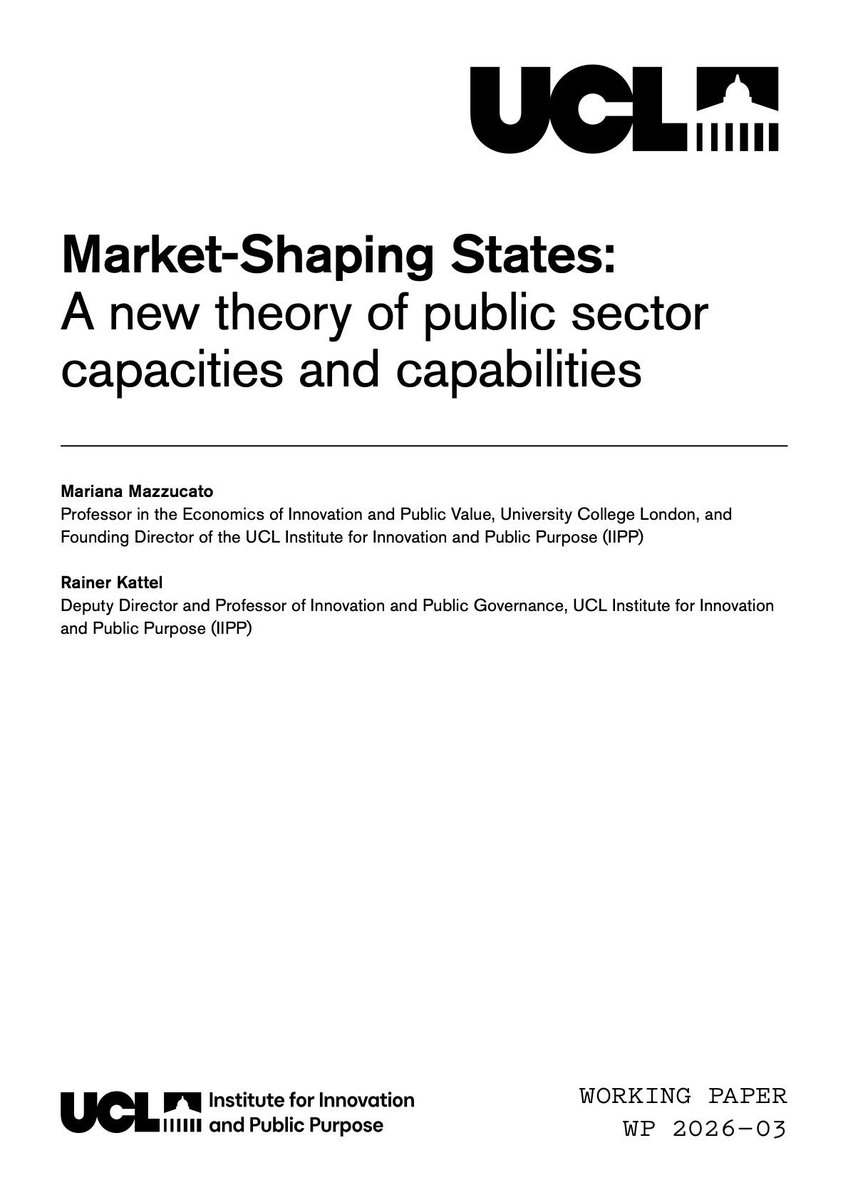
🆕 Market-Shaping States
The latest working paper by @IIPP_UCL Director @MazzucatoM and Co-Deputy Director Rainer Kattel proposes a new theory of public sector capacities and capabilities, reframing the state as capable of shaping futures.
✍️ Read more: https://t.co/xHE8LbeB8F
If labour's share of global income had stayed at its 2004 level, workers would have received an additional US$2.4 trillion in 2024 alone. This isn't the inevitable result of technological change—it's a political choice about who shares in the risks and rewards of collective value creation.
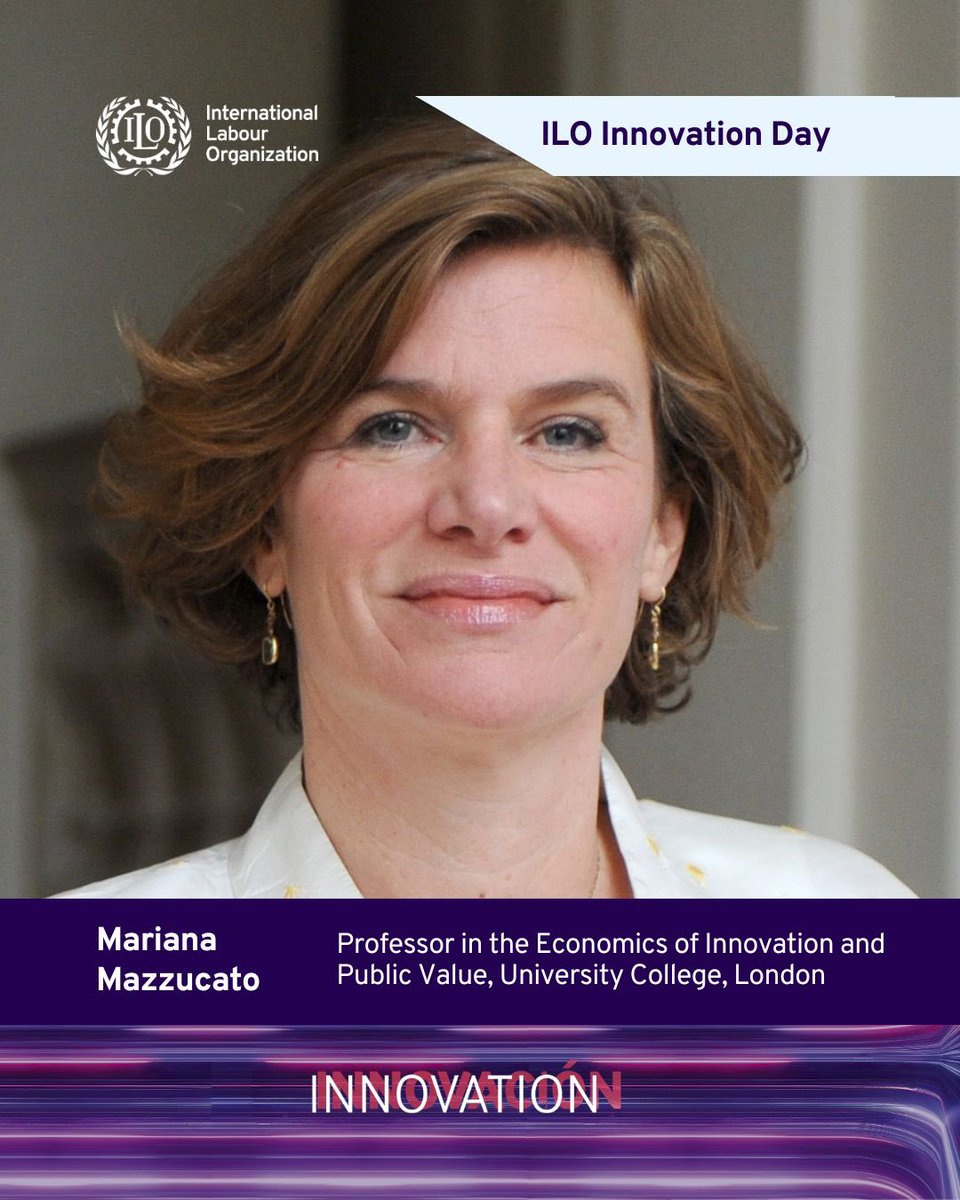
Delivering a keynote today at the @ILO Innovation Day (13:15 CET) on why innovation systems must be built on a new social contract between labour, state and market.
Watch live ➡️ https://t.co/zrM7NZc4uY
New working paper with Rainer Kattel: governments are stuck using frameworks designed to fix market failures. But climate, inequality and technological transformation require shaping collective futures—not patching up existing ones.
Market-Shaping States reframes the state as a co-creator of public value, not just a market corrector. This requires capabilities to set direction, coordinate across silos, experiment under uncertainty and learn from what works.
Read more ➡️ https://t.co/uG02EbD4n8
New working paper with Rainer Kattel: Market-Shaping States.
Governments face a paradox—they need stability to sustain direction over time, yet agility to adapt when conditions change. These aren't opposing forces. They're complementary capabilities that must work together.
We present a framework showing how structural capacities, organisational routines and dynamic capabilities interact to create public value. Strong strategy without learning leads to rigidity. Strong delivery without direction leads to fragmentation.
Read the paper ➡️ https://t.co/uG02EbD4n8
We rarely think of economics as scandalous, but maybe we should. Sam Bowles, in conversation with @sndurlauf & @ethanbdm, argues that a core assumption in the field impedes moral reasoning about wealth redistribution. Watch the full panel → https://t.co/OBAwhPCtXX
"We have left them alone, abandoned."
Manchester City manager Pep Guardiola wore a keffiyeh as he condemned global silence over the suffering of Palestinian children in Gaza during a charity event in Spain on Thursday.
Trump’s equity stakes in Intel are not an Entrepreneurial State in action. If Trump’s team is serious about the ‘art of the deal,’ it starts with ensuring public investments deliver public value, not extortionate shareholder profit.
Read the new @ForeignAffairs piece on making the Entrepreneurial State great again ➡️ https://t.co/m6ZZ4MSyCE
Today, I joined 500+ researchers from 70 countries in calling on world leaders to create an International Panel on Inequality modelled after the IPCC— as recommended by the G20 Committee on Inequality led by @JosephEStiglitz. Help us spread the call.
🔗https://t.co/R6mNpSUxMT
(1/5) Happy to share our new article with Ha-Joon Chang, where we argue for the urgent need to reform the international economic order.
https://t.co/N9hQ2LEZOe
🚨 Today, Common Wealth launches the Green Planning Commission.
A major new initiative to tackle the twin crises of our era: climate breakdown & the affordability crisis.
To meet these challenges, we need a new era of democratic planning.
🧵 Here’s why.
https://t.co/l2WMbycXDZ