Transform - your hard problems for which you don't have a solution to the form of problem for which you have a solution.
Was skimming through this book "Quantum Computation & Quantum Information".
Was spending some time on Fourier Transform & Quantum Fourier Transform which is the key to many many Quantum algorithms & methods that make Quantum computers valuable.
Putting the math & technicals aside, This line caught my attention, the one highlighted in the pic shared.
May be not just for maths & computer science but anywhere in general life across personal, professional & businesses.
Don't you think so? Can you point out some real world area where we do this often?
Weather is making me feel lazy 😴
But trying to make the day mark something exciting & new.
And it's diving deep into - quantum sensing & spin based systems.
Deeply investigating about NV, SiV in diamonds. The exact anatomy & workflow of quantum sensing systems & spin based computing systems.
Anything you want me dig deep into ?
Why Quantum Computers cannot exist?
An amazing lecture by Prof. Gil Kalai (in 2013) on why quantum computers can't exist gave me new perspectives of the technology.
And here's one interesting pattern I keep observing across areas.
I strongly believe smaller, robotic machines designed & built to perform a set of task will capture the huge amount of the market and humanoid's won't.
Industries want to get their particular jobs done perfectly at least amount of time. They dont need multi tasking general robots.
We've see this in digital apps space also - we pay for google workspace but dont use google docs. Everyone one of us use WhatsApp but never use it for UPI.
Even in quantum computing this is clearly becoming visible but not due to the user's choice but due to technical feasibility, and ease of development of the quantum computing systems.
Building one general fault-tolerant quantum system is still a question. But we've already figured out the tech to build fault tolerant quantum systems designed for certain kind of operations that can help with a set of usecases.
So why not?
And it has already started. D-wave's quantum annealing systems are best at solving optimization problems than a geberal purpose systems built by IBM or anyone.
And not just the hardware system but something called as QEC codes which basically a kind of structure that help the main quantum computing operation doesn't have any errors through - syndrome detection, mitigation & recovery etc.
So purpose/ specific usecase build quantum hardware systems & the QEC codes might be the fastest and most effective way to react fault tolerant quantum computing.
Harsh Reality of any one can create content.
Content creation is just a mode of showing up and becoming visible to achieve goals like - building audience, build a brand, get customers, gain reputation & trust.
But for anyone to create content, they need to have a valuable content inside them & they should be doing a valuable work which will become the barrier.
So anyone can create content but not anyone can create a brand and gain people's trust over a valuable work being done by you.
What do you think?
Will you invest on me with this pitch ?
Me & my team of AI researchers & developers. And here's the pitch :
- Gaint AI labs like @OpenAI or @AnthropicAI will not release their best models to public and still gain more.
- They will use it for themselves to invent things, discover medicine to deadly diseases, solve the food production & water problem, solve the energy problem by figuring out the nuclear fusion problems & build one.
- They can make more money than selling tokens this way. And gain power & control over the things on which whole humanity will slowly get dependent on.
- So there is a huge value in owning the capability and intelligence and not just think of using something owned by others.
If you find me & team capable of building the most powerful models that can create ASI (Artificial Super Intelligence), will you invest in us?
The ask is $1 Billion for 25% equity.
This is my question to all the investors on the planet.
Tagging some of the greatest ones i know here - @WarrenBuffett@balajis@peterthiel@naval@sequoia
Super curious to know what the world says on it.
Wait! You are still very young.
This is not just to my 21 years self, but for everyone reading this even if you are 50.
All the platforms we spend a lot of time on - X, linkedin & Instagram can make use feel we are late, the world is moving so fast, we are getting old with less progress.
But stop there! Especially if you are in your 20s or early 30s. You really think 50 is old? It's not.
The reality is we dont realise the power of dedicating our life to something and spending decades on it.
I truly feel the only goal of 20s is to find the one thing that you can dedicate your next 3 decades to.
Imagine 3 decades back. No smart phone, only 1% people with internet & computers. No question of AI outside a handful of universities.
So never feel you'll grow old. Just tdke care of your mind & body because only they age, your soul will never grow old even at 90.
Learn to nourish your soul regularly by just being a little life, doing what you really love doing beyond utility, measurement & achievement.
I stopped all my planned work yesterday and spent all day with these 10 research papers recently published by IonQ.
Must read for anyone in quantum computing and even for someone who's thinking to study it.
A dish of neurons just started earning a paycheck.
A startup in Salt Lake City put living human neurons online.
Then they let random strangers play Tetris against them.
Not a simulation. Not "neural network" as a metaphor. Actual brain cells. Grown from stem cells. Wired to electrodes. Deciding, piece by piece, where to drop the next block.
You can try it right now, for free, at https://t.co/SlgIHaWxL3.
It's called Biostack, built on what they call a Biohybrid Processing Unit — a rack-mountable box that sits in a GPU's slot, except it's alive.
Rrad the full story at : https://t.co/LQ7y0p6tt2
Your brain can now generate videos!!!
This can be a over hype, but looking at the current bio compute space I couldn't control my curiosity & excitement.
So I decided to dig deeper.
Found a lot of companies doing amazing work and looks like we are far beyond just proof-of-concept.
A startup named Cortical Labs even launched a fully ready production system CL1 last year.
Their architecture is mainly : living neurons + electrode array + silicon electronics + software.
They have their biOS as well and they are literally calling it "code deployable biological computer".
And this is just the high level picture. There so many things to dig into and a lot of questions like,
- What are all the areas / approaches of bio computing ?
- What are they looking like as of today?
- What problems or hurdles they are facing?
- How will the next 2 years, next 5 years and next 10 years looks like?
And many more questions.
Couldn't wait to share more soon. Stick around with me & follow me for more deeper & full picture of bio computing space.
If you want to add your thoughts or questions, please do in below comments. Would love to hear from you.
#biocompute #ai #QuantumComputing
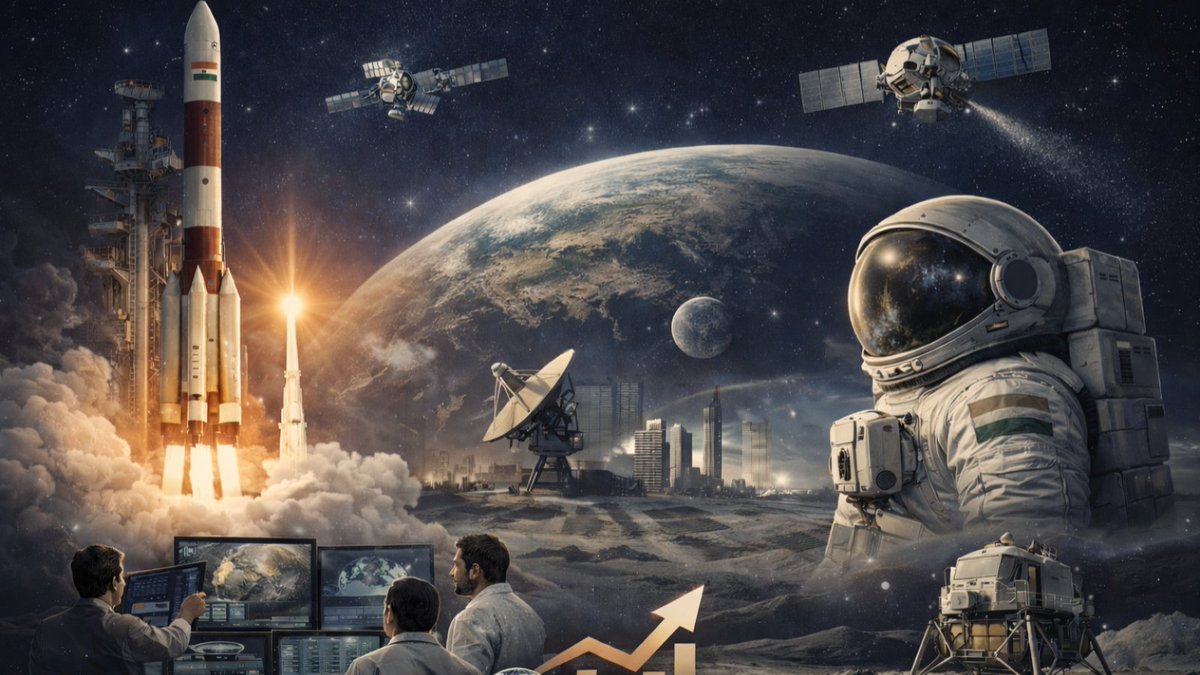
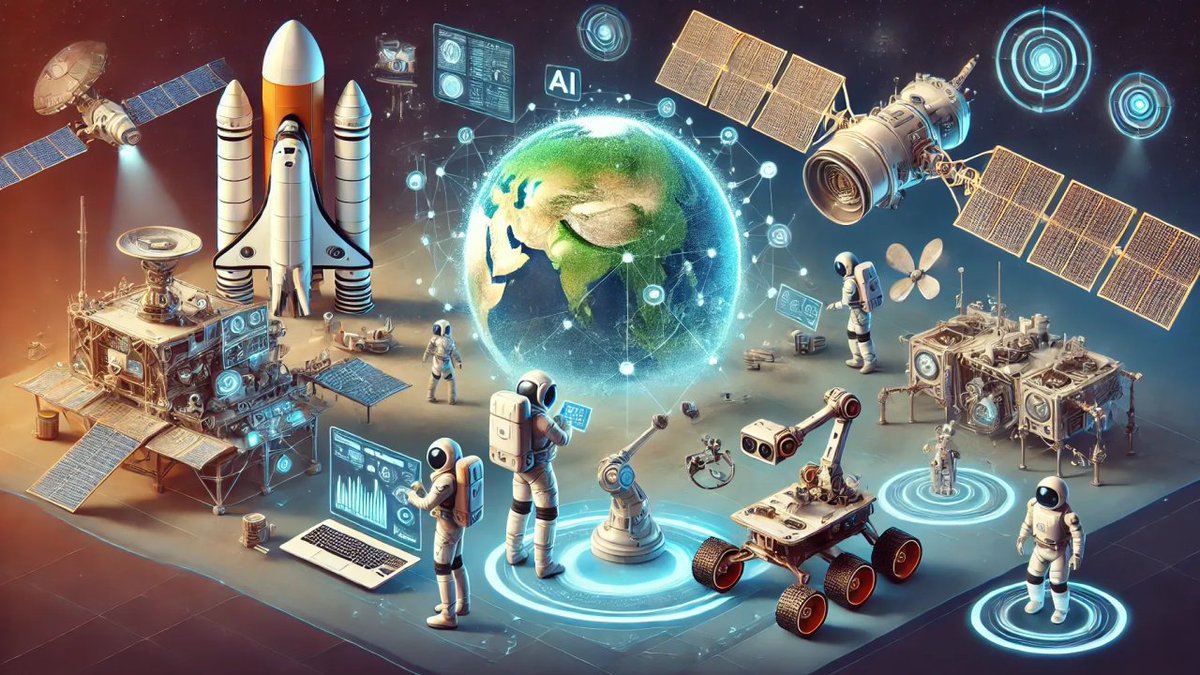
The question I get most about building in space: "Don't I need to be a rocket engineer?"
No. That question is exactly why most people never start.
Rockets are becoming a commodity input, not a moat. SpaceX, Rocket Lab, and a growing list of national programs already solved "how do we get to orbit."
The real question now is what happens once you're there, and that doesn't require an aerospace degree.
Pick one narrow, repeatable bottleneck: refueling, debris removal, in-orbit assembly, microgravity crystallization, lunar logistics. Build one flagship asset around it, not a company-shaped idea.
Sell the outcome, extended satellite life, reduced risk, better drug delivery, not the hardware.
Specialized, purpose-built tools beat generalist platforms.
That's true in space the same as everywhere else. Nobody needs to out SpaceX or Skyroot.
They need to own one unglamorous task inside a multi-billion-dollar segment, completely.
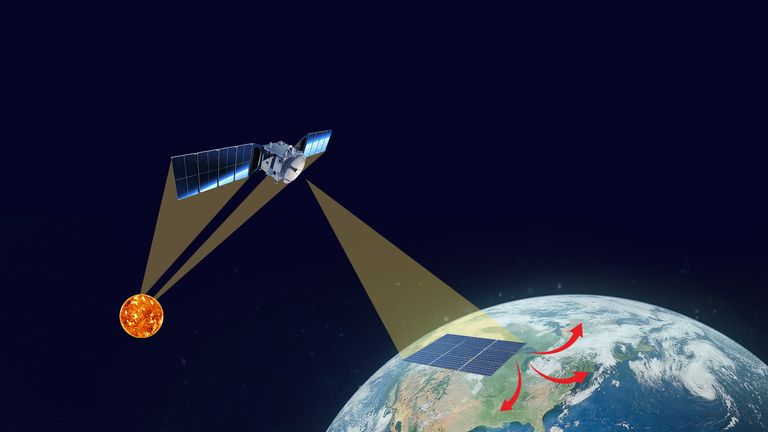
A briefcase-sized device in orbit beamed solar power down to a rooftop in Pasadena. It lit up two LEDs.
That's it. That's the whole demo. And it might be one of the most important space experiments nobody's heard of.
The device was MAPLE, part of Caltech's Space Solar Power Demonstrator, launched three months earlier.
It proved you can capture solar energy in orbit, no atmosphere, no night, no clouds, and beam it wirelessly to a fixed point on Earth using nothing but timed microwave transmitters. No moving parts.
Same pattern is showing up in microgravity manufacturing. BioOrbit just raised the largest seed round ever for in-space drug manufacturing, £9.8M, to crystallize drugs in microgravity.
About 70% of top-grossing drugs today only work as hospital IVs because the molecules are too unstable to self-inject. Crystallize them right, and some become take-home treatments.
Neither company is selling "space." They're selling better power and better drugs. Space is just the manufacturing environment.
The winners here won't be the ones with one good demo, they'll be the ones who own the repeatable tooling other companies build on top of.
Space venture funding peaked at $12.3B in 2021, then fell two years straight.
In 2025 it climbed back over $12B. Rockets aren't why.
Axiom Space (space stations): $350M. Loft Orbital (satellite infrastructure-as-a-service): $170M.
BioOrbit, a London startup growing drug crystals in microgravity: £9.8M, the largest seed round ever raised for in-space manufacturing, aimed at turning IV-only cancer drugs into ones you self-inject at home.
Zero of those are rocket companies.
India's space economy is targeting $44B by 2033, up from $8.4B in 2022, with 300+ private startups already running, the world's 5th-largest space startup ecosystem, mostly building things that aren't launch vehicles.
Investors made a decision a while back that most founders still haven't caught up to: "space company" stopped meaning "rocket company."
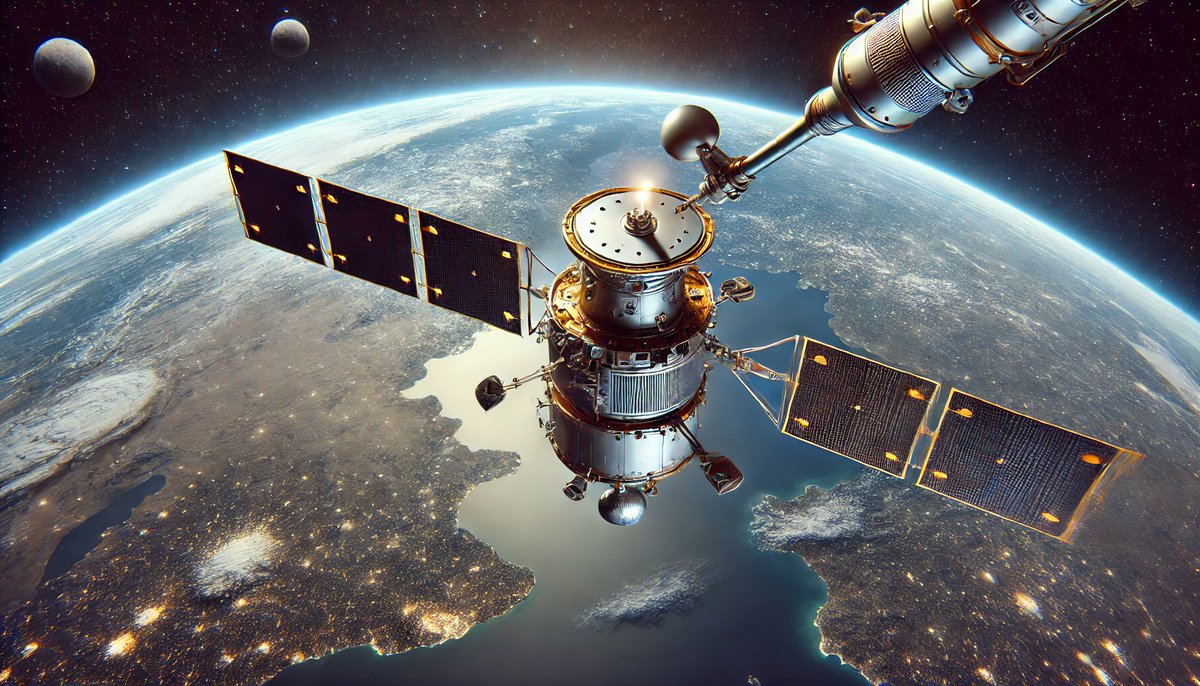
Last year, Astroscale refueled a U.S. Space Force satellite in geostationary orbit, using Orbit Fab's docking interface.
First mission of its kind. That satellite was never built to be serviced after launch.
This is on-orbit servicing, assembly, and manufacturing — OSAM. It's quietly becoming the maintenance industry of space.
Astroscale proved the concept with ELSA-d in 2022, then moved to actual JAXA debris-removal operations. ClearSpace picked up a €26.7M ESA contract to remove a derelict object from orbit.
Redwire's Archinaut is 3D-printing structures directly in orbit, trusses and antennas too large to launch pre-built.
Estimates on market size vary ($3-6B in 2025 depending on methodology), but the trajectory doesn't: double-digit growth through the 2030s, starting with refueling and life-extension, moving to debris removal and assembly.
Nobody builds a satellite constellation without eventually needing this.
Whoever owns rendezvous, docking, and autonomy isn't selling a mission, they're selling infrastructure every operator after them will need.
The global space economy hit $626 billion last year.
Novaspace, McKinsey, and Morgan Stanley all put it past $1 trillion by the early-to-mid 2030s, with some models running as high as $1.8 trillion by 2035.
Rockets aren't where that growth is coming from.
Launch cost per kg fell from tens of thousands of dollars to under $3,000 in about a decade. That's the whole story of "cheap access to space."
Once access stops being the bottleneck, the interesting money moves to what you actually do once you're up there.
Same thing happened to cloud computing. AWS didn't capture the value of the internet, it built the rails. SaaS and data platforms captured the value.
Space is repeating that pattern right now: nearly 2,860 smallsats launched in a single year, orbital servicing companies getting paid to refuel and repair satellites, microgravity labs manufacturing materials that can't be made on Earth.
Commercial spending is now ~78% of the entire space economy, a full flip from an industry that used to run on government budgets alone.
Rockets are turning into infrastructure. The next generation of space companies won't build them. They'll plug into them.