If you're learning Kubernetes, this repo has 24 hands-on labs worth checking out 👇
It covers:
→ Pods, Deployments, ReplicaSets, StatefulSets & DaemonSets
→ Rollouts, rollbacks & live scaling
→ Secrets, ConfigMaps, PVs & PVCs
→ Node affinity, taints & tolerations, RBAC
→ Services, Ingress & Helm
→ Kubeadm cluster setup
You get the YAML, the kubectl commands, and an actual lab to work through.
Pick one. Open your terminal. Start breaking things.
Repo: https://t.co/HmOw9Hbu3k
Andrej Karpathy just explained the 5 shifts turning LLMs into agentic systems.
00:00 - Memory turns chat into personal AI
06:41 - Multimodal AI reads the world
16:58 - Thinking models solve harder tasks
24:51 - Search makes LLMs live
30:58 - Tools turn LLMs into workers
Most people are still treating LLMs like chatbots.
Karpathy is showing the full stack:
Memory → Vision → Reasoning → Search → Tools
Prompting is the old workflow.
Agentic systems are the new one.
This 40-minute talk is worth more than most paid AI agent courses.
Bookmark and watch it before everyone catches up.
Then read how to turn LLMs into self-improving agent loops below
I'm a Principal engineer & I passed system design rounds of Amazon, Atlassian, Walmart, Saleforce, and Deliveroo.
Trust me, learning system is not hard. Start from these fundamental concepts:
1) Load Balancing: https://t.co/3jKCLiI6vl
2) CDN: https://t.co/dxzCmm9gAf
3) Caching: https://t.co/pRgn0FTPp2
4) Cache Invalidation: https://t.co/QrfRjJ57gd
5) Rate Limiting: https://t.co/LE5ECM2tGt
6) API Gateway: https://t.co/DgU8cBDUVr
7) CAP Theorem: https://t.co/a8WydnAIxd
8) Sharding: https://t.co/XQLU6eDriD
9) Replication: https://t.co/KuDkFH0fjx
10) Partitioning: https://t.co/3WXKeZLbLa
11) Queues: https://t.co/JchEoCcFmF
12) Microservices: https://t.co/aAQfM6AWMq
13) Microservices Vs Monoliths: https://t.co/bTaIIWkPU3
14) Fault Tolerance: https://t.co/qXNBoyOqYT
15) Database Scaling: https://t.co/D2lvPm1wkB
16) Service Discovery: https://t.co/z2DpwbJBVI
17) Consistency models: https://t.co/K2r3nMcCQu
18) Eventual Consistency: https://t.co/SWiz4ckIKR
19) Distributed Transactions: https://t.co/xqL7BTJxXn
20) Leader Election: https://t.co/ApNaYSnSFj
21) Horizontal vs Vertical Scaling: https://t.co/IFuEmzMfob
22) Back of the Envelope Estimation: https://t.co/7ntEmtVggQ
23) Idempotency, Data Latency & Finale: https://t.co/fNArLx4MrW
Let me know what you'd like me to cover, would love to help :)
In 2008, Malcolm Gladwell explained why some people succeed and some don't in a single 1-hour talk.
This will permanently change the way you think about talent, effort, and success.
Bookmark & watch today, no matter what.
Wall Street charges $500,000 for probability. an IIT professor put the real thing on YouTube for nothing over a decade ago.
160,000 people watched him define a coin flip properly. almost none of them ever traded on it.
his subject is the axioms under every bet. what a probability actually is, before you dare size a position on it. every quant in 2026 is standing on this, most just skipped the lecture.
Jagannathan teaches this to the IIT engineers who end up on the desks. no upsell, no thumbnail. the foundation of your whole post sits there with fewer views than a phone review.
skip to where he refuses to hand-wave. he builds "the chance of heads" from the ground up, slow, rigorous, the way the people who keep the money were taught.
no ticker. no hype. one chalkboard and the axioms.
a quant I know says half his desk learned probability from this exact free course, not from their finance degree.
you are a decade late. it is still free.
LLMs can write market commentary, but they can also sound confident without using any real data.
Here, Nikhil teaches you how to use MCP + Python to build a financial assistant that computes the numbers from real market data deterministically.
You'll also learn how to generate a single-ticker brief, compare a watchlist on volatility and drawdown, and more.
https://t.co/aLwNzvszld
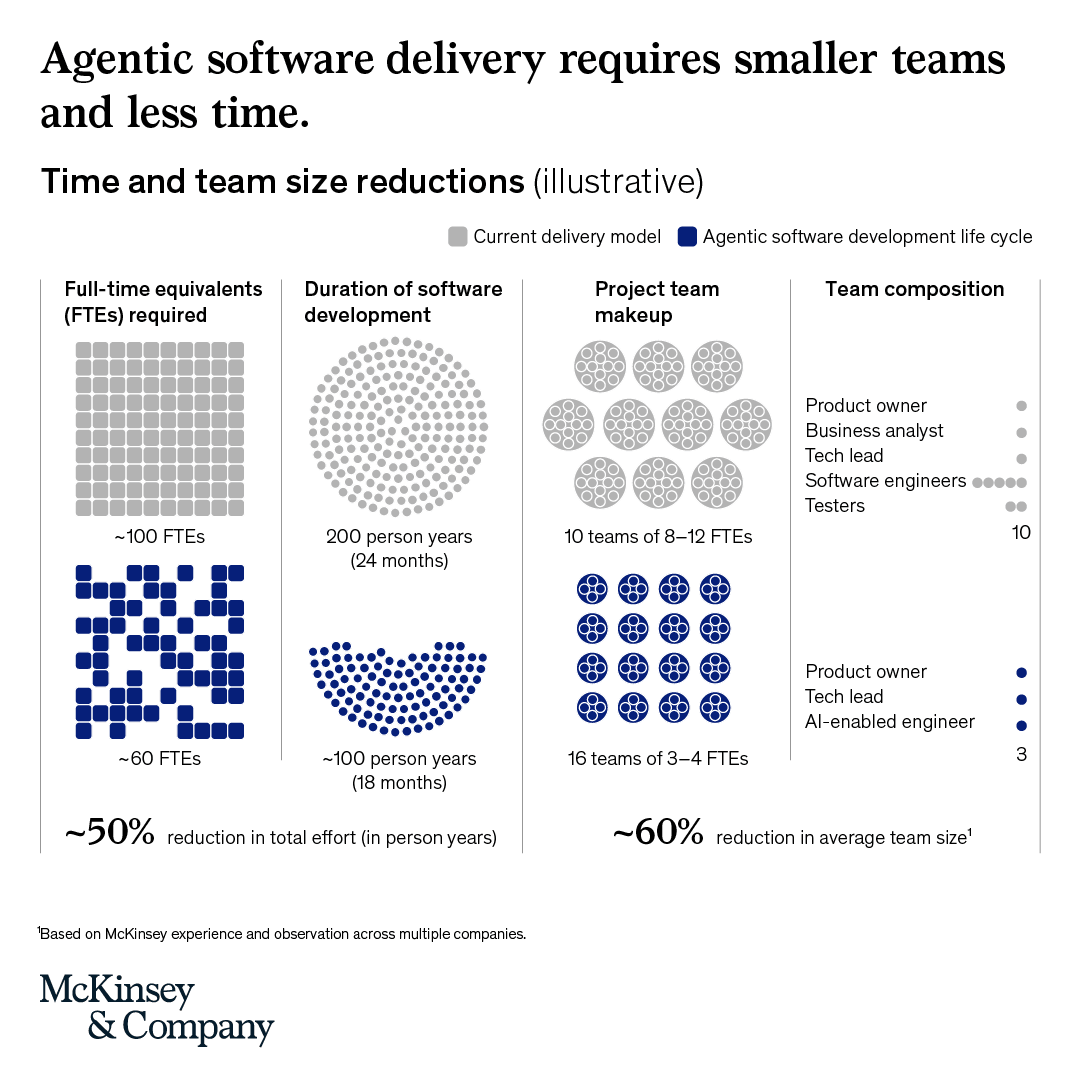
Leading companies are moving from two-week sprint cycles to a daily rhythm that combines human judgment with overnight agent execution.
The opportunity now is how organizations use the capacity those agent-enabled workflows create. https://t.co/z4dKVhUlfF
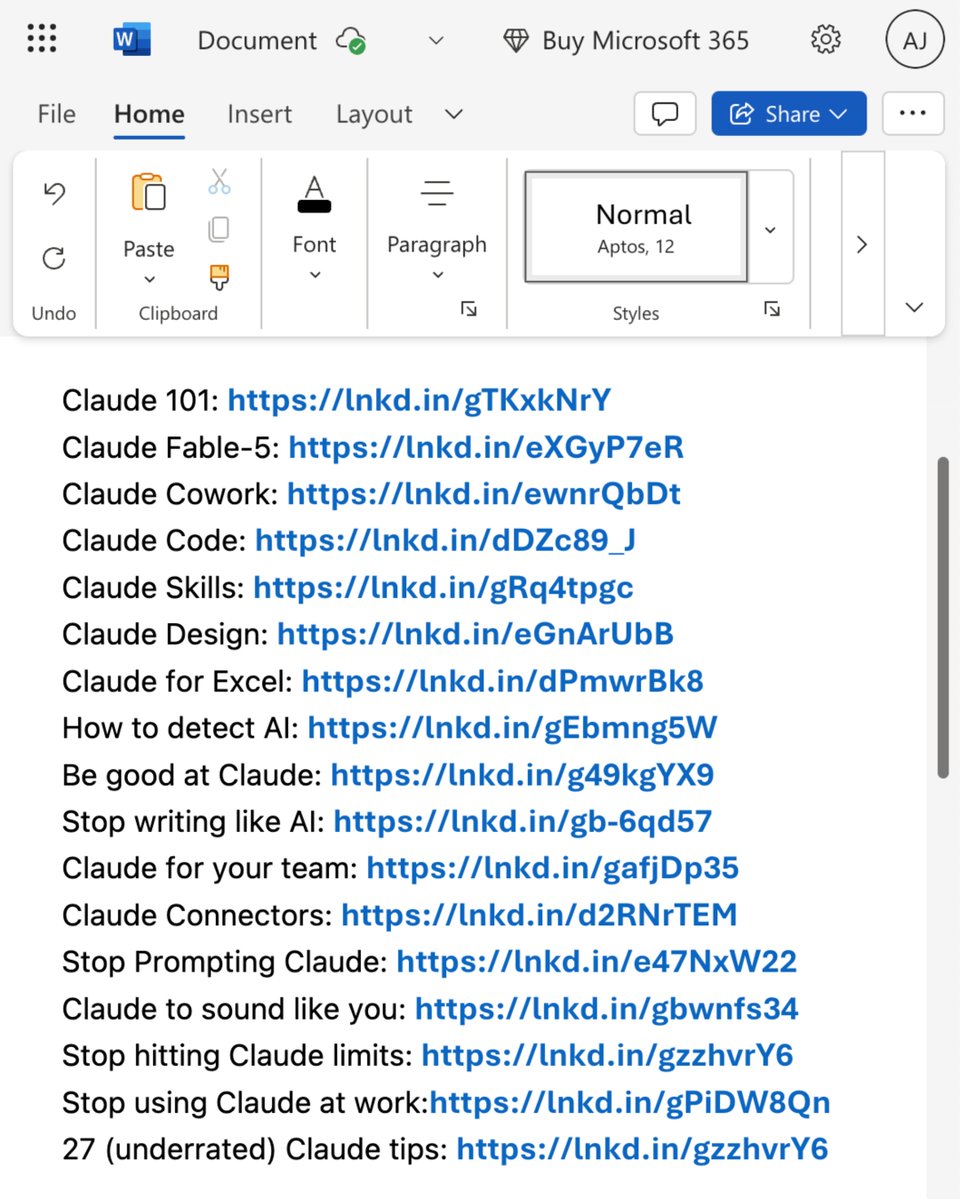
Stop bookmarking 50 guides you'll never read.
You can skip all of it with these 17 free guides:
Claude 101: https://t.co/HNa5MrCLVU
Claude Fable-5: https://t.co/682TA10gmu
Claude Cowork: https://t.co/AvO8fCLTrL
Claude Code: https://t.co/O2kJvFkgan
Claude Skills: https://t.co/jT4uB5Bdjw
Claude Design: https://t.co/q1zjMfeAyg
Claude for Excel: https://t.co/7g3CFNcKrs
How to detect AI: https://t.co/Tcc7YTTf1D
Be good at Claude: https://t.co/SVGd967eMQ
Stop writing like AI: https://t.co/JWKUGNKgOS
Claude for your team: https://t.co/U1JsBVCzYH
Claude Connectors: https://t.co/TSAQqOpDeV
Stop Prompting Claude: https://t.co/j1LATSJiat
Claude to sound like you: https://t.co/kDGBpSF7Wh
Stop hitting Claude limits: https://t.co/j5fEzSH5br
Stop using Claude at work: https://t.co/c6X55Thy6t
27 unknown Claude tips: https://t.co/Uk66CN3rj5
___
1. Save this list for later (three dots, top right).
2. Share it with a friend by ♻�� reposting this image.
3. Subscribe to my free newsletter: https://t.co/psB7XxB2Y4.
IBM engineers just released a 40-minute deep dive into “Agent Engineering” for building production-ready AI agents
“80% of building an AI agent has nothing to do with the model. It is frameworks, tools, skills and risk controls.”
00:00 - the 5 core concepts behind every AI agent
11:07 - choosing frameworks for tools, memory and orchestration
23:01 - when agents need MCP, skills or both
31:04 - designing AI architecture around real production risk
The core stack:
Agent → Framework → MCP → Skills → Risk → Production
This 40-minute workshop will teach you more about production AI agents than most $500 Agent Engineering courses.
Watch it today, then read the full agent engineering playbook in the article below ↓
Most performance problems come down to how you use memory.
And this paper is still the best place to understand it:
• How RAM actually works
• CPU caches (and why they make or break performance)
• Practical optimization techniques
• Tools to measure what's really happening
Written by Ulrich Drepper (Red Hat).
Almost 20 years old and still holds up.
100% free:
https://t.co/l1LFpfu8Jd
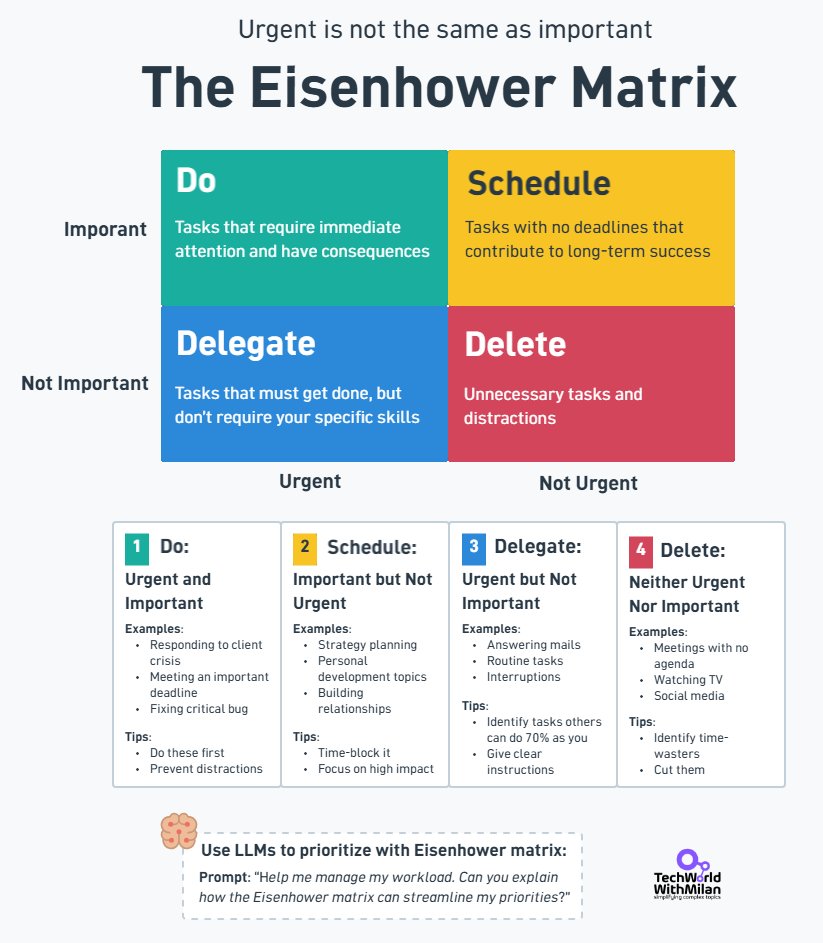
𝗨𝗿𝗴𝗲𝗻𝘁 𝗶𝘀 𝗻𝗼𝘁 𝘁𝗵𝗲 𝘀𝗮𝗺𝗲 𝗮𝘀 𝗜𝗺𝗽𝗼𝗿𝘁𝗮𝗻𝘁!
Urgent tasks require immediate attention. Important tasks have an outcome that leads to achieving goals.
What matters here is to distinguish between "urgent" and "important" tasks.
To do this, you can use 𝗧𝗵𝗲 𝗘𝗶𝘀𝗲𝗻𝗵𝗼𝘄𝗲𝗿 𝗠𝗮𝘁𝗿𝗶𝘅. It is a simple decision-making tool. It helps you separate important, unimportant, and not urgent tasks.
It divides tasks into four boxes. They rank which tasks you focus on first, and which you delegate or delete.
When you get a task, you put it in one of 𝘁𝗵𝗲 𝗳𝗼𝘂𝗿 𝗾𝘂𝗮𝗱𝗿𝗮𝗻𝘁𝘀:
𝟭. 𝗜𝗺𝗽𝗼𝗿𝘁𝗮𝗻𝘁 & 𝗨𝗿𝗴𝗲𝗻𝘁 (𝗗𝗼): this task requires immediate attention, which means "do it now" (e.g., something you can do below 2mins).
𝟮. 𝗜𝗺𝗽𝗼𝗿𝘁𝗮𝗻𝘁 & 𝗻𝗼𝘁 𝗨𝗿𝗴𝗲𝗻𝘁 (𝗦𝗰𝗵𝗲𝗱𝘂𝗹𝗲): These tasks have no fixed deadline but bring you to your long-term goals. You should spend the most time here. Rank and schedule them.
𝟯. 𝗡𝗼𝘁 𝗜𝗺𝗽𝗼𝗿𝘁𝗮𝗻𝘁 & 𝗨𝗿𝗴𝗲𝗻𝘁 (𝗗𝗲𝗹𝗲𝗴𝗮𝘁𝗲): These tasks must be done, but they usually drain your energy. Try to delegate them as they are not important.
𝟰. 𝗡𝗼𝘁 𝗜𝗺𝗽𝗼𝗿𝘁𝗮𝗻𝘁 & 𝗡𝗼𝘁 𝗨𝗿𝗴𝗲𝗻𝘁 (𝗗𝗲𝗹𝗲𝘁𝗲): These activities only distract you from your goals and do not add anything to your value, e.g., watching TV and similar. Try to limit them.
So, the trick is to focus on the right tasks. Prioritize the important ones, and decline the non-important and non-urgent ones.
If everything is urgent, nothing is important.
Google just dropped a free 2-hour course on complete agent engineering
How to turn one prompt into a system that keeps running while you sleep:
38:46 - Build your first AI agent
54:46 - Connect agents to MCP tools
1:12:43 - Run four different agent loops
1:20:57 - Turn those loops into graphs
2:22:31 - Build the complete autonomous system
Most people are still building one agent and stopping there
Google is already teaching the entire stack:
Agents → Tools → Loops → Graphs → Autonomous Systems
Single agents are the old workflow
Systems that keep running without you are the new one
This free course is worth more than most paid agent engineering bootcamps
Bookmark and watch it today
Then read the full graph engineering playbook below