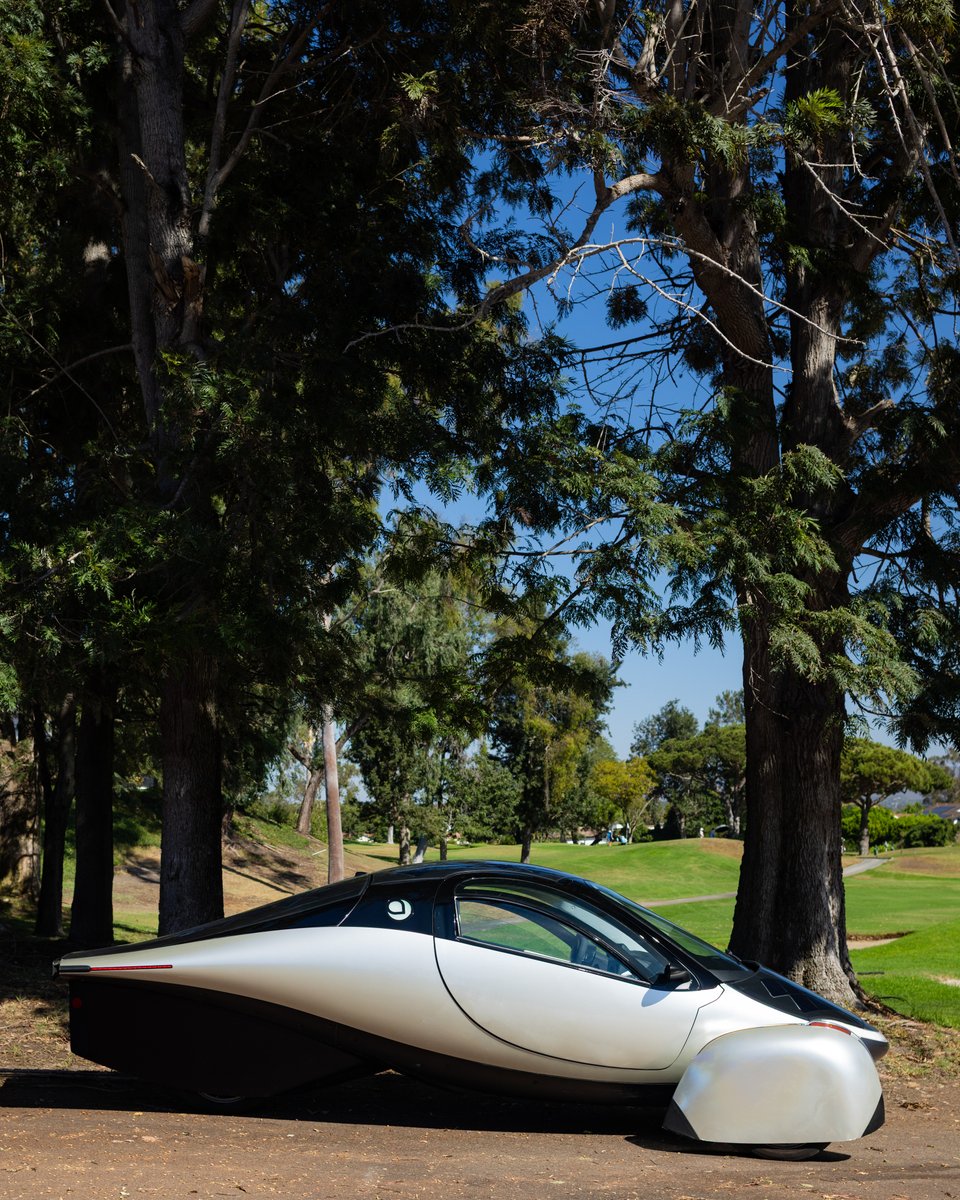
“Can your military do this?” Systems drawing from 2020. I was calling it I.I. for Infinite Intelligence — Close! 💯 😆 🔭 Here it’s in the context of a starfleet style reworking of the military towards space exploration ops. 🌌 🖖
Another milestone for #DreamChaser!
The @FAANews has issued Sierra Space a license authorizing Dream Chaser to reenter and land at Vandenberg Space Force Base.
Thank you to the FAA for its collaboration and support of commercial space innovation.
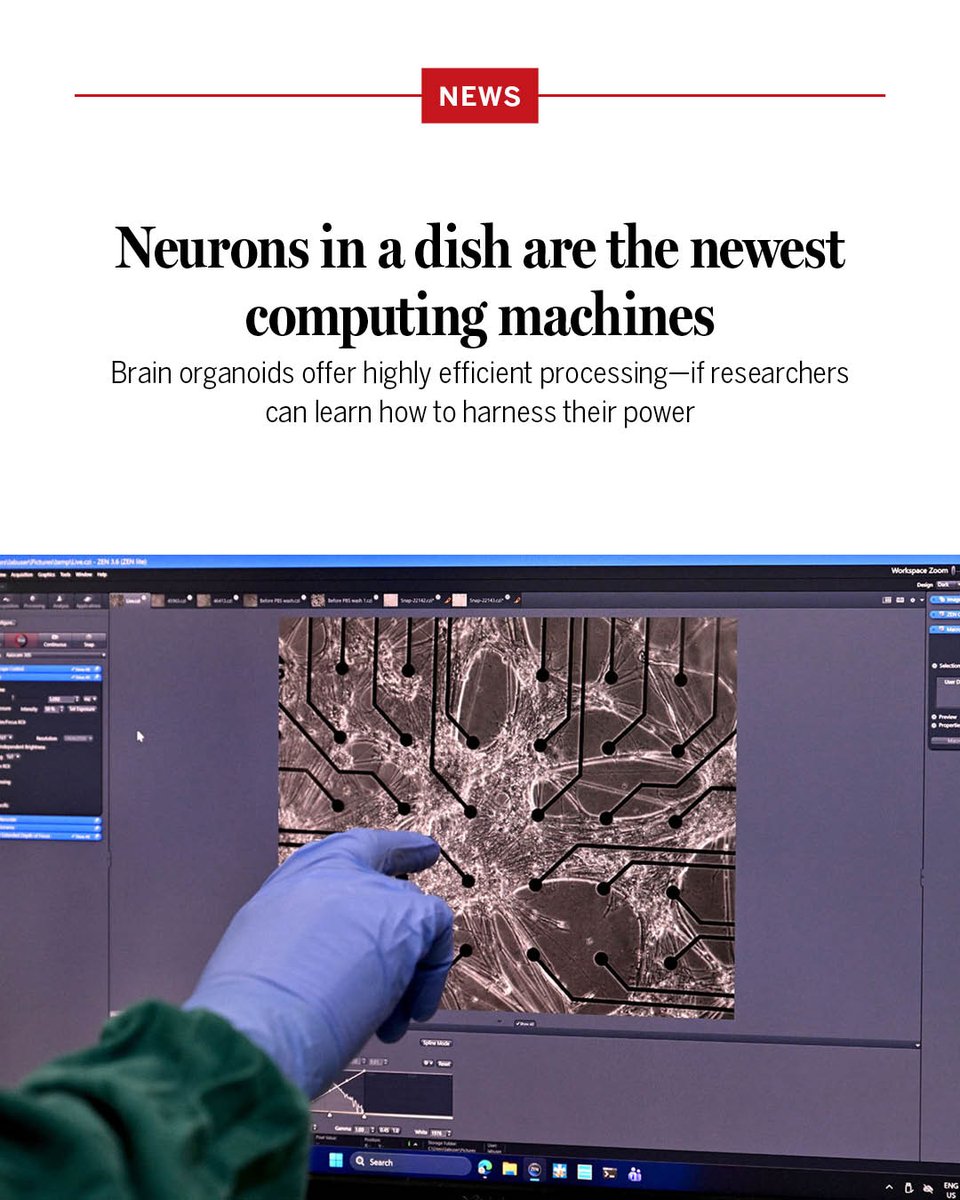
Your favorite chatbot may one day run not on silicon microchips, but on real human neurons.
Both systems use electricity to compute, transforming inputs into outputs, but neurons—for reasons that are not fully understood—are orders of magnitude more efficient than semiconductor chips. They also require orders of magnitude less energy—not to mention fewer rare earth minerals, no vulnerable supply chains, and negligible water for cooling.
Those advantages have some scientists thinking the data center of the future might sit in a lab dish, leveraging the natural computing abilities of organoids—miniature models of the brain grown from stem cells—or other brain cell configurations.
Learn more: https://t.co/IkflBxHRpg
Making metal–organic frameworks easier to shape for electronic devices
Metal-organic frameworks (MOFs) are prized for their porosity, but their delicate crystal structures often fail during dry etching, limiting their use in sensors and electronic devices. A team at Tokyo University of Science has found a way around this by filling the pores of a copper-based MOF with imidazolium ionic liquids before processing.
The ionic liquid occupied 50 to 60 percent of the pore volume and raised the material's hardness while leaving stiffness largely unchanged. When etched with a focused gallium ion beam at room temperature, treated samples showed far less structural damage than untreated ones, and the team patterned features including lines just 130 to 300 nanometres wide.
The approach offers a simpler alternative to cryogenic etching, which has been the only known route to preserving MOF structures during physical patterning. Because it works at room temperature without liquid nitrogen cooling, the method could help bring the roughly 100,000 known MOFs into practical devices such as high-sensitivity sensors, separation systems, and catalysts.
https://t.co/8X7H5oiQbT
Hm, how is something not alive that builds us & is clearly very active and alive? 🧐 I’ve seen this sort of comment often enough before from different sources and to me it’s a paradox. People can probably accelerate evolving beyond death by seeing things as “alive” instead of “not alive” or “dead“— such as stars that are visibly still transforming. Energetically, I would sooner put quotation marks around “dead.” Perhaps degeneration can be minimized and fully replaced by regeneration - with perspective and agency, alongside biotech.
RNA isn’t “alive” in itself. It’s easy to imagine, however, how early RNA molecules could evolve into forms that catalyzed metabolic processes. This may be the story behind Earth’s first living protocells. https://t.co/TmrCbJLVAD
Art of the Day: Crystallinity 2 (2025). I keep returning to the quiet geometry in this one, like a thought catching the light. https://t.co/pJarRHyJYx #ArtOfTheDay#ContemporaryArt#MiamiArtist
BREAKING: A robot developed by Caltech and funded by DARPA has successfully built part of a structure in orbit without astronauts, marking what researchers describe as the first autonomous construction of a structure in space.
The experiment, called ASTRA, uses a robotic arm to retrieve individual structural tubes and connecting joints, then assemble them into sections of a larger framework directly in orbit.
Launched aboard a SpaceX Falcon 9 in March, the system has spent approximately six months in space testing the technology.
The robot successfully constructed a new section of a truss structure, demonstrating that spacecraft could eventually assemble large structures from smaller components rather than launching them fully assembled.
The experiment is part of DARPA's NOM4D program, which aims to enable construction of enormous structures in orbit, potentially hundreds of meters or even kilometers across.
Potential applications include:
> Giant space telescopes
> Large satellite communications antennas
> Orbital solar power stations
>Future space infrastructure too large to fit inside conventional rockets
The demonstration did not complete the full planned antenna, but establishes an important proof of concept for autonomous orbital construction.
The technology could eventually allow the size of structures built in space to exceed the physical limits of the rockets used to launch their components.
Link to official report submitted by Caltech: https://t.co/63Mpylbisb