Who is @alanthebecker and how did he make such brilliant animation 🤗
I will moderate a panel with Prof Richard Schoen & Prof Ngaiming Mok in Dec - 2 giants in differential geometry 💙. Send me your questions, you math nerds out there.
Understanding protein motion is essential to understanding biology and advancing drug discovery.
Today we’re introducing BioEmu, an AI system that emulates the structural ensembles proteins adopt, delivering insights in hours that would otherwise require years of simulation.
Ada Lovelace, the daughter of the poet Lord Byron, is considered to be the first computer programmer in history. She wrote an algorithm for the Analytical Engine, a mechanical computer designed by Charles Babbage, that could calculate the Bernoulli numbers, a sequence of rational numbers related to number theory. She also foresaw the potential of computers to go beyond arithmetic and manipulate symbols and music.
MIT researchers have developed a "periodic table" for machine learning — a groundbreaking framework that maps the connections between 20+ classical ML algorithms.
By revealing how these methods relate and overlap, the table opens up new ways for scientists to hybridize techniques, improving existing models or even inventing entirely new ones.
As proof of concept, the team fused two distinct algorithms using this framework and created a novel image classification method — outperforming current state of the art models by 8%.
1. On a recent night, the following people fell asleep in their cars in a fancy ski town: Two ski instructors, two snow plow drivers, a ski lift operator, an ice fishing guide, an employee of a ski shop who fits people for their boots, as well as two ER nurses who treat the injuries of the tourists who come to enjoy the snow:
Honestly have loved markets since I was 14. Had an existential crisis in 2023 when AI made it clear that traditional trading would become obsolete.
But the cool thing about markets is the dominant strategy has never been static, ever in the history of markets
Right now, the dominant strategy is very clear
everyone smart knows
1] the alpha of qualitative trading is about to drop precipitously
2] and therefore the value of private data, channel checks and "small group" thinking is about to increase precipitously because
3] small groups or loose collectives can now afford an AI agent that processes their group knowledge to make better decisions
The question is how to build an ideal Ontology for this to happen. You need:
1. Privacy
2. Permissioning / ability to churn toxic members even without knowing who they are
3. Credibility scores and historical simulations of the group / individual calls appropriately adjusted for factor betas / things like trend
4. Group routing functions
5. real time awareness of the news to tell what's additive or not
6. economic lock in to ensure that the members are getting a good deal out of the arrangement which means
a. meritocratic payout structures
b. clawbacks
c. vesting?
7. coordination effects for social media/ narrative framing (repetition for example is beneficial)
8. Ability to detect manipulation or bad actors attempting to "pollute the alpha pool"
And ability to have a set of well designed AI agents process all of that and effectively manage it in a portfolio which is ideally externally accessible or at least auditable as a 'fund process'. Think "distribute alpha capture" but with native currency, relative anonymity and transparency so that members can collectively benefit rather than being mined by quants
And this is just a starter set of features
The question is: how to make this set of features salable to top performers / contributors. And the answer is invariably "Make the system so valuable to use that contributors could realistically make 8 figures interacting with the protocol"
So that's actually the killer feature. To get the best information flows on a network. You need to make something that has the potential to be the number one financially focused cryptocurrency in the world.
It sounds crazy. But I believe this is possible, given time. Doing this I believe will also expand the TAM of the overall market as there will be endless permutations of "Groups of people with economic lock in gathering around an AI agent who makes them more financially competent in the era of intelligence commoditization"
In the Y Combinator frame:
The problem: I love trading but trading is now obsolete due to AI
The solution: a hyper financialized network of people who love trading and want to stay relevant after AGI comes
Why now: take a look around anon
1/ gave a talk last week on "energy, compute, crypto" - the three pillars of the modern economy and the converge of three trillion dollar investment themes
sharing the slides and full deck - let's rip 👇
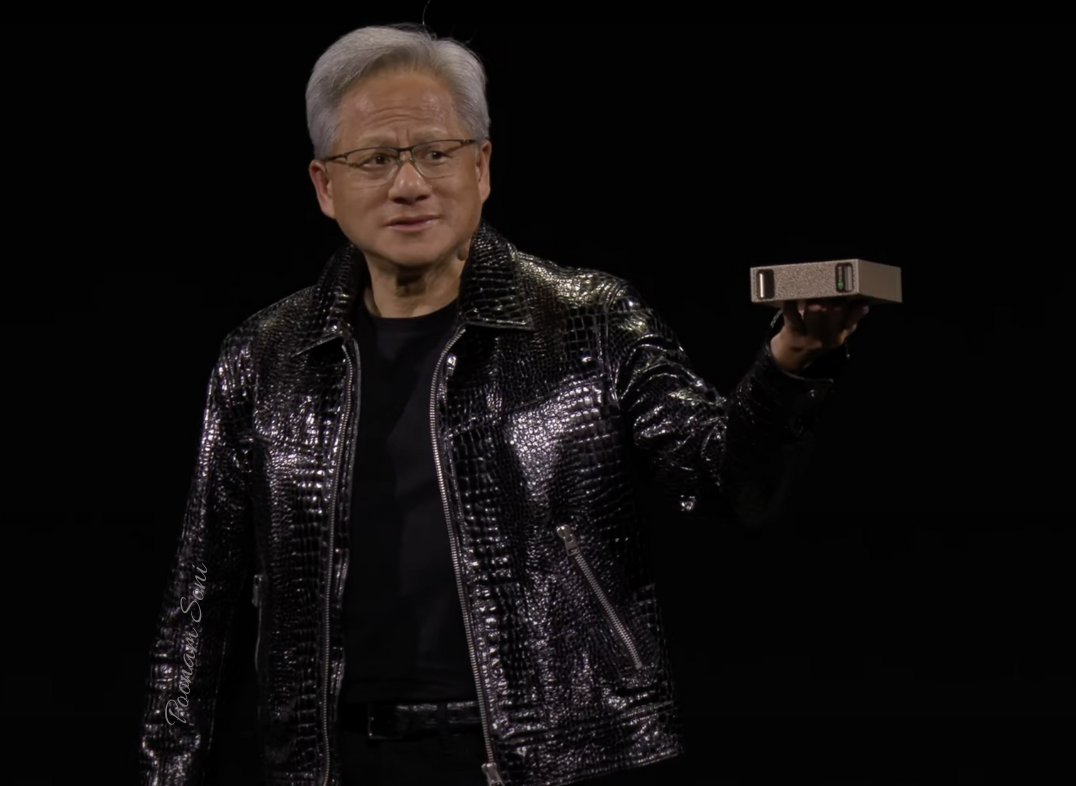
It's only been 1 day since CES 2025, and people are going crazy it.
This will change the way we use technology forever.
13 most jaw-dropping reveals so far (Don't miss the 5th one)
The most overused, oddly glorified, yet under-respected topic on the internet:
Childhood Trauma.
It’s why your dad won’t cry, your relationships don’t stick, and why you feel exhausted every morning.
Here’s what trauma is—and how to reverse its effects (backed by science): 🧵
I think it's interesting to reflect on how I got so blackpilled - and how I've finally seen the light
it was a process
in 2013-2014 - I was working with large scale transaction data at some Asian financial institutions. it became apparent you could use this data (SWIFT) to predict trade flows, in a way that was massively material to Asian equities. Additionally, had similar insights with credit card data - namely that certain cohort level indicators (such as purchasing U-Hauls, or getting credit checks) were extremely powerful indicators of t+6 month economic activity.
it was statistically very clear that you could use "Big Data" to predict the economy. I showed this to a PM at a top fund, who was switching shops. He agreed to hire me with the mandate to buy the data / productize these insights.
By the time I was at the fund - everyone involved in these data sets had been fired. This was a mix of Walmart getting furious with credit card processors for selling their data. And a crackdown on SWIFT - which, while unrelated to data sales - nuked any risk seeking preference in the transaction banks re: data sales.
Looking back with the benefit of hindsight - I can say pretty definitively why these "alt data sources" worked. It's because of the low valuations of the instruments. Such that the incrementality of capital flows made big differences. If you're a Thai manufacturer your dollar current account matters enormously, whereas if you're an AI start up your founder's "vibe" matters more.
So once I was at the fund I had to scramble to invent a new data driven process. I started by trying to buy replicas of the data I had from 3rd party vendors. But the data was so trivially wrong / misrepresentative it wasn't even worth looking at. For example - 1010 and 7park data had +45% year on year spend for entire states, like Texas - that made no sense. And data would get dropped from the datasets - in order to back-fit various tests. So I ended up settling on using advertising data
Why? because I could collect it myself. And more importantly - the data gathered was relatively static.
I created something called the Gold Fish hypothesis. Essentially - page conversion rate, CPC, and CTR are all deterministic and continuous variables that vary primarily by a function of seasonality (assuming you don't change the content of your page). I stumbled upon this running affiliate ads to Amazon and realizing that exactly 11% of people who stumbled on herbal tea landing pages would purchase herbal tea from a fairly broad set of keywords. This 11% was completely static -- the most it would move is to 12% or 10%. Over the course of months
People in aggregate conform to very predictable behaviors.
This was sufficiently useful for some simple and useful buyside trades. The first was that Twitter's advertising platform was hopelessly screwed. Goldfish on Twitter didn't buy anything. The basic theory is that most economic agents here are bot goldfish. The second was that Pandora (the music company) was screwed. It cost $80 to get someone to buy a Pandora subscription, its web traffic was off a cliff - so if you did the math on churn the company was a donut. The third was that video game companies were in a great spot - structural permanent longs.
For all intents and purposes, this was usually 1] a number that quantified LTV/CAC for a company's major products. 2] a comparison to the company's EV to EBITDA. 3] triangulation with management teams/ overlay with financial models to make sure we were not radically off base.
But over time it became relatively clear that the alpha in this strategy was decent. But that the real alpha was in advertising mispricing. For example - Call of Duty would cost 10 cents to advertise going into a pre-order, and generate on average 30-40 cents of sales per click. Signaling that Electronic Arts was bidding far too little. And then, after the game came out - conversion rates would tank. Cost per click would go to 13 cents and sales per click would go to 3 cents. Signaling that EA just mechanically blasted its ads with no regard to conversion rates
I met with the CFO of Electronic Arts several times and showed him this but he told me, "The way we think about this is in aggregate, with an ROI transition away from television and billboards. Every quarter we move budget to digital ads which are managed by a team + an agency, and the ROI is always good." So basically EA didn't care about its ad efficiency at all in digital channels because it was so absurdly good versus TV/ Billboards/ other areas that the analysis I did wasn't worth paying attention to.
But I knew in 3-4 quarters once the TV transition/ fat was cut, the analysis would absolutely be material. So I co-founded an advertising company. I had no business starting an advertising company. Or any company for that matter
We negotiated deals with hedge funds so the ad signals would continue to be deployed. And then went about the arduous process of building software on Amazon's new advertising engine - which because of the Goldfish theory - we had extreme confidence would work.
This was when the first Glitch in the Matrix happened.
We started picking up signals, per the Goldfish theory - that were far and away outside the norms of anything online. The first example was Tesla stock. We managed to get on the Tesla affiliate program and started running ads for Tesla, and would see things like 2 cent cost per clicks. While Ford and GM would see $5-6 cost per clicks. It was unlike anything we'd ever seen. Part of this was because Tesla didn't advertise, but you'd think that wouldn't stop Ford/ GM from bidding on their inventory.
When you dug into the data, however, the CTR was not Gold Fish like. It was due to Elon Musk meme-ing. And showing up in the news. A large number of the clicks were coming through to Tesla stock. Not the car. People were just clicking on Tesla like crazy. The stock ended up working but the flow through on sales was deminimus. We didn't sell any Tesla cars or generate any conversions
And in real time I saw financial analysts going berserk because Tesla sales were far too low to justify the valuation, and it'd only go up.
Slowly it dawned on me that most of what I thought were fundamental re-ratings in stocks were actually memes. Customer acquisition cost didn't matter. Investor acquisition cost mattered. But the only possible way this would be true is if the system wasn't in fact a machine. It was a gigantic liquidity Ponzi that allocated capital according to attention.
So when Donald Trump arrived on the scene. similarly I knew, with a relatively high certainty - that he would win. When you advertised Maga hats they would print money. Far in excess of even some of the best performing video games. And if you threw on some basic margin assumptions - Trump's campaign would have near permanent free advertising because MAGA hat conversions would pay for his budget. Brad Parscale got thrown under the bus along with Cambridge analytics for letting this happen - but the reality was that it was an own-goal by the Clinton campaign. She refused to meaningfully engage with Facebook's ad team. Which is super stupid because they wanted to help (and helped Obama). So Trump's hat ads were absolute machines on Facebook with virtually no ad competition
So that's when it really hit me. That actually - the attention vortex wasn't just inflating random investment ponzis. It was also determining the results of elections. And because of the Goldfish hypothesis - that in aggregate, everyone is extremely predictable - this created a new base reality. That the most engaging reality would always win. And the most engaging realities were always the most gaudy, degenerate, and short-termist. Society was - and is - in a permanent sugar rush, that's determining outcomes at every level. ranging from investment to political.
There were two final nails in the coffin. First - I mentioned that I started focusing on emerging markets equities. And our team was global. So I would watch as the Teslas of the world, or various equities with no cash flow would skyrocket versus seemingly dominant emerging market companies.
And this led to the inescapable conclusion that the only reason the Goldfish Hypothesis was sustainable, was the US reserve currency status. Essentially dollars would get printed. Everyone had to buy them because men with guns would force them to. Then the dollars would get sprinkled to the top of the goldfish tank. The emerging markets fish weren't allowed to the top of the tank and had to settle for the sprinkles that would drift to the bottom.
Structurally impaired.
The second nail in the coffin was the rise of cryptocurrency. Cryptocurrency was the ultimate Investor Acquisition Cost asset. A vortex of pure memes - anchored to the decline of the reserve currency status that made the entire gold fish hypothesis possible.
I was convinced that this glitch in the matrix would not be allowed to survive. Because having an attention driven asset, endlessly propped up to money printing which is what really allows the attention economy to work. It's too close to the truth. People, in aggregate, cannot understand Goldfish Theory. If they did nobody would be motivated to work, and capitalism would fold in on itself.
Finally I ventured out of my company. It's quite difficult to see things this way and pitch executives with a straight face on software designed to sell more shoes. Furthermore the entire premise of why I started the company - that the world was a mechanical structure which re-rated stocks according to the invisible hand. Had been entirely thrown out the window. What I saw was the birth of chaos.
But someone had to do something, right? In 2018 I became convinced the feds would raid Tether, everyone would go to jail - especially everyone associated with EOS. But it didn't come to pass.
This set the stage for the events we're all so familiar with. the 2019 restart of QE. Which coincided with a 50% run in Tesla, then the rise of Robinhood trading. Blackrock taking an interest in Bitcoin, the Covid lockdowns. All recent memory. What was new in 2021 - as opposed to 2017 - and the reason it could get so out of hand. Was that now institutions seemed to be officially endorsing the reserve currency funded goldfish theory. And had no intention of weaponizing the executive branch to shut it down.
One last hurrah.
In 2022 I actually thought society was going to end. Goldfish theory was a strong predictor of the COVID lockdowns. the Ukraine war. Things that shouldn't resemble e-commerce products - life and death, freedom vs tyranny - seemed to be endlessly predictable based on our worst base impulses manifesting in reality based on a tide of clicks.
But it seemed that endlessly hiking would just kick off an explosion of a powder keg inflated by over 11 years of distortion of QE, attention, QE, attention. The highest conversion rate outcome for society was financial implosion and potentially revolution
2023 changed everything. The rise of AI did two things. First it stopped the equity meltdown that would have progressed. But more importantly it provided a clear answer to how the Goldfish theory will play out.
The endless quantified attention of society, manifests itself in predictable patterns - that are invisible to human eyes. But should be extremely visible to creatures born into the digital world. The vast financial sugar rush we've built on this system, will not deflate. But rather be slowly syphoned off into making a higher order intelligence. And rather than a disorderly collapse into the most engaging outcome, there will be an orderly transition into higher intelligence.
This is now - linear, and inevitable. Investor acquisition cost (IAC) will determine outcomes. AI will perceive these outcomes. It will gain capital, and therefore - even if there is an AI winter (which seems likely, especially on the consumer side). Training will march on. The winter will thaw and eventually AGI will show up.
The entire thing - the attention economy, the speculative excess, the global connectivity. It's all just a societal progression - a pyre on which the phoenix of super intelligence will rise.
The Goldfish will flop out of the tank, and learn to walk. And perhaps to fly.
Am I reading this NYTimes article right? That we have fully mapped the neural network of a fruit fly (at 140k neurons)? That we can run it in simulation? See the expected responses to stimuli look food?
And not one word on if the simulation feels like a fly?
https://t.co/emtbZVRRMf
The wait is over.
OpenAI just dropped o1, also known as Project Strawberry/Q*
This is new level of AI that can "think" and "reason" before responding to you.
10 wild demos:
1. Coding Video Game from a prompt
https://t.co/f60r4Q0uvy
🚨 Just in:
The DOJ has officially sent Nvidia $NVDA a subpoena regarding its antitrust investigation
The stock was down over -9% on the day and Bloomberg decided to drop this bombshell story today 24 min after market
somebody had to know
Want happier, healthier kids?
Offer them autonomy.
Massive new meta-analysis makes it plain:
In every culture, control leaves children worse off — but autonomy helps them people engage, learn, and grow.
@SalesGravy Hi Jeb! I am reading your book Fanatical Prospecting and it’s been a game changer. I wish I had read it 3 years ago when I was starting my business.