Fully agree. We’ve seen the same pattern: teams hit auth complexity as soon as they move beyond local experimentation.
Smaller teams and startups are shipping fast with local STDIO MCP servers, but the jump to remote MCP servers means building secure OAuth infra.
The timing makes sense too. MCP protocol mandated OAuth in March, so now everyone’s hitting this wall.
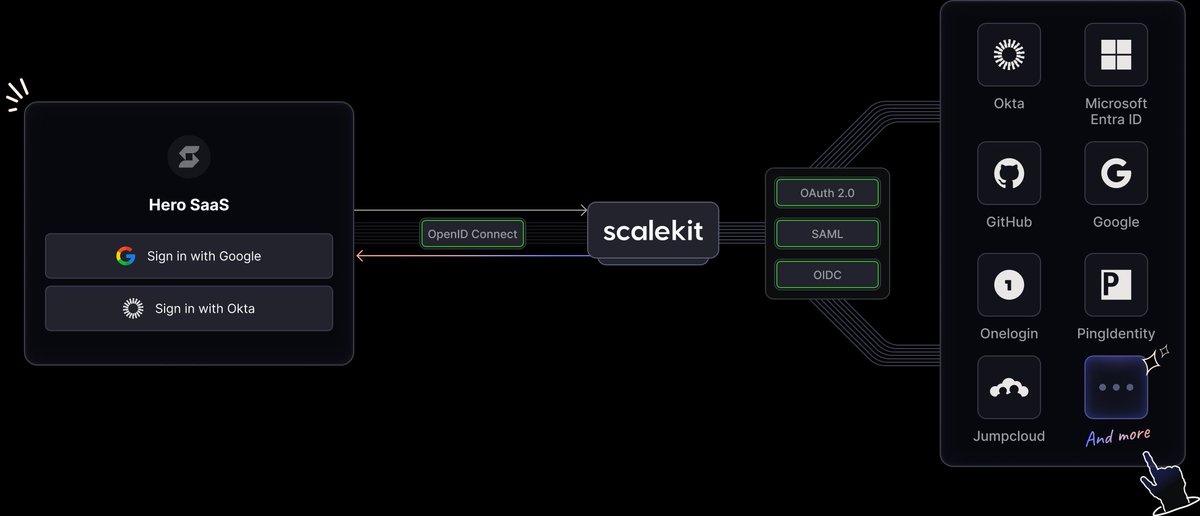
At @scalekitinc we share this thesis and we’re launching a couple of new enhancements. Secure MCP servers without the overhead of rolling own OAuth implementation.
Looking forward to seeing what @clerk ships.
@hnshah So true. The tension between scaling and staying weird is real. The trick is keeping it alive as processes, layers, and middle managers show up.
@NotionHQ Notion joins the modern event-driven club 🥳
Real-time updates > Polling hacks. Webhooks = cleaner architecture, faster integrations. Kudos to the team at @NotionHQ!
@hnshah Speed of feedback matters, but so does quality. As startups, we might collect tons of data quickly, but at times miss the signal in the noise. The key is to keep looking for honest, actionable insights - not just more data points.
Looking to streamline login experiences with OAuth social identities? Consider exploring Scalekit's Social Logins for your authentication needs. #SaaSTools Link here: https://t.co/vW9oaQpmGK
In B2B SaaS, every signup drives growth. Social logins simplify auth, boosting product-led strategies. But traditional implementations bring challenges. #SaaS#ProductLedGrowth
I've written a detailed article on how B2B SaaS companies can explore auth challenges and make strategic choices. Read the full article here: https://t.co/mzZQLzkFeR
A few weeks ago, a founder friend shared: “We lost a Enterprise customer deal. Not because of pricing, not because of product features—but because our #authentication didn’t meet enterprise needs.”
3/3: The build vs. buy decision for authentication isn't just about saving engineering hours - it's a strategic choice that impacts your go-to-market success . #buildvsbuy