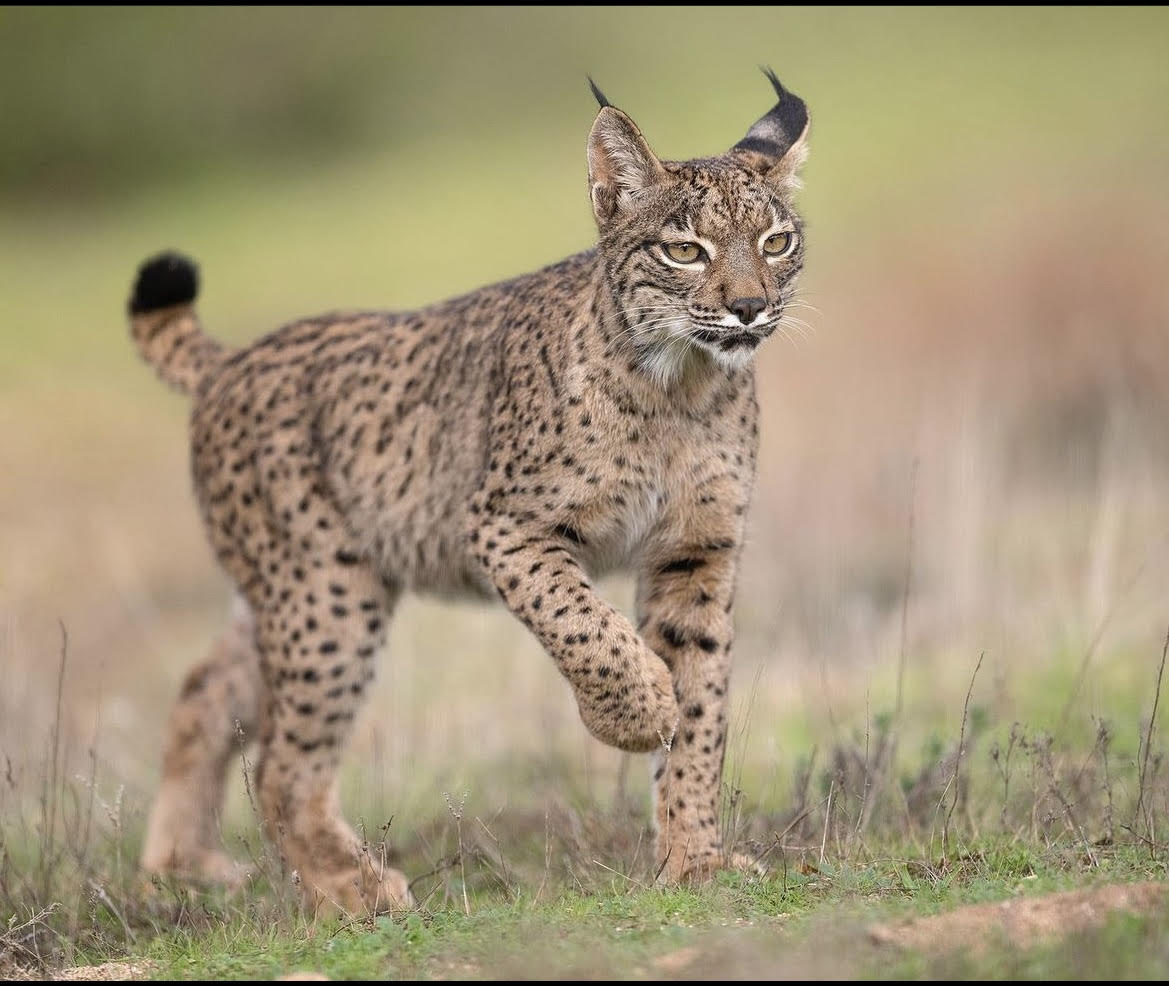
FYI: The breeding season for Iberian lynxes generally occurs during the winter, between the months of January and March. During this period, male lynxes actively seek out females in heat and compete with each other to mate.
#iberianlynx#endangered#lynx#savetheiberianlynx
➡️ Los trabajos de seguimiento de #LinceIbérico 🐱 que realizamos los #AAMM de @gobjccm ya están dando resultados y comenzamos a ver las primeras camadas de esta temporada.
🎥 Aquí tenemos a Proa con sus cachorros en Montes de #Toledo.
👇
Impressive Jumpers! Iberian lynxes are excellent jumpers, capable of leaping distances of up to 3 meters (10 feet) in a single bound. Their agility and leaping ability help them catch their prey.
🔻🔻Watch now!🔻🔻 #IberianLynx
https://t.co/Y4exVKMkoC
Great final day on the 2023 Spanish field trip for @BioSciChester students - visiting part of the #iberianlynx#reintroduction programme. There's a lynx in these photos - I promise!
VIDEO: 🇪🇸 Just 20 years ago, the #IberianLynx was at risk of becoming the first big cat to go extinct since the sabre-tooth tiger. Now their numbers have jumped tenfold, with 1,100 living in the wild at the end of last year in Spain and Portugal #Doñana
📢 Such good news! 💕
"El Acebuche"center in Spain, expands the family with five new Iberian lynx puppies 👏
An emblematic species that, little by little, and with a lot of work, is recovering 💪
#IberianLynx#Recovery#Spain@mitecogob@oapngob
4. '124 species.. particularly vulnerable including the Iberian lynx, brown and black bear, tiger, jaguar, and lion-tailed macaque'
The growth economy has triggered the fastest extinction rates in Earth's history. Roads mean deforestation and pollution.
https://t.co/ul13E0fu5s
It’s hard to tear ourselves from The #Straits but ….
…This picture taken moments after a female Iberian Lynx walked right past us and this sign with guests from @naturetrektours in #Doñana
+ 2 Lesser-spotted Woodpeckers, Eurasian Wryneck, masses of European Bee-eaters & more
The Iberian lynx is found in Mediterranean forests composed of native oaks and maquis thickets.
87% of the Iberian lynxes are in the southwest of the Iberian Peninsula, located in the five nuclei in Andalusia, which is home to 50% of the population of the species in Spain.