Ethereum Fusaka upgrade will go live this week and here is what will change in the upgrade :
1. PeerDAS (Peer Data Availability Sampling) : EIP-7594
so before explaining this, you must need to know about blobs. so think of blobs as temporary storage lockers for L2 networks.
when we use dapps on Arbitrum, Optimism or other Layer 2s, our tx data needs to be posted to Ethereum for security, blobs are special containers designed exactly for this data to store temporarily.
Before Blobs (Pre-Dencun) :
▫️L2 Transaction Data stored in calldata
▫️Cost : $$$$ (Expensive, Stored forever)
▫️L2 fees : $1-10+ per tx during congestion
After Blobs (Post-Dencun) :
▫️L2 Transaction Data stored in BLOBS
▫️Cost: $ (Cheap, Temporary storage)
▫️L2 fees : $0.001-0.10 per tx
So, in DAS, Instead of downloading all blob data to verify it exists, nodes sample small random pieces.
If enough random samples check out, the full data is statistically guaranteed to be available.
-----> Analogy :
Let's say you want to check pizza quality of any shop, here is what happens with and without DAS
Old Way (Download Everything) :
▫️Eat the entire pizza to verify quality
▫️Time : Long
▫️Stomach : Full
▫️Cost : Expensive
New Way (Sampling) :
▫️Take 5 random bites from different slices
▫️If all 5 are good → Pizza is probably good
▫️Time : Quick
▫️Stomach : Room for more
▫️Cost : Cheap
-----> In Blockchan terms :
Before Fusaka :
▫️ Every full node must store all blob data from L2s
▫️ Storage : 100% of blob data
▫️ Bandwidth : high (downloads everything)
After Fusaka :
▫️ Each node stores only 1/8th of the blob data
▫️ Full blob data can be reconstructed from any 50% of the network node
▫️ Bandwidth : ~80% reduction
Impact : 8x theoretical scaling without increasing node requirements
2. Gas Limit Increase to 60 Million : EIP-7935
have u ever noticed that some blocks contain 150 txs , some block contains 400 txs?
this is because of the block gas limit, each block has max cap of gas limit, if there is any txs with less gas limit, then u will see many txs in that block.
on the other hand if there are tx with more gas usage, in that case, you will see less txs in that block.
Before Fusaka :
▫️ Block Capacity : 45 Million Gas
▫️ Transactions : ~1,500 simple transfers
▫️ Congestion : Common during high activity
After Fusaka :
▫️ Block Capacity : 60 Million Gas
▫️ Transactions : ~2,000 simple transfers (+33%)
▫️ Congestion : Reduced
3. Transaction Gas Limit Cap : EIP-7825
Fusaka introduced gas limit cap per tx to prevent DoS attack.
Before Fusaka :
▫️ Single Transaction Could Consume entire Block's 45M Gas, for example this tx : https://t.co/aATMpVE8vL used all the entire block gas and thus there were no other tx in that block : https://t.co/M8fZVLUAva
▫️Risk : DoS attacks possible
After Fusaka :
▫️ Maximum 16.7M Gas Per Transaction (2²⁴)
▫️ DoS protection enabled
▫️ ~3.5+ large transactions per block minimum
4. secp256r1 Curve Support : EIP-7951 (Precompile)
This upgrade also introduce native mobile hardware security.
Before Fusaka :
▫️ Signing method : Only secp256k1 (Bitcoin/Ethereum)
▫️ No native mobile secure enclave
▫️ Hardware wallets need special chips
After Fusaka :
▫️ Signing Methods : secp256k1 (Original) + secp256r1 (New)
▫️ iPhone Secure Enclave supported
▫️ Android Hardware Security Module supported
▫️ FIDO2/WebAuthn compatibility
▫️ Hardware-backed mobile wallets
For more info, you can read this : https://t.co/h0GKgZCT94
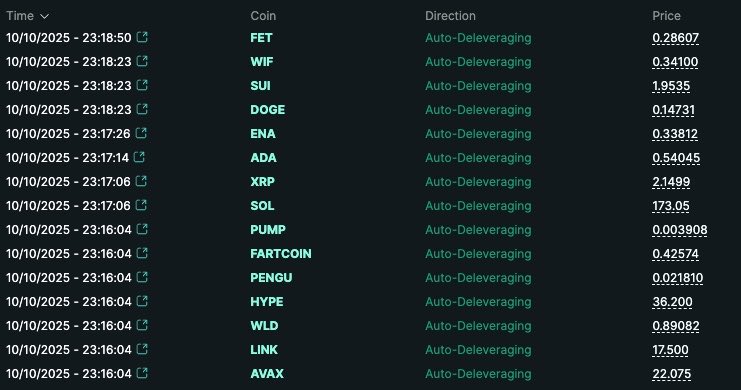
1/ Since a lot of people are waking up to see their perps positions closed and wondering what the hell “Auto-Deleveraging” means, here’s a quick and dirty primer.
What is ADL? How does it work? And why does it exist?
1/ Senate Democrats are trying to kill market structure.
A group just sent a counter-proposal to the RFIA and it is deeply unserious. These Senators claim to be pro-crypto, but what they propose is basically a crypto ban.
It's hard to imagine a good deal happening right now 🧵
Patrick (and by extension, @nic_carter) are correct. Stablecoin issuers will end up paying out all of their yield, one way or another. This will put a lot of pressure on banks that don't. They'll have to pay up.
The fact that banks don't pay competitive interest on deposits was never a pre-ordained optimal design for the economy. It was more of an accident of history, fueled by the lack of better technology and regulatory moats. Today, it's more of a policy decision.
The banking lobby argues this impedes credit creation, but banks are not non-profits. They make money from not paying more on deposits. So bank profits will have to go down.
The world doesn't yet recognize how economically impactful such a change will be. In its most recent earnings, JPM forecast $95 billion in net-interest margin income for the next 12 months. That's more than half of its 2024 revenues.
BoAs NIM is in the $60 billion range, Citi somewhat lower. Not all of it will disappear due to stablecoins, but most might, eventually.
Put together, I'd estimate a quarter trillion dollars that may someday not go to bank shareholders. The world is not ready for the economic impact of this - we are talking some of our largest and most profitable corporations.
More importantly, the quarter trillion that doesn't go to banks will go to corporations and individuals, the depositors. Imagine the economic impact of this - a massive stimulus if there ever was one.
But of course stablecoins aren't just desirable because they'll pay yield, they also offer instant settlement. The eventual disappearance of delayed settlement is another way stables will deprive banks and other payment providers--including Stripe--of income and give it back to customers.
For example, the US Government pays around $1.5 trilloin in social security benefits annually. Most of it goes out via ACH (T+2 business days), some of it via even slower methods like prepaid debit cards and checks.
That's $1.5 trillion dollars, the yield on which does not go to the US government or retirees, for several days a year. We are talking billions in profit for the banking system and card issuers.
Same goes for the even larger amount paid by all corporations in payroll, the lost float on your rent payment, wires that take 3 days to settle, etc etc.
The current architecture of banking and payments is predicated on someone else getting the yield on your money for some period of time, and charging you transaction fees on top of it for the privilege of not getting yield. Many FinTechs offer faster settlement, but for an additional fee.
The payments industry, which includes banks, has over $3 trillion in annual revenues. Thanks to stablecoins, but really public permissionless blockchains, some substantial percentage of that will someday stop going to the payments industry and instead go back to payers and payees.
One of the largest sources of economic rent, eliminated.
The world is not ready for this. But it will be glorious.
Why is the @MoonlingsNFT team ignoring our proposal? It benefits the community and shuts down an inactive project that should have dissolved already.
1. Run a claim period of 3-6 months. People with moonlings can show interest in turning in their NFTs for their share of the 500k community funds.
2. After the claim period the 500k+ is split between all claimants evenly.
3. There is no party or money going to anyone else. Just a clean distro for people still active in the space and everyone is given at least 90 days to claim and possibly longer if @Reef_X_ chooses to do that.
This would be an honorable and just end to the Moonlings. Share this if you think the Moonlings team should not slow rug but returns the community moonbank back to the community.
1/ 10 years ago, Ethereum was born to rewrite the rules of programmable finance.
Today, ahead of Ethereum's anniversary, we’re thrilled to introduce ETHZilla, a NASDAQ-listed treasury vehicle for Ethereum, by Ethereum.
It will commence trading under the ticker $ATNF.
Christopher Nolan explains his mindset before making a film:
“We put a lot into the films. I had lunch with a producer a few years ago, a very successful producer, not somebody I’ve worked with, and he was curious about my process. At some point, I said, ‘Every film I do, I have to believe that I’m making the best film that’s ever been made.’ He was absolutely shocked by this. It just never occurred to him that someone would think like that. And that, to me, was truly shocking, because films are really hard to make. I’m not going to say it’s the hardest job in the world—I’ve never tried coal mining—but they are all-consuming. Your family life, everything goes into it for a couple of years. So it had never occurred to me there were people doing it who weren’t trying to make the best film that ever was. Why would you otherwise? Even if it’s not going to be the best film that’s ever been made, you have to believe that it could be. You just pour yourself into it and when it affects someone that way, that is a huge thrill for me—huge thrill. I feel like I have managed to wrap them up in it the way I try to wrap myself up.”
After significant studying, and in keeping with President Trump’s vision to make the United States the crypto capital of the world, today I ordered the Great Fannie Mae and Freddie Mac to prepare their businesses to count cryptocurrency as an asset for a mortgage.
SO ORDERED
Chairman Paul Atkins' remarks at the Crypto Task Force roundtable on tokenization:
The topic of this afternoon’s discussion is timely as securities are increasingly migrating from traditional (or “off-chain”) databases to blockchain-based (or “on-chain”) ledger systems.
The House just overturned the Biden administration's DeFi broker rule, which would have forced providers of non-custodial software to KYC users.
The vote was 292-131.
The Senate vote last week was 70-27.
94 Congressional Democrats voted yes. The anti-crypto army is defeated 🇺🇸
If you're a little frustrated, I'm more than a little frustrated. OFAC continues to list Tornado Cash on its sanctions list and prevent U.S. persons from using it. That’s even though the Fifth Circuit has clearly held that OFAC did not have the power to impose these sanctions. Here's why: 1/3
Because of the reserves announcement now is the time - a short window of opportunity for everyone who builds large stable DeFi, institutional custody solutions, institutional staking, stablecoins, institutional wallets to present how mature, how secure, and how broadly integrated in global finance Ethereum ecosystem is. I cannot promise it would be delivered by the EF quickly enough, I am not sure if Etherealize is already fully operational to execute this within hours - so please go and do not wait for us. We will look how to improve it with EF but Ethereum is a sum of all great builders and it handles really high institutional stakes.
@Anchorage@aave@21shares_us@BitGo@CoinSharesUS@MorphoLabs@Etherealize_io@EtherFi@LidoFinance@twinstake_io@FigmentCapital@base@arbitrum@Optimism@Starknet@Consensys@zksync@Uniswap@1inch@nethermind (I am writing from memory, please add and highlight more - also let us talk more)
I’m thrilled to announce that I’m joining as a cofounder of @etherealize_io to help onboard the world to Ethereum
I’ll be at the helm of the ship alongside @vivekventures and the incredible team he is building
Great news!
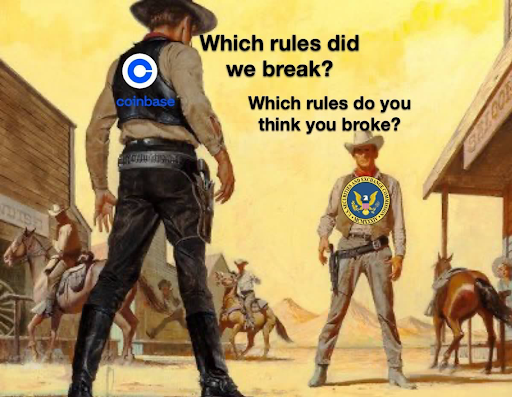
After years of litigation, millions of your taxpayer dollars spent, and irreparable harm done to the country, we reached an agreement with SEC staff to dismiss their litigation against Coinbase. Once approved by the Commission (which we're told to expect next week) this would be a full dismissal, with $0 in fines paid and zero changes to our business.
This is hugely vindicating, especially because many people questioned my decision to engage in litigation with the SEC on this matter in 2023. People told me the courts would give a lot of leeway to the government. They said public market investors wouldn't like it. They said it would take years and cost us tens of millions of dollars in legal fees (which it did). They said the agency would use mafia tactics like trying to pressure other companies not to work with us while the lawsuit was underway (which they did).
But I knew a few truths that helped make it an easy decision to fight them in court:
1. The SEC was wrong on the law.
They were exceeding the authority given to them by congress by asking us to delist a number of assets that were not securities. We had taken a conservative approach to ensure we weren't listing any securities, and the SEC itself had allowed us to go public in 2021 after reviewing our listing standards in depth. We tried to “come in and register” but it turned out it was a fake offer, as every crypto company discovered. Regulators are supposed to enforce the law, but they can't make up new laws on the spot if they don't like the current ones, or weaponize a lack of clarity in the law.
2. Caving to their demands could have killed the crypto industry in America.
The SEC made it clear to us that the only way to avoid litigation was to delist the many assets they falsely claimed were securities. It was a bullying tactic, pure and simple, driven by Gensler's own political agenda. And if we had caved, it would have dramatically limited the scope of which crypto assets were allowed in the US, and pushed the industry further offshore, into the shadows. Never forget how close a few activists in government came to unlawfully killing an entire industry in America! It could have easily gone the other way. Thank goodness the founding fathers created the judicial branch, as a check and balance on executive power.
3. It was the right thing to do for our customers and the industry.
At the end of the day, it didn't matter what our chance of success was. I had to stand up for our customers’ and our industry’s rights. I also knew it would serve as a deterrent for future bad actors around the world we may have to engage with, for them to know that we won't be bullied or pressured. We are comfortable engaging in litigation across multiple fronts, indefinitely, while continuing to build. This is business as usual. As Bain in The Dark Knight says, "you merely adopted the dark; I was born in it".
Growing up I had a naive view that regulators exist to hold companies accountable. What I realized in this ordeal is sometimes, companies must hold regulators accountable who are painting outside the bounds of the law, to preserve freedom. Accountability can actually happen both ways. At Coinbase, our mission is to increase economic freedom, and I initially thought we could achieve this solely through our crypto products. But I'm increasingly realizing that we can move the needle on economic freedom in the courts and through our policy efforts as well, when we see bad actors in government around the world. We plan to do more of this.
I have to give credit here to the Trump administration, for winning the election, and for the departure of the activist head of the SEC, Gary Gensler, who orchestrated this unlawful action along with Elizabeth Warren, and a handful of their lackeys in congress. I feel confident we would have won this case in the courts either way, given our facts were so strong, but it certainly helped accelerate the process and drive accountability. I called out the sketchy behavior of the SEC back in 2021, and I believe this comment turned out to be prescient.
I want to give a shout out to all the other crypto companies who fought back with their own lawsuits (we certainly were not the only ones).
I want to give a shout out to all the crypto startups who couldn't afford the legal fees, and went bankrupt due to the administration's abusive tactics. Your company may have died, but crypto lives on. Don't stop building.
I want to give a shout out to both Democrat and Republican members of congress, who are working hard to ensure America leads on crypto. I know that Gary Gensler and Elizabeth Warren do not represent the entire Democratic party.
And I want to give a shout out to all the crypto holders in the US who elected pro-crypto candidates, on both sides of the aisle, to make sure your rights were preserved. It turns out the crypto voter is real, and showed up in the millions.
Finally, I expect we'll continue working productively with the SEC on any number of items over the years, just as we do with every agency around the world where we operate. I look forward to the SEC being reformed under Paul Atkins, Mark Uyeda, Hester Peirce, and DOGE, and new more sensible personnel coming into leadership roles. I commend the new leadership that is already in place for working to right this wrong - it's a great step in the right direction, and took courage. Now let's get some crypto legislation passed in the US to finally clarify the rules, and really kick off this next phase of building.