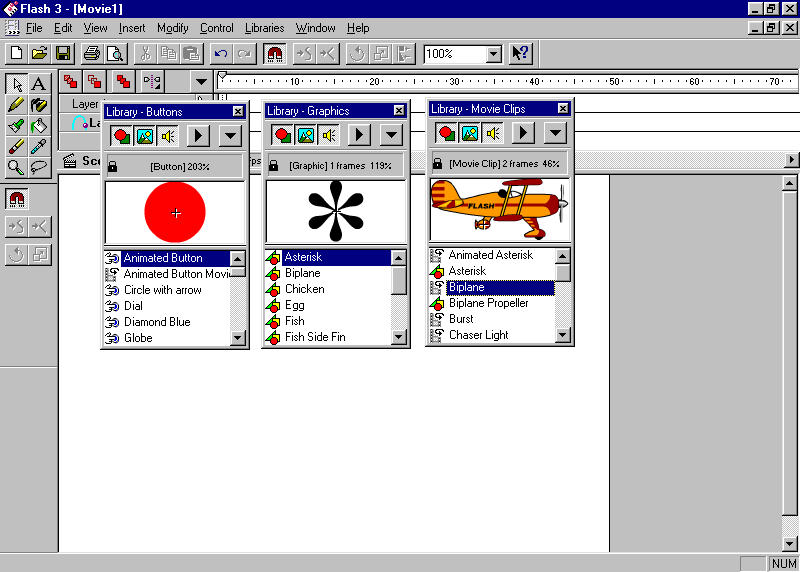
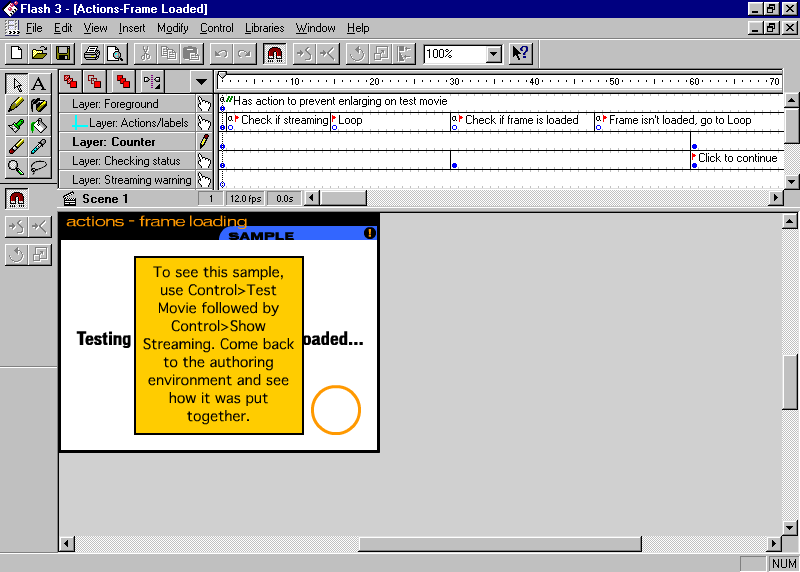
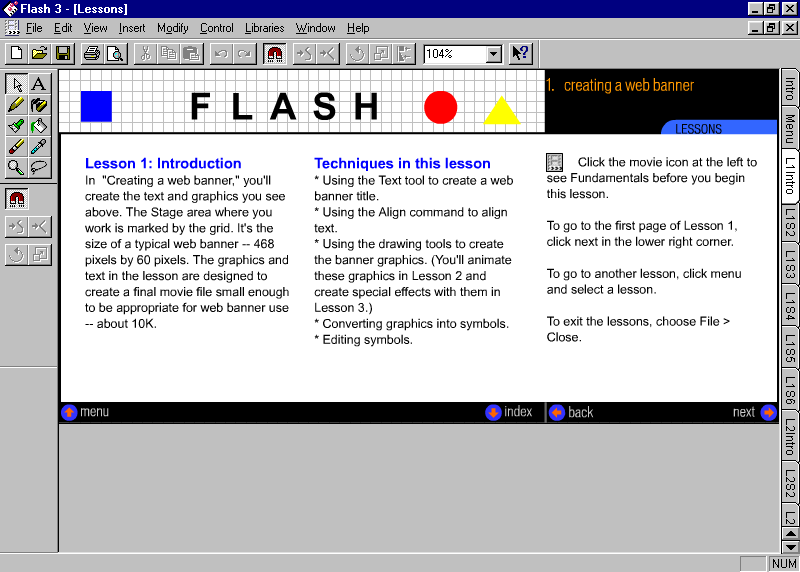
In May 1998, Macromedia released a vector graphics editor for creating interactive Macromedia Flash 3.0 web animations.
Flash 3.0 included new features such as vector & bitmap transparency, shape morphing, sprite animation
#WebDesignHistory
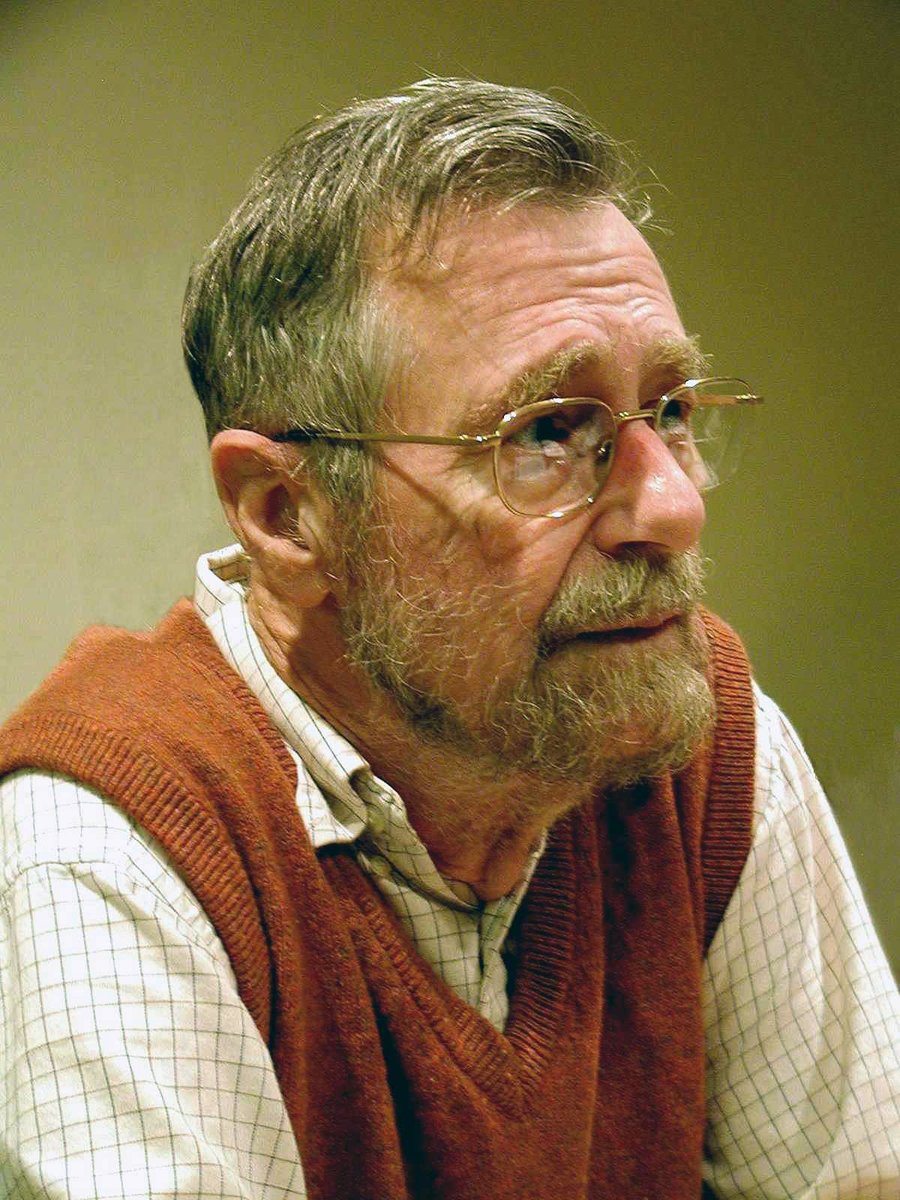
On this May 11, we honor the birth of Edsger Wybe Dijkstra (1930–2002), the Dutch mathematician whose crystalline intellect reshaped the very soul of computing.
Born in Rotterdam, he began in theoretical physics and mathematics before forging a new path where elegance became doctrine. In 1956 he gave the world his shortest-path algorithm; still the quiet heartbeat of every GPS, network router, and logistics system on Earth.
With his 1968 letter “Go To Statement Considered Harmful,” he ignited the structured-programming revolution, insisting that clarity and simplicity are moral imperatives in code. Dijkstra taught us that true mastery is invisible: programs should read like poetry, not puzzles.
His quiet, relentless pursuit of beauty in complexity continues to inspire every developer who chooses discipline over cleverness. Today we remember a mind that proved mathematics is not merely useful; it is noble. Happy Birthday, Professor.
I want to get back into publishing writing. I’ve accumulated tons of notes and thoughts. What’s a good platform these days? Is it Substack?
(will self host as well. Already have that in the pipeline :)
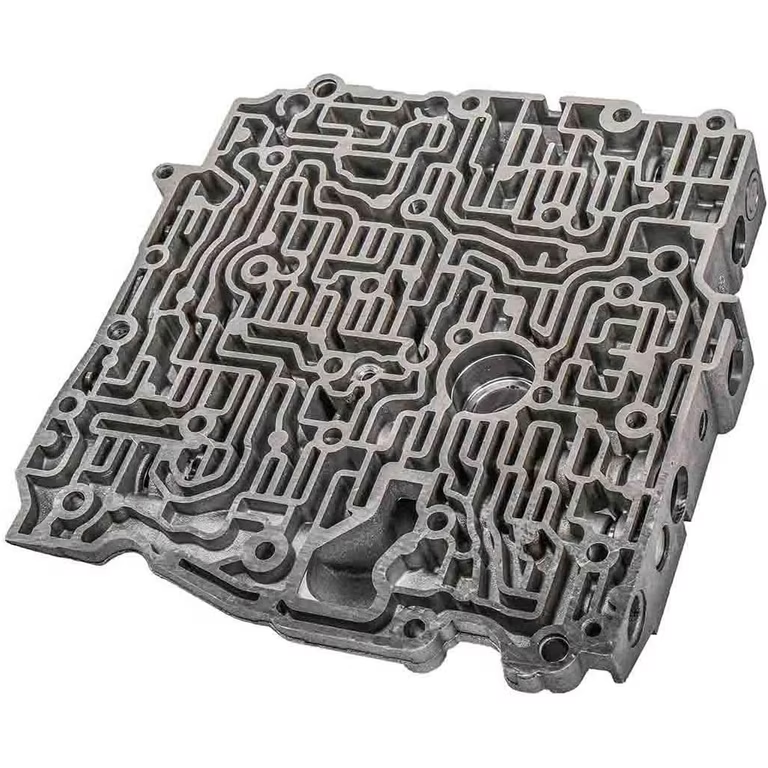
This a computer, and you likely own one. It's a hydraulic analog computer.
It’s essentially a machined analog computer that computes with fluid instead of electronics: pump pressure is routed through passages that act like wires, while spool valves, springs, orifices, and check balls perform the equivalents of comparators, logic gates, delays, and one-way elements.
What it “calculates” is the machine’s current operating state, whether conditions have crossed a threshold to justify changing state, how strongly to apply each output, and how quickly to make that transition without instability or shock.
It does this by continuously balancing forces—pressure on different valve areas against spring preload and feedback pressure—so each valve shifts only when one hydraulic condition outweighs another, while restrictions and chambers add timing and smoothing.
In plain English, it is a real-time fluidic state machine that solves “if this pressure is greater than that one, route flow here; otherwise hold, delay, soften, or override” entirely through geometry and oil.
They're used in every car with an automatic transmission, where it makes choices like what gear to be in and how hard to apply clutches, etc....
And some dude worked it all out on paper back in the 1960s.
In 1948, a 32-year-old at Bell Labs published a paper nobody fully understood.
Engineers found it too mathematical. Mathematicians found it too engineering-focused. One prominent mathematician reviewed it negatively.
That paper - "A Mathematical Theory of Communication", became the founding document of the digital age.
The man was Claude Shannon. Father of Information Theory.
At 21, he wrote the most important master's thesis of the 20th century.
Working at MIT on an early mechanical computer, Shannon noticed its relay switches had exactly two states - open or closed. He had just taken a philosophy course introducing Boolean algebra, which also operated on two values: true and false.
Nobody had ever connected these two things.
His 1937 thesis proved that Boolean algebra and electrical circuits are mathematically identical, and that any logical operation could be built from simple switches.
Howard Gardner called it "possibly the most important, and also the most famous, master's thesis of the century."
Every digital computer ever built traces back to this insight.
At 29, he proved that perfect encryption exists.
During WWII, Shannon worked on classified cryptography at Bell Labs. His work contributed to SIGSALY, the secure voice system used for confidential communications between Roosevelt and Churchill.
In a classified 1945 memorandum, he mathematically proved the one-time pad provides perfect secrecy, unbreakable not just computationally, but provably, permanently, against an adversary with infinite power.
When declassified in 1949, it transformed cryptography from an art into a science. It laid the foundations for DES, AES, and every modern encryption standard.
At 32, he defined what information is.
His 1948 paper introduced one equation:
H = −Σ p(x) log p(x)
Shannon entropy. The average uncertainty in a probability distribution. The minimum bits required to encode a message.
Three things followed:
> He defined the bit - the fundamental unit of all information. His colleague John Tukey coined the name.
> He proved the channel capacity theorem, every communication channel has a maximum rate of reliable transmission. You can approach it. You can never exceed it.
> He unified telegraph, telephone, and radio into a single mathematical framework for the first time.
Robert Lucky of Bell Labs called it the greatest work "in the annals of technological thought."
Where his equation lives in AI today:
Cross-entropy loss - the function training every classifier and language model, is derived directly from H. Decision tree splits use information gain, which is H applied to data. Perplexity, the standard LLM evaluation metric, is an exponentiation of cross-entropy.
Every time a neural network trains, Shannon's formula runs inside it.
He also built the first AI learning device.
In 1950, Shannon built Theseus, a mechanical mouse that navigated a maze through trial and error, learned the correct path, and repeated it perfectly. Mazin Gilbert of Bell Labs said: "Theseus inspired the whole field of AI."
That same year he published the first paper on programming a computer to play chess. He co-organized the 1956 Dartmouth Workshop, the founding event of AI as a field.
The man:
He rode a unicycle through Bell Labs hallways while juggling. He built a flame-throwing trumpet, a rocket-powered Frisbee, and Styrofoam shoes to walk on the lake behind his house.
He called his home Entropy House.
When asked what motivated him: "I was motivated by curiosity. Never by the desire for financial gain. I just wondered how things were put together."
In 1985, he appeared unexpectedly at a conference in Brighton. The crowd mobbed him for autographs. Persuaded to speak at the banquet, he talked briefly, then pulled three balls from his pockets and juggled instead.
One engineer said: "It was as if Newton had showed up at a physics conference."
He died in 2001 after a decade with Alzheimer's, the cruel irony of information slowly leaving the mind of the man who defined what information was.
Claude, the AI model, is named after Claude Shannon, the mathematician who laid the foundation for the digital world we rely on today.
Obsidian has three engineers. Three. The app has been downloaded 5 million times, 1.5 million people open it every month, and three people build the whole thing. They make $25 million a year. They never took a dollar from any investor.
I ran the math on this and it broke my brain a little. Each person on the team (about 9 total, including non-engineering staff) brings in roughly $2.8 million a year. The typical software company generates about $130,000 per employee, according to SaaS Capital’s 2025 industry report. Obsidian runs at 21 times that number.
Now put Notion next to it. Notion is the other big name in note-taking apps. They make somewhere between $400 and $600 million a year, which sounds massive. But they also have over 1,000 employees and raised around $350 million from venture capitalists (investors who fund startups in exchange for a chunk of ownership). That works out to about $500,000 per person. Obsidian generates five times that, with no outside investors and no board telling them what to build.
The reason is almost stupidly simple. Obsidian saves your notes as regular files on your own phone or computer, not on some company server. So when another million people download the app, Obsidian’s costs barely change. Notion stores everything on their servers, which means every new user costs them more money to support.
Obsidian charges for two optional extras: Sync ($4 to $5 a month to keep your notes updated across your phone and laptop) and Publish ($8 to $10 a month to turn your notes into a website). Everything else is free.
Over 2,000 independent developers volunteer their time building add-ons for Obsidian. Task trackers, flashcard tools, calendar views, habit logs, all free. A normal company would hire hundreds of engineers for that. Obsidian’s three engineers keep the core alive while thousands of volunteers handle everything else.
Two University of Waterloo grads, Shida Li and Erica Xu, started this as a side project during COVID lockdowns in 2020. They were running a small outlining app called Dynalist at the time. Six years later they own 100% of a company worth an estimated $350 million.
Hiring engineer number four is a 33% increase in building power for a team that already out-earns companies 100 times its size.
(3/3) (για εντολές 03–06.04) και στις 14.04 (για εντολές 10–13.04). Ωστόσο, μπορείτε να πραγματοποιείτε κανονικά μεταφορές μεταξύ λογαριασμών Alpha Bank, καθώς και άμεσες διατραπεζικές μεταφορές.
(2/3) συναλλαγών, εξαιτίας της μειωμένης λειτουργίας των τραπεζικών και διατραπεζικών συστημάτων. Συγκεκριμένα, κατά τις ημερομηνίες αυτές δεν θα είναι δυνατές οι μεταφορές προς λογαριασμούς άλλων τραπεζών στην Ελλάδα ή στο εξωτερικό. Οι συναλλαγές αυτές θα εκτελεστούν στις 07.04
Το ελληνικό τραπεζικό σύστημα εν έτει 2026:
(1/3) Θα θέλαμε να σας ενημερώσουμε ότι, λόγω των ειδικών τραπεζικών αργιών του Καθολικού Πάσχα (03.04.2026 – 06.04.2026) και του Ορθόδοξου Πάσχα (10.04.2026 – 13.04.2026), ενδέχεται να υπάρξουν περιορισμοί στην εκτέλεση ορισμένων
Nancy Pelosi: “I think Hillary Clinton was the most qualified person of that generation. More qualified than her husband, more qualified than George W. Bush, more qualified than Barack Obama. Certainly more qualified than the creature that is there now”
1/4 Want to build a computer inside a transformer?
Given the wide interest in our project, we are releasing the code and the weights so that others can build on our construction.
I ACCIDENTALLY OPENED MY CTO'S PERSONAL NOTION WORKSPACE AND NOW I UNDERSTAND WHY HE SHIPS 5X FASTER THAN THE REST OF US.
He is 48. I am 26. He manages 3 products and never works past 5 PM.
I work 10 hours a day and barely clear my Jira board.
In his workspace, one specific document explained everything:
Most people panic when the workload scales. They work longer hours, burn out, and eventually drop the ball. High performers do not manage time. They manage boundaries.
The document was a list of strict operating rules. Here are 18 systems you can steal.
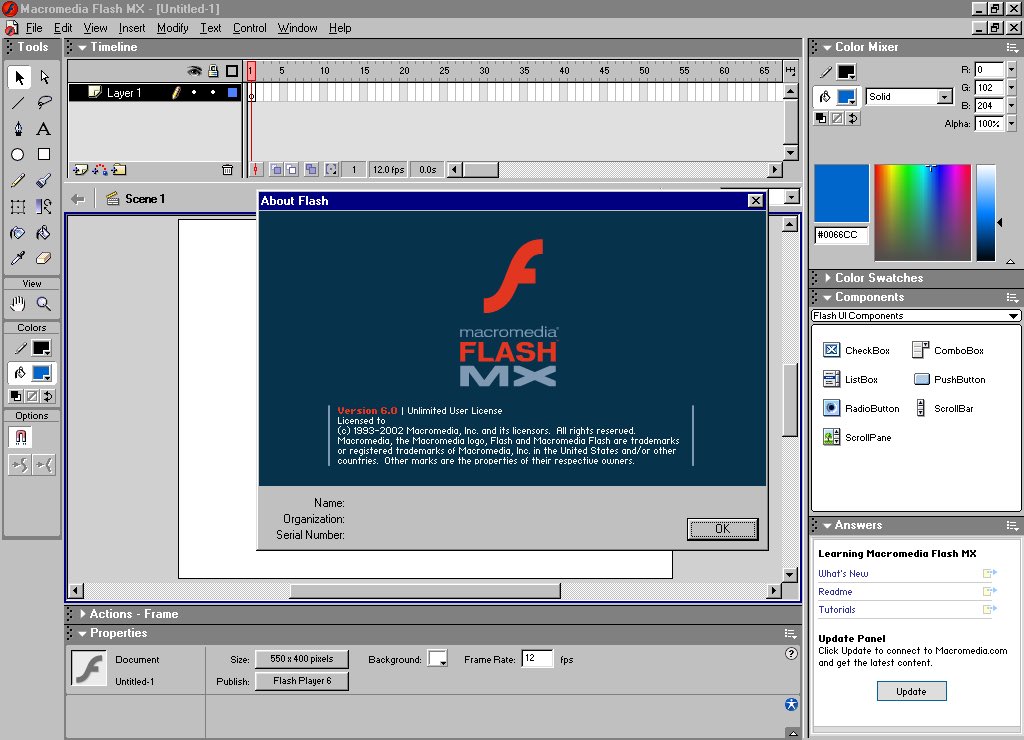
OTD 24 y.a. the web became a better place. Creativity was unleased. Macromedia released the Flash MX and the Flash Player 6.
Still remember the heartbeat of that splash screen
“Timing is very important. You need to pick hard problems to solve and be ambitious with them. But you've also got to pick the right time when the world and the context that you're in is the right kind of environment for those ideas to flourish.”
In his official Nobel Prize interview, Demis Hassabis discussed how his aspirations as a young gaming programmer were ahead of their time.
Watch our official interview: https://t.co/2ovRqsSAtc