Delighted to be a part of this work
Multipronged Protein Engagement by a Ruthenium(II) Sunitinib Hydrazide Complex Elicits ROS‐Independent Immunogenic Cell Death - Ghosh - Angewandte Chemie - Wiley Online Library https://t.co/sS9x3NmjBW
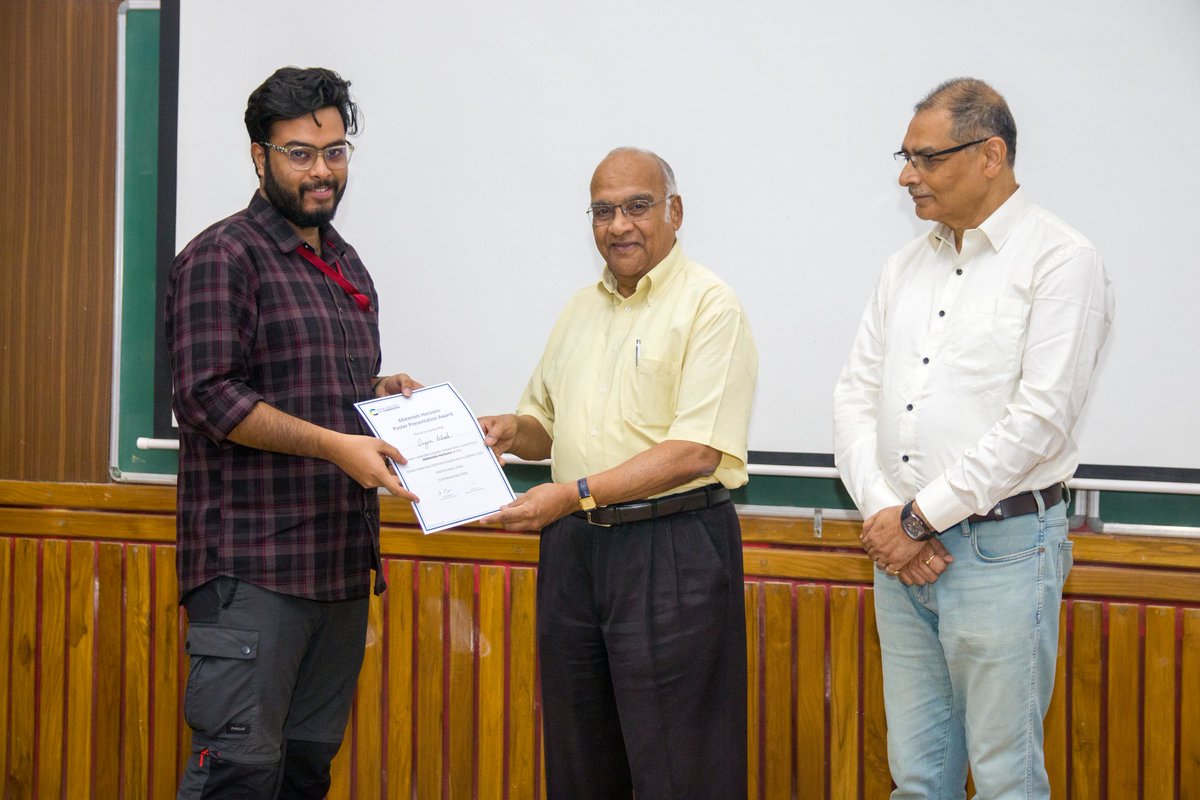
I attended the SMMA 2025 conference at IISER Kolkata, where I had the chance to present my work alongside experts from smart materials and various other fields. I’m grateful and delighted to have received the Best Poster Award from the Royal Society of Chemistry
BREAKING NEWS
The 2025 #NobelPrize in Physiology or Medicine has been awarded to Mary E. Brunkow, Fred Ramsdell and Shimon Sakaguchi “for their discoveries concerning peripheral immune tolerance.”
Delighted to attend The 15th Bangalore Microscopy Course,an incredible dive into optics and microscopy. Deeply grateful to the organizers who worked tirelessly to create such a focused and inspiring learning environment. Huge thanks to NCBS for hosting and making it so inspiring!
Delighted to share this work showcasing a unique biochemical approach for determining kinetic parameters of novel inhibitors.
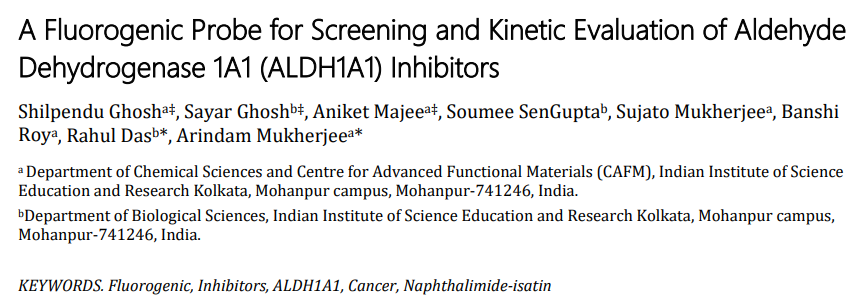
A Fluorogenic Probe for Screening Aldehyde Dehydrogenase 1A1 (ALDH1A1) Inhibitors - now published in Chemical Communications https://t.co/VpAYytwWhD
This is one of the most thought-provoking cell division papers! Brilliant!
Interphase cell morphology defines the mode, symmetry, and outcome of mitosis @ScienceMagazine
https://t.co/qxaEPfLAAD
How do cells clean up misfolded proteins when they divide?
This study finds that the cleanup crew includes the ER chaperone BiP and the proteasome, and kicks in right as cells finish dividing. Surprisingly, one major cell cycle regulator isn’t involved.
https://t.co/cabMJXGUNO
This is wild!
Engineering E. coli bacteria to turn plastic waste into paracetamol (Tylenol)
@NatureChemistry
https://t.co/5YuLVEbvOA
https://t.co/nWapY9N1VH
Did Helicobacter pylori just break the amyloid code? Meet CagA which is nature’s unexpected anti-amyloid weapon! As a neurologist, I never thought I'd say this: a stomach bug may possibly hold a secret about modulating amyloid diseases like Alzheimer's. Zin and colleagues just published a stunning paper in Science Advances (2025) showing that H. pylori’s CagA protein powerfully blocked amyloid formation. From α-synuclein to tau to amyloid-β this bacterial protein acted like a microscopic molecular cop, keeping toxic clumps in check. Could gut bugs someday treat brain bugs? The science is real, and it's fascinating.
Key Points:
- The broad-spectrum inhibitor: CagA from H. pylori inhibited both functional (bacterial) and pathogenic (human) amyloids including α-synuclein, Aβ42, tau, and IAPP. These were inhibited at nanomolar potency.
- There was a distinct mechanism. CagA targeted specific stages of fibril formation. It was elongation for α-syn, and it was primary nucleation for Aβ. This activity did not to occur via classical chaperone activity.
- The gut-brain implications included CagA-positive H. pylori possibly altering gut microbiota and affecting neurodegenerative risk. The changes could be either pathogenic or protective, depending on strain and context.
My take: There were 5 points that resonated w/ me about the H. Pylori story.
1- Not all bacteria are villains. Some, like H. pylori, may even hold keys to future brain disease treatments.
2- A single bacterial protein (CagA) could stop the formation of toxic amyloid clumps seen in Alzheimer’s. COOL!
3- The gut and the brain are more connected than we ever imagined. Gut infections might influence brain health.
4- This discovery may open the doors to new therapies that don’t just remove amyloid, but also block its formation at the source.
5- We are just scratching the surface in thinking about turning a bacterial defense mechanism into a safe, scalable human therapy; though realistically this could take years.
So I ask you, could a stomach bacterium protect the brain?
https://t.co/f228cJoPiY #Parkinsons #Alzheimers #GutBrain #HelycobacterPylori #Amyloid #Neurodegeneration @ParkinsonDotOrg@alzassociation@FixelInstitute
Harnessing light to disarm TNBC—Limantrafin‐BODIPY Conjugates Reduce Stemness and Metastatic Potential via Superoxide Driven Phototherapy in Triple Negative Breast Cancer - Small - Wiley Online Library https://t.co/UR1m8jnRNE
Our latest findings are now available as a preprint! Excited to share our work "A Fluorogenic Probe for Screening and Kinetic Evaluation of Aldehyde Dehydrogenase 1A1 (ALDH1A1) Inhibitors" with the community. | ChemRxiv - https://t.co/mkYS1ZGVf1
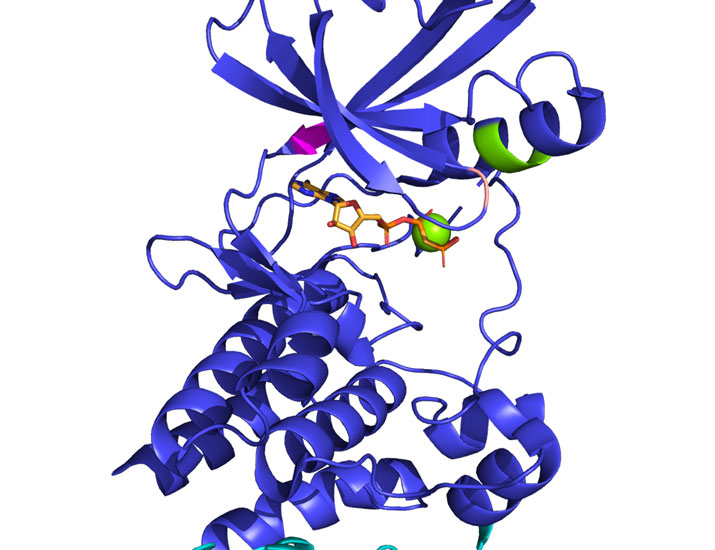
A new resource presents an atlas of bacterial #SerineThreonineKinase sequences to inform drug development and kinase research and categorizes the kinases into families based on sequence and structural characteristics. @universityofga@kannanlab https://t.co/8UNWWdbCh7
Pyruvate kinase M2 activation reprograms mitochondria in CD8 T cells, enhancing effector functions and efficacy of anti-PD1 therapy https://t.co/Ih9Rmz8sUi
Publication alert!
Thrilled to share the latest publication in @CommsBio from our lab, where @RupamPa96165633 has explored the alteration in the Copper Homeostasis Pathway during Host- Leishmania Interaction.
To know more, check it out below.
https://t.co/O8PPyd6bBZ
@iiserkol
Thrilled to share our latest preprint highlighting IP6 Dependent activation of Bruton's Tyrosine Kinase E41K mutant in solution,Which could give rise to an alternative B-cell signaling pathway.
@SubhankarC20@KaustavGanguly1
@SwarnenduRoy10 @_SazAbad
https://t.co/jX4hRMYWi5