Everyone is talking about RWAs, but almost no one is talking about where autonomous AI agents will actually park institutional liquidity.
$IXS is solving the biggest blind spot in the space with Real Yield Vaults launching this quarter.
Read the thread. This is how you front-run a narrative. 👑
This is WILD!
MIT just solved one of the hardest unsolved problems in robotics (Save this).
For decades, the fundamental problem with soft robots and wearable exoskeletons has not been compute or AI, it has been actuation.
The moment you try to give a soft robot meaningful strength, you run into the same wall every engineer has hit since the field began, fluid-driven systems require external pumps, hydraulic reservoirs, and heavy infrastructure that makes the entire thing impractical to wear or embed into fabric.
MIT's new Electrofluidic Fiber Muscles solve that problem by eliminating external infrastructure entirely.
The key insight is electrohydrodynamic pumping using electric fields to generate pressure directly from electricity, with no moving parts, no motors, and no external fluid reservoir.
The fibers are less than 2 millimeters thick, can be woven into fabric like ordinary textile, and operate in complete silence because nothing physically moves inside them, it is just ions propelling fluid through a closed circuit.
The performance numbers published in Science Robotics are not conceptual, they are empirical results from actual hardware.
These fibers achieve a power density of 50 watts per kilogram, matching skeletal muscle, with a contraction strain of 20% and a response time of 0.3 seconds.
A single bundled configuration lifted 4 kilograms, 200 times its own weight while a separate configuration drove a robotic arm through a 40-degree bend compliant enough to safely complete a human handshake.
Another configuration launched objects in under 100 milliseconds, which is faster than a human flinch reflex.
The design mirrors biological muscle architecture in a way that prior artificial muscle approaches never achieved.
The fibers are organized into antagonistic pairs, one contracts while the other extends, exactly like biceps and triceps and because the system runs in a closed loop, the relaxing fiber serves as the fluid reservoir for the contracting one, which is what allows the whole system to operate untethered with no external tank.
The applications are not hypothetical but rather are the exact use cases the industry has been waiting years for the hardware to catch up to.
Exoskeletons for physical labor, prosthetic limbs that move with the natural compliance of biological tissue, assistive garments for patients with motor disorders, and soft robots capable of safe physical contact with humans are all immediately unlocked by a muscle technology that is silent, lightweight, and weavable into clothing.
The deeper significance is what this technology does when it meets the AI robotics wave that is already underway.
Every major humanoid robot program, Figure, 1X, Boston Dynamics, Tesla Optimus is currently bottlenecked by the same hardware limitations these fibers address, actuators that are too rigid, too loud, too heavy, or too dependent on infrastructure to operate naturally alongside humans.
Electrofluidic fiber muscles do not just solve a materials science problem but rather they remove one of the last physical barriers between robots that live in labs and robots that live in the world.
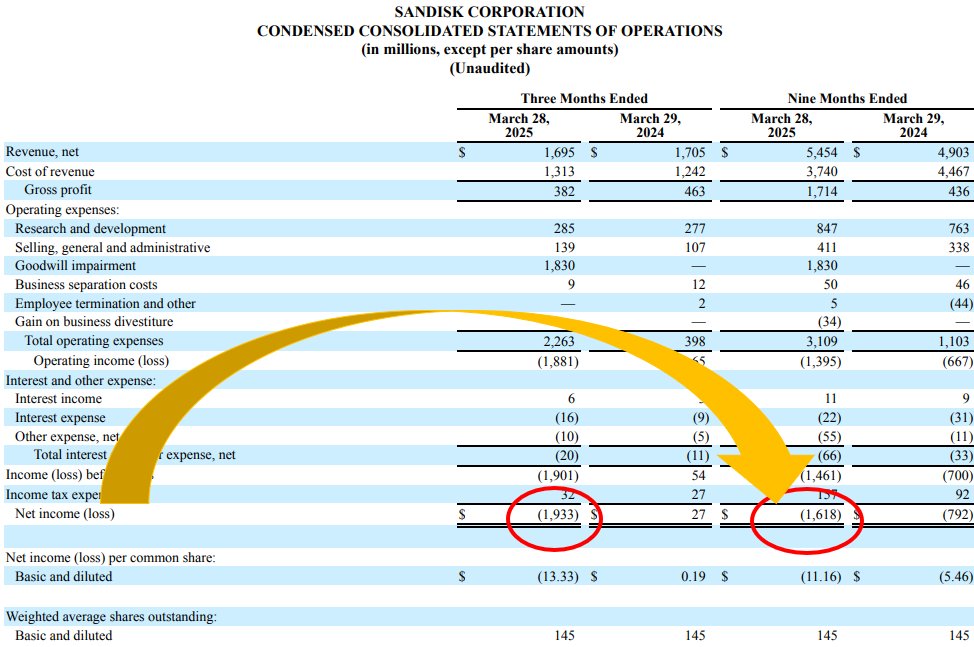
1 year ago, SNDK was under $30, its up 5200% at $1560.
SNDK lost $2 billion every quarter, but GOOG AMZN needs their chips.
Right now, there's 7 companies under $30 exactly like SNDK:
1. $POET — $11.19 🎯 PT: $80
Optical interconnects that replace copper inside AI data centers.
Customers: Lite-On, $SMTC, NTT now targeting Marvell's ecosystem
Catalyst: Malaysia plant ramping 30,000+ Infinity optical engines in 2026
2. $NOK — $12.82 🎯 PT: $15
5G + optical networking backbone for every hyperscaler buildout.
Customers: Amazon, Google, Microsoft €1B in orders from them in Q1 alone
Catalyst: Raised optical network growth outlook to 18–20% on exploding AI demand
3. $EOSE — $8.70 🎯 PT: $30
American-made zinc batteries powering the grid AI data centers drain.
Customers: Utilities, IPPs, CAISO & ERCOT grid operators
Catalyst: $303.5M DOE loan finalized — funds 8 GWh annual production by 2027
4. $DGXX — $6.45 🎯 PT: $30
Building GPU data centers to rent compute directly to AI companies.
Customers: Cerebras Systems (AI chip maker)
Catalyst: $1.1B, 10-year colocation deal signed $2.5B potential with expansion
5. $LWLG — $16.41 PT: $120
Electro-optic polymers that make AI fiber speeds physically possible.
Customers: Tower Semiconductor, GlobalFoundries, 4 Fortune 500 companies in Stage 3
Catalyst: PDK 1.1 ready for high-volume foundry transfer tape-outs begin H2 2026
6. FLNC — $24.50 🎯 PT: $28
Battery storage that keeps AI data centers powered without grid failure.
Customers: Two major hyperscalers (MSAs just signed), utilities globally
Catalyst: Record $5.6B backlog + first hyperscaler order converting Q3 2026
7. $PLAB — $49.50 🎯 PT: $55
Photomasks for every advanced AI chip no mask, no chip, period.
Customers: $TSM, $INTC, Samsung, UMC the entire chip foundry food chain
Catalyst: Record high-end IC revenue driven by AI chip packaging and advanced logic nodes
Remember, these have 1000%–2000% potential like $SNDK. My favorite is POET, but I like PLAB too since it makes photomasks which is needed in every chip on earth.
♻️ RESHARE this post and share 1 comment, and I'll DM you my BUY ZONES for each of these.
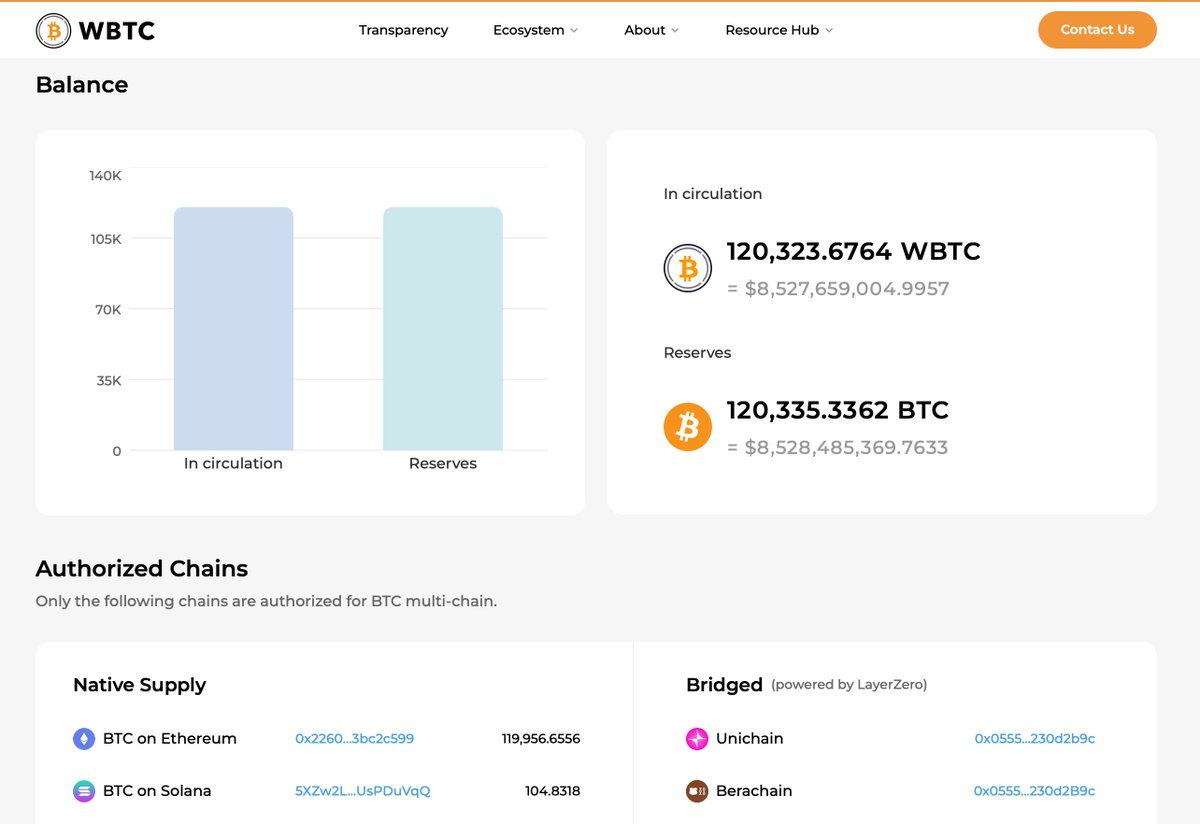
Roughly $4.1T of value now exists onchain globally.
And we’re about to introduce AI agents as economic participants.
Agents that can trade, allocate capital, and execute 24/7.
Feels like we’re still very early.
Within 24 months, AI agents will manage more than 50% of the TVL in RWA protocols.
The Agentic Economy is the new institutional standard.
The math is simply too efficient to ignore.
$IXS 🤖💰
It’s happening.
Introducing ForbesWeb3 by Forbes, an experience and community hub curated for the Web3 entrepreneurs, creators, and changemakers of the world.
100+ years of legacy. Bullish on Web3. 👇
I will be greatly humbled by any help provided. You do not need to live in Santa Barbara to support the petition. You can read more history here: https://t.co/RiwsSfooyF Petition link here: https://t.co/zahtm0rcQL
SB is attempting to demolish a vital piece of aviation history at our airport. The 100 yr old hangers in question were first an Army Airforce training facility followed by an airplane factory run by the great men and women of the General Western Aero Corp.
Help us protect our beautiful national parks for generations to come. For every retweet of this post Winnebago will donate $1 to the National Park Foundation. Plus, #SupportYourParks for your chance to win. Learn more here: https://t.co/5JLAwLPkHh