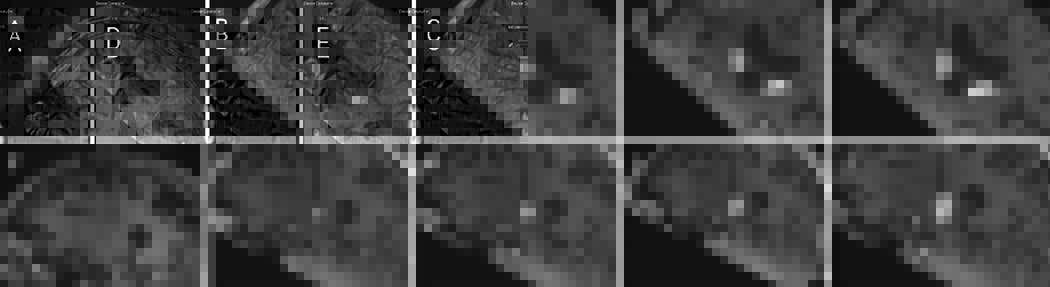
Real-time MR-guided intrathalamic convective delivery for gene therapy for frontal temporal dementia (@AviadoBio) reveals predictable scaling, high containment and lack of leak back. These features establish the thalamus as an excellent convective delivery conduit for gene therapy.
https://t.co/eBZxeV79ZA
#neurosurgery #FTD #GeneTherapy #Neuroscience #CED
@TheJNS@AANSNeuro@NeurosurgeryOSU@OSUGeneTherapy@OhioStateMed@OSUWexMed
Every machine in a Hospital that diagnoses your body without cutting you open is based on a principle of Physics, discovered by a Physicist who had no interest in Medicine.
If you think the world doesn’t need Basic Science, or that somehow Science has failed you, think again.
A pill that costs pennies can restore movement — yet millions still can’t access it.
New op-ed by Okun & Dorsey in STAT News.
Click the link to read more: https://t.co/C6yNv7N9Zb
#Parkinsons#Levodopa#GlobalHealth
A miracle pill for Parkinson's is 50 years old. Why can't most of the world get it? Ray and I wrote a new Op-Ed in StatNews that appeared today. Spoiler alert: we need a Parkinson's Plan https://t.co/e9eKnkGsxz to make levodopa available for all.
Subscribe to our new substack column here:
https://t.co/Eotre0LxeS
Link to https://t.co/mQNMQieLXA Op-Ed out that dropped this morning:
https://t.co/qxcFyGBzCr @ParkinsonDotOrg@FixelInstitute@PdAvengers
By popular demand — the next edition of our hands-on @Stanford@BrOrganogenesis course is coming in 2026!
This year, the focus turns to neural #assembloids, reflecting the growing movement toward modeling circuit-level and complex cell-cell interactions in brain disease.
The course remains free (including lodging) and is taught by my lab for a full week.
We look forward to welcoming another cohort of 20 participants from all over the world selected from hundreds of applications each year.
Organized by an amazing trio of scientists: @RebeccaJLevyMD, Sabina Kanton, and Merve Avar.
Supported by @BrOrganogenesis, @StanfordBrain, @StanfordBioX, and @NIH_NINDS.
🧠 Deadline: mid-December
By popular demand — the next edition of our hands-on @Stanford@BrOrganogenesis course is coming in 2026!
This year, the focus turns to neural #assembloids, reflecting the growing movement toward modeling circuit-level and complex cell-cell interactions in brain disease.
The course remains free (including lodging) and is taught by my lab for a full week.
We look forward to welcoming another cohort of 20 participants from all over the world selected from hundreds of applications each year.
Organized by an amazing trio of scientists: @RebeccaJLevyMD, Sabina Kanton, and Merve Avar.
Supported by @BrOrganogenesis, @StanfordBrain, @StanfordBioX, and @NIH_NINDS.
🧠 Deadline: mid-December
Here’s a nice analysis of 2.5M children about Tylenol and autism. The study found a small association between tylenol use in pregnancy and autism, but the association went away in sibling analysis. In sibling analysis you compare children born to the same mother where one child was exposed to Tylenol but not the other. This is a better comparison because genetics are similar between siblings whereas they differ greatly in non siblings from different families. Bottom line: no increased risk of autism with tylenol use in a huge population analysis. https://t.co/JyodtiSwWC
We don’t yet know what motivated the person who shot and killed Charlie Kirk, but this kind of despicable violence has no place in our democracy. Michelle and I will be praying for Charlie’s family tonight, especially his wife Erika and their two young children.
🚨NEW RELEASE🚨
🔍Daily neurology connections, anyone?
https://t.co/FhAKrxbFVm has launched with a free, fun micro-learning puzzle game every day! Still the initial release so let me know if you spot any bugs.🐛
Play and learn here: https://t.co/Y1qqtd1cSW
#Neurology#MedEd
People out there really think doctors don't want to "cure" you of disease because then we'll run out of patients. Buddy, there will always be people with disease. Every physician on earth could cure 40 people per day, every day, for 100 years, and guess what? There will still be 40 new people with disease for us to cure the next day.
Myorhythmia is a slow, rhythmic movement disorder characterized by repetitive, jerky or undulating movements. Countdown to the MDS Aspen course continues as we approach the July 27th start. The movement typically occurs at 1–4 Hz. It often affects the face, jaw, tongue or limbs and can resemble slow tremor or chewing-like motions. In simple terms, myorhythmia looks like slow, rhythmic muscle twitches or movements that may come and go, frequently affecting the face or arms and it can be confused w/ other movement challenges like tremors or tics. The differential diagnosis of myorhythmia includes a range of neurological and systemic conditions. Common causes include brainstem strokes, autoimmune or paraneoplastic encephalitis (especially cases of anti-NMDA or anti-GAD), Whipple’s disease (a rare infection involving the GI tract and brain), multiple sclerosis, neurosyphilis, Wilson’s disease, CNS lymphoma, and metabolic or toxic encephalopathies. It may also occur in the setting of Creutzfeldt–Jakob disease or after brain infections like viral encephalitis. Mimics of myorhythmia include palatal tremor, tardive dyskinesia, segmental myoclonus, parkinsonian tremor and dystonic tremor. Distinguishing between these entities relies on clinical context, imaging (particularly MRI of the brainstem), EEG and in some cases, CSF or antibody testing. This case was associated w/ Anti-IgLON5 Disease. @movedisorder@FixelInstitute@AANmember
If you see a wing beating tremor, is it always Wilson's disease? The 2025 Aspen course countdown continues. Wing-beating tremor is one of those fascinating neurological signs that points us directly toward a specific shortlist of conditions. Most notably is of course Wilson’s disease, a disorder of copper metabolism that we can’t afford to miss, especially in younger individuals. This tremor is typically proximal, low-frequency, and appears when the arms are held outstretched with elbows flexed. It resembles flapping wings. While Wilson’s disease is the classic cause and should always be at the top of our differential, we must also consider other conditions that affect the thalamus, midbrain and cerebellar outflow pathways. Lesions involving the red nucleus, such as those from strokes, tumors or even demyelination in multiple sclerosis can produce a 'rubral tremor' that may mimic this wing-beating. Holmes tremor, which combines resting, postural and kinetic elements may overlap w/ wing-beating features, particularly when there’s delayed onset after a brainstem insult. Less common conditions like hepatic encephalopathy, metabolic disorders or even essential tremor with proximal involvement might cloud the picture. The key in these cases is a careful history, neuroimaging and appropriate labs. Ceruloplasmin can fool you, so remember to obtain a 24-hour urinary copper level. Keep in mind that we have accurate genetic testing too, as we don’t want to miss a treatable and potentially reversible cause like Wilson’s disease. No need for a liver biopsy if you have genetics. Bonus points: Aceruloplasminemia is a rare inherited disorder of iron metabolism caused by mutations in the ceruloplasmin gene that lead to a complete absence or dysfunction of the ceruloplasmin protein. The protein is a ferroxidase that is essential for iron export from cells. Without functional ceruloplasmin iron becomes trapped in tissues and especially the brain, liver, pancreas and retina leading to progressive iron accumulation and to multi-organ damage. See you in Aspen on July 27th, and if you miss us follow our updates.
Nice recent review of Wilson's, and YES the video is of a person w/ Wilson's disease.
https://t.co/DpFU4ByGKn @movedisorder@FixelInstitute
Countdown to the MDS Aspen Movement Disorders Course has begun, and we will tease you with cool cases each day until the July 27th launch. Today: Adult-onset opsoclonus-myoclonus which is rare, striking and always demands a thorough workup. This chaotic eye movement and body jerking combination can be the tip of a neurologic iceberg. The differential diagnosis includes paraneoplastic syndromes and think about lung, breast, ovarian cancers and don't forget anti-Ri or anti-Hu antibodies. Always think about neuroblastoma. Also keep in mind autoimmune encephalitis (NMDA receptor, GAD65), post-infectious causes (especially West Nile or Epstein-Barr), toxic-metabolic syndromes, and even neurodegenerative or prion-related processes. And yes, functional can mimic the real deal. Early diagnosis usually leads to better outcomes. See you July 27th-August 1st and if you can't attend in person, follow us for updates during all 5 days of the meeting.
https://t.co/J6R5K82Avt
#NeurologyPearl #OpsoclonusMyoclonus #MovementDisorders #NeuroTwitter
Classic Video from Archives of Neurology 2012. @movedisorder@ParkinsonDotOrg@FixelInstitute
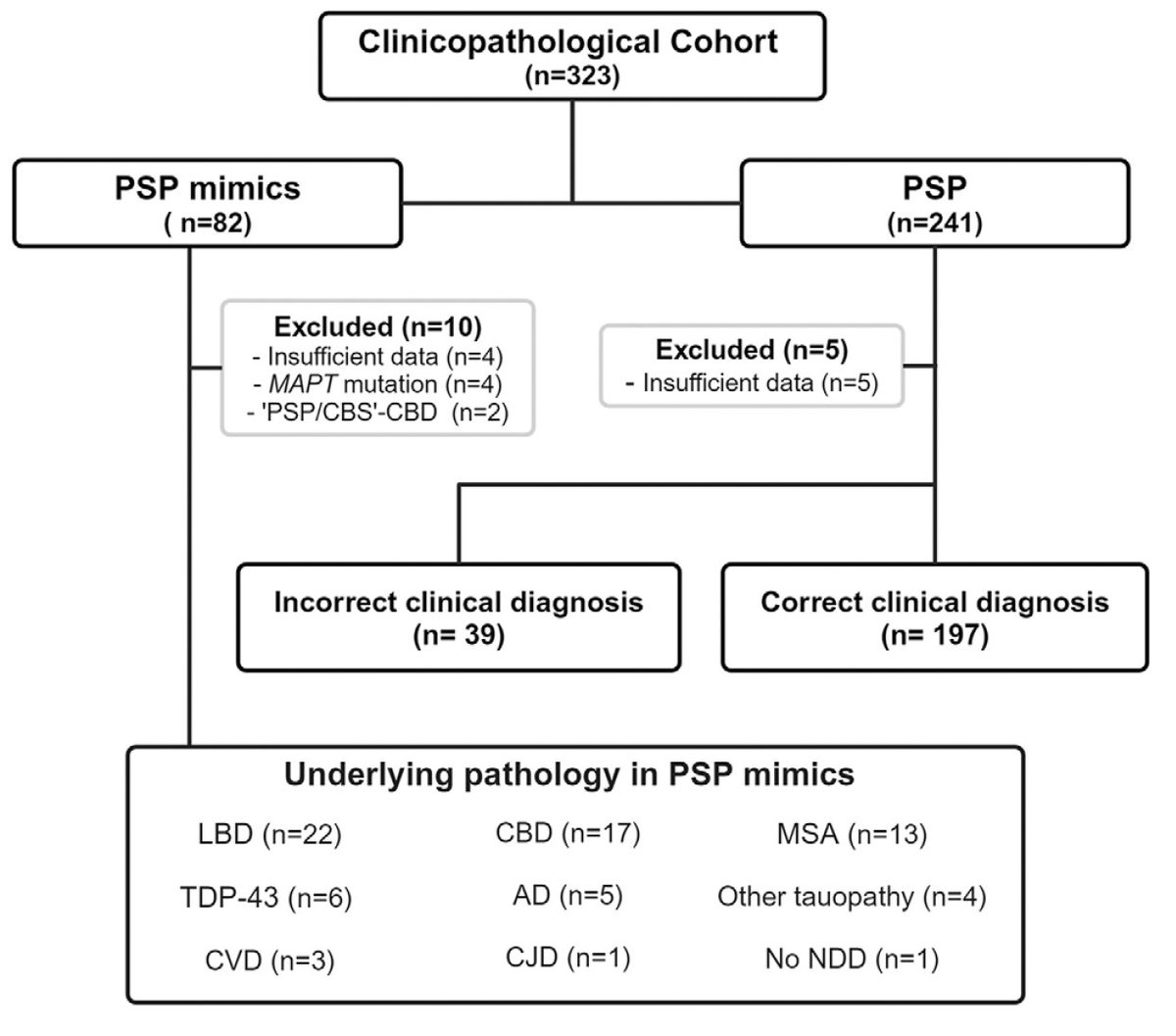
Wrigley et al. report clinicopathologic insights into PSP and its
mimics: 83.5% (197/241) of autopsy-confirmed PSP cases had the correct clinical diagnosis. Most common mimics? Lewy body diseases, CBD, and MSA. https://t.co/vmPn6hLoOP