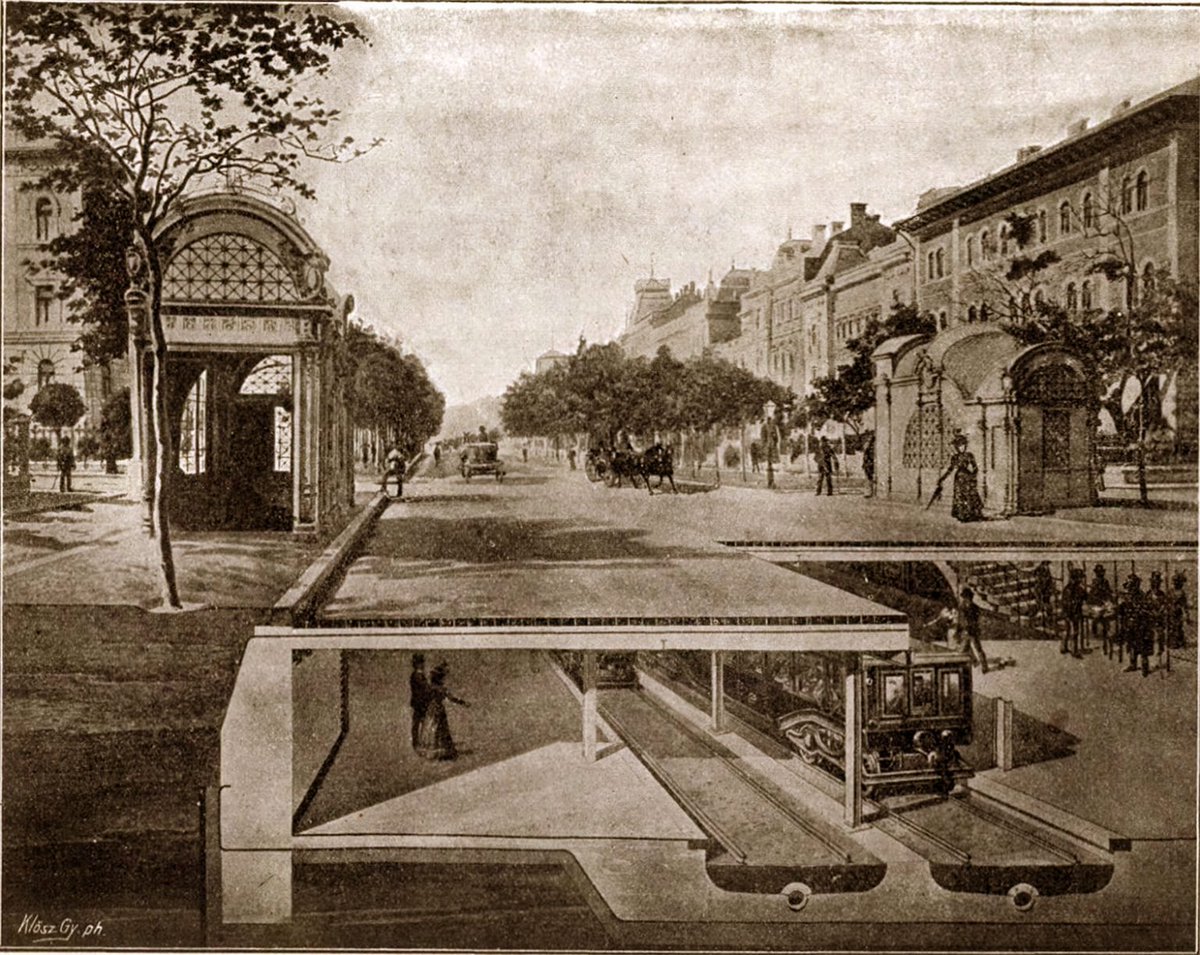
One hundred and twenty-five years ago, on May 2, 1896, the world’s first electrically powered underground railway was inaugurated in Budapest. It was the first underground railway in continental Europe
Kedves új magyar követőim!
Egy japán vagyok, aki Japánban végzett magyar szakon és magyar‑rajongó.
Szeretnék ajánlani egy helyet: a Tokió szívében lévő @BarPalinka‑t, ahol a japán pálinka lovagrend kiváló pálinkákat és koktélokat kínál.
Ha Japánba jöttök, nézzétek meg!
Pleased to announce that Dave McClintock and I have displayed and navigated a whole slide image on the Las Vegas Sphere — 580,000 sq ft of H&E at 256 megapixels. Press release follows. 1/
#digitalpathology#PathTwitter@dpatweet@SphereVegas
With CosMx® SMI, whole-transcriptome spatial biology at true single-cell and subcellular resolution is already possible. Explore this Minerva story featuring one of the first transcriptome-scale spatial imaging of a breast tumor spanning 610,000 cells. 👉 https://t.co/ijMEHU7y5U
Please see our new textbook on itch. This promises to be "The Bible" of itch biology. It is such a unique honor to publish this with Xinzhong Dong who discovered Mrgprs. He is both a scientific legend, but also an amazing drug hunter, and GREAT friend.
https://t.co/R4sxVEVJmM
Excited to share our new work on building a multimodal atlas of human skin in health and inflammatory disease — a project I’m especially proud of, bringing together AI, high-throughput genomics, and clinical science to accelerate discovery.
Over the past decade, single-cell genomics has transformed how we map cells in human tissues. But a major challenge remains: can we systematically decode how cells organize into functional niches in situ — including those invisible to standard histopathology?
To address this, we integrated large-scale scRNA-seq, spatial transcriptomics, histopathology, and AI-driven modeling frameworks to build an in situ atlas of human skin across health and disease.
Led by Lloyd Steele, an MD/PhD student working between @HaniffaLab and my lab at @sangerinstitute and @Cambridge_Uni . Another amazing collaboration with Muzz Haniffa, the mastermind behind the work as part of @humancellatlas.
A key part of this study is that we didn’t build everything from scratch — we leveraged and combined AI methods that actually work! and showed how they can be used together to extract biological insight at scale.
We used:
• scArches to build and map into a reference scRNA-seq atlas of human skin: https://t.co/c5TgcG7PU4
• NicheCompass to identify and characterize spatial niches: https://t.co/c5TgcG7PU4
• MINT-Flow to extract microenvironment-induced cell states and gene programs: https://t.co/sfE47AnF3c
Together, these enabled an end-to-end workflow from atlas construction to spatial mapping, niche discovery, and cell state decoding.
At scale, we integrated ~5 million cells and 100+ spatial sections, enabling a systematic view of tissue organization. Using this framework, we identified 26 niches in skin, including known histopathologic structures as well as hidden disease-associated niches not visible on H&E.
Among the most striking findings were a resident memory T cell-rich sebaceous gland niche and a plasma cell-rich sweat gland niche, suggesting that appendageal structures act as active immunological microenvironments and may contribute to inflammatory memory and disease persistence.
Importantly, this atlas is not just descriptive — it is usable. It can support mapping of new datasets, resolve finer cell types and niches, extract microenvironment-driven programs, and enable predictive analyses at scale.
More broadly, this work shows what becomes possible when AI, spatial genomics, and atlas-scale data are integrated end-to-end: not just mapping tissues, but systematically decoding them.
This was a massive collaboration, and I’m very grateful to the amazing scientists April Foster, Kenny Roberts, and Chloe Admane.
Lloyd is an amazing scientist, and I’m especially excited for the community to see more of his work soon — stay tuned.
The data and pre-trained models will be released soon.
Preprint: https://t.co/LeWxOKkgMt
Many congratulations to Lee P. Richman @MGBpathology for presenting our project on epithelioid MPNST, a rare #Sarcoma subtype, this week @TheUSCAP annual meeting! So excited to see the corresponding paper published online - thank you @ModernPathology!
https://t.co/OoOWQ3K03X
This paper is highly complementary to Fang Wang’s recent paper in @ImmunityCP. However, basophils are much more potent effectors than eosinophils as far as we have seen so far. https://t.co/25Xk17OArQ
How specific are therapeutic monoclonal antibodies, really?
In our new paper, @Yile_Dai led a collaboration with Adimab to profile 174 FDA-approved and clinical-stage mAbs against 6,172 human extracellular proteins.
What we found surprised us.🧵
https://t.co/ONTSF60B2g
There is a relatively unknown, but very beautiful attraction in the Romanian industrial town of Turda - it's the old salt mine of Salina Turda, whose interior views are stunningly impressive.
https://t.co/D0tzh6NNyz
🇯🇵 A brainless blob reproduced the Tokyo rail network in 26 hours. It was not trying to solve a transport problem. It was trying to eat oat flakes.
Physarum polycephalum is, to be generous, a blob. Pale, damp, the size of a thumbnail, it has no brain, no nervous system, and no cells that could reasonably be accused of thinking. Scientists had studied it for years without feeling particularly threatened by it.
Then someone put it in a maze.
Within hours, Physarum had found the shortest route between entrance and exit. Not by wandering randomly. Not by luck. By something that had no name, because everyone had assumed it required a brain. This was interesting enough. What happened next was embarrassing.
In 2010, a researcher named Toshiyuki Nakagaki and his team placed a piece of slime mold at the centre of a damp map of greater Tokyo. Around it, at the locations of 36 surrounding cities, they put small piles of oat flakes. Then they left the room.
The organism did what it always does. It explored. Thin tendrils pushed outward in every direction, feeling for food. When a tendril found an oat flake, that connection strengthened. When a path led nowhere useful, it was quietly dismantled. The slime mold was not planning. It was simply following local chemistry, the same way it had been doing for 500 million years.
After 26 hours, the exploration was over. What remained was a sparse, elegant network of tubes connecting all 36 cities to each other. Not a tangle. Not a web covering everything. A clean, efficient system with strong main corridors between the busiest points and lighter connections branching where they were needed.
The team held it up next to the actual Tokyo rail map. The corridors matched. The branch lines matched. Even the redundant connections, the backup routes engineers had added so the system could survive a single failure, appeared in nearly the same places. The slime mold had not just found the cities. It had independently arrived at the same logic that Japanese railway engineers had spent decades refining. By some measures, its network was more robust than the one humans had built.
There is no headquarters inside Physarum, no moment where anyone decides anything. The intelligence, if that is even the right word, lives entirely in one simple rule repeated across millions of connections: strengthen what works, abandon what doesn��t. That rule, applied blindly and without awareness, produces something that looks unnervingly like wisdom.
The slime mold was not trying to redesign the Tokyo rail network. It was trying to eat breakfast. It just turns out that the most efficient way to eat breakfast, when your breakfast is scattered across a map of greater Tokyo, looks a great deal like good urban planning 😅
Gandalv / @Microinteracti1
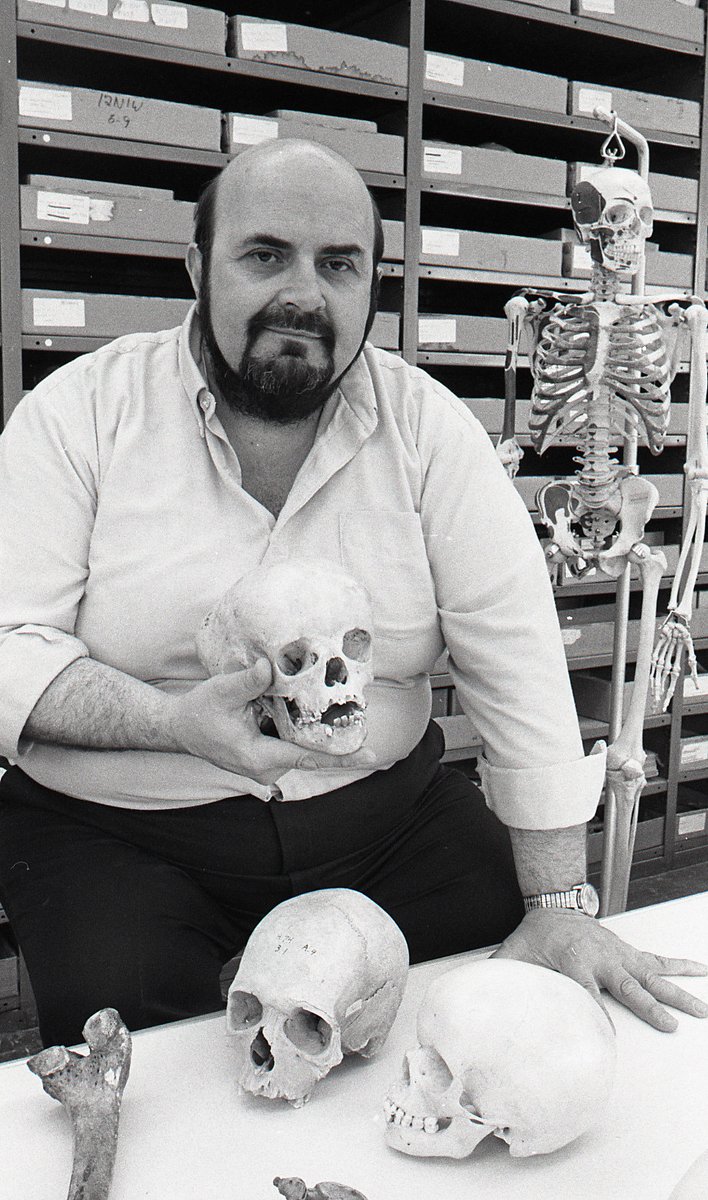
In 1980, a bioarchaeologist at Emory University named George Armelagos was studying ancient human bones from Sudanese Nubia, the kingdom that flourished along the Nile south of Egypt between roughly 350-550 CE, when something stopped him. Under ultraviolet light, the bones glowed.
They fluoresced with a distinctive yellow-green color that Armelagos recognized immediately, because the same glow appeared in the bones of modern patients who had been treated with tetracycline.
The antibiotic binds tightly to calcium and phosphorus in bone tissue as the body metabolizes it, leaving a permanent fluorescent marker. What Armelagos was seeing in bones nearly two thousand years old was chemically identical to what he saw in twentieth-century medical subjects.
The archaeological community was skeptical. The received history of antibiotics began with Alexander Fleming’s discovery of penicillin in 1928, and tetracycline itself was not isolated until 1948. The idea that a pre-literate population in the Nile valley had been routinely ingesting it seemed implausible, and the initial findings were dismissed as post-mortem contamination from soil bacteria.
Armelagos spent three more decades building the case. He eventually partnered with Mark Nelson, a leading tetracycline specialist at Paratek Pharmaceuticals, who agreed to perform a definitive chemical analysis.
The process required dissolving the ancient bones in hydrogen fluoride, one of the most corrosive and dangerous acids in existence. What the resulting liquid-chromatography mass-spectrometry analysis found was not a trace of tetracycline.
The bones were saturated with it. Multiple tetracycline variants were identified, including chlortetracycline and oxytetracycline, in concentrations indicating sustained exposure beginning in early childhood and continuing throughout life.
Ninety percent of the Nubian individuals tested showed the labeling. The exposure had not been accidental or occasional. It had been lifelong and deliberate.
The source was their beer.
Ancient Egyptian and Nubian brewing began with grain, typically emmer wheat or barley, which in that region was naturally contaminated with Streptomyces, a soil bacterium that produces tetracycline as a metabolic byproduct.
The grain was germinated, made into bread, then incompletely baked to preserve an active center, and finally fermented in vats of water. The standard practice was to seed each new batch with ten percent of the previous one, which kept the Streptomyces culture alive and active from batch to batch in a continuous chain.
The resulting brew was thick, sour, low in alcohol, and highly nutritious. Everyone drank it, including children as young as two years old.
The critical question Armelagos could not fully resolve was whether the Nubians understood what they were doing. The consensus among researchers is that they almost certainly did not know the mechanism.
They had no concept of bacteria, no understanding of antibiotics as a drug class, and no language for what tetracycline was doing in their bodies.
What they likely did know, accumulated through generations of observation and passed down as practical knowledge, was that this particular preparation of beer had medicinal effects.
Ancient Egyptian and Jordanian medical texts record beer being used to treat gum disease, wounds, and other infections.
The brewing method that produced tetracycline appears to have been deliberately maintained and refined over centuries, not by any understanding of the chemistry involved, but by the accumulated recognition that it worked.
#archaeohistories