Thank you to everyone who has followed and supported Judy throughout her lifetime of advocacy. May her memory be for a blessing.
https://t.co/BzQSXux9bj
@CityLab@yating_liu ‘s title is Director not “czar”. I look forward to media outlets - especially those focused on urban and civic issues - moving away from describing important public servants in terms of Russian monarchs.
@davidgissen Experimental film folks use the old-school Frameworks listserv as •the• central place for sharing info, Q’s, etc. It’s here: https://t.co/cSGGBSbXLT
In his approach to disability and urban design “Gissen . . . focuses on variety and customizability, rather than efforts to please everyone all at once with one generic paradigm”
Designer, historian, and Parsons professor @davidgissen imagines an urban environment that would do more than grudgingly accommodate people who can’t see or walk or hear, or who have cognitive impairments. @JDavidsonNYC writes https://t.co/M6xzT2qjwY
"How we currently design our cities & towns to prioritize private cars over people reduces our mobility options + creates problems for the planet’s climate, societal equity & household budgets" @benjiedlp @SharedUseCenter
Let's build cities for people!🙌
https://t.co/OuO0edZaHK
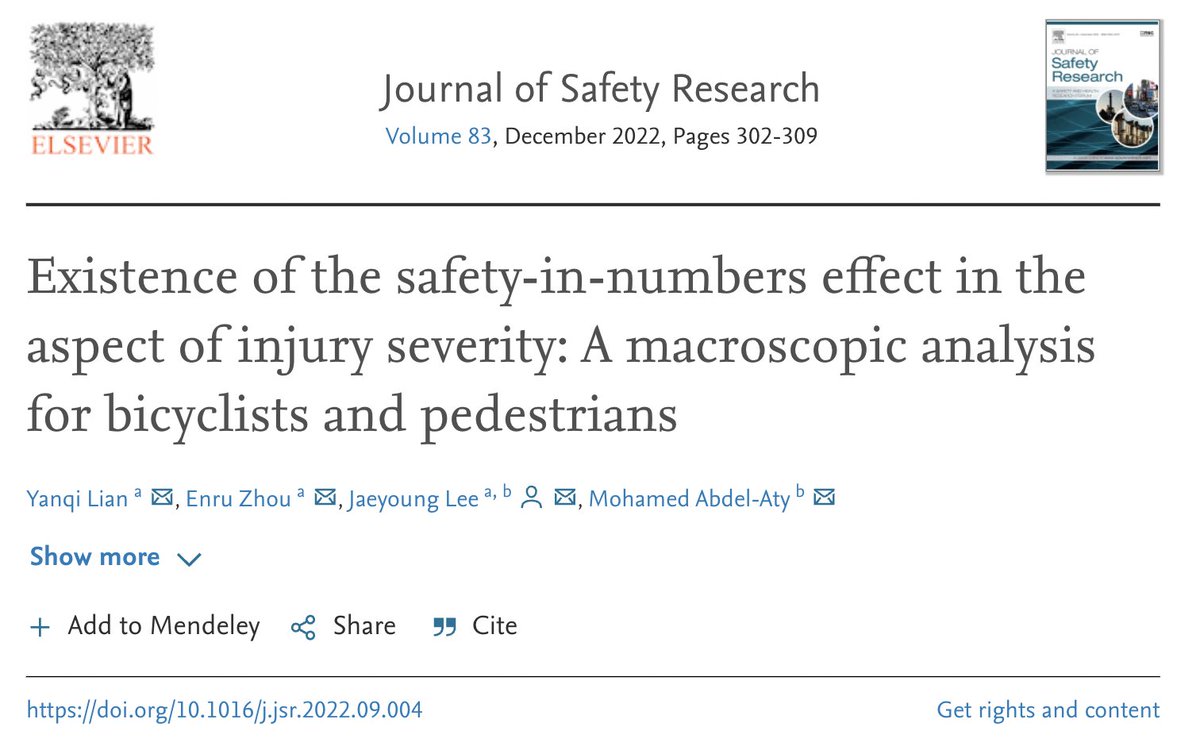
“a phenomenon wherein the number of bicyclists/pedestrians on a road is higher, and consequently, the risk of each bicyclist/pedestrian being involved in a crash is lower”
Is there "safety-in-numbers" for those cycling and walking?
Researchers: "Results clearly revealed a lower proportion of severe injuries caused to bicyclists/pedestrians at a higher level of daily bicycle/pedestrian flows."
In other words: YES
https://t.co/KcyIExFFmK
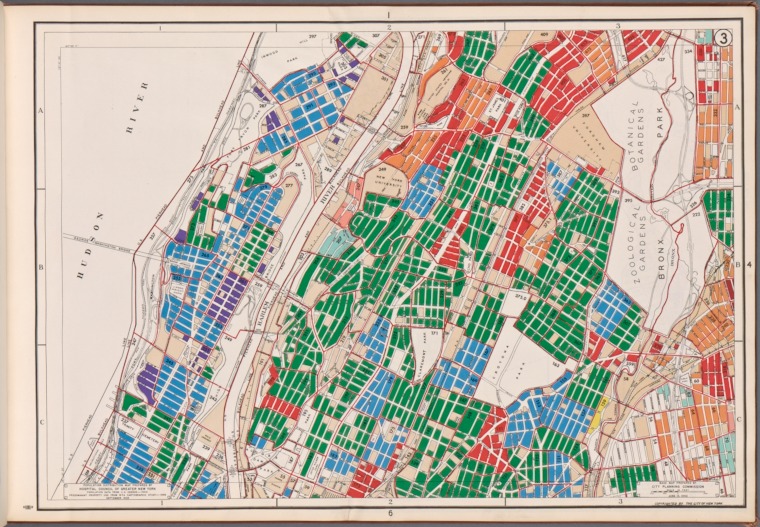
You may be aware of the "redlined" district maps of 1934-40, but perhaps not of their deep and lasting ill effects on NYC's five boroughs. Join us Jan 18 to hear from April De Simone of @designingthewe & @trahanarch as she kicks off a series on the topic: https://t.co/8m4r1vAhzL
“commoning mobilities can enact new ways of being in the world, becoming a method for moving toward mobility justice, environmental justice, racial justice, climate justice, and social justice.”
New publication: The Communes and Other Mobile Commons, Open Access Special Issue of Praktyka Teoretyczna, with my article "Mobile Commoning: Reclaiming Indigenous, Caribbean, Maroon, and Migrant Commons” https://t.co/ncBfaRRYFe
Check out this article co-authored with 12 faculty about how to Advance Racial Justice Research in Architecture, Urban Planning, and Allied Fields. It is a primer on some of the issues we need to address in academia. @MITdusp@MITarchitecture
https://t.co/7jUMT4vE4w
Our blueprint for keeping communities safe requires policy that:
✅ Is evidence-based.
✅ Utilizes a public health approach to safety.
✅ Includes proven alternatives to a police-first approach to public safety.
Learn more about #KeepingCommunitiesSafe. ➡️ https://t.co/J33wN0JTC6
Most building industry professionals are aware of the "redlined" district maps of 1934-40, but few understand how deep and lasting their many ill effects are. Join us Jan 18 for an intro lecture, then for a series of 5 participatory roundtable discussions: https://t.co/8m4r1vzJKd
.@AIA_NewYork has worked with an interdisciplinary task force including @Stantec to outline the impacts of urban freight on NYC and offer equitable solutions to counter the burdens imposed on communities by the movement of goods. Read the report: https://t.co/v5C0GAt29U