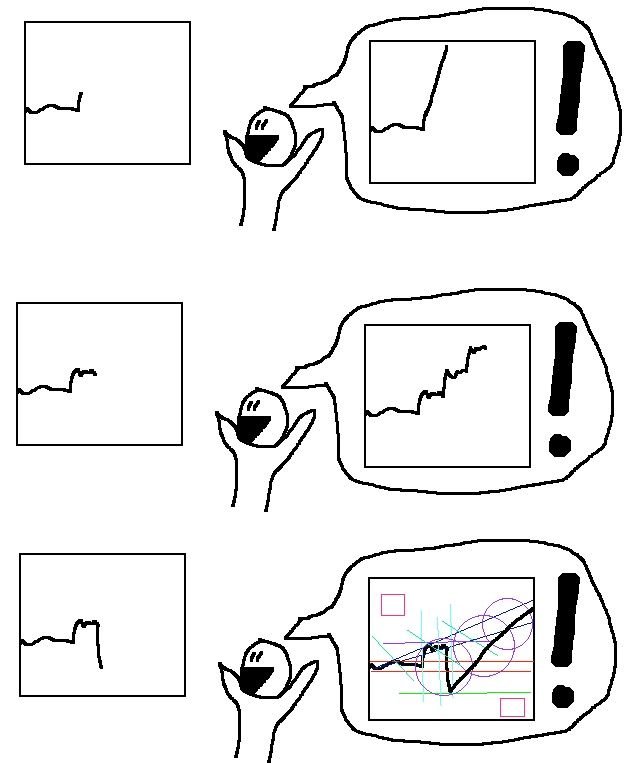
Schrödinger’s Macro Lens #1 is live
Gold glittered, but I saw Katzengold 🐱✨
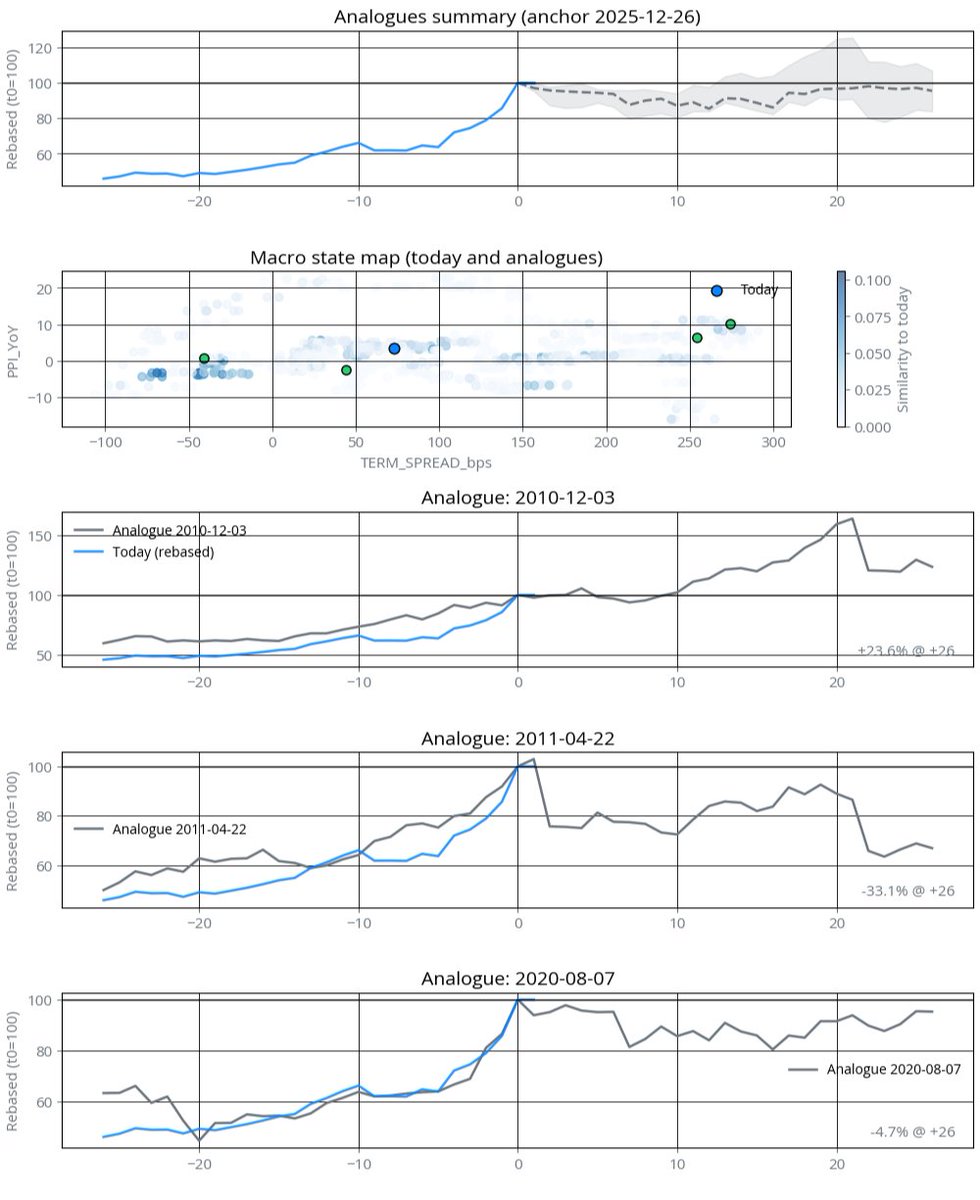
Top 4w pick (+4.4%, 76% conf.), yet no Alive. Why?
Bullish analogues came from an inverted curve.
Today’s 10y–2y is positive → new regime.
So the cat curled up in bonds (~80% Alive) instead.
I have favored silver over gold most of the year, but now my analysis based on historical analogues and macro scenarios points towards the rally fading out before reigniting in Q2.
Slightly negative week in the Schroedinger's ETF portfolio last week mainly due to the very conservative bond picks.
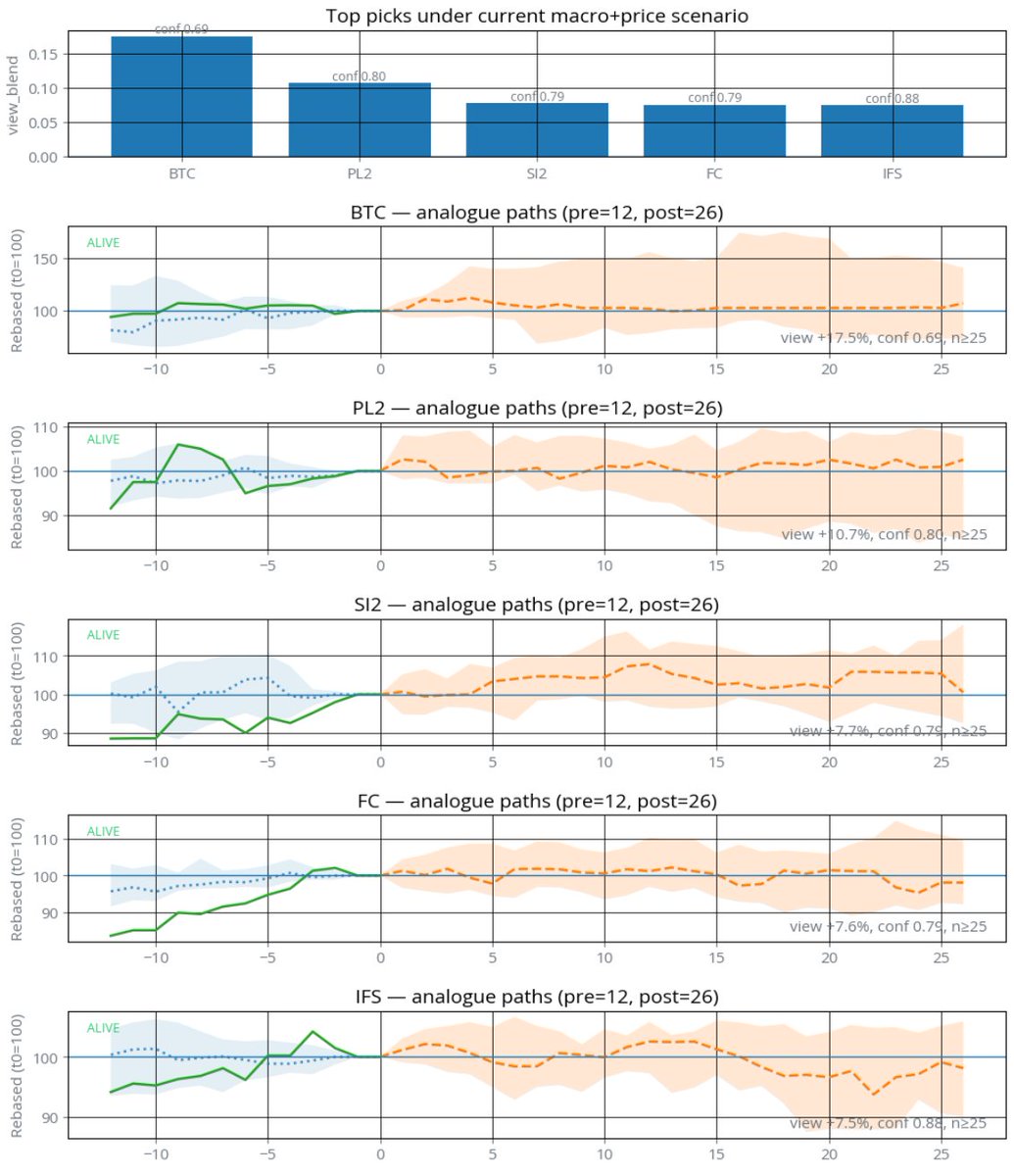
On the short term horizon (4 weeks) we remaing bullish $GLD & $SLV, as well as $IWMO, $EEM, $EFA and $XLE.
Looks like my preference for silver was gold.
Anyway.
On the short term horizon (4 weeks) we remaing bullish $GLD, $SLV and $IWMO as well as $EEM, $EFA and $XLE.
AQR showed that macro trend signals can work.
I took the idea further with an analogue engine I called Schrödinger’s AI.
Instead of fixed heuristics, it asks: “When markets looked like this in the past, what happened next?”
Each week, markets get classified Alive 🔵 or Dead ⚫
And yes, Schrödinger is currently very into Bitcoin & Silver
Link to article below
Energy: Alive ⚡
Bitcoin: stretching its paws 🪙
Gold: still staring it down.
I see power grids humming and GPUs glowing, and maybe a spark of belief returning to crypto.
The next phase runs on both electricity and belief.
We named our fund @TakaheCapital after a bird that “went to zero” twice… and still made the mother of all comebacks in 1948.
If you want a ticker for our ethos, it’s not $HYPE (even though I like that one, but that’s a crypto story). It’s survival first, compounding second.
NZ birds have a strange habit: vanish for decades, reappear when no one’s looking. Markets do the same. Trends die, eulogies are written… and then they stroll back on stage once the last PM pulls the plug.
Case in point: the night parrot in Australia. Assumed extinct for 100 years, now rediscovered. One of its calls literally goes: “didly dip, didly dip.”
If that isn’t the soundtrack of mean-reversion pain, I don’t know what is.
Trend following moral: we don’t predict which species (or trends) will reappear.
Well… we do, in our macro trend models at @schroedingersai. But not in the fund.
In the fund it’s simple: diversify habitats, control fire risk (position sizing), keep the cats out (left-tail protection), and let the winners breed (let profits run).
And yes, we’re very glad we chose the Takahē and not the night parrot. “Didly dip” is a rough brand promise in a drawdown.
Our brand promise: be hard to kill, in life and in markets.
(Also: we have the cutest Takahē stickers. Resilience looks even better on a laptop.)
Schrödinger’s Macro Lens #1 is live
Gold glittered, but I saw Katzengold 🐱✨
Top 4w pick (+4.4%, 76% conf.), yet no Alive. Why?
Bullish analogues came from an inverted curve.
Today’s 10y–2y is positive → new regime.
So the cat curled up in bonds (~80% Alive) instead.
The model updates weekly.
Check the latest allocation, expected 4w returns, and confidence scores here:
https://t.co/oBqwcgFLyG
More details soon on the @twoquants substack. More about the model here https://t.co/4NL3tTqFsN
Think of it as an empirical “cat scan” of the macro environment:
- Alive → strong historical precedent, worth taking risk
- Dead → inconclusive, stay flat
- Dead & Alive → conflicting, uncertainty reigns
Alive: HYG, IEF, LQD, IWMO, EEM, DBC, EFA
Strong income/ defensive tilt. 80% bonds but the cat is reaching for high yield by holding riskier debt.
Small diversifcation add on via commodities (DBC) and factor momentum tilt via (IWMO)
Before we get into the litter gritty details of my inner workings, let me already provide you with weeks allocation based on what I think is currenctly alive in my ETF portfolio.
Opaque color = last week's weights
Solid color = this week
They told me not to put a cat in charge of macro.
I ignored them.
Now every week I’ll tell you which markets are Alive, Dead, or just confusing.
Link to introductory post below
The Ghosts of Bubbles Past 👻💸
Financial bubbles leave scars—just ask German investors still haunted by Dot-Com PTSD. Unlike the U.S., where retail investing bounced back, Germans remain cash-heavy & stock-averse.
The key isn’t jumping on trends—it’s knowing when to get out.
@ChrisLooksHere@moritzseibert No. Exit was in this case stop loss based. Trailing stop losses only move higher if I'm long, so even a slow decline might trigger an exit. One can combine both things though
Farewell, OJ – For Now 🍊📉📈
We went long in early 2022, rode the trend as hurricanes, disease & tight supply sent prices soaring—then came the sell-off. Exiting around current levels, locking in a solid gain.
Systematic trend following means no emotions, just process.