Working with multiple scRNAseq batches? Having trouble replicating at the bench? Our recent pre-print may show one reason why: (https://t.co/pklPFadpll) Findings complementary to @lpachter & Tara’s work finding low dim projections can be unreliable representations.
The US mostly funds biomedical research through a large lump payment to the NIH. Panels of scientists and doctors volunteer to decide on the merit of grant individual applications, not unlike a really boring battle royale.
All of this is halted.
No new science is being funded.
NIH has stopped considering new grant applications, delaying decisions about how to spend millions of dollars.
The freeze occurred because the Trump administration has blocked the NIH…
https://t.co/YX2AxyfdDE
This by @SGRodriques laments the (anticipated) failure of models trained on large datasets to reproduce "real biology discoveries" like those found in Science and Nature. While he sees this as a problem, I COULD NOT DISAGREE MORE. That foundational models don't (and God help us won't) spit out Nature papers is a feature, not a bug!
@wasserstein_rao Fair enough haha - cloud lab would have a near infinite number of edge cases. I like the idea of starting out with an API, especially if you have it with some validated protocols for RAG. Would be a really cool prototyping even if cloud lab is a bit more distant.
Single-cell RNA sequencing is biased (and more so if you count more molecules). But biases aren't just arbitrary artifacts; they reveal something non-obvious about the technology and chemistry of sequencing, and we can learn a lot by using physical models. Read to find out more!
If you’re frustrated with healthcare, get this:
Health Insurance @ElevanceHealth (formerly Anthem) bamboozled @Caltech into overpaying thousands per person for a pricier plan identical to the cheaper one—except for a higher premium and deductible.
No added benefits.
Seeing data on macrophages and metabolism from single cell. It's somewhat buried in the paper and not obvious from the title - but we see different metabolic profiles in macrophages from pro-regenerative vs fibrotic materials in vivo! https://t.co/nFSy30FxPr
@iScienceLuvr I'm sure they'll be improving it in chunks with the interactive user feedback RLHF, but it's definitely been a bit of a challenge out of the gate imho
@iScienceLuvr Curious what your take on full o1 is at the moment. I've only had one session with it, trying to use it to create a new agent framework & it was really almost unusable for me because it refused to answer, or just said nothing after "finished thinking" so many times.
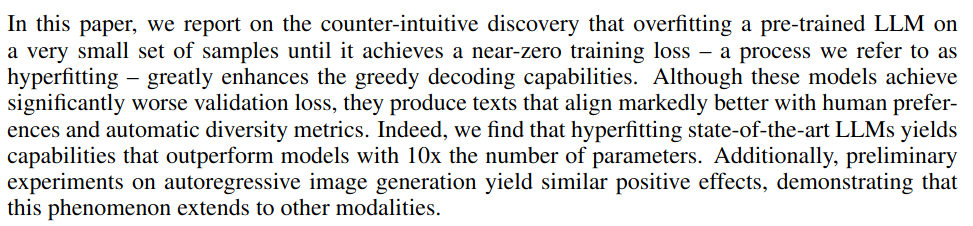
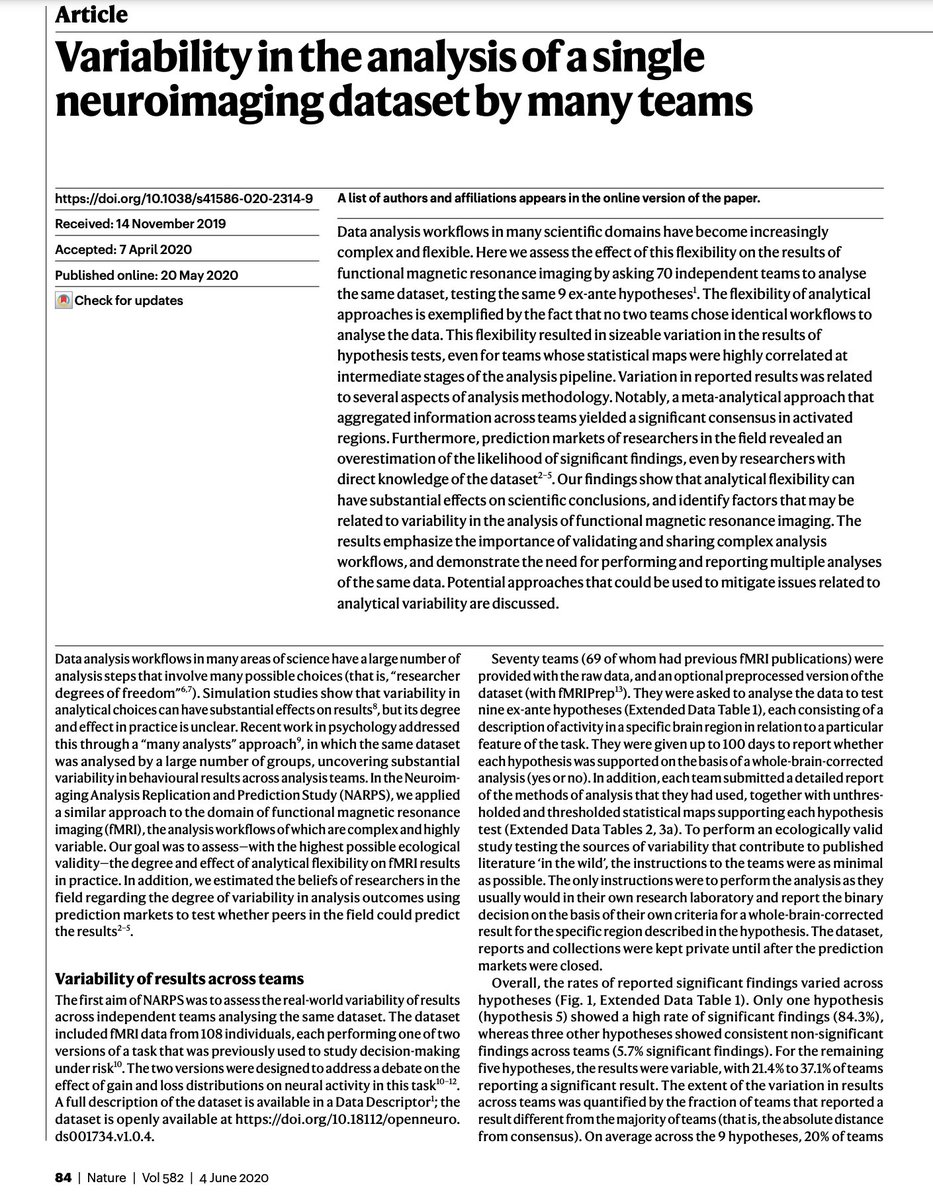
Data can be analyzed in endless ways, as this paper reminds us. So while our published paper reports one way to do it, it's crucial to test many many variants of the analysis to see just how robust our conclusions are.
Happy Thanksgiving! We are thankful for the opportunity to talk about how cool genomics is with you all the time. Our family might get annoyed at us for talking about it too much, but that won’t stop us!
It's a weird and beautiful bag of cheetos ;-) Cool technique! Worth checking out the paper; lots of cool new science can be done with this resolution in living systems!
Relationship between chromosomes (orange) and the mitotic spindle (green) in four stages of cell division, as seen by Bessel Beam plane structured illumination microscopy https://t.co/Z5NRQOoi4q
Our group of #ImageForensics experts @Thatsregrettab1 , @mumumouse2, @schrag_matthew, and myself are currently posting the problems we found in these papers.
We have now posted 118 of Dr. Masliah's paper onto @PubPeer. Follow our progress here:
https://t.co/ZakEoHHcjw