Extraordinary.
Among the many claims that Al Gore got wrong or grossly overstated were:
(1) An imminent 20-foot sea level rise
(2) The disappearance of snow on Mount Kilimanjaro
(3) Polar bears drowning in "significant numbers"
(4) Hurricane Katrina was a direct result of warming
(5) An influx of fresh meltwater from Greenland could completely halt the Gulf Stream, potentially plunging Northern Europe into a sudden ice age
(6) The drying of Lake Chad was entirely due to global warming
(7) Rising carbon dioxide levels historically directly caused the Earth's temperature to rise in a cause-and-effect relationship
(8) Glacier National Park would lose all (or nearly all) its glaciers soon
(9) Arctic summer sea ice could disappear very soon
(10) Low-lying Pacific atolls/islands were currently being inundated now, causing evacuations due to warming
(11) Coral reefs facing imminent widespread destruction primarily from warming
(12) Increased frequency and severity of floods, wildfires, tornadoes, or general extreme weather directly are tied to warming
(13) Himalayan glaciers melting rapidly and will soon lead to depletion of water supplies
Trump gets one thing correct: Iran cannot have nuclear weapons.
If it acquires them, Turkey, Saudi Arabia, and possibly Egypt will, as a matter a national pride — each believes that it is the true and natural regional leader — seek them.
The Turks have the human capital to produce them, and the Saudis the money to buy them from Pakistan (which desperately needs the cash).
So now we have the most unstable region in the world (and the one through which so much of the world's economy transits) with three, four, or even five (if you include Pakistan) nuclear powers.
This makes the application of American and Western power and diplomacy in the region far more complex, and, in the not entirely unlikely event of further anti-Western Islamization, almost impossible. A new unstable multicentric world could be created. And one in which the US has been discredited and embarrassed by its failure to contain nuclearization.
For the true radical isolationist — truly the dumbest person in the world — maybe this doesn't seem so bad. But if you're interested at all in engaging in realpolitik, then you know what a disaster it might be.
I think possibly the best thing about Elon Musk becoming a trillionaire is how angry it makes a bunch of losers who've never built a thing in their lives.
Cada día estoy más convencida de que uno de los mayores problemas de nuestra generación no va a ser el dinero.
Va a ser la soledad.
Cada vez veo a más gente de mi generación incapaz de mantener una relación, incapaz de comprometerse con nada y convencida de que siempre habrá algo mejor esperándoles.
Ya nada parece suficiente. Ni la pareja. Ni formar una familia. Ni tener hijos. Ni construir algo a largo plazo.
Todo tiene que ser perfecto.
Y en cuanto aparece el primer problema, la primera discusión o la primera incomodidad, se cambia de pareja.
Vivimos en la generación con más formas de conectar que nunca y, al mismo tiempo, en la generación que más sola se siente.
Porque nos han vendido que la libertad consiste en no depender de nadie. Que comprometerse es una carga. Que tener hijos es un problema. Que construir una familia te quita vida.
Y mientras tanto cada vez hay más gente que llega a los 45 años con cientos de contactos y absolutamente nadie a quien llamar cuando tiene un problema serio.
Lo peor es que muchos no se dan cuenta ahora.
Se darán cuenta dentro de 20 o 30 años.
Cuando los padres ya no estén. Cuando los amigos empiecen a hacer su vida. Cuando las fiestas ya no llenen. Cuando los viajes ya no tapen el vacío. Y cuando descubran que las relaciones humanas necesitan años para construirse.
A veces tengo la sensación de que estamos sacrificando compañía futura por comodidad presente.
Y quizá el gran problema no sea que vayamos a tener menos dinero que nuestros padres.
Quizá el problema sea que vamos a llegar mucho más solos.
Trans activists: “Just call people what they want to be called. It’s basic decency.”
OK, maybe this is fine in personal interactions. But, at a policy level, the denial of biological reality becomes a civilizational threat because it obliterates one of the most fundamental realities of human existence and replaces it with a requirement that we affirm the disordered thinking of a small percentage of individuals.
🇦🇪 Dubai is full of traffic and crowds again. Already missing the Iranian fireworks — they helped clear the city of the easily impressed.
The UAE’s air defenses proved excellent under fire. For 0% tax, we get better protection than Europeans paying 50%.
We're told that we shouldn't object to Helen of Troy being portrayed as a black woman. And yet if a major Hollywood studio made a film set in Africa and cast a white woman as "the most beautiful woman in Africa," those same people would literally riot in the street. If, say, Sydney Sweeney was cast in the role, they'd be driven to murderous violence. We all know this is the case.
A highlight of my trip to Cordoba to deliver the keynote at the International Conference on Bilingual Education: a pilgrimage to the statue of Maimonides, aka Rabbi Moses ben Maimon, acronym Rambam:
Lithuanian composer and conductor Mindaugas Piečaitis, directs his orchestra on the notes of Nora the cat playing the piano.
She earns a standing ovation.
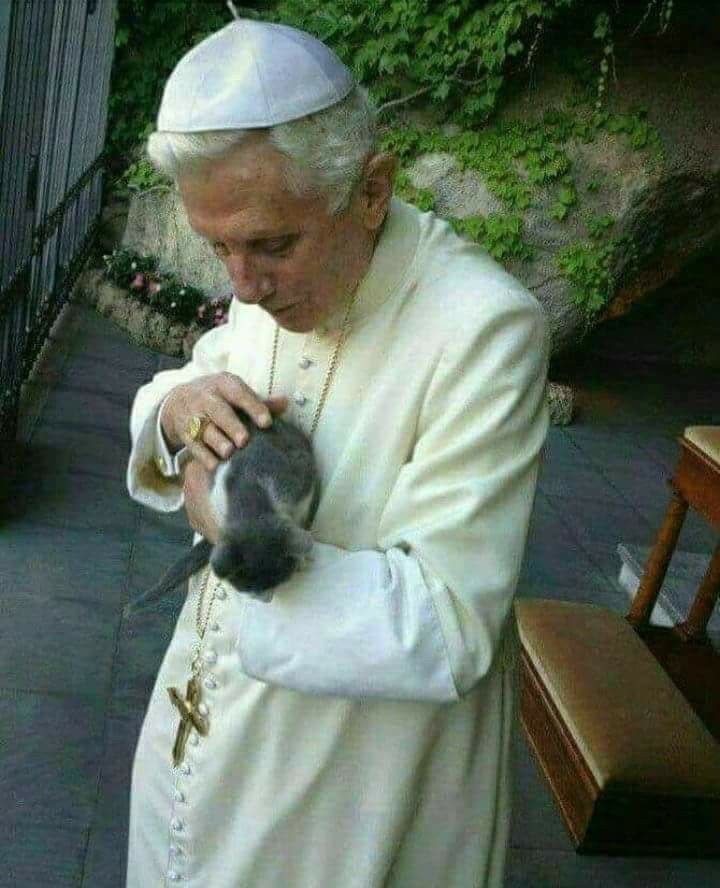
'I remember him in this neighborhood, walking towards his house with a beret and surrounded by cats. I think he knew cat language, it was impressive. He spoke to them, they understood him and guided him'
Pope Francis on Pope Benedict XVI's love of cats
A cat train in Japan.
It was opened in honor of the cat Tama, who worked as a station attendant in the city of Kinokawa. The entire train is dedicated to cats, and it even has a library.
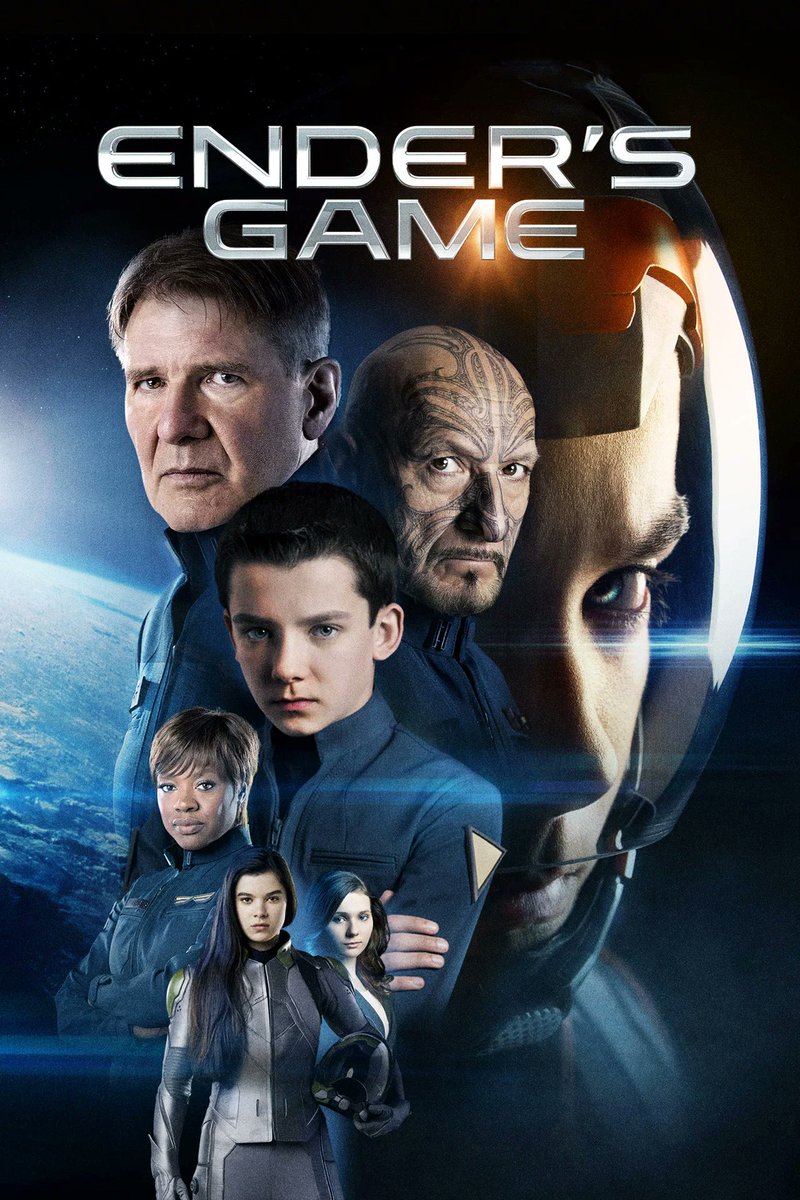
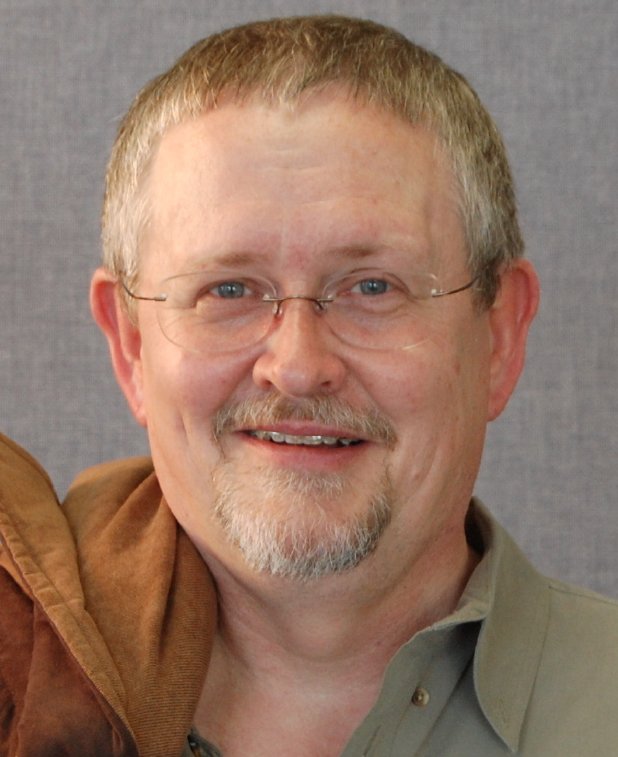
Ender's Game author Orson Scott Card on the problems with how religion is portrayed in current fantasy and science fiction:
"In our culture, intellectuals have become so uniformly a-religious or anti-religious that our fiction, with few exceptions, depicts religious people in only two ways: the followers are ignorant and stupid and easily fooled, and the leaders are exploitative and cynical, manipulating others' faith for their private benefit.
I know some people who fit those descriptions. But they are in a tiny minority. Most religious people I know are smart, well-educated, independent-minded, stubborn, honest, and generous -- at least as much so as the average intellectual, and usually more.
The hostility toward religion among American intellectuals arises, I think, from a clear awareness that it was against a publicly religious culture that their own culture rebelled. Now that rebellion is completely successful in terms of capturing control of all the public instruments of transmission of culture -- the universities, the media, and the literature and art -- but it has become such a shibboleth of intellectual life to snipe at religion that, like the aging "revolutionaries" of the old Soviet Union, they mindlessly continue to "rebel" in order to defend their tight grip on the establishment. Indeed, those intellectuals are the establishment. And what was once a daring and rebellious stance is now just another example of lockstep conformists mindlessly echoing ideas that they haven't examined.
That's when contemporary fiction mentions religion at all. Most of the time, in and out of speculative fiction, religion simply doesn't exist. Characters don't believe in God or even think about believing in God. Nobody talks about religion. Nobody belongs to any kind of church. Religion simply doesn't exist. ...
This is, I think, a serious lapse, a dishonesty in our contemporary literature. It is most seriously dishonest because in fact, even the supposedly a-religious intellectuals behave exactly as religious people always have. That is, the behavioral and cultural patterns that we have always associated with religions are indistinguishable, except by vocabulary, from the behavioral and cultural patterns of the a-religious intellectuals. They band together with fellow believers, feel sorry for or hostile toward unbelievers, immediately punish heretics -- intellectuals who, having once been accepted in the 'faith,' dare to question its premises -- anoint their priests and theologians (psychologists and therapists being their ministers, scientists and, more usually, science popularizers being their doctors of atheology), and insist on their absolute right to put forth their religious ideas with public funding and the authority of the state behind them, while doing their utmost to silence or marginalize the beliefs of others.
Most fiction has become, in short, an instrument of propaganda for the established religion of our time, which differs from other religions only in the particular content of the faith and the vocabulary used to describe it. Naturally, the true believers are sure that the real difference is that their beliefs are objectively true. But then, true believers have always believed that. This is not what distinguishes them from other established religions, but rather what makes them fundamentally identical to them.
The honest depicter of human life will include the religious aspect of that life. This is not to say that stories need to be about religion, any more than stories about our contemporary culture need to be about cars. But the cars need to be present, at least by implication, and if a character doesn't know how to drive, we'd need to know why."
Is this why Hollywood stopped adapting his books into films?
My talk to the Catholic Flemish Student Union (@KVHVGent) at Ghent University
- The logic of wokism
- Race denial was never based on evidence
- The science of race https://t.co/bIG5gkVtqC
Here's my @spectator column, 'What David Attenborough gets wrong about cats'
https://t.co/60F790rtnL
Here we go again. Last February I wrote about the latest wave of ‘catphobia’ – my new word, do use it – prompted by a report (more accurately, an anti-cat rant) published by the Scottish Animal Welfare Commission. The report suggested the ‘compulsory containment of cats in vulnerable areas’ and the banning of cats altogether in some new housing developments. A wave of cat hate followed.
For anyone who hasn’t been brainwashed by the anti-cat mafia that dominates the media and public life, I bring bad news. The majority of this anti-cat screed was easy to swat away as the nonsense it was. As for the Scottish Animal Welfare Commission…well, who cares?
But, my fellow cat lovers, we now have a very different and altogether higher-calibre adversary to contend with. I can barely bring myself to report that tonight on BBC1 the latest piece of anti-cat propaganda is to be delivered by…Sir David Attenborough. And it’s not just any old new series of his; it’s one celebrating his 100th birthday. It’s as if the anti-cat mafia has decided it’s time to explode its nuclear weapon. How are we supposed to take on Sir David Attenborough celebrating his centenary?
In the documentary Secret Garden, he argues that the 9.5 million pet cats in Britain kill 55 million birds every year. He suggests – assuming that this is, by definition, a bad thing – that cats wear a bell on their collars as this ‘reduces pet cats’ hunting success by a third’. As it happens, I don’t think it’s an outrageous suggestion; my cat, Louie, wears a bell on his collar, mainly so I can hear where he is.
But that’s not all. In a recent interview, the series’s producer, Bill Markham, lets rip at cats on the bizarre ground that they are too well looked after. Having so many pet cats is, he says, ‘unfair on the prey’, because ‘they’re being fed every day. There’s no limit on their population. So the normal relationship between predators and prey falls apart.’
I’m struggling to understand the logic. Like most cats, Louie does occasionally bring back a dead bird for me. But it’s very occasional – perhaps once or twice a year. That’s because he doesn’t need to kill to eat. He’s just doing what cats do once in every while for fun. But if I didn’t feed him every day, he would do what cats do because he had to – and kill many more birds. If you’re trying to reduce the number of dead birds, how is making cats more reliant on killing them a good idea?
Markham also says people should keep cats indoors during the avian breeding season in April and May. It’s not too outrageous a suggestion, although if you’ve ever had to contend with a stir-crazy cat for whatever reason – recuperating after an operation, for example – then you’ll know it’s not that straightforward.
My real issue with the series isn’t the specific suggestions put forward. It’s the tone and the approach that we see all the time – that cats are somehow a problem that has to be dealt with. Usually they’re contrasted with dogs – ‘man’s best friend’ in that idiotic phrase, as if they’re loyal and bright while cats are self-centred.
Anyone who owns a cat (or rather is owned by a cat) will know what rubbish that is. I’ve no interest in being slobbered over by a dog that runs affectionately at anyone. But when I’ve earned a cat’s trust and affection, as with Louie, that’s something I’ll take with me to my grave.
I hesitate to take issue with Sir David Attenborough, but it’s depressing how yet again cats are being portrayed as a problem. Wouldn’t it be wonderful if we just celebrated the joy, the comfort and the calm that cats can bring?
La dictadura cubana y la iraní no "resisten", a pesar del desastre social y el fracaso económico, por apoyo popular, sino porque usan a sus países como cárceles y a los ciudadanos como rehenes. Son cleptocracias parasitarias.
Por eso hay que extirparlas.
Catholics, especially Catholic bishops, priests, monks, and nuns, are nothing like these people:
Candace Owens
Milo
Carrie Prejean
Don't let these weirdos, who frequently go against mainstream Catholicism, distort your view of Catholics.
Of all the things Hollywood romanticises the worst it’s the ghetto.
Young talented men and beautiful women who could just “make it” if they lived in a better environment.
Reality is that by and large it’s just full of retards with low IQs.