On this auspicious day of Ashada Ekadashi, I am very happy to announce the launch of my humble attempt to make history interesting.
https://t.co/SGfD2ebBpO
The idea is actually very very simple
You go to the site, select a year, and It will show you who ruled which part of India at that point in time.
🇮🇳 India Tops the World at the 56th International Physics Olympiad 2026!
🥇🥇🥇🥇🥇India's young physicists deliver an extraordinary performance at #IPhO2026 in Colombia. All five members of the Indian team win Gold Medals. 1/3
@PMOIndia@DrJitendraSingh@HBCSE_TIFR@TIFRScience
They did it again.
They just proved mainstream archaeology knows nothing.
KAILASA Temple, INDIA
They scanned the most impossible temple in the world and proved that mainstream archaeology knows absolutely nothing about our ancient past.
Uncovering unexplainable tool marks in some of the hardest natural rock known to man — rock we still can’t replicate with modern tools today.
If you thought the pyramids were impressive, the Kailasa Temple in India is about to run circles around them.
This entire complex wasn’t “built.” It was carved out of the side of a mountain.
One solid piece of rock, worked around to create a fully functional monolithic temple complex with insane levels of detail.
The acoustics are otherworldly — the slightest hum turns into a full-body vibrating chant.
Many believe it was designed for sound healing, functioning like an ancient hospital.
It also has perfectly engineered drainage and ventilation systems built into the original design, not added later.
Mathematically and artistically perfect pillars over 100 feet tall, all carved by digging around them. The whole site spans the size of a football field and goes 100 feet straight down at its deepest point.
All of it — one single piece of rock. No room for error.
One mistake and you’re starting over, just like sculpting a giant statue.
They removed an estimated 400,000 tons of rock.
That’s more than the entire weight of the Empire State Building.
And here’s the kicker: that rock just… disappeared.
No massive piles nearby.
No traces.
It’s gone.
This is just one of over 30 temples in India’s mysterious Ellora Caves, all carved into the mountain.
But Kailasa stands apart because it was built from the top down — completely defying conventional architecture.
Historians date it to 756–773 AD based on two copper plate land grants found hundreds of miles away.
These plates praise King Krishna I for commissioning it.
But the same plates also boast that the temple was so breathtaking that even the gods flying overhead stopped their celestial chariots to admire it.
Gods.
Celestial chariots.
Hmm.
Legends say it was built in just one week.
Mainstream calls that myth… but treats the copper plates as gospel. Convenient.
The material?
Basalt — hardened lava, 6-7 on the Mohs scale, as hard as granite. Modern experiments with steel pickaxes showed it would take three years of nonstop swinging to remove just one cubic meter (roughly three tons).
Official story: built in 18 years. That would require removing five tons of rock per hour, every hour, for 18 straight years. In a confined space the size of a football field.
Numbers don’t add up.
In the 1600s, Mughal Emperor Aurangzeb sent a thousand workers with steel tools to destroy it. After three years they barely scratched it and gave up.
Recent investigations show deep, consistent grooves over an inch deep — requiring enormous force. These marks appear in narrow hallways barely wide enough for a person, let alone heavy machinery.
How do you apply that kind of precision power in such tight spaces?
The level of artistic detail in this basalt is mind-blowing.
Today we’d need diamond-tipped, high-powered equipment.
They supposedly did it with chisels and hammers over a thousand years ago.
Hindu mythology says it was built by Vishwakarma, the divine architect, using concentrated solar radiance channeled into divine instruments.
Concentrated solar radiance… sounds a lot like laser technology.
Ancient lasers? Forgotten knowledge from prior civilizations?
Or something even more extraordinary?
Whatever the truth, the mainstream explanation falls apart under scrutiny.
Use your own eyes and brain. Look at the evidence.
The Kailasa Temple remains one of the greatest architectural mysteries on Earth — and a giant question mark for conventional history.
What do you think really happened here?
Drop your thoughts below.
#KailasaTemple #AncientMysteries #ElloraCaves #ForbiddenHistory
Holy shit...
The bacterial flagellar motor is a reversible, nanoscale rotary engine that powers bacterial motility. Driven by an electrochemical ion gradient, it converts chemical energy into mechanical rotation.
Are these Indian temple pillars... is this... 🤯
India’s lung cancer burden is rising rapidly, with cases projected to grow from 63,708 in 2015 to over 81,000 by 2025. Smoking and increasing environmental pollution are major contributors, while nearly 80 to 85% of patients are diagnosed at advanced, incurable stages, leading to around 60,000 deaths every year.
Source: Indian Journal of Medical Research (IJMR)
Factors such as tobacco exposure, rising air pollution, and occupational hazards continue to increase the burden of lung cancer, while access to affordable and non invasive early screening tools remains limited.
Early detection can significantly improve survival outcomes, yet current screening approaches are often expensive, invasive, radiation dependent, or inaccessible to large sections of the population.
Supported by BFI-BIOME, BioMarkIQ is working to address this gap through VarSee, an AI-powered, biomarker based platform for early lung cancer detection.
VarSee combines blood based biomarker analysis with machine learning and bioinformatics to identify early lung cancer signals through a non invasive approach. Designed for scalability and accessibility, the platform aims to enable earlier clinical intervention and improve patient outcomes.
By enabling faster and more accessible screening, the technology has the potential to transform how lung cancer is detected across India, especially for high risk populations.
Addressing the participants of @BharatInnovates 2026, Principal Scientific Adviser to the Government of India Prof. Ajay Kumar Sood delivered a keynote and joined the panel discussion session on ‘Tech Parks and Accelerators as Bridges for DeepTech Scale-up’ held today at Nice, France. He was joined by panellists Dr. @DeepakBagla_, Mission Director of @AIMtoInnovate; Prof. Shireesh Kedare, Director of @iitbombay; Ms. @ChloeBoscagli, Director of MonacoTech; Dr. Eduard Peris Deprez, MD of @BFI_Impact.
In his address, Prof. Sood emphasised that the global innovation landscape is shifting from incremental improvements to science-driven breakthroughs in areas such as quantum technologies, synthetic biology, AGI, robotics, and neuro-technologies. He underscored that deep-tech innovation sits at the intersection of economic competitiveness, sustainable development, and national security, citing initiatives such as India's @nqmdst , BioE3 policy and @OfficialINDIAai.
“A scientific breakthrough cannot move from laboratory to market through capital alone. A deep-tech innovation requires a connected chain of support: laboratory research, proof-of-concept facilities, pilot validation, regulatory guidance, policy support, patient capital, and industrial partnerships.”, remarked Prof. Sood. He highlighted the potential for a Joint India–France Deep-Tech Accelerator to support technology translation, joint intellectual property commercialisation, industrial validation, and bilateral investment.
@narendramodi | @EmmanuelMacron | @PiyushGoyal | @DrSJaishankar | @MEAIndia | @IndiaembFrance | @FranceinIndia
BFI signed a historic MOU with IIT Bombay under Bharat Innovates Program at NICE France. Partnership was announced by Hon. Commerce Minister Shri Piyush Goyal and Principal Scientific Advisor to PMO Dr Ajay Sood. The event was graced by Prime Minister Narendra Modi and French President Emmanuel Macron.
BFI along with IIT Bombay will work to support biomedical startups from ideation to market access in collaboration with European ecosystem of Universities, hospitals and Investors.
My friend invited me to his "casual game night."
I thought that meant snacks and maybe Uno.
He dimmed the lights, pulled out a whiteboard, and said, "We'll start with Catan, obviously."
Obviously.
Within 20 minutes, three grown adults were accusing each other of "sheep hoarding" with the intensity of a custody battle.
One guy slammed his hand on the table and yelled, "You broke our wheat alliance, Trevor."
I don't even know Trevor.
I'm just trying to figure out why there's a resource called "ore" and why I'm emotionally invested in it.
At one point, someone looked me dead in the eye and asked if I wanted to trade wood.
I haven't recovered.
We finished at midnight and my friend said, "Next time we'll do something light, like Twilight Imperium."
I Googled it.
That's not a board game.
That's a part-time job with lore.
The weird thing about reading so much as a child and gaining a huge vocabulary from that is I can't define a lot of the words I use, I just know that they would fit correctly in a specific sentence. Does anyone else experience that?
India imports 70–80% of its medical devices. That has to change.
On 16th Feb, At IIT Delhi, we launched BFI Innovation Full Stack — one of India’s largest biomedical innovation networks — a high-velocity translational engine connecting ideation → prototyping → validation → manufacturing → market adoption.
At its core is NAMAH — bridging the deadly gap between lab prototypes and real-world products with pilot manufacturing, regulatory muscle, clinical validation, and go-to-market pathways.
From IIT Delhi to real hospital deployment.
From proof-of-concept to procurement.
This is how India builds, validates, and scales its own MedTech.
Not incremental change.
Structural change.
BFI is determined to help build healthcare sovereignty for India.
Personally it was a dream moment for me. IIT Delhi was my dream institute for engineering but I couldn't get in via the coveted Joint Entrance Exam. It was inspirational to launch this program with the Dean R&D and other distinguished professors of IIT.
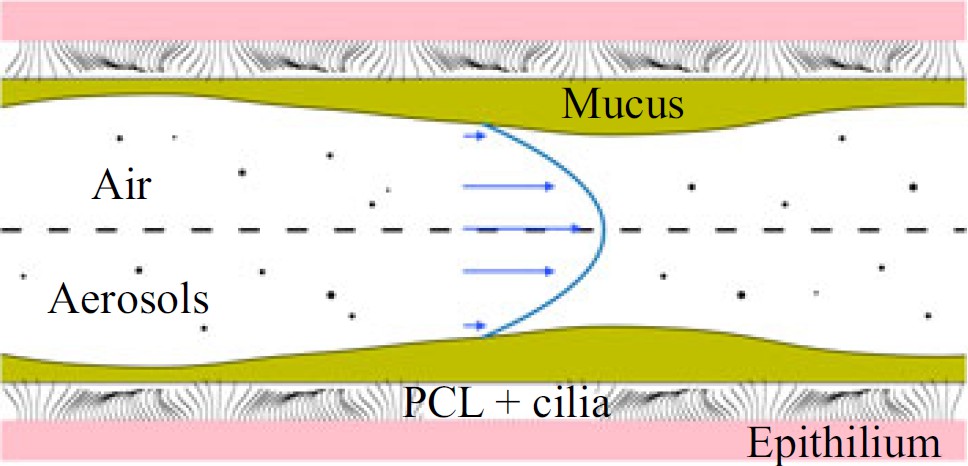
A recent study from IIT Bombay has found that as mucus volume increases in response to pollution (or a foreign material) in the airways, its defence does not improve. Instead, the increased mucus volume ends up creating narrow ‘humps’ that leave large patches of the airway walls completely exposed. This patchy landscape could explain why excessive mucus is detrimental, potentially allowing fine soot particles to penetrate deep into our systems and triggering asthma attacks.
The study conducted by Swarnaditya Hazra and Prof. Jason R. Picardo has been published in the Journal of Fluid Mechanics and focuses on the middle airways. These are the branching pipes of the lung that lie midway between the windpipe and the terminal air sacs. The air flow, which is swirling and chaotic in the windpipe, calms as it enters the small middle airways.
https://t.co/wFmZK1HLyg
Indian academia embraces Saraswati, but often stays away from Lakshmi.
That must change.
— Prof. V. Ramgopal Rao
In Episode 3 of science.unblocked, Prof. Ramgopal Rao unpacks the systemic reasons behind this paradox and what India must do to move from papers to products.
Watch the full conversation to see how policy, academia, and industry must align to unlock India’s true innovation potential.
Episode out now: https://t.co/tsYgNhB688
@ramgopal_rao@sandeepnailwal
Indian academia embraces Saraswati, but often stays away from Lakshmi.
That must change.
— Prof. V. Ramgopal Rao
In Episode 3 of science.unblocked, Prof. Ramgopal Rao unpacks the systemic reasons behind this paradox and what India must do to move from papers to products.
Watch the full conversation to see how policy, academia, and industry must align to unlock India’s true innovation potential.
Episode out now: https://t.co/tsYgNhB688
@ramgopal_rao@sandeepnailwal