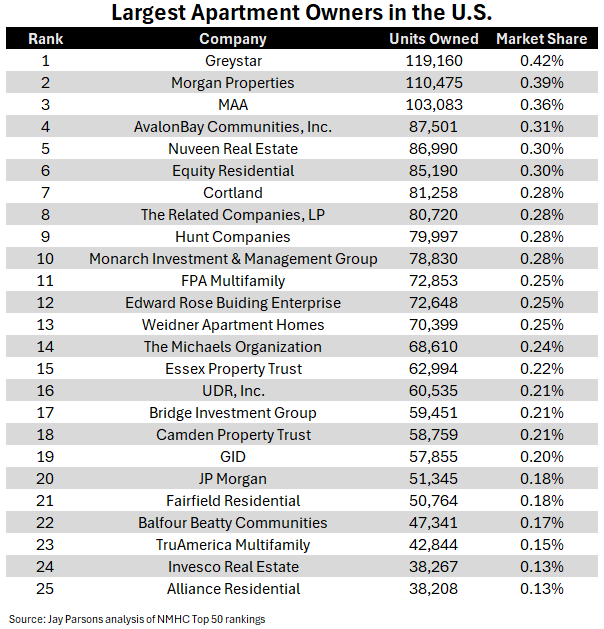
Important to read into headlines like this with caution. There’s a lot of noise circulating that builds the narrative real estate and rental prices are run by a few major corporations. But here's the facts - the largest multifamily owner in the U.S. (Greystar) only owns ~0.5% of rental inventory. Relative to almost any other industry, apartment real estate is one of the least concentrated.
Moreso, in high-cost areas such as coastal California markets, ownership is overwhelmingly private, dominated by legacy mom-and-pops and local investors. San Diego's 280k apartment units are largely comprised of duplexes, fourplexes, scattered 5-30 unit properties - mostly all privately owned.
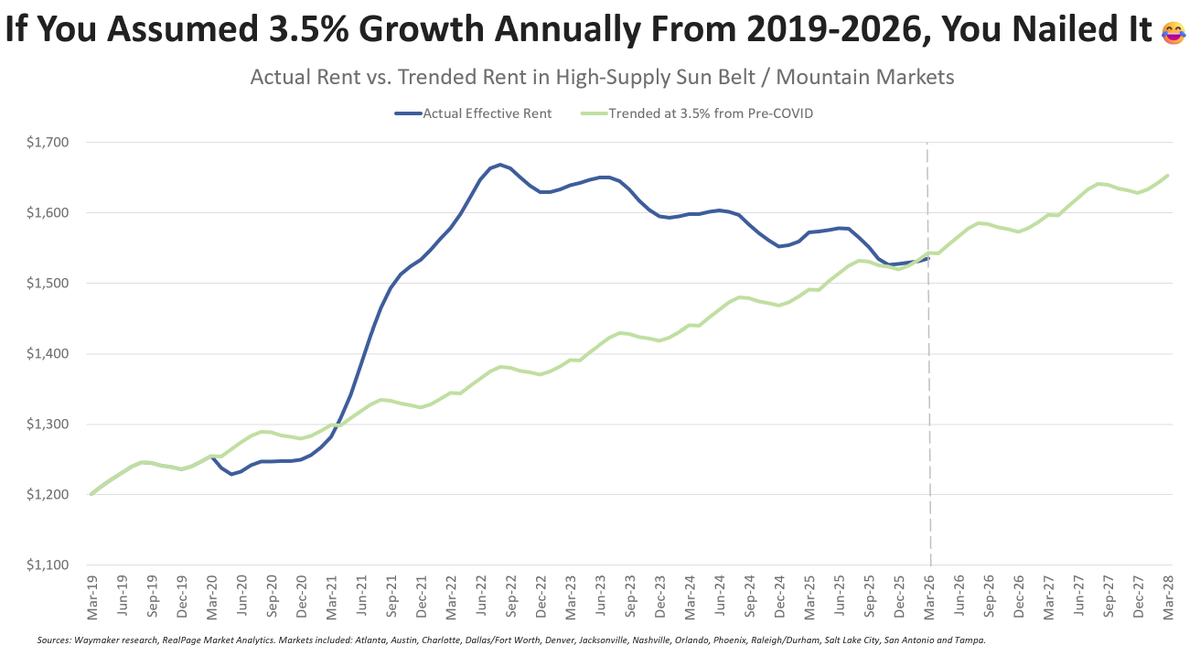
Institutional ownership concentration is lower here than in more affordable markets, ie Austin, Phoenix, and other sunbelt markets that have witnessed substantial rent declines. Those markets allow major builders to develop at scale, which is ultimately what drives affordability. California’s land scarcity and regulatory environment prevent ground-up supply. So institutional capital goes where it can actually build.
Its simple economics of supply and demand. Supply is the real release valve on rents. Apartments lack substantial economies of scale, the sector is structurally fragmented and will remain so for decades. A potential merger between two of the largest owners changes nothing.
As you go to work today and settle into the week, please study the form below. You will soon need to fill this out EVERY year and tell the government what you own and then allow them to tell you how much its worth.
That is the framework that is enabled by the Trojan Horse "Billionaire Tax" that is trying to get passed.
Give them credit: they cleverly use Billionaires as the hook, but build in the language and the framework that will allow the Legislature to simply extend the tax to everyone and make it yearly.
And this is where the form below comes in...
In this case, ask yourself, will it be you or the Billionaires that will be able to fill this out properly and avoid penalties.
As much as Billionaires can be pushed to do more for society, we all know that they have the infrastructure to manage these kinds of disclosures...middle class Californians do not and they will be the ones that get penalized in the end.
There's been reform - 13% tax on STROs plus a cap on permits at ~1% of inventory. There were 6,000 new units of housing delivered in the past year in San Diego; we are building the entire STRO market in terms of new supply each year. The way to fix a housing shortage is to continue to "growing the pie" by adding more housing, not fighting over who gets a slice.
San Diego directly collects a ~13% Tax on short term rentals (in addition to property taxes, and business licensing fees), which directly funds city services and homeless services. Short term rentals support 200,000+ tourism-related jobs locally and directly supports handymen, cleaners, property managers, local businesses and restaurants, etc.
San Diego has real affordability concerns and understand the motivation to pick on short term rentals, but the only real winners here are large hotel groups, not local residents.
35,000 San Diego households endure severe overcrowding. Only 13% of residents can afford a median rate home, & 390,000 renters are overburdened by housing costs. STRO reform is one solution many can get behind, but it’s irresponsible to say that the problem stops there.
Name one major U.S. industry where the biggest players have <0.5% market share.
The apartment business has gotta be the most fragmented major industry, is it not? Big names, sure, but no behemoth owners.
(Analysis from today's release of the NMHC Top 50)
Disagree. Miami has a massive driving force behind its growth, with an influx of wealth and job, and one of the lowest unemployment rates in the country. 50% rent growth is not sustainable, so a correction is a net benefit long term. Constrained single family home supply. Similar story here in San Diego with flat/negative rent growth after spiking in 2020-2022.